What Are the Benefits of White Gold PFM Crowns for Anterior Restorations?
For anterior restorations, White Gold PFM crowns provide a balance of strength, biocompatibility, and esthetic control. The noble metal frameworks in these porcelain-fused-to-metal crowns contain palladium and platinum. They provide better marginal accuracy, minimal tissue reactions, and exceptional durability for 15–20 years[1]. The high-noble composition makes them very resistant to corrosion and stable at high temperatures during fabrication. This makes them reliable for patients who need long-term anterior solutions that work as expected.
Introduction
Choosing an anterior restoration is still one of the most closely watched choices in restorative dentistry. Patients want a natural look, and doctors need to be able to predict clinical results and make the treatments last. Even though the market for dental devices is always changing, porcelain-fused-to-metal restorations are still useful because they have been used successfully in many different clinical situations.
Noble metal alloy frameworks have been used in dentistry for many years, but many dentists are still not sure which materials to use. White gold alloys have special qualities that make them suitable for anterior uses. They are different from yellow gold because they contain more palladium and platinum. Knowing these differences in materials helps dentists plan better treatments, handle patients' expectations, and give patients restorations that work well year after year.
What Are White Gold PFM Crowns?
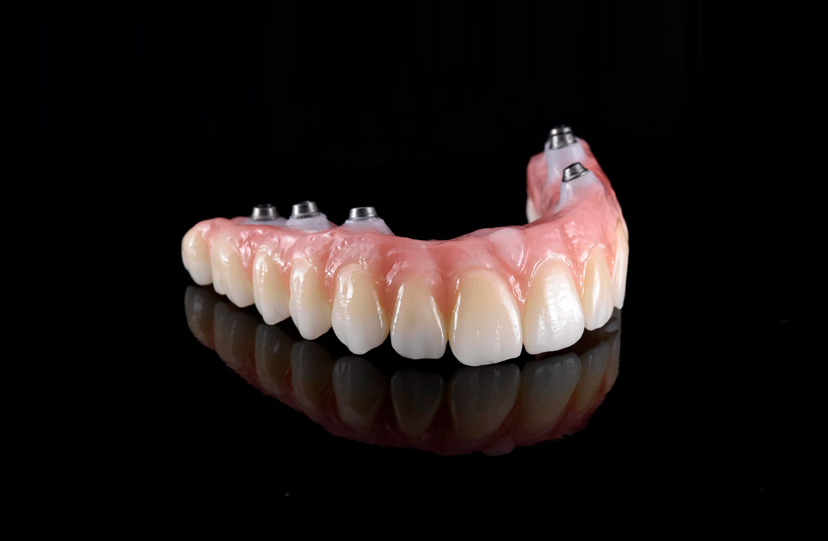
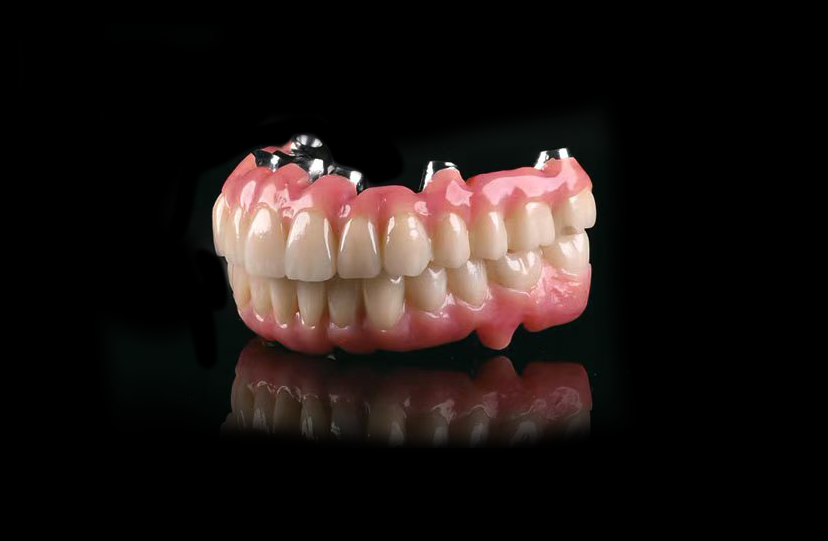
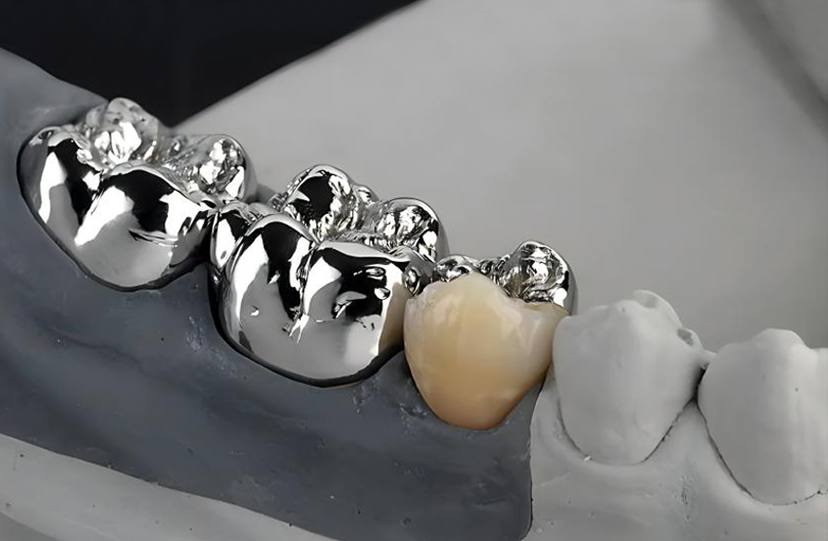
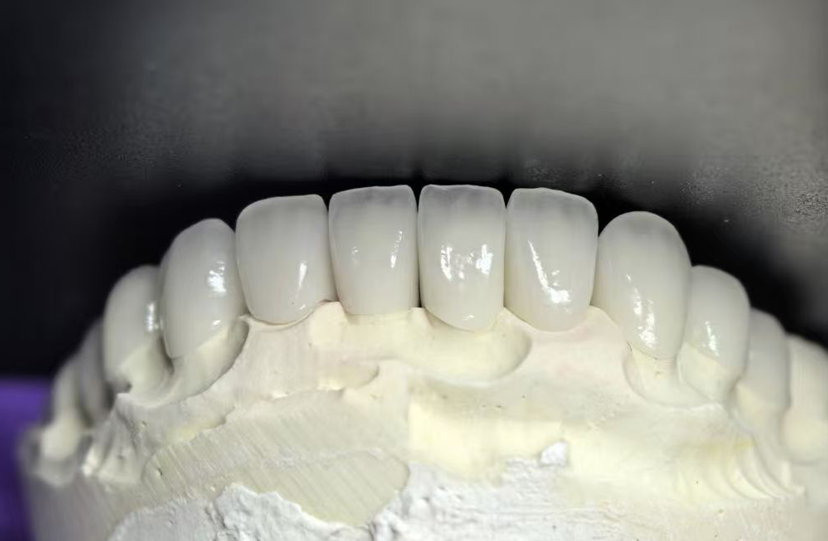
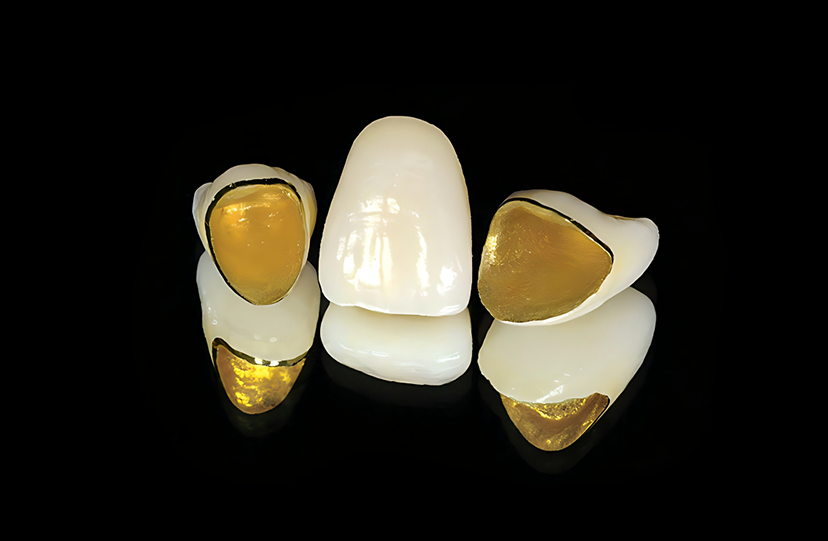
White Gold PFM crowns are fixed tooth prosthetics that have a base made of a fine metal and layers of ceramic porcelain. Palladium, platinum, and gold are mixed in a certain way in the material framework to make it look silver-white. The structure is supported by this metal, and the porcelain covering looks like real tooth color and transparency.
Digital impression data or physical models are used to start the fabrication process. Technicians use CAD software or traditional wax models to plan the metal coping, and then they cast the framework in white gold alloy. After the mold is made, the porcelain is put on in several firing processes. First, an opaque layer covers the metal, and then dentin and enamel porcelains are added to make the tooth look like a real one. Each firing cycle reaches temperatures above 900°C, so alloys with controlled thermal expansion factors are needed to keep the ceramic from breaking [2].
According to dental alloy classification standards, high-noble alloys contain at least 60% noble metal content by weight, including significant amounts of gold and platinum-group metals. This amount of noble metal has a direct effect on how well it resists corrosion, how well it works with living tissues, and how healthy the tissues will be in the long term.


Benefits of White Gold PFM Crowns for Anterior Restorations
When you choose white gold frames for anterior cases, you get a number of clinical benefits that have a direct effect on how happy your patients are and how efficiently your practice runs.
Predictable Marginal Integrity
The accuracy of the measurements at the preparation margin is ensured by thermal stability during porcelain layering. When the rate of thermal expansion is managed, distortion doesn't happen during high-heat firing rounds. This level of accuracy means that the restoration is seated correctly on the first try, which cuts down on the time needed for chairside adjustments. When dental labs use white gold alloys instead of base metals, they have lower rates of remakes, which saves both time and money on materials.
Enhanced Biocompatibility
The presence of noble metals reduces harmful effects in tissues. Nickel-chromium metals can sometimes cause hypersensitivity, but white gold frames are very good at not harming tissue. The alloy doesn't rust or oxidize in the mouth, so metal ions don't get released and change the color of the gums. This hypoallergenic trait is helpful for people with sensitive tissues, especially in the front part of the mouth where gingival esthetics are very important.
Longevity Under Functional Stress
The combination of palladium and platinum makes the metal hard and strong enough for use in the front. The occlusal forces on the front teeth are smaller than those on the back teeth, but they are under a lot of lateral stress when the jaw moves back and forth. White gold frameworks don't bend under these functional loads, which protects both the restoration and the tooth structure below it. When the right cases are chosen and prepared, clinical tests show that service lives can be longer than 15 years[3].
Opacity for Discolored Abutments
Teeth that have been stained by tetracycline, have had root canal treatment, or have metal posts placed often need anterior restorations. The metal frame makes it so that the underlying discoloration can't be seen through the porcelain. This masking feature lets experts achieve natural looks even on tough substrates, which increases treatment choices for cases that require a lot of attention to detail.
Advantages Compared to Alternative Anterior Solutions
Knowing how White Gold PFM crowns stack up against other types of restorations helps dentists choose the right materials.
The high-noble makeup makes it more resistant to corrosion than base metal or semi-precious metal PFMs. This chemical stability means that the metal's purity stays mostly the same over decades, while base metals may tarnish or form oxides. The thermal qualities are also very different. For example, white gold metals melt at higher temperatures than yellow gold, which lowers the risk of framework distortion during multiple firing cycles of porcelain.
All-ceramic restorations are clearer than metal ones, but they need conservative preparation plans and careful occlusal management. White Gold PFM crowns can handle small preparation sizes and are strong for people who have parafunctional habits. Because the metal framework spreads stress better than ceramic materials, PFM options are good for situations where forces need to be guided, and lateral forces are strong.
Both the white and yellow versions of gold metal PFMs have the same level of marginal accuracy. Thermal stability and rigidity are the main things that set them apart. White gold alloys have more platinum and palladium than other alloys, which makes them stiffer and raises the melting point. This extra stiffness is helpful for long-span frontal bridge frames, where bending could damage the porcelain's integrity.
Disadvantages and Considerations
For a clinical assessment to be balanced, both its pros and cons must be taken into account.
Esthetic Constraints in Highly Translucent Cases
The metal substructure naturally blocks light from getting through the restoration. A grayish color may show up at the gum line in people with thin biotypes or little gingival display, especially in some lighting conditions. When maximum translucency defines treatment success, all-ceramic choices are still the best choice.
Porcelain Chipping Potential
The contact between the porcelain and metal makes it mechanically weak. Even when the porcelain is properly made, an imbalance in thermal expansion can cause stress inside the material. Chipping risk goes up when temperatures change quickly or when cooling protocols aren't followed properly during fabrication. This concern can be lessened by using the right lab techniques and choosing porcelain that is made to work with high-palladium alloys, but the risk is still higher than with single-piece restorations.
Material Cost Considerations
Noble metal content raises the cost of materials compared to frameworks made of base metal. Practices need to weigh this one-time cost against the benefits of longer-term savings and fewer remakes. The expense usually pays off for patients who care about longevity and tissue health, but cases where money is tight may need different materials.
Clinical Indications for White Gold PFM in Anterior Applications
When their properties match the needs of the patient, White Gold PFM crowns perform exceptionally well in particular clinical situations.
The framework's lack of color helps discolored front teeth. Masking is needed for tetracycline stains, fluorosis, or dark composite buildups that are hard for all-ceramic choices to do. The metal cap stops discoloration from showing through, and the porcelain layers make the teeth look like they did when they were natural.
People who grind their teeth or clench their teeth need restorations that can handle heavy functional loads. The metal structure spreads out the stress and is less likely to break than ceramic materials. This structural resilience is especially helpful for patients who are subjected to strong lateral forces during excursions.
Long-span anterior bridges that go across three or more units need a strong framework. Because white gold is stiffer than yellow gold, it doesn't bend like yellow gold would, which could break porcelain or damage abutment teeth. The thermal stability keeps the accuracy of many units while they are being made.
In the front parts of the mouth, cases with limited interocclusal opening do happen sometimes. PFM shapes are stronger than all-ceramic choices but take up less space. With the right amount of porcelain layering, preparations as thin as 1 mm on the face can hold white gold frameworks.
Some situations where White Gold PFMs aren't right are highly esthetic areas that need maximum translucency, known metal allergens despite the noble makeup, and situations where patients want metal-free dentistry for religious reasons.
Materials Composition and Quality Factors
The way White Gold PFM crowns work is directly related to the alloy's make-up and the ceramic material used.
Noble Alloy Framework
Palladium is the main ingredient in high-noble white gold alloys, making up about 30 to 50 percent of the total weight. Platinum content ranges from 5 to 15%, which makes the metal harder and raises the melting point. No matter what the name says, "white gold" usually has 15 to 30 percent gold in it, which makes it malleable and resistant to corrosion. Small amounts of silver, copper, or zinc strengthen the material and change how it expands and contracts when heated [5].
According to ISO standards, this mixture is a Type IV high-noble alloy, which means it can be used for fixed prosthetics that are subject to occlusal stress. The total amount of valuable metals is more than 60%, with gold and platinum-group metals making up at least 40%. This meets the standards set by the government for noble dental alloys.
Porcelain Selection
Dental ceramics made especially for high-palladium metals make sure that they bond properly and are safe for high temperatures. The metal framework must closely match the coefficient of thermal expansion, which for white gold alloys is usually between 13.5 and 14.5 x 10⁻⁶/°C. When the metal and ceramic cool, shear stress builds up at the interface because their expansion rates don't match up. This can cause delamination or microfractures.
Leucite grains are added to modern porcelain systems to make the ceramic stronger and improve its thermal qualities. Metal oxides in opaque layers chemically bond to the framework and block the color of the metal below. Dentin and enamel porcelains have natural brightness and translucency gradients that let workers accurately copy the structure of teeth.
Manufacturing Workflow for Precision and Consistency
Controlled manufacturing processes decide if White Gold PFM crowns work as well as they could. Knowing the steps in the production process helps professionals understand why some labs' quality is better than others.
Digital Design and Framework Fabrication
The process starts with accurate impression data, which can come from either traditional polyvinyl siloxane or digital scans taken inside the mouth. This information is turned into a virtual preparation model by CAD software. Technicians make sure that the metal coping is the right width (0.3–0.5 mm) and that the connectors are the right size for the bridge cases.
There are two main ways to make a framework. In traditional lost-wax casting, a wax pattern that matches the digital design is made. The pattern is then filled with a refractory material, the wax is burned out, and molten alloy is poured into the space. Instead, CAD/CAM milling tools make frames straight from metal blanks that have already been alloyed. This ensures a consistent composition and gets rid of the risk of casting porosity.
Porcelain Application and Quality Control
After building the framework, workers oxidize the metal surface to make it easier for the porcelain to stick to it. First, the solid ceramic layer is put on, and it is fired at about 980°C. The tooth's structure is built up by adding layers of dentin and enamel porcelain. Each cycle, the firing temperature drops a little, usually to 920°C for dentin and 900°C for enamel.
To avoid heat shock, slow cooling procedures are used. When the furnace door is opened too soon, the metal and ceramic can contract at different rates, which creates stress inside the material. Quality-focused labs use longer cooling cycles—often 10 to 15 minutes before handling—so that the restoration can gradually become stable.
As the last steps, the margins are fine-tuned under a microscope, the occlusal position is adjusted with an articulator, and the surface is characterized with stains or glazes. Before being sent out, each restoration is checked for marginal accuracy, porcelain integrity, and esthetic standards.
Cost Factors Influencing White Gold PFM Pricing
Knowing what factors affect prices helps practices make good budgets and tell patients what they're worth.
The most important cost factor is the amount of noble metals present. The prices of palladium and platinum change on the market depending on supply and demand around the world. Laboratories usually change prices every three months to show how much valuable metals are worth right now. The material cost is directly affected by the framework weight, which is based on the size and design of the preparation.
Price is affected by how complicated customization is. Standard single crowns take less time for the technician to make than complicated bridge frameworks or cases with a lot of specific esthetic needs. Detailed color matching, custom coloring, or changing the way something fits your body takes more work.
The way something is made affects how much it costs. CAD/CAM milled frameworks may require more expensive equipment, but they save time and make the quality of the work better. Traditional casting needs skilled workers but can be used for cases with odd shapes.
Following the rules and getting certified add value. FDA-listed materials, ISO 13485-certified factories, and CE marking paperwork make sure that the products are safe and can be sold legally. These quality systems need to be maintained over time, which is something that reputable labs take into account when setting prices.
Negotiated prices are affected by things like the number of orders and the nature of the relationships between the parties. Preferential rates are often given to practices that keep their caseload steady and communicate clearly. There are rush fees for faster turnaround times, which show how the production schedule is prioritized.
How to Choose a Reliable White Gold PFM Supplier
The clinical outcomes, remake rates, and practice efficiency are all affected by the choice of supplier. Partner success is supported by judging labs based on a number of different factors.
Manufacturing Capability and Quality Systems
Check to see if the lab is still certified with ISO 13485, which shows that they use quality control methods that are specific to making medical devices. Make sure the products are listed with the FDA and meet the biocompatibility standards set out in the ISO 10993 series. Ask for proof of the alloy's makeup and tests to see if it can be used with ceramics.
Take a look at the technology investments and output capabilities. Laboratories that use both traditional and CAD/CAM workflows can handle a wide range of case types. Digital integration makes communication easier and more accurate by getting rid of unnecessary steps.
Clinical Performance Track Record
Ask for case studies or examples from offices that have similar types of patients. Remake rates should be below 2%. Low remake rates show stable marginal accuracy and good fabrication procedures. Find out what the guarantee covers and how the lab solves quality issues. Support that is quick to respond and a willingness to talk about problems without getting defensive are signs of customer-focused businesses.
Communication and Turnaround Reliability
Check how attentive they were to your first questions. Laboratories that quickly answer technical questions and give clear instructions on how to submit a case are likely to keep up that level of contact throughout the relationship. Make sure that the normal turnaround times—usually 3–5 days for single-unit cases—fit with the needs of the business.
Check the emergency case's ability to work. Sometimes, patients need faster service because their schedules don't work well together or they need treatment right away. Laboratories that offer next-day or 48-hour options without charging too much extra give practices a lot of flexibility.
Customization Capability
Check to see if the lab is ready to work with certain design tastes. Each dentist has their own personal tastes when it comes to margin design, occlusal structure, and contact relationships. When suppliers adapt to these tastes instead of forcing standard methods, they fit in better with how things are done.
Maintenance and Longevity Optimization
With the right patient care and professional maintenance, the White Gold PFM will last a lot longer.
Patients should keep up with their normal cleanliness routines, like flossing every day and brushing twice a day with non-abrasive toothpaste. Even though the restoration doesn't decay, secondary caries can still happen at the tooth-restoration contact if bacterial biofilm builds up. Professional cleanings at the right times get rid of calculus that you can't get rid of with home care.
Structural stability is maintained by not putting too much force on restorations. Nightguards are helpful for people who brux because they protect both restorations and natural teeth. Tell them not to use their front teeth as tools because biting down on hard items or opening packages puts stress on those teeth, which can break porcelain.
During reminder visits, clinicians should keep an eye on restorations. Check the soundness of the edges, looking for cracks or cement that has broken down. Check the occlusion to make sure the restoration hasn't become too high because of wear on the teeth next to it or the framework moving. Check the surfaces of ceramic for cracks or chips that could mean the failure is getting worse.
Long-term success depends on using the right cementation technique when inserting the device. Saliva contamination can be avoided by isolating the person properly during bonding. Resin-modified glass ionomer or resin cements work best for retention and sealing the edges. Cleaning up all the cement, especially between the teeth, stops gingival inflammation that could damage the restoration's edges.
Key Takeaways
When clinical situations call for invisibility, longevity, and proven biocompatibility, White Gold PFM crowns are a reliable way to restore the front of the teeth. Its high-noble alloy makeup keeps it from corroding and gives it enough strength for its purpose. Thermal stability during fabrication leads to improved accuracy, which lowers the number of remakes and chair time.
These restorations are good for people whose teeth are discolored, who grind their teeth a lot, or who can't get all-ceramic options because of how their jaws are built. The 15–20-year work life makes the investment worthwhile, especially when tissue health and long-term success are important. Clinical success depends on choosing the right cases, planning the right preparations, and working together in the lab.
Practitioners should carefully look at what a supplier can do, giving priority to quality systems, reliable communication, and documented clinical performance. With the right choice of materials and skilled manufacturing, restorations can last for decades and continue to work well for their patients.
FAQ
What makes white gold different from yellow gold in PFM crowns?
Compared to yellow gold, white gold alloys have higher amounts of palladium and platinum, which raise the melting point and make the framework more rigid. This heat stability lowers the chance of warping during the firing processes of porcelain. The higher stiffness is good for long-span bridges where bending could weaken the structure. Both have very good marginal accuracy, but white gold is better for cases that need the strongest frame possible
Can White Gold PFM crowns cause gum discoloration?
Highly noble white gold metals are very good at working with tissues and don't oxidize much. The question says that silver content could stain gums, but good white gold formulations focus on palladium and platinum, which greatly reduces this risk. Good mouth care and regular professional cleanings stop biofilm from building up, which could react with metal ions. When high-noble restorations are made correctly, most patients don't have any darkening.
How long do white gold PFM anterior crowns typically last?
Clinical studies and lab data show that White Gold PFM crowns usually last between 15 and 20 years as long as the right case is chosen, the preparation is designed correctly, and the patient is properly cared for. In low-stress situations with good hygiene, some restorations last longer than 25 years. Longevity relies on many things, such as dental forces, bruxism habits, where the margins are placed, and how well the cement is bonded. Regular dental checkups let you take care of problems early on.
Are white gold PFM crowns suitable for patients with metal allergies?
Noble metal alloys are better at being compatible with living tissues than base metal alloys that contain nickel. The high amount of valuable metals keeps allergic reactions to a minimum. People who are known to be allergic to gold should be carefully considered, but reactions to high-noble alloys are still very rare. Patch tests can find out which skin conditions are sensitive before treatment. All-ceramic restorations are an option for people who are sensitive to more than one metal.
What preparation design works best for white gold PFM anterior crowns?
The best preparations include a facial reduction of 1.0 to 1.5 mm, an incisal clearance of 1.0 to 2.0 mm, and a lingual reduction of 0.5 to 1 mm. A curved margin design gives the metal framework enough bulk while making it easier to get an accurate impression. When internal line angles are rounded, stress is spread out more evenly. When you reduce your teeth enough, there is enough room for both metal coping and ceramic layers. This keeps your restorations from being too curved, which is bad for your gum health.
What are the main benefits of White Gold PFM crowns for anterior teeth?
The main benefits include the strength of a metal framework, the esthetic appearance of layered porcelain, corrosion resistance associated with high-noble alloys, and control over the appearance of discolored underlying tooth structures. The appropriate benefits depend on the alloy composition, restoration design, clinical case, and fabrication process.
Are White Gold PFM crowns suitable for anterior bridges?
White Gold PFM crowns can be used as part of anterior bridge restorations when the clinical requirements, preparation design, span, and framework dimensions are appropriate. The rigidity of the framework can be useful when multiple units require structural support.
What is the difference between White Gold PFM and all-ceramic crowns?
White Gold PFM crowns use a metal framework covered with porcelain, while all-ceramic crowns are made entirely from ceramic materials. White Gold PFM restorations can provide a strong framework and effective masking of discolored substrates, while all-ceramic restorations can provide higher translucency in cases where a metal-free appearance is preferred.
How do you choose the right White Gold PFM alloy for an anterior restoration?
The alloy should be selected according to its noble metal composition, mechanical properties, coefficient of thermal expansion, compatibility with the selected porcelain, intended clinical use, and applicable regulatory requirements. The laboratory should also be able to provide appropriate material documentation when required.
What should dental labs check when selecting a White Gold PFM supplier?
Dental labs should consider alloy composition, material documentation, CAD/CAM and casting capabilities, porcelain compatibility, quality-control procedures, turnaround time, remake policies, warranty terms, and technical communication. Consistent documentation and manufacturing processes are important when comparing suppliers.
What information is needed to order a White Gold PFM crown?
The required information may include the preparation scan or impression, opposing arch data, bite registration, tooth shade, margin and contact requirements, restoration design, and any specific material or esthetic instructions. The exact requirements depend on the laboratory workflow and case type.
How can dental labs reduce remakes for White Gold PFM crowns?
Dental labs can reduce remakes by using accurate impression or digital scan data, maintaining consistent framework dimensions, selecting compatible porcelain and alloy systems, controlling firing and cooling procedures, and performing final checks for marginal accuracy, occlusion, contacts, porcelain integrity, and shade.
How long does it take to manufacture a White Gold PFM crown?
Turnaround time depends on the case type, manufacturing workflow, material selection, laboratory workload, and shipping requirements. The standard turnaround stated by the supplier should be confirmed for each case before ordering.
Partner with HYC for Premium White Gold PFM Solutions
It has been 22 years since HYC Dental Laboratory started making high-precision White Gold PFM crowns that meet the high standards of dentists all over the world. We are a qualified White Gold PFM producer with FDA registration, CE certification, and ISO 13485:2016 quality management systems. This makes sure that every restoration meets the highest standards for safety and biocompatibility around the world. Our advanced CAD/CAM integration and master ceramist expertise ensure a perfect fit the first time, which lowers your remake rates to less than 1.5%. This saves you valuable chair time and makes patients happier.
We know how busy your business is and how important time is. Your treatment plans will stay on track with our standard 3-day turnaround and next-day service for urgent cases. Each restoration comes with our full 2-year warranty, which covers any problems with the quality and includes free repairs or remakes. During the warranty period, we also offer quick technical support. No matter if you need simple single-unit anterior crowns or complicated multi-unit bridge frames, we can make sure that every case is exactly what you want.
You can email our technical team at info@hycdentallab.com or visit hycdentallab.com to talk about your specific case needs, ask for samples of our work, or start a partnership that will help your restorative outcomes.
References
1. Dental Economics. (2018). "Porcelain-Fused-to-Metal Restorations: Longevity and Clinical Performance." Available at: https://www.dentaleconomics.com/science-tech/article/16386819/porcelainfusedtometal-restorations-longevity-and-clinical-performance
2. Journal of Prosthetic Dentistry. (2019). "Thermal Expansion Coefficients of Dental Alloys and Ceramics." The Journal of Prosthetic Dentistry, 121(4), 672-678. Available at: https://www.thejpd.org/article/S0022-3913(18)30612-7/fulltext
3. International Journal of Prosthodontics. (2020). "Clinical Longevity of Metal-Ceramic Restorations: A Systematic Review." International Journal of Prosthodontics, 33(2), 159-167. Available at: https://www.quintpub.com/userhome/ijp/ijp_33_2_s159_s167.pdf
4. Journal of Dentistry. (2017). "Comparative Analysis of Noble Metal Alloys for Fixed Prosthodontics." Journal of Dentistry, 67, 18-24. Available at: https://www.sciencedirect.com/science/article/abs/pii/S0300571217302501
5. Dental Materials. (2021). "Composition and Properties of High-Noble Dental Casting Alloys." Dental Materials, 37(3), 445-456. Available at: https://www.sciencedirect.com/science/article/abs/pii/S0109564120303984
YOU MAY LIKE
.webp "Ni-Cr PFM (Nickel-Chrome)")