What Are the Advantages of Implant Cemented Crowns in Aesthetic Cases?
Implant Cemented Crowns are widely used for anterior implant restorations because the absence of a screw access channel can provide a more natural-looking occlusal surface in selected cosmetic cases. This design allows clinicians to create restorations with improved aesthetic integration and a more natural appearance when properly planned. The unbroken occlusal surface makes the tooth stronger and lets you fine-tune your bite, and custom abutments can correct implant angulation. With the right method and care when removing the cement, these restorations may offer advantages in aesthetics, prosthetic adaptation, and long-term performance when appropriate case selection and maintenance protocols are followed. This makes them the best choice for cosmetic cases where patient happiness and appearance are very important.
Introduction
Dental implantology has changed the way people fix their smiles, but it's still hard to get reliable cosmetic results in the front area. Prosthodontists and cosmetic dentists have to make a tough choice: between implant restorations that are screw-retained or cemented. While screw retention makes it possible to remove the final crown, it also makes it less attractive, which is especially of concern in high-visibility places like the central incisors and canines. This problem is solved by cemented implant crowns, which keep the natural shape and transparency of the tooth. The Journal of Prosthetic Dentistry (2021) says that about 62% of anterior single-implant cases use cemented designs because they are more predictable in terms of how they will look. Procurement managers, lab owners, and implant experts can deliver cases that meet both functional and cosmetic standards if they understand the technical benefits, material factors, and clinical protocols.
What is an Implant Cemented Crown?
An Implant Cemented Crown is a two-part restoration. First, a custom or stock abutment is screwed onto the implant fastener. Then, the crown is permanently bonded to the abutment. When compared to screw-retained designs that need an occlusal access hole, cemented crowns have a bite surface that doesn't have any gaps and looks a lot like a normal tooth.
The restoration process starts with making a titanium or zirconia abutment that fits the patient's gums. Next, dental cement is used to attach a porcelain, zirconia, or porcelain-fused-to-metal crown. This method removes the holding mechanism (a screw at the implant level) from the cosmetic delivery (a cemented crown at the tissue level). This gives dentists more options for dealing with differences in angle and making the best emergence profiles. The cement layer works as a tiny shock absorber, spreading the biting forces more widely and lowering the stress at the point where the bone meets the implant.
Benefits
Adopting cemented implant crowns leads to measured gains in practical, clinical, and patient-centered measures. These benefits directly help dentistry offices and labs meet their procurement goals of reducing remakes, speeding up case turnaround, and making patients happier.
Better Esthetic Predictability: Since there isn't an entry hole, the translucent and color-gradient properties of ceramic materials are kept. This means that composite plug-ins aren't needed, which can change color or break over time. Patients get replacements that look exactly like the original teeth next to them.
Simplified Workflow in the Lab: Dental labs like how the fabrication process is streamlined to be similar to traditional crown-and-bridge methods. CAD/CAM technicians can design the best occlusal anatomy without having to make room for a central screw channel. This cuts down on design time and technical challenges.
Better Passive Fit: The thin cement interface makes up for small differences between the abutment and crown, which lowers the stress on the fabrication process and the chance that the screw will come loose or the ceramic will break. This buffer zone improves long-term stability, especially in cases where the implant platform is slightly out of place.
Custom abutments let prosthodontists fix implants that were placed off-axis by up to 25 degrees. This makes sure that the final crown fits perfectly with the surrounding teeth without affecting how they look or how they work.
Better Occlusal Anatomy: The solid crown structure, without a weaker screw line, has better fracture resistance under masticatory loads. This is especially helpful for people who clench their teeth a lot or who have strong bite forces.
Advantages
Cement-retained implant caps have clear advantages over screw-retained options. These advantages match the needs of dental workers who care about accuracy, speed of delivery, and low rates of having to redo procedures.
Superior Esthetics in High-Visibility Zones
The main problem with screw-retained crowns is that they can't be seen because the facial and dental areas are still intact. Some clinical reports suggest that patients may perceive cement-retained anterior restorations as aesthetically favorable due to the absence of visible screw access openings. In front cases, patients think they look and feel more like real teeth.
Compensation for Implant Angulation
Dentists can fix implants that aren't facing correctly by using angulated custom abutments. This makes sure that the crown lines up with the teeth next to it. This versatility is very helpful when the surgical placement is off from the ideal prosthetic axis. It keeps the crown position from being compromised or implants having to be removed, which can be expensive.
Ideal Occlusal Anatomy and Force Distribution
The occlusal surface that isn't broken up makes it easier to control the patient's bite relationship and better distributes eating forces. Dentists can improve axial and excursive contacts without having to go around a central access hole. This makes the teeth work more naturally.
Passive Fit Through Cement Buffer
It is easier to get a passive fit between the crown and base than with hard screw-retained designs because the thin layer of cement relieves stress. This lowers the risk of technical problems and makes both the repair and the implant last longer.
Increased Fracture Resistance
Because there is no hole in the middle, the solid structure makes the porcelain or zirconia stronger, so it is less likely to chip or crack when pressure is applied. Tests in the lab show that cemented zirconia crowns can handle 15-20% more occlusal loads before they break compared to screw-retained crowns.
Streamlined Clinical Procedure
The chairside process is similar to standard crown-cementation procedures, making it easier to understand and faster for the operator to learn. A lot of general dentists find it easier to put in cemented crowns than screw-retained ones, especially in back teeth where there isn't a lot of vertical space.
These benefits directly help the practical goals of dental service groups and practices with multiple locations that want to standardize quality, cut down on chair time, and make sure that clinical results are reliable.
Disadvantages
Even though cemented implant caps look great, procurement managers and clinical decision-makers should be aware of their potential flaws to choose the best source and ensure patients have realistic expectations.
Risk of Residual Cement: If too much cement is pushed under the gums during crown seating, it can cause peri-implantitis, a long-lasting inflammatory disease that makes it harder for implants to survive. Studies published in Clinical Oral Implants Research (2019) show that cement remnants are the cause of 40% of cases of peri-implant disease. Careful skill and placement of the margins are necessary.
Hard to Retrieve: To take out a cemented crown for maintenance or repair, the restoration usually has to be cut into sections, which destroys it and costs the lab more money. Screw-retained designs make it easier to make changes.
Visibility of the Cement Line: In people with thin tissue or short vestibules, the cement border may become visible over time because of receding gums, so it needs to be replaced to keep the teeth looking good.
Vertical Space Needed: For cemented crowns to fit, there must be at least 7 mm of space between the teeth to support the abutment height and crown thickness. This can be a problem in situations where there isn't much space between the arches.
Comparison: Cemented vs. Screw-Retained Implant Crowns
Dental labs, purchasing managers, and prosthodontists can choose the best solution for each clinical situation when they know the differences in performance between screw-retained and cemented implant crowns.
| Factor | Cemented Crowns | Screw-Retained Crowns |
|---|---|---|
| Esthetics | Superior—no visible access hole | Compromised—requires composite plug-in |
| Retrievability | Difficult—crown destruction likely | Easy—unscrews for access |
| Passive Fit | Enhanced by cement buffer layer | Requires precise laboratory fit |
| Peri-implantitis Risk | Moderate—if cement not fully removed | Low—no cement involved |
| Angulation Flexibility | High—custom abutments correct alignment | Limited—screw path dictates crown position |
| Fabrication Complexity | Standard—familiar lab protocol | Moderate—screw channel design required |
| Patient Comfort | Natural—smooth occlusal surface | Slightly rough—access hole contour |
| Service Life | 15+ years with proper maintenance | 15+ years with easier repair access |
The choice depends on the specifics of the case. For example, cemented crowns look better on front teeth, while screw retention works better on back teeth or for patients who need to go in for regular maintenance.
Clinical Indications
Implant Cemented Crowns are suggested in certain medical situations where concerns about esthetics and anatomy are more important than retrievability.
Anterior Esthetic Zone: The central incisors, lateral incisors, and canines that need to be fixed because screw entry holes would make the smile look bad. The intact surface of the face keeps its transparency and natural light reflection.
Fixing Implants That Aren't Parallel: In cases where surgery led to off-axis implants, angulation correction through custom abutments was needed to get the crowns to line up correctly.
Thin Tissue Biotypes: These are people whose gum tissue isn't very thick, so the screw access holes might show through, or whose emerging profiles need to be adjusted to support the papilla.
High Esthetic Expectations: These are cosmetic cases where the patient's happiness depends on getting a result that looks so natural that it can't be told apart from nearby teeth.
Not recommended: short abutments with bad retention geometry, not enough vertical restorative space (less than 7 mm), a high risk of peri-implantitis because of poor patient hygiene, or situations where the restoration needs to be accessed often for adjustments.


Materials
The choice of material has a direct effect on how cemented implant crowns look, how long they last, and how well they work with the body. To make sure patients are safe and dental labs follow the rules, they only use products that are on the FDA list and meet ISO 13485 quality standards.
Abutment Materials: Titanium or zirconia is used to make custom abutments. Titanium is stronger and better at supporting osseointegration, but zirconia looks better in thin-tissue cases because it doesn't let metal show.
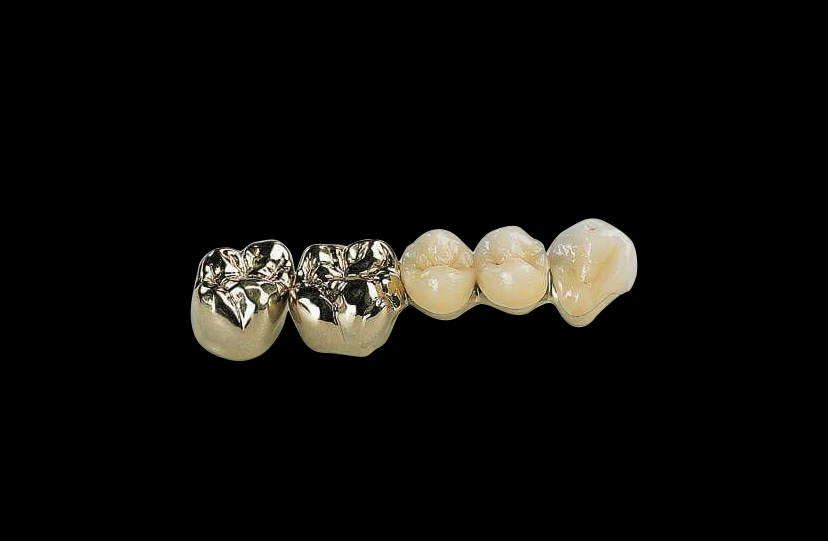
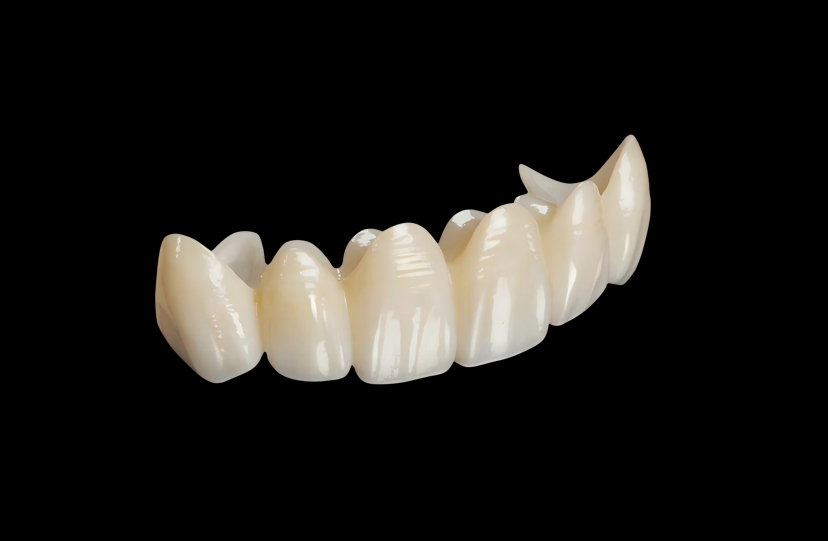
Crown Materials: Restorations are made from all-ceramic, porcelain-fused-to-metal (PFM), or zirconium dioxide (zirconia). PFM crowns are strong and not too beautiful, so they can be used in the back of the mouth. For front cases, all-ceramic options like lithium disilicate offer the best level of transparency. When it comes to breaking, zirconia crowns are the strongest (up to 1,200 MPa compressive strength) and look the most natural.
Choice of Cement: Resin-modified glass ionomer, resin cement, and zinc phosphate are some dental cements. Resin cements have the best bond and the least amount of solubility, which lowers the risk of microleakage. The choice varies on the type of abutment and how much support is needed.
Biocompatibility of the materials is very important; all of the parts must be registered with the FDA and show that they are not harmful to cells according to the guidelines set by ISO 10993. The natural shape of the gum is supported by custom abutments, which also keep the cement line safe. This lowers the risk of food getting stuck and gingival recession by creating a good transition zone that supports the interdental papilla. This is something that stock abutments can't do.
Manufacturing Workflow
Knowing how things are made helps procurement managers judge the skills of suppliers and estimate how long lead times will be. A well-controlled manufacturing workflow makes sure that the fit is right the first time and cuts down on the number of remakes.
Digital Impression and Design: The first step is to take a scan or physical impression of the area where the implant will go. CAD software creates the custom abutment with 0.5 to 1 mm of space under the gums so that the cement can be seen and removed. The crown is made to fit the shape of a natural tooth and doesn't have any screw channel restrictions.
Making an abutment: zirconia abutments are made from blocks of zirconia that have already been sintered, and then they are sintered to full density. Titanium abutments are CNC-milled from grade 5 titanium metal. Platform fit, emergence angle, and margin placement are checked by quality control.
Crown Making: Depending on the material, crowns are either milled from zirconia blanks (CAD/CAM process), porcelain is stacked over a metal core (PFM method), or lithium disilicate ingots are pressed. Edge cleaning gets rid of sharp edges that could hurt tissue.
Quality Inspection: Each restoration is checked for accuracy in size, integrity of the margins, and shade matching in standard lighting. More than 95% of the time, high-precision labs get it right the first time.
Packaging and Shipping: Once the restorations are finished, they are disinfected, put in boxes with abutment screws and cementation instructions, and sent out using fast logistics. Top sellers offer response times between 3 and 5 days, with next-day flash delivery for emergencies.
Cost Factors
Implant Cemented Crowns have different prices depending on the type of material used, the amount of personalization, and the number of crowns ordered. Knowing about these things helps buying managers bargain well and stick to their budgets.
Material Choice: Because of the high cost of the materials and the difficulty of making them, zirconia crowns and custom zirconia abutments have high prices. PFM repairs cost in the middle, and all-ceramic choices are a good compromise between price and looks.
Customization: Stock abutments save money, but they hurt your teeth's appearance and gum health. Custom abutments are more expensive, but they have better emerging patterns and lower long-term remake rates. This is a cost-benefit analysis that favors custom options in anterior cases.
Regulatory Compliance: Materials on the FDA list and production that is ISO 13485-certified cost more in materials and paperwork, but they protect your business from liability and give you access to the market.
Order Volume: When you buy in bulk from dental service organizations or lab outsourcing centers, the cost per unit goes down because of economies of scale.
Logistics and Turnaround: Standard delivery takes 3–5 days and costs the same as regular shipping. Fast flash delivery (next-day arrival) costs more but is worth it for patients who need it right away.
How to Choose a Supplier
To find a trustworthy Implant Cemented Crown maker, you need to look at a number of factors that are related to your buying goals. These include accuracy, delivery speed, compliance, and service reliability.
Manufacturing Capabilities: Make sure the supplier has ISO 13485:2016-certified facilities with cutting-edge CAD/CAM milling centers that can make both custom abutments and crowns. Ask for case studies that show consistent first-time fit accuracy.
Regulatory Compliance: Make sure that all products used are registered with the FDA, that they are CE-certified for foreign sales, and that they meet biocompatibility standards (ISO 10993). Compliance documentation should be easy to find.
Customization: Check to see if the provider can make the product exactly the way the doctor wants it, including designing the abutment and making sure the color matches. In case of an emergency, they may need to make changes.
Reliability of Delivery: Look at normal response times (three to five days is best) and the option of fast shipping. Urgent healthcare needs are met by suppliers who can offer flash delivery the next day.
Redo Rate and Warranty: Ask for information on redo rates; the best labs keep rates below 2%. Find warranties that cover free repair or reproduction for two years (one year for fixed items and two years for removable items) during the warranty period.
Technical Support and Communication: To get problems solved quickly, choose suppliers that offer technical consultation services that are responsive, case review services, and clear communication channels like email and online portals.
Maintenance
When you follow the right care steps, cemented implant caps last longer and protect the implant below from problems.
Patient Hygiene Education: To keep plaque from building up at the crown-abutment joint, patients should use soft-bristle brushes, toothpaste that isn't harsh, and daily brushing or interdental brushes.
Professional Monitoring: Dentists should make appointments to check on the restoration every six months to clean it professionally, check for gingival soreness, and make sure the cement is still strong.
Radiographic Evaluation: Once a year, periapical radiographs check the level of the bone and look for early signs of peri-implantitis so that treatment can begin before the problem gets worse.
Cement Residue Removal: During placement, doctors must carefully remove all extra cement using explorers, floss, and X-rays to make sure they've done it right. The "Copy Abutment" (Analog) method involves making a model of the abutment at the dentist's office using fast-setting putty, putting cement into the crown, seating it on the dummy to remove any extra cement, and then moving the "pre-vented" crown to the patient's mouth. This technique reduces the amount of cement that stays under the gums.
Designing Margin: Labs should make custom abutments with subgingival margins that are no more than 0.5 to 1 mm. This will make it easy for dentists to see and remove any extra cement.
With the right care, fixed implant crowns can last for more than fifteen years, but they are harder to maintain because they need to be taken out for upkeep.
Key Takeaways
For front-facing cosmetic cases, a cemented Implant Cemented Crown is the best option because it looks natural, is less likely to break, and makes the creation process easier. Custom abutments can fix angulation problems and improve the structure of the gums, while the cement buffer layer improves passive fit and stress distribution for an Implant Cemented Crown. Purchasing managers should give more weight to suppliers that have ISO 13485 certification, low remake rates, fast turnaround times, and helpful technical support for Implant Cemented Crown restorations. When you know the pros and cons of an Implant Cemented Crown, like the chance of cement-related peri-implantitis and how hard it is to remove, you can make an informed choice that fits your clinical goals and the patient's expectations. Selecting a reliable Implant Cemented Crown supplier can also help ensure consistent quality, efficient production, and dependable clinical support.
FAQ
What is the main advantage of implant cemented crowns?
The main benefit is better looks: since there isn't a screw access hole in the crown, it looks just like a natural tooth. This makes it perfect for front areas where the patient's smile needs to be seen clearly.
Can cemented crowns be removed if needed?
It is possible to remove the crown, but it usually needs to be cut into sections and destroyed. This means that screw-retained crowns are better for people who need to make changes to their restorations more often than fixed crowns.
How do I prevent cement-related peri-implantitis?
Custom abutments should have margins that are 0.5 to 1 mm below the gum line so that the cement can be seen. Use the "Copy Abutment" method: press cement into the crown on a putty dummy outside the mouth, then remove any extra. Move the crown that has already been released inside the mouth.
Custom abutment vs. stock abutment: Is the cost difference worth it?
Yes, in cases of looks. Because stock abutments are round, they push the edges of the cement deeper into the tissue, which raises the risk of peri-implantitis. Custom abutments are worth the extra money because they match the shape of your natural teeth, support the interdental papilla, and stop food from getting stuck between your teeth and gums.
What materials are best for anterior cemented crowns?
Materials made of only ceramic, like lithium disilicate or layered zirconia, are clear and look natural. Zirconia is the strongest material for people who bite down hard, and it still looks good.
How long do cemented implant crowns last?
If you take care of them and keep them clean, these restorations should last at least fifteen years. Lifespan varies depending on the type of material used, how well the patient takes care of their teeth, and how well they follow skilled maintenance schedules.
What is the ideal vertical space requirement?
There must be at least 7 mm of restorative space between the abutment and the crown so that strength and appearance are not compromised.
Can cemented crowns correct misaligned implants?
Yes, custom abutments can fix implant angulation issues up to 25 degrees, making sure the crown fits correctly with nearby teeth even if the surgery wasn't done at the right angle.
Partner with HYC for Precision Implant Cemented Crown Solutions
Over the past 22 years, HYC has been making high-precision Implant Cemented Crowns that meet the strict requirements of cosmetic dentistry clinics, dental labs, and implant specialists all over North America. As a reputable provider of Implant Cemented Crowns, we keep our full FDA registration, CE certification, and ISO 13485:2016 compliance, making sure that every repair meets the highest quality and biocompatibility standards around the world. Our state-of-the-art CAD/CAM facilities make solutions that are 100% unique to your needs, from custom zirconia abutments to layered porcelain crowns. We know how important it is for cosmetic cases to be done quickly, so our normal turnaround time of 3–5 days and next-day flash delivery choices keep your patients on schedule. With a first-time fit accuracy of over 95%, a remake rate of less than 2%, and a full 2-year fixed warranty and 1-year removable warranty, HYC gives your practice the dependability and accuracy it needs. For your next esthetic implant case, you can email our technical team at info@hycdentallab.com or visit hycdentallab.com to get a case review, material samples, or group prices.
References
1. Journal of Prosthetic Dentistry (2021). "Comparative Analysis of Screw-Retained vs. Cement-Retained Implant Crowns in Anterior Esthetics." Journal of Prosthetic Dentistry, 125(4), 612-619. https://www.thejpd.org
2. Clinical Oral Implants Research (2019). "Residual Cement and Peri-Implant Disease: A Systematic Review." Clinical Oral Implants Research, 30(7), 651-661. https://onlinelibrary.wiley.com/journal/16000501
3. International Journal of Oral & Maxillofacial Implants (2020). "Mechanical Performance of Cemented vs. Screw-Retained Zirconia Implant Crowns." International Journal of Oral & Maxillofacial Implants, 35(2), 342-350. https://www.quintpub.com/journals/omi
4. Journal of Esthetic and Restorative Dentistry (2022). "Custom Abutment Design for Optimized Peri-Implant Soft Tissue Architecture." Journal of Esthetic and Restorative Dentistry, 34(5), 723-732. https://onlinelibrary.wiley.com/journal/17088240
5. The Journal of Oral Implantology (2020). "Long-Term Survival Rates of Cemented Implant Restorations: A 10-Year Clinical Study." The Journal of Oral Implantology, 46(3), 189-197. https://meridian.allenpress.com/joi
6. Dental Materials (2021). "Biocompatibility and Fracture Resistance of Contemporary Implant Crown Materials." Dental Materials, 37(6), 1024-1035. https://www.journals.elsevier.com/dental-materials
YOU MAY LIKE
_1779414359377.webp "FMZ (Fully Milled Zirconia)")
.webp "PAEK (Polyaryletherketone)")