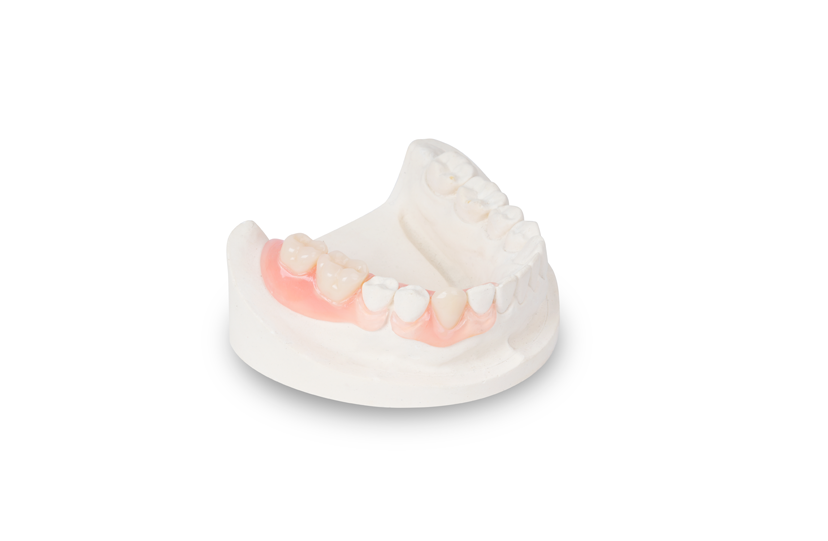
Valplast Dentures

Valplast Dentures: Flexible, Metal-Free Partial Dentures
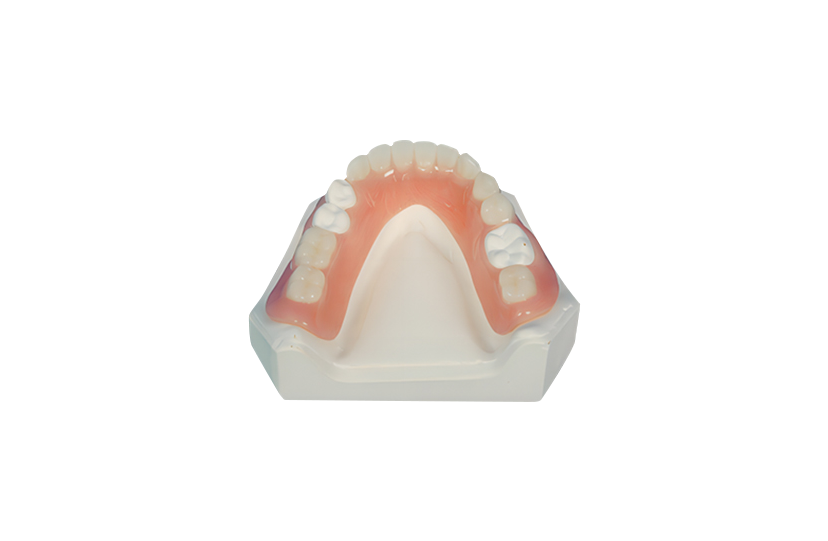
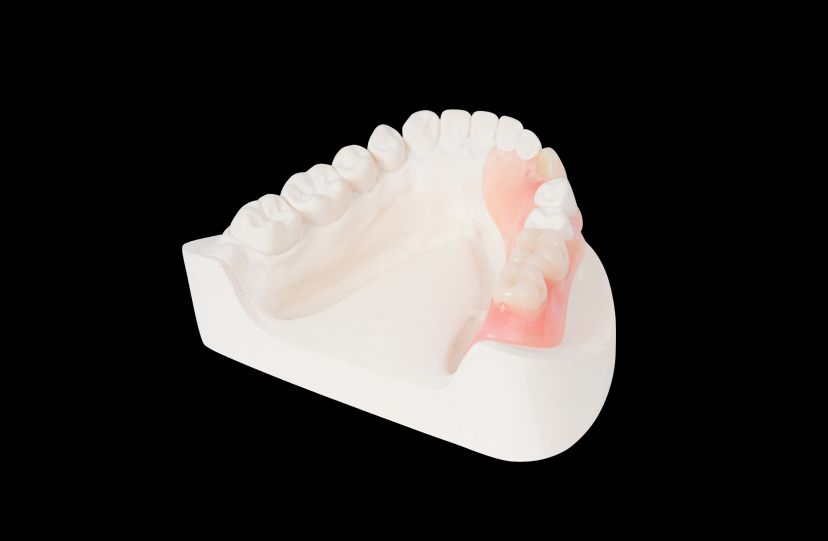
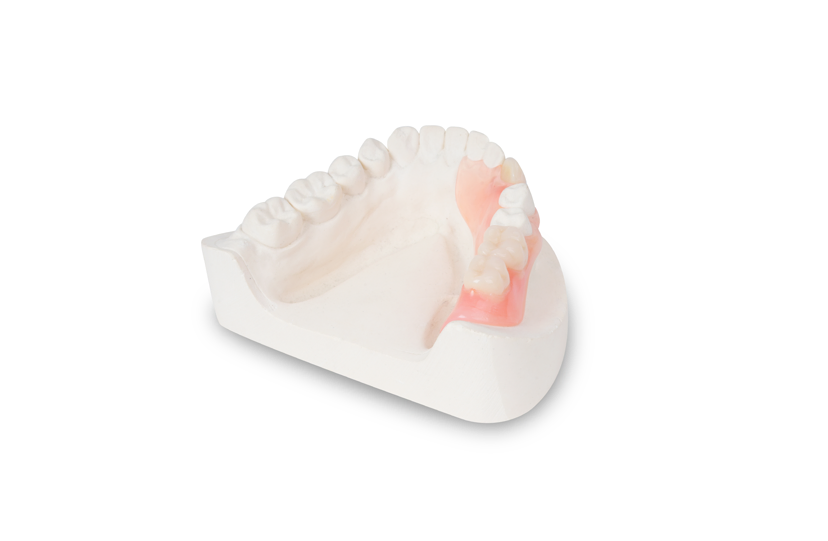
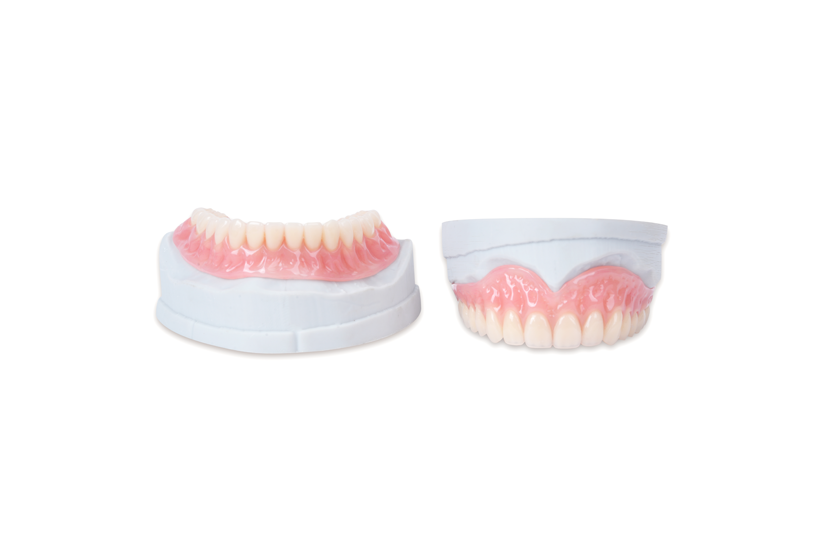
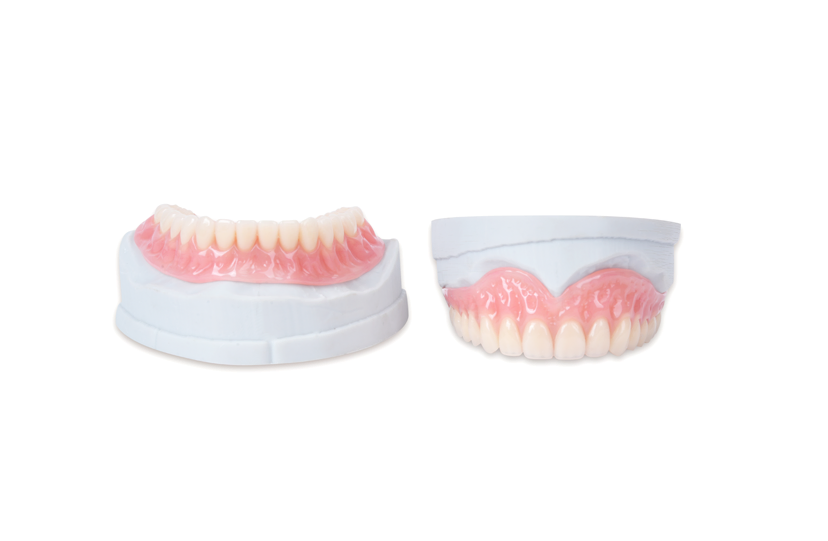
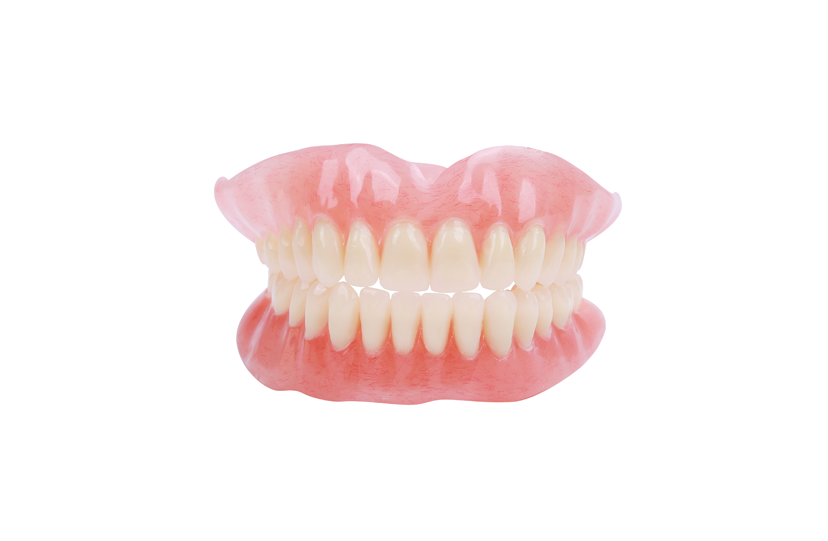
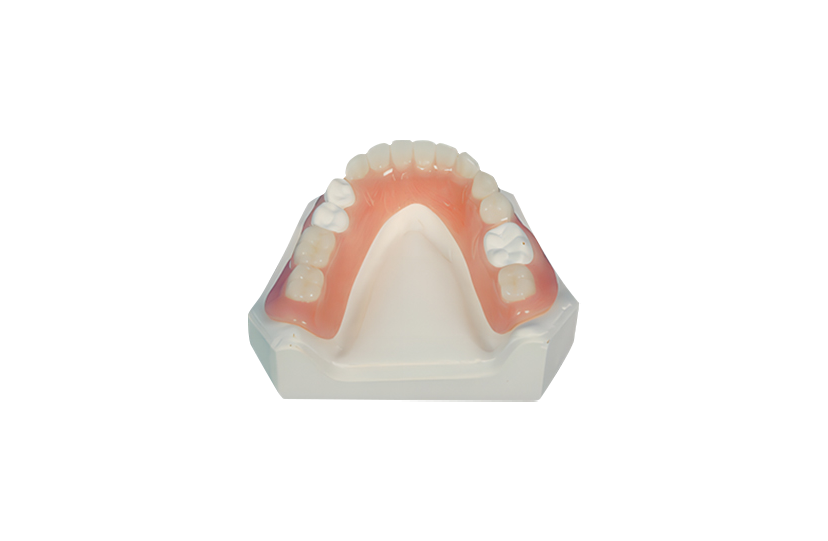
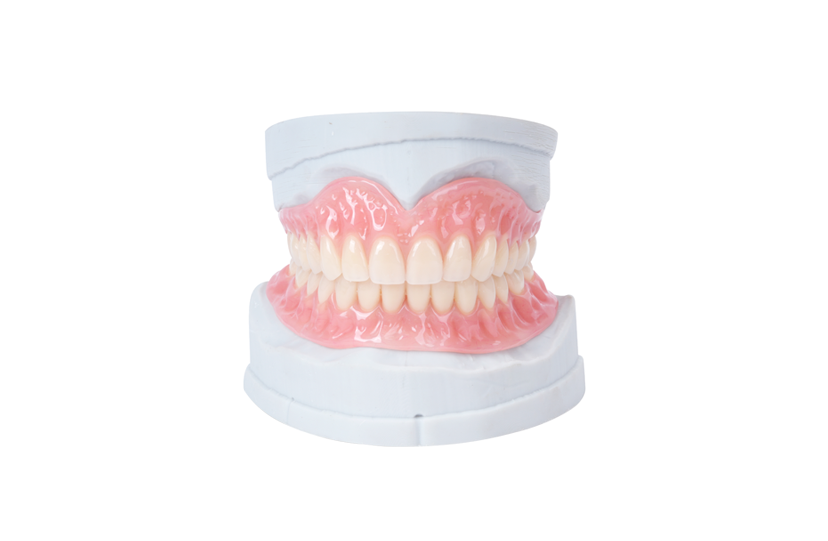
Valplast Dentures from HYC Dental Laboratory provide a flexible, metal-free option for selected removable partial denture cases. Made with thermoplastic nylon/polyamide resin, these flexible partial dentures are designed to combine a discreet appearance with flexibility and patient comfort.
With more than 22 years of dental laboratory experience, ISO 13485 certification, and US FDA registration, HYC Dental Laboratory provides customized removable dental restorations for dental professionals worldwide. Our Valplast flexible partial dentures are fabricated according to the dentist's prescription and case requirements, with efficient laboratory turnaround and international shipping support.
What Makes Valplast Flexible Partial Dentures Different?
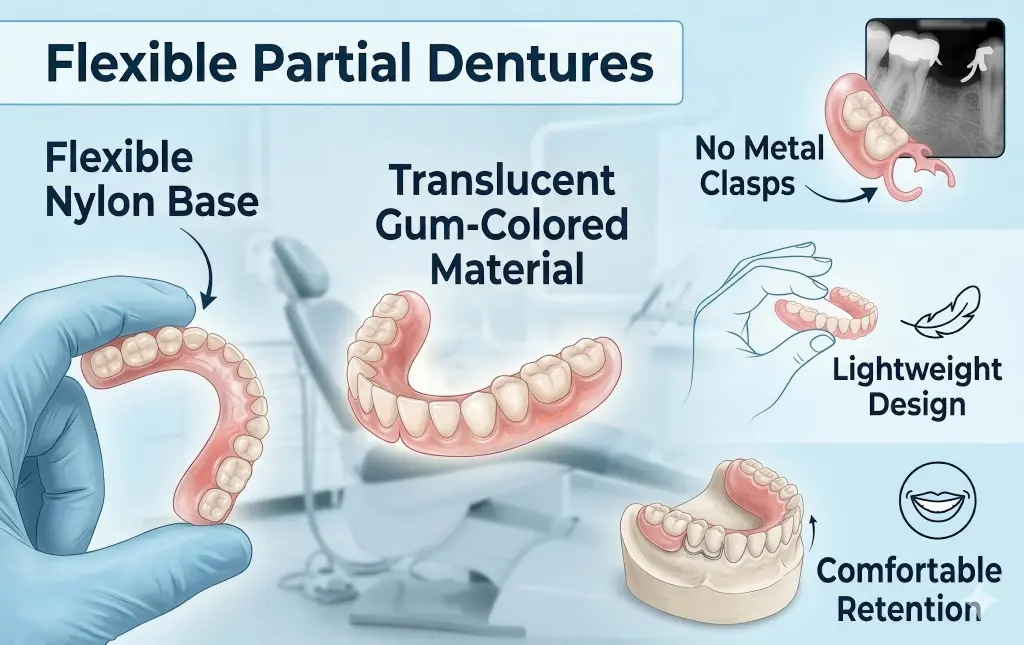
Flexible partial dentures offer an alternative to conventional removable partial denture designs. Instead of a traditional rigid metal framework, a flexible thermoplastic base can provide a more discreet, flexible design for selected cases.
The flexible material can adapt to the contours of the oral tissues and remaining teeth, while the tissue-colored or translucent appearance can help reduce the visibility of the denture when worn.
Because every patient and case is different, flexible partial dentures are not suitable for every clinical situation. Proper case selection, denture design, impression accuracy, and professional evaluation remain important factors in achieving a satisfactory result.
Who May Benefit from Valplast Dentures?
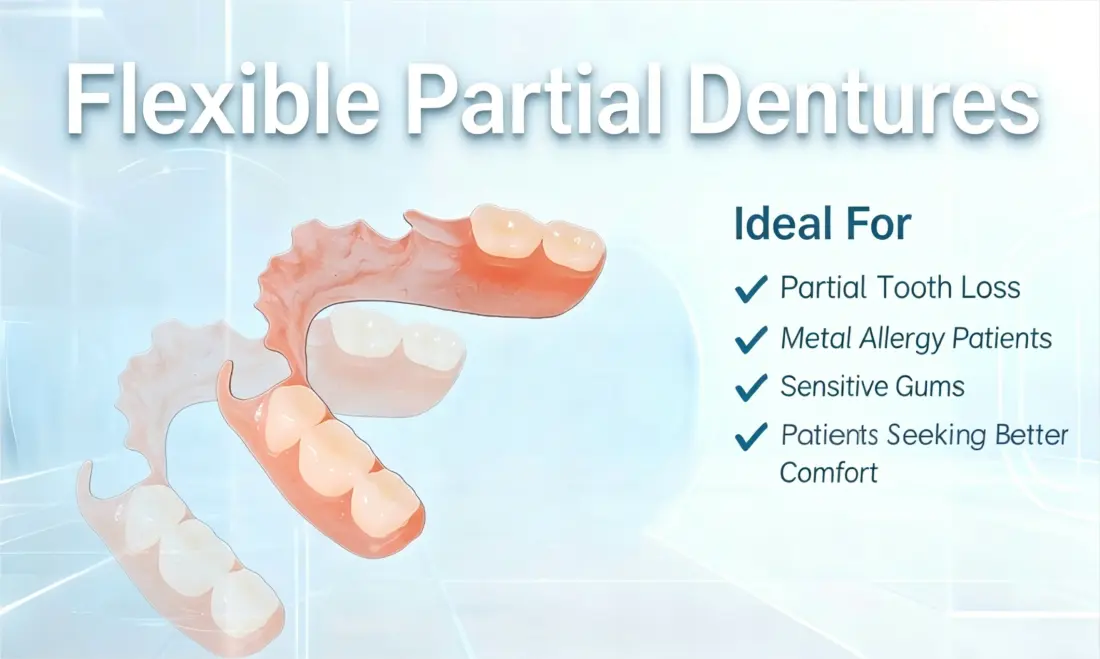
Valplast flexible partial dentures may be considered for selected patients with partial tooth loss, particularly when aesthetics and a metal-free design are important considerations.
Potential applications include:
- Patients with partial tooth loss in visible or aesthetic areas
- Patients who prefer a metal-free removable partial denture
- Patients looking for an alternative to conventional metal-clasp partial dentures
- Selected patients who may benefit from a flexible denture design
- Cases where a discreet denture appearance is an important treatment consideration
When May Another Denture Design Be More Appropriate?
Flexible partial dentures are not appropriate for every case. Alternative denture designs may be considered for situations such as:
- Complete or full-arch tooth loss
- Significant ridge or bone resorption
- Limited interarch space
- Insufficient periodontal support
- Cases requiring extensive future adjustment or modification
- Clinical situations where greater rigidity or support is required
The dentist should evaluate each patient's oral condition, occlusion, remaining teeth, and treatment objectives before selecting a denture design.
Technical Specifications
| Feature | Specification |
|
Material Type |
Thermoplastic nylon/polyamide resin |
|
Metal Content |
Metal-free design |
|
Monomer Content |
Monomer-free formulation |
|
Base Appearance |
Translucent or tissue-colored appearance |
|
Material Characteristics |
Flexible thermoplastic material |
|
Denture Design |
Customized removable partial denture |
|
Tooth Preparation |
Case dependent |
|
Impression Type |
Accurate dental impressions or appropriate digital records |
|
Warranty |
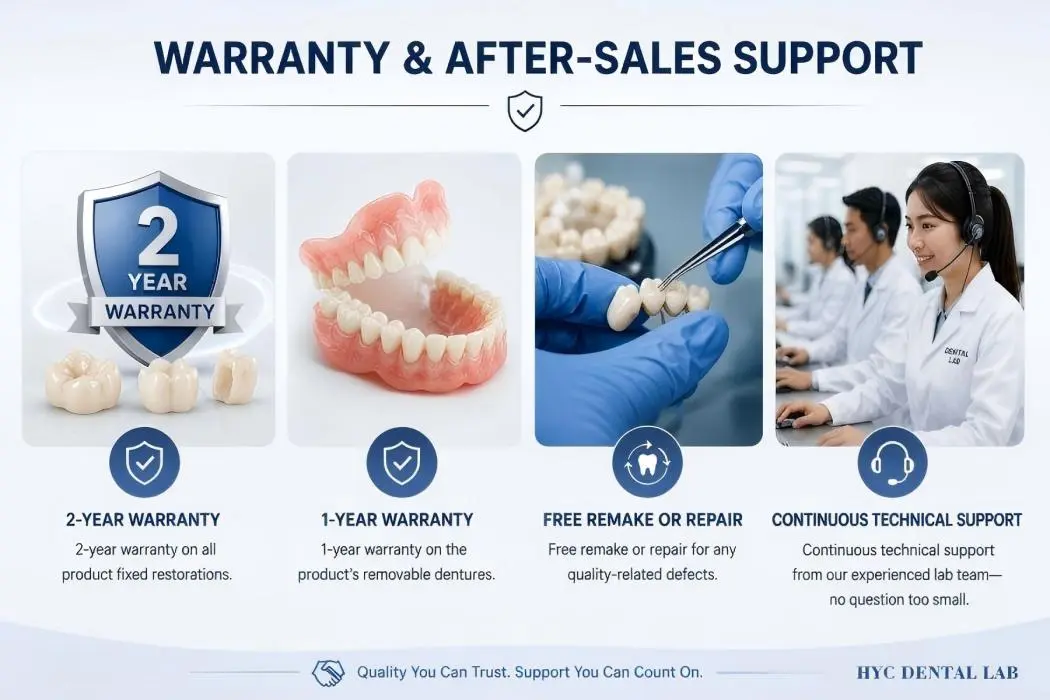
1-year limited warranty |
|
Standard Turnaround |
Typically 3-day shipment for standard orders |
pecifications and turnaround times may vary according to case requirements, prescription, laboratory workflow, and shipping arrangements.
Why Choose HYC Dental Laboratory?
Experienced Dental Laboratory
With more than 22 years of experience serving dental professionals, HYC Dental Laboratory understands the importance of accurate fabrication, consistent communication, and reliable laboratory service.
Our team works according to the dentist's prescription and case requirements to produce customized removable dental restorations.
Customized Fabrication
Each flexible partial denture is fabricated according to the individual case, including the prescribed tooth arrangement, denture design, shade, and other laboratory requirements.
Accurate impressions or digital records and clear case instructions help support predictable laboratory fabrication.
Quality and Compliance
HYC Dental Laboratory is ISO 13485 certified and registered with the US FDA. Our laboratory processes are designed to support consistent quality and professional dental laboratory service for international customers.
Material selection and clinical suitability should always be evaluated according to the applicable manufacturer's instructions and the individual patient's needs.
Efficient Turnaround
We understand that dental practices need reliable laboratory turnaround.
Standard orders: typically ship within 3 days
Removable restoration orders: typically ship within 4–5 days
Expedited processing: available for eligible cases
International shipping: available
Please contact HYC Dental Laboratory for the current turnaround time for your specific case.
Key Benefits of Flexible Partial Dentures
Flexible Design
The thermoplastic material provides flexibility that distinguishes flexible partial dentures from more rigid denture designs. This can be useful for selected cases where flexibility is an important consideration.
Discreet Appearance
The tissue-colored or translucent base and absence of visible metal components can provide a more discreet appearance than some conventional metal-clasp partial dentures.
Although flexible partial dentures are sometimes described as "invisible dentures," they are not literally invisible. Their visibility depends on the material, design, tooth position, oral anatomy, and individual case.
Metal-Free Design
Valplast flexible partial dentures are designed without a conventional metal framework or visible metal clasps. This makes them an option for patients and dentists who prefer a metal-free removable partial denture design.
Patients with known allergies or material sensitivities should discuss their medical history with their dentist before treatment.
Patient Comfort
A flexible partial denture may provide a comfortable alternative for selected patients. Comfort depends on proper case selection, accurate impressions, denture design, fit, occlusion, and individual oral anatomy.
No denture material can guarantee that every patient will experience the same level of comfort.
Durable Thermoplastic Material
The flexible thermoplastic base is designed to provide flexibility and resistance to fracture under normal conditions. However, no removable dental appliance should be considered completely unbreakable.
Proper handling, cleaning, storage, and regular dental examinations can help maintain the appliance over time.
Streamlined Laboratory Workflow
Clear prescriptions, accurate impressions or digital records, and effective communication between the dental practice and laboratory can help streamline the fabrication process.
HYC Dental Laboratory works with dental professionals to support efficient case submission, fabrication, and international delivery.
Frequently Asked Questions
Q: Are the products really "invisible" in the mouth?
A: They are not literally invisible, but the flexible, tissue-colored base and absence of visible metal components can make them less noticeable when worn. The material is designed to provide a discreet appearance that can blend with the surrounding oral tissues.
Q: Can these dentures really break if I drop them?
A: Valplast flexible dentures are designed to provide flexibility and resistance to fracture under normal conditions. However, no removable dental appliance should be considered completely unbreakable. Accidental drops, excessive force, improper handling, or long-term wear may still cause damage.
Q: How do I keep them clean without harming the material?
A: Clean the denture according to your dentist's and the material manufacturer's recommendations. Use a denture-cleaning solution that is compatible with the material and avoid abrasive toothpaste or household cleaning products that may scratch the surface. Regular cleaning and proper storage can help maintain the denture's hygiene and appearance.
Q: What happens if I lose another tooth or the denture breaks?
A: Some Valplast flexible dentures may be repairable or suitable for modification, but this depends on the specific design and condition of the appliance. If additional tooth loss is expected, discuss your treatment options with your dentist before fabrication. In some situations, a different denture design may provide greater flexibility for future adjustments.
Q: What are Valplast dentures?
A: Valplast dentures are flexible partial dentures made from a thermoplastic material. They provide a flexible alternative to conventional removable partial denture designs and are commonly considered when aesthetics and flexibility are important factors.
Q: Are Valplast dentures metal-free?
A: Yes. Valplast flexible partial dentures are designed without a conventional metal framework or visible metal clasps. This can provide a more discreet appearance compared with some traditional metal-clasp partial dentures.
Q: Are Valplast dentures comfortable to wear?
A: Flexible partial dentures can offer a lightweight and flexible alternative to some conventional partial denture designs. Comfort depends on proper case selection, denture design, fit, and the patient's individual oral anatomy.
Q: Do Valplast dentures require tooth preparation?
A: In many cases, conventional tooth preparation may not be necessary. However, the clinical requirements depend on the patient's oral condition and the specific denture design. The dentist should determine whether any tooth preparation is appropriate for the individual case.
Q: Are Valplast dentures suitable for patients with metal allergies?
A: Because Valplast flexible partial dentures do not use a conventional metal framework, they may be considered for patients who need a metal-free removable option. Patients with known allergies or material sensitivities should discuss their medical history with their dentist before treatment.
Q: How long do Valplast dentures last?
A: The service life of a flexible partial denture varies depending on oral conditions, chewing forces, hygiene, handling, and changes in the patient's mouth over time. There is no single lifespan that applies to every patient. Regular dental examinations can help determine when adjustment, repair, or replacement may be appropriate.
Q: Can a tooth be added to a Valplast denture?
A: In some cases, an additional tooth or modification may be possible. However, this depends on the existing denture design and condition of the appliance. The dentist and dental laboratory should evaluate the case before any modification is attempted.
Q: How should Valplast dentures be cleaned?
A: Valplast dentures should be cleaned according to the dentist's and material manufacturer's recommendations. Use a cleaning solution that is compatible with the material and avoid abrasive products that may scratch the denture surface. Proper cleaning and storage can help maintain hygiene and appearance.
Q: What is the difference between Valplast and acrylic partial dentures?
A: The main difference is the material and design approach. Traditional acrylic partial dentures generally use a more rigid acrylic base, while Valplast flexible partial dentures use a thermoplastic material designed to provide greater flexibility. The appropriate option depends on the patient's clinical condition and treatment requirements.
Q: What is the difference between Valplast and metal partial dentures?
A: Metal partial dentures typically use a rigid metal framework for support and retention. Valplast flexible partial dentures use a flexible thermoplastic base and can avoid visible metal clasps. Both designs have different clinical indications, advantages, and limitations, so material selection should be based on the individual case.
Q: How long does it take to manufacture a Valplast denture?
A: Turnaround time depends on the case requirements, laboratory workflow, impression or digital records, denture design, and shipping arrangements. For current turnaround times and case-specific requirements, please contact HYC Dental Laboratory.
Q: Can dentists send Valplast cases to HYC Dental Laboratory?
A: Yes. Dental practices and dental professionals can contact HYC Dental Laboratory to discuss Valplast flexible partial denture cases, case requirements, laboratory procedures, and shipping arrangements. Our team can review the prescription and fabrication requirements before production.
Get Started with Valplast Flexible Partial Dentures
Looking for a dental laboratory for Valplast flexible partial dentures?
HYC Dental Laboratory provides customized removable dental restorations for dental professionals worldwide. Send us your case requirements to discuss material options, denture design, turnaround time, and laboratory procedures.
Contact HYC Dental Laboratory to request a quote or submit your case.
Email: info@hycdentallab.com
SC-Bold