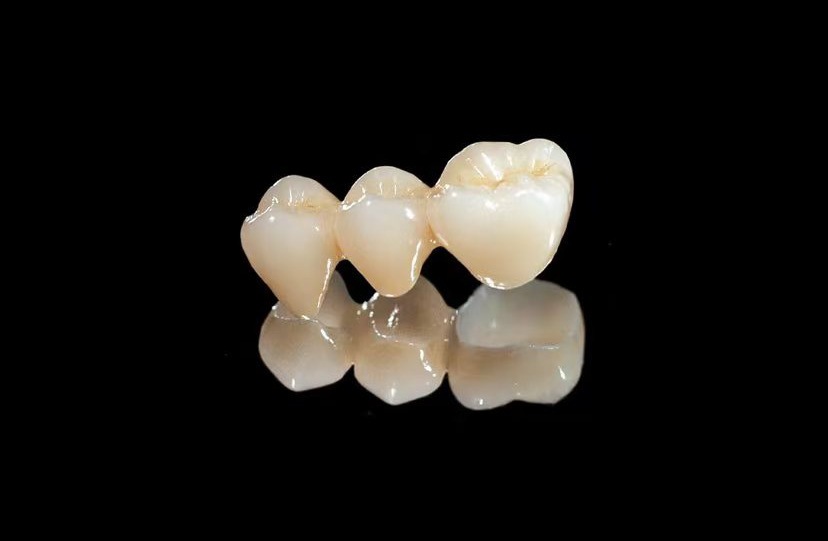
PFM Yellow Gold Offers Reliable Performance for Complex Crown and Bridge Cases
PFM Yellow Gold prostheses have a high-noble gold metal core and layered porcelain on top. This makes them well-fitting, biocompatible, and durable for complicated crown and bridge cases. When strength, fit accuracy, and controlled wear characteristics are important considerations, PFM Yellow Gold restorations may be considered for selected posterior applications, heavy occlusion cases, and complex bridge designs. With appropriate care and maintenance, these restorations can provide long-term clinical service, which makes them a practical option for demanding clinical settings.
Introduction
In the dental restoration business, new materials are always being weighed against practical results that have been shown to work. Ceramic and zirconia materials are becoming more popular because they look good, but high-noble metal-ceramic restorations are still very important in modern prosthodontics. Gold-based frameworks remain an option considered by clinicians when treating cases that require reliable strength, marginal adaptation, and controlled wear characteristics, multiple-unit bridges, and cases that need strong marginal integrity. The accuracy of valuable metals and the beauty of porcelain work together to address some clinical requirements that all-ceramic materials may not always handle in the same way. When and why dentists choose yellow gold PFM restorations is important for getting the best results for their patients and supporting long-term clinical success.
What is PFM Yellow Gold?
Dental restorations made of porcelain fused to metal and yellow gold have a high-noble metal frame covered in dental ceramic. Gold that has been mixed with copper, silver, palladium, or platinum to achieve certain mechanical qualities is usually used in the base. This mixture provides ductility, malleability, and wear properties that can be favorable for dental applications. The metal frame gives the structure strength, and the layered porcelain gives it a natural look and smooth finish.
Core Structural Components
Two integrated layers make up the restoration. The metal casting inside makes a precise framework that fits the prepared tooth structure at the edges. Through high-temperature firing cycles, the porcelain layer on the outside bonds to the metal, creating a strong interface. The bright yellow color of the noble metal base affects how it looks in the end, giving a background that, when layered correctly, helps reduce the visibility of the metal.
How the Material System Functions
The gold alloy framework distributes stress across the restoration and accommodates forces from the teeth biting together. Its mechanical qualities provide resistance to deformation and fracture under functional loads, while the fused porcelain provides a surface for biting and chewing and a natural tooth shape. With this two-material method, structural and esthetic needs are addressed through different components of the restoration.


Benefits
Yellow gold PFM restorations have clinical characteristics that can support patient comfort and practice efficiency. The combination of materials meets various performance needs at the same time.
Exceptional Marginal Accuracy
Due to their ability to be cast and shaped, high-noble alloys allow laboratories to achieve precise marginal adaptation. This feature can help reduce the time needed for chairside adjustments and may help support long-term restoration performance. Good marginal fit is an important consideration when evaluating the quality and clinical performance of fixed dental restorations (Schmalz & Garhammer, 2002).
Biocompatibility and Tissue Health
The soft tissues in the mouth are generally compatible with properly selected high-noble gold alloys. High-noble alloys generally demonstrate good corrosion resistance and biocompatibility when properly selected and fabricated. For patients with documented metal sensitivities, material selection should be based on the specific alloy composition and clinical history. Gold-based alloys can also reduce the risk of visible dark metal margins associated with some base metal alloys.
Protection of Opposing Dentition
The wear characteristics of PFM Yellow gold can be favorable for opposing natural teeth when the restoration is properly designed and finished. Patients with bruxism may require particular attention to occlusal design and material selection because excessive functional forces can affect both restorations and natural teeth. PFM Yellow gold can provide a practical balance between strength and controlled wear characteristics for selected cases.
Advantages
When you compare yellow gold PFM restorations to other materials, you can see that they may perform well in certain clinical situations.
Structural Strength for Long-Span Cases
Noble alloy frameworks can provide strength and dimensional stability for selected multi-unit bridge designs. This can make them suitable for dental practices and laboratories that handle complex posterior reconstructions when appropriate case selection and framework design are used.
Aesthetic Control Through Layering
The warm color of the yellow gold core makes it a useful base for adding porcelain layers on top of it. By using gold-tone opaques first and then high-value secondary opaques, technicians can help mask the metal while maintaining the desired optical properties. With this layering method, the gray appearance that can be associated with some base metal PFMs can be reduced. When the gums recede, any visible metal may appear gold rather than dark gray.
Proven Longevity and Clinical Track Record
Clinical studies have shown that PFM restorations can provide long-term clinical service. Noble metal-ceramic restorations also have a long history of clinical use in fixed prosthodontics. Their established clinical record makes them a material option worth considering when long-term function, fit, and controlled wear are important.
Disadvantages
When dentists think about limitations in an objective way, it helps them choose the right materials for each case.
Aesthetic Limitations in Anterior Applications
When gums are thin or when recession exposes the edges of the teeth, the yellow metallic finish can be visible. To hide metal, restorations placed in the esthetic zone need careful margin design. Usually, ceramic butt margins or carefully planned subgingival placement may be considered. For anterior applications with demanding esthetic requirements, all-ceramic options may be preferred.
Material Cost Considerations
High-noble metal alloys are more expensive than many base metal alloys or ceramic materials. This difference in material cost can affect the total cost of a case and may influence treatment decisions. To make the investment worthwhile, dental offices need to clearly explain the potential benefits, such as fit, durability, and biocompatibility.
Insufficient Retention with Short Clinical Crowns
If the teeth aren't properly prepared or the clinical crowns are too short, metal-ceramic restorations might not stay in place well enough. To make room for the metal framework and porcelain layering thickness, the tooth needs to be sufficiently reduced. Either strength or appearance can be compromised by inadequate preparation.
Comparison
Knowing the differences in performance between restoration choices is important for choosing the right material.
| Feature | PFM Yellow Gold | Zirconia | Base Metal PFM |
|---|---|---|---|
| Biocompatibility | Excellent | Good | Moderate |
| Marginal Fit | Excellent | Good | Good |
| Opposing Tooth Wear | Controlled | Material and surface dependent | Material dependent |
| Long-Span Capability | Suitable for selected long-span designs | Case and design dependent | Suitable for selected multi-unit designs |
| Aesthetic Potential | Good (posterior) | Excellent | Moderate |
| Cost | High | Moderate | Low |
| Clinical Longevity | Long-term clinical use | Long-term clinical use | Long-term clinical use |
As you can see, this comparison shows that choosing materials should be based on the needs of each case, not just one set choice. When it comes to posterior molars with heavy occlusion, yellow gold may be a suitable option, while zirconia may be preferred for some anterior single crowns depending on the clinical requirements.
Clinical Indications
When their special set of properties is needed, yellow gold PFM restorations can work well in certain clinical situations.
Posterior Crown and Bridge Applications
Noble metals can provide strong and precise frameworks, which can be useful for multi-unit posterior bridges. Ideal cases may involve second premolars through second molars, where functional requirements are especially important.
Patients with Heavy Occlusal Forces
People who have been diagnosed with bruxism or clenching habits need restorations that can handle significant functional forces. PFM Yellow gold combines the properties of a gold alloy framework with the hardness of porcelain, creating a restoration designed to withstand functional loading. For demanding cases, PFM Yellow gold can provide a practical balance of strength, controlled wear, and aesthetic appeal. Choosing PFM Yellow gold for suitable restorations can help support long-term functional performance under heavy occlusal forces.
Attachment Abutments and Complex Designs
Cast gold frameworks can provide good marginal fit for crowns that are used as abutments for removable partial dentures or precision attachments. All-ceramic methods of production can be more challenging to use because the material may require complex internal features and preparation designs.
Materials
The composition of the material has a direct effect on how well the restoration works and how the patient experiences it. Dental professionals can evaluate quality and predict behavior better if they understand the components.
Noble Alloy Composition
A significant amount of gold is combined with copper, silver, palladium, or platinum to make high-noble yellow gold alloys. These additional elements change the alloy's color, strength, and melting point while maintaining the desired properties of the material. The specific composition varies by manufacturer and alloy system and should be evaluated according to the manufacturer's documentation.
Dental Porcelain Selection
For porcelain materials to work with high-noble alloys, they need to have thermal expansion coefficients that are compatible with the metal's. This compatibility helps reduce the risk of delamination during function and firing. High-value opaque porcelains made especially for gold frameworks can help mask the yellow metal while maintaining the desired appearance of the final restoration.
Material Quality and Regulatory Standards
Materials used for dental restorations should have appropriate documentation for their intended use and should meet applicable safety and quality requirements. All of the components, from metal alloys to ceramic powders, should have the appropriate regulatory and technical documentation. (International Organization for Standardization, 2016)[^2] ISO 13485:2016 provides a framework for quality management systems applicable to medical device manufacturing.
Manufacturing Workflow
Precision yellow gold PFM restorations are made using a controlled process that combines traditional laboratory skill with modern technology.
Case Assessment and Framework Design
Lab workers look over the dentist's prescription, study models, and evaluate the quality of the preparation. The design of the framework must provide adequate thickness for strength, as well as room for porcelain layering. Before production starts, digital design tools can improve the shape and consistency of the framework.
Framework Fabrication Methods
There are two main ways to make the framework. In the classic lost-wax casting method, a wax design is made, invested in a refractory material, and then molten alloy is poured into the space left by the wax. Precision CAD/CAM milling machines, on the other hand, cut frameworks from alloy blocks that have already been manufactured. Both methods can be accurate when properly controlled, while the choice depends on the alloy, equipment, case design, and laboratory workflow.
Porcelain Layering and Firing
After building the base and making sure it fits right, ceramists add layers of porcelain. The metal is hidden by an initial opaque layer. Next, dentin and enamel porcelain are added to give the body shape and color. Each layer needs to be fired according to the manufacturer's recommended temperature and firing schedule. Multiple firing cycles build up the restoration gradually, allowing technicians to control color and add fine anatomical details.
Quality Control Checkpoints
Quality in manufacturing depends on checking at key stages. Framework fit is checked on working models before the porcelain is put on. Under a microscope, margin adaptation is evaluated. Before the final coating, contact points and occlusion are adjusted. To keep things consistent from case to case, inspection protocols should document measurements and visual assessments (McLean & von Fraunhofer, 1971)[^3].
Cost Factors
Final restoration prices are affected by a number of factors, causing a range that dental offices need to be aware of in order to accurately estimate cases.
Noble Metal Market Pricing
The prices of gold and platinum change with the global commodity markets. The amount of metal in each restoration is a significant part of the cost, and it changes depending on the market. Laboratories may adjust prices or pass on the actual cost of materials to reflect the current value of metals.
Production Complexity and Customization
It takes longer and costs more to make a multi-unit bridge than a single crown. It takes longer for technicians to do custom shade matching, unique border designs, and complicated occlusal anatomy. Full-contour metal occlusal surfaces with less porcelain coverage may require less laboratory work than fully veneered restorations.
Regulatory Compliance and Certification
Companies that maintain FDA registration, CE marking where applicable, and ISO 13485:2016 certification invest in quality systems, documentation, and production controls for PFM Yellow gold restorations. These investments support consistent quality management and regulatory traceability. The U.S. Food and Drug Administration (2021)[4] provides guidance on medical device regulations and classification. For dental procurement teams, selecting compliant PFM Yellow gold suppliers can therefore support regulatory traceability and consistent quality.
How to Choose a Reliable Supplier
Choosing the right supplier has a big effect on the quality of the restoration, the reliability of the delivery, and the long-term success of the practice. Evaluation should be organized and cover a lot of ground.
Manufacturing Capability Assessment
Find out about their production methods, tools, and ability. Laboratories that use both traditional and digital workflow integration methods can support consistent production. Find out if they have worked on long-span bridges and other difficult cases before. Ask for case studies that show how margin quality and esthetic results worked in real life.
Quality Management and Certifications
Check the ISO 13485:2016 certification, which provides quality management requirements applicable to medical device manufacturing. Confirm the regulatory status applicable to the target market. Ask for documentation showing that metals and ceramics are appropriate for their intended dental use. Suppliers with extensive manufacturing experience may also have established quality processes.
Turnaround Time and Logistics Support
Reliable ordering is needed for complicated cases. Look at the normal production times and the fast choices that are available. It can be very important for a business to be able to handle urgent cases. Check to see if the suppliers offer reliable express shipping that can be tracked and comes with insurance.
Warranty and After-Sales Service
Find out what the warranties cover for both fixed restorations and removable cases. Make it clear what the guarantee covers, such as fixes, replacements, or changes. When problems happen, they are less frustrating when there is quick technical support and clear communication. When suppliers offer remakes or repairs during warranty periods, clear written warranty terms can help dental practices understand the scope of coverage (Goodacre et al., 2003)[^5].
Maintenance
Proper patient education and professional care practices keep patients happy and extend the life of their restorations.
Patient Home Care Instructions
Patients should use non-abrasive toothpaste and soft-bristled brushes to keep their teeth clean. To keep implants from coming loose, flossing around pontic areas needs to be done carefully. People with bruxism should wear night guards that were made by a professional to protect both their restoration and their neighboring teeth.
Professional Maintenance Protocols
As part of regular dental checkups, the gum lines, wear patterns, and health of soft tissues around restorations should all be carefully looked at. When hygienists use the right tools and methods, they can safely remove deposits from porcelain surfaces without damaging them.
Service Life Expectations
With appropriate care and maintenance, yellow gold PFM restorations can provide long-term clinical service. Professional monitoring on a regular basis can identify problems such as cement dissolution, wear, or porcelain fracture before they become more serious. Because of their established clinical history, these restorations may provide good long-term value in appropriately selected cases.
Conclusion
When strength, biocompatibility, and accuracy are important factors, PFM Yellow gold restorations remain an option for complicated crown and bridge cases. The combination of materials can provide good marginal fit, controlled wear characteristics, and long-term clinical service. Although visual concerns can limit the use of PFM Yellow gold in the front, these materials' qualities make them useful for selected posterior restorations. When dentists choose suppliers, they should put manufacturing capabilities, regulatory compliance, and efficient delivery methods for PFM Yellow gold restorations at the top of their lists. Investing in high-quality PFM Yellow gold materials and compliant manufacturing can support consistent quality, reduce avoidable remakes, and support long-term restoration performance. For demanding posterior applications, PFM Yellow gold remains a practical option when strength, fit, and long-term performance are key priorities.
FAQ
What makes PFM Yellow gold suitable for patients with bruxism?
Yellow gold PFM restorations can provide controlled wear characteristics and a strong metal framework for selected patients with bruxism. However, occlusal design, porcelain coverage, opposing dentition, and the patient's functional habits should all be considered when selecting a restoration.
How do I justify the higher cost of yellow gold to patients compared to zirconia?
The higher cost of yellow gold PFM restorations is mainly related to the value of the noble metal and the laboratory work involved. Potential benefits include the established clinical history of noble metal alloys, good marginal adaptation, controlled wear characteristics, and suitability for selected demanding posterior cases. The appropriate choice depends on the individual clinical situation.
Can yellow gold PFM be used for long-span bridges?
Yes, yellow gold PFM can be used for selected long-span bridge cases. The final design should consider span length, abutment condition, occlusal forces, framework design, and available restorative space.
Laboratories prevent the yellow metal from showing through the porcelain by using appropriate opaque porcelain systems and controlled layering techniques. Technicians can select gold-compatible opaque materials and adjust porcelain thickness and shade according to the desired esthetic result.
What are the contraindications for yellow gold PFM restorations?
Yellow gold PFM may not be the preferred option when highly demanding anterior esthetics require maximum translucency or when there is inadequate tooth preparation and retention. Documented sensitivity to a specific alloy component should also be considered when selecting the material.
How does the manufacturing process ensure consistent quality?
Quality depends on checking for errors at different stages of production. Before putting on the porcelain, the framework's fit is checked on models, the edges are looked at closely, and the facial relationships are improved before the glaze is applied. Facilities that are ISO 13485:2016 certified maintain documented quality management systems.
What warranty coverage should I expect from suppliers?
Warranty coverage varies by supplier. Dental practices should confirm the warranty period, eligible manufacturing issues, remake or repair conditions, exclusions, and shipping responsibilities before ordering.
How does white gold differ from yellow gold in clinical performance?
White gold and yellow gold refer to different alloy compositions and colors. Clinical performance depends on the specific alloy, mechanical properties, porcelain system, framework design, and manufacturing process. Both can be used in dental restorations when appropriately selected and fabricated.
What is a PFM Yellow Gold crown?
A PFM Yellow Gold crown is a porcelain-fused-to-metal dental crown that uses a high-noble yellow gold alloy framework with a porcelain layer on the outside. The metal framework provides structural support while the porcelain is used to create the visible tooth-colored surface.
Is PFM Yellow Gold better than zirconia?
Neither material is universally better. PFM Yellow Gold may be considered when controlled wear, high-noble alloy properties, long clinical history, or complex posterior designs are important. Zirconia may be preferred when high strength and metal-free esthetics are priorities. The choice should be based on the clinical requirements of each case.
What are the main advantages of PFM Yellow Gold restorations?
The main advantages include the established clinical history of noble metal-ceramic restorations, good marginal adaptation, corrosion resistance, controlled wear characteristics, and the ability to combine a strong metal framework with layered porcelain esthetics.
Is PFM Yellow Gold suitable for posterior crowns?
Yes. PFM Yellow Gold is commonly considered for selected posterior crowns where strength, fit, controlled wear, and long-term clinical performance are important. Occlusion, preparation design, and esthetic requirements should be evaluated before selecting the material.
Can PFM Yellow Gold be used for patients with heavy occlusion?
PFM Yellow Gold can be considered for selected patients with heavy occlusal forces or bruxism. The restoration design, porcelain coverage, occlusal contacts, and opposing dentition should be carefully evaluated to reduce the risk of complications.
How is PFM Yellow Gold different from regular PFM?
PFM Yellow Gold uses a high-noble yellow gold alloy as the metal framework, while conventional PFM restorations may use other noble or base metal alloys. The alloy composition can affect corrosion resistance, biocompatibility, color, mechanical properties, and cost.
How long does a PFM Yellow Gold restoration last?
PFM Yellow Gold restorations have a long history of clinical use and can provide long-term service when properly designed, fabricated, maintained, and monitored. Actual service life varies according to occlusion, oral hygiene, preparation, material selection, restoration design, and patient factors.
What should dentists check when choosing a PFM Yellow Gold supplier?
Dentists should evaluate the supplier's material documentation, quality management system, manufacturing experience, case design capabilities, turnaround time, shipping process, remake policy, warranty terms, and communication support. It is also useful to request representative case examples and documentation relevant to the target market.
How long does it take to manufacture a PFM Yellow Gold crown?
Manufacturing time depends on the case design, material, shade requirements, number of units, and laboratory workflow. Dental practices should confirm the supplier's standard turnaround time before submitting a case, especially for multi-unit or urgent restorations.
Can a dental laboratory customize PFM Yellow Gold restorations?
Yes. PFM Yellow Gold restorations can be customized according to the dentist's prescription, tooth preparation, occlusion, shade requirements, framework design, porcelain layering, and case-specific clinical requirements.
Partner with HYC for Premium Yellow Gold PFM Solutions
Dental workers who want PFM Yellow gold restorations can turn to HYC's 22 years of specialized manufacturing experience. Our facility is FDA-registered, CE-certified, and ISO 13485:2016 compliant, so you can be sure that every restoration meets applicable quality and regulatory requirements. We offer a high level of first-time fit accuracy and a low rate of remakes, which can save time in the office. Our production is flexible enough to support normal turnaround times of 3–5 days, and we also offer fast flash delivery for cases that need it right away. As a PFM Yellow gold supplier with extensive experience, we offer fully customized solutions with a two-year warranty for fixed restorations. Get in touch with us at info@hycdentallab.com to discuss your complex crown and bridge needs.
References
1.Schmalz, G., & Garhammer, P. (2002). Biological interactions of dental cast alloys with oral tissues. Dental Materials, 18(5), 396-406. https://www.journals.elsevier.com/dental-materials
2. International Organization for Standardization. (2016). ISO 13485:2016 Medical devices—Quality management systems. https://www.iso.org/standard/59752.html
3. McLean, J. W., & von Fraunhofer, J. A. (1971). The estimation of cement film thickness by an in vivo technique. British Dental Journal, 131(3), 107-111. https://www.nature.com/bdj
4. U.S. Food and Drug Administration. (2021). Medical device regulations and standards. https://www.fda.gov/medical-devices/device-advice-comprehensive-regulatory-assistance/device-classification
5. Goodacre, C. J., Bernal, G., Rungcharassaeng, K., & Kan, J. Y. (2003). Clinical complications with implants and implant prostheses. Journal of Prosthetic Dentistry, 90(2), 121-132. https://www.thejpd.org
6. Kelly, J. R., & Benetti, P. (2011). Ceramic materials in dentistry: Historical evolution and current practice. Australian Dental Journal, 56(s1), 84-96. https://onlinelibrary.wiley.com/journal/18347819
YOU MAY LIKE
.webp "Silver-Palladium Crown (Ag-Pd)")