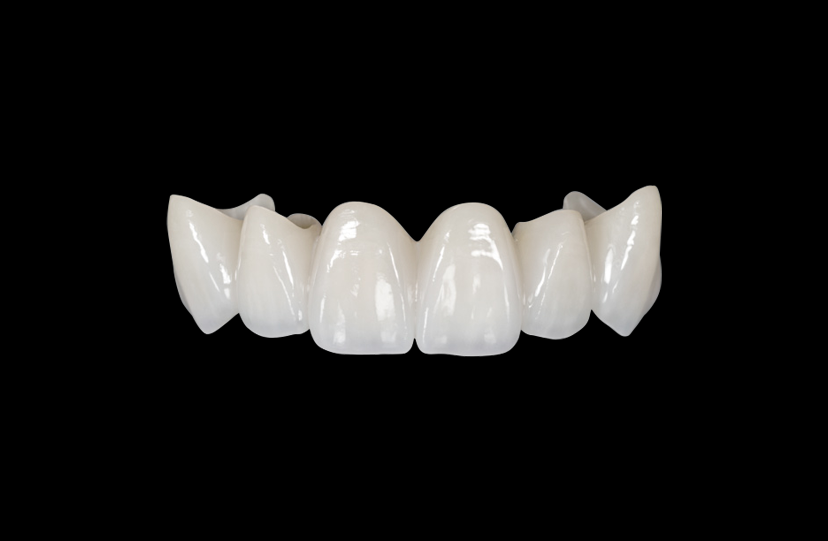
Implant Cemented Crown vs Traditional Crown: Key Differences
When deciding between an Implant Cemented Crown and a traditional crown, dental professionals and procurement managers face distinct clinical and logistical considerations. An Implant Cemented Crown attaches to an abutment via dental cement, eliminating visible screw access holes and delivering superior aesthetics. Traditional crowns, by contrast, cap natural teeth or attach via screw retention, offering simplicity but with potential aesthetic compromises. Understanding these differences enables dental clinics, laboratories, and distributors to select restorations that balance patient satisfaction, cost control, and supply chain efficiency while meeting rigorous regulatory standards.
Understanding Implant Cemented Crowns
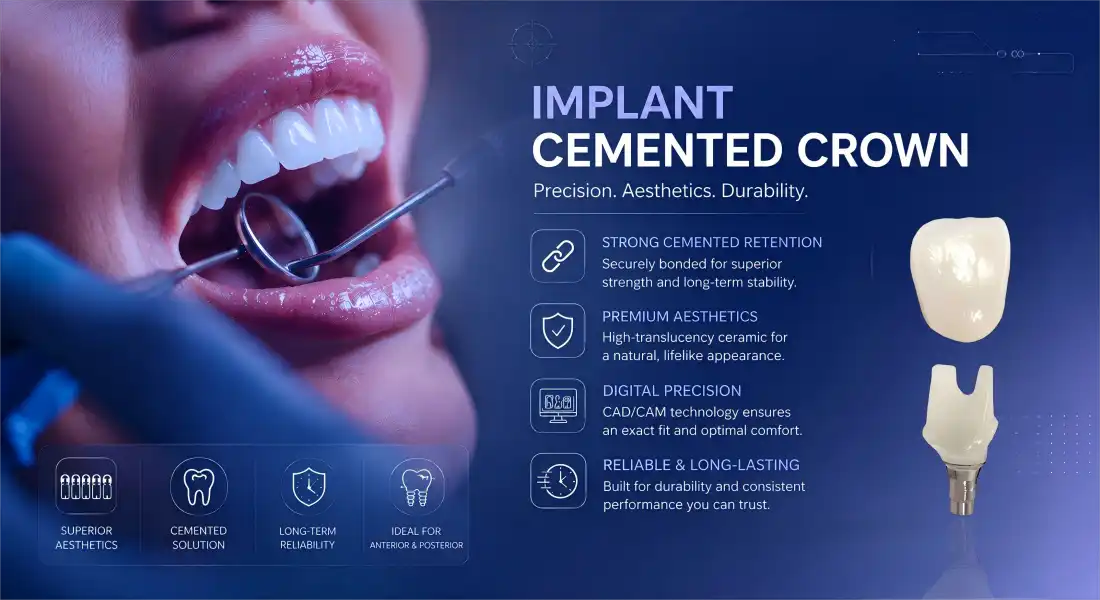
Implant Cemented Crowns represent a refined approach to implant prosthetics, combining aesthetic excellence with functional reliability. These restorations consist of a custom abutment screwed into the implant fixture, topped by a crown that is permanently bonded using dental cement. This two-component design mimics the natural emergence profile of teeth, making it particularly suitable for anterior restorations where aesthetics drive patient expectations.
Materials and Manufacturing Precision
Modern Implant Cemented Crowns utilize titanium or zirconia abutments paired with porcelain-fused-to-metal, all-ceramic, or zirconia crowns. Zirconia has gained prominence due to its exceptional fracture resistance—exceeding 900 MPa in flexural strength—and its ability to replicate the translucency of natural enamel. Porcelain-fused-to-metal options remain relevant for posterior applications where mechanical strength outweighs aesthetic demands. The fabrication process involves digital impression scanning, CAD/CAM milling, and precision sintering, with quality control checkpoints at each stage to ensure margin accuracy within 50 microns. This level of precision reduces chairside adjustment time and minimizes remake rates, directly impacting laboratory profitability and clinic workflow efficiency.
Clinical Workflow and Placement Protocol
The first step in the clinical process is choosing an abutment and tightening it onto the implant to the manufacturer's recommended levels, which are usually 25 to 35 Ncm. Custom abutments are better than stock parts because they support the natural structure of the gums and place cement edges 0.5mm to 1mm below the gum line. This narrow border placement makes it easier to remove all of the cement, which is a key step in keeping peri-implantitis from happening. The "copy abutment" method, in which extra cement is spread out on a putty-like substance before being placed inside the mouth, may help improve excess cement control compared with conventional direct cementation techniques. Once the implant is in place, x-rays are used to make sure it is fully in place and that no cement has gotten into the tissues around the implant.
Longevity and Maintenance Considerations
When properly planned and maintained, Implant Cemented Crowns demonstrate excellent long-term clinical performance, with many studies reporting high survival rates over extended follow-up periods. With proper clinical management and regular maintenance, Implant Cemented Crowns can provide long-term functional performance, but it's still harder to get out than screw-retained options. In order to remove a crown, the restoration is usually cut into sections. This breaks the replacement but leaves the abutment and implant intact. Maintenance plans stress teaching patients how to keep an eye on soft tissues and professional exams every six months to find early signs of problems related to the cement, like bleeding on probing or bone loss at the edges.
Overview of Traditional Crowns
Traditional crowns have been an important part of restorative dentistry for many years, and they can be used in many situations to fix natural teeth that are broken or weak. These replacements cover the whole clinical crown of a prepared tooth, returning its shape, function, and appearance using a range of materials and construction techniques.
Material Classifications and Applications
Traditional crowns are made from a variety of materials, each of which is best for a certain set of clinical conditions. Full-metal crowns, which are usually made of gold or base metal alloys, are very strong in areas of the back teeth that get a lot of stress, but they don't look good. Crowns made of porcelain bonded to metal are strong and look better, but the metal base can make them less clear. All-ceramic systems, like lithium disilicate and zirconia, now rule the aesthetics world. They have a flexural strength of 400–800 MPa and match colors very well. Choosing the right material has a direct effect on buying choices, since metal alloys need different source screening and regulatory compliance than digital workflow ceramic blanks.
Production Timelines and Supply Chain Dynamics
Most dental laboratories have been able to improve their traditional crown manufacturing processes over many years, including the production of Implant Cemented Crowns. Taking an impression, making a model, wax-up or digital design, casting or milling, and then adding ceramic are the first steps in the process. Turnaround times are usually between 7 and 10 business days, but digital processes can cut this time down to 3 to 5 days if labs buy their own milling machines. The mature supply chains that come with traditional crowns, with multiple redundant sources for raw materials and stable price systems, are appealing to procurement managers. But because they are more stable, they can't be changed as easily as implant-based options.
Durability and Clinical Performance
Traditional crowns on natural teeth have different life spans that depend on how well you take care of your teeth and how much tooth tissue is still there. Meta-analyses show that 10-year survival rates are between 85 and 93%, with failures mostly caused by secondary cavities, endodontic problems, or fractures. Regular dental exams are part of maintenance, and crown repair may be needed if the tooth structure below the crown breaks down. Depending on natural tooth retention can be helpful because it protects proprioception, but it can also be a problem when the tooth's health isn't clear.
Key Differences Between Implant Cemented Crowns and Traditional Crowns
There are important differences between these two types of restoration that affect clinical results, patient satisfaction, and how dental businesses buy supplies.
Structural and Aesthetic Contrasts
The most obvious change can be seen in the way the base is supported. Anchored on osseointegrated titanium fixtures, Implant Cemented Crowns work on their own and are not affected by nearby teeth. This separation lets you create the perfect contour and emergence profile without any problems. Traditional crowns are put on natural teeth that have been prepared. This means that healthy enamel and dentin have to be removed, which weakens the tooth structure permanently. When it comes to looks, Implant Cemented Crowns are the best because the biting surface stays smooth because there are no screw entry holes. This smooth structure makes it easier to copy the shape of natural teeth. This is especially important in the anterior, where even small differences can be seen when you talk or smile.
Custom abutments can help compensate for certain implant angulation challenges and optimize emergence profiles when clinically appropriate, making up for less-than-perfect implant placement. This is something that standard crowns can't do because the tooth's position is fixed. The cement layer makes the passive fit possible and also spreads the oral forces more evenly. This design may help optimize stress distribution and reduce the risk of mechanical complications.
Cost Analysis and Economic Considerations
The two choices have very different pricing systems. Implant Cemented Crowns have higher start-up costs because of the surgery needed to place the implants, make the abutments, and make the crowns. In the U.S., these costs often fall into a high upfront investment per unit. Traditional crowns cost in a more moderate range, based on the material chosen. However, lifetime cost analysis shows details that people who work in buying need to look at. Traditional crowns may need to be replaced every 10 to 15 years, and since people may lose teeth over time, implants may be the only option. Even though they cost more up front, implant-supported solutions may provide predictable long-term outcomes when appropriate case selection and maintenance protocols are followed.
The factors of buying in bulk also differ. When dental labs work with makers that offer a wide range of products, they can take advantage of economies of scale that Volume-based purchasing programs may provide cost advantages depending on order quantity, product specifications, and cooperation terms. Traditional crown materials are priced like commodities, with smaller profit margins but more suppliers to choose from, which gives you more bargaining power.
Aftercare Complexity and Clinical Maintenance
Aftercare for patients is very different between the methods. With traditional crowns, you have to be careful that decay doesn't happen again at the crown edges, which means you have to brush and floss your teeth very carefully and use fluoride. Bacteria can still get into the space between the tooth and cap, especially in people who don't clean their teeth properly or who have xerostomia. Implant Cemented Crowns don't pose a cavity risk because titanium and zirconia are neutral. However, the health of the soft tissue around the implant becomes very important. Residual subgingival cement has been associated with increased risks of peri-implant soft tissue complications, which is the main risk factor for complications.
When looking at the supply chain, the complexity of support affects how warranties are set up and what kind of customer service is expected. Traditional crowns usually come with a warranty that covers flaws in the way they were made for one to two years, but not biological problems. Warranty periods vary among manufacturers and suppliers, depending on product type and service agreements—which shows that the maker trusts the material to work well and that the implant will integrate properly.
Choosing the Right Crown Type: A Procurement Perspective
Buying decisions involve more than just clinical indications. It also involves managing inventory, building relationships with suppliers, and planning how to place products in the market. Dental laboratories, clinic groups, and distributors need to make sure that the products they choose are compatible with their operations and the people they want to sell to.
Decision Scenarios and Strategic Mapping
High-volume beauty offices that put patient satisfaction first tend to use Implant Cemented Crowns for anterior restorations, even though they cost more. This is because they want to offer better service. General offices that treat a wide range of patients often have two types of restorations available: standard crowns and implants. Implants are only used in certain situations. Standardizing on preferred systems and making business deals that lower per-unit costs by 20–30% while ensuring uniform quality across sites is good for dental service organizations that run more than one location.
Evaluation Metrics for Supplier Selection
A thorough evaluation of suppliers in many areas is essential for successful procurement. To check the quality of the material, you should ask for batch testing certificates that show it meets ISO 13485:2016 standards and that all of its parts are FDA-registered. Production capacity audits show if providers can increase their capacity to meet rising demand. This is especially important during busy times of the year or when taking on big clinic groups. Communication infrastructure, such as having specialized account managers, tracking orders in real time, and technical help available, is what sets transactional vendors apart from trusted partners.
When it comes to dentistry, where treatment times have a direct effect on patient satisfaction, delivery success measures are especially important. When suppliers offer faster production cycles—3-5 days for normal cases with next-day shipping options—clinics can shorten treatment plans, which increases the number of cases that are accepted. In addition to normal 3-day dispatch, we can also turn around both Implant Cemented Crowns and traditional crowns in 4-5 days. In case of emergencies, expedited production and shipping options may be available for urgent cases depending on location and case requirements.
Quality Assurance and Remake Reduction
Remake rates are the most objective way to measure the quality of a seller. When working with well-known makers, the average prices for standard crowns are around 5 to 8 percent, and for Implant Cemented Crowns, they are around 3 to 5 percent. Remake policies, such as free repair, faster production, and shipping cost coverage, should be written into procurement contracts. Our company keeps remake rates below 2% by using many quality checks, such as digital design verification, pre-sintering size validation, and a final review with 10 micron-accurate measurement tools.
Low remake rates hurt the economy in more ways than just the direct costs of replacement. Each remake takes time from the lab worker, slows care for patients, and could hurt relationships that were built on referrals. Reducing remake rates can improve workflow efficiency, reduce operational costs, and enhance overall patient experience just by making operations run more smoothly. However, when an Implant Cemented Crown is involved, the impact can be even more pronounced because precision requirements are higher and any adjustment or remake of the Implant Cemented Crown tends to require additional clinical coordination, increasing both time loss and workflow disruption.
Trusted Brands and Supplier Insights
When buying dental products, it's important to have reliable ties with suppliers. Finding makers with a history of quality, strong quality systems, and helpful customer service can help keep businesses safe from supply problems and inconsistent quality that can hurt their reputations.
Manufacturer Credentials and Certifications
The first step in due research is to make sure that all target areas are following the rules. For U.S. distribution, FDA registration is still needed, and makers must list all types of devices and keep their business registration up to date. The European Medical Device Regulation's CE label shows that a product meets safety and performance standards after being evaluated by a recognized body. The ISO 13485:2016 approval shows that quality management systems meet international standards for making medical devices. These standards cover design rules, managing suppliers, and taking corrective action.
Our business has a lot of different kinds of certifications, such as ISO 13485:2016 certification that is reviewed every year by recognized bodies, compliance with applicable FDA requirements and registration obligations for relevant dental devices, and CE certification according to applicable European medical device requirements. These references show that the company has been making things for 22 years and has always put money into improving processes and making sure they follow the rules.
Supplier Relationship Management
Beyond certifications, working compatibility is what makes a relationship work. Responsive communication lines, such as support staff who can speak multiple languages and are available at times that are appropriate for each time zone, get rid of the stress of waiting for answers during important production windows. Technical knowledge is also important, and supplier teams can help with choosing materials, making designs better, and fixing fit problems that come up during trial placement.
How warranties are set up shows how confident the maker is in the product's performance. Leading sellers in the industry back Implant Cemented Crowns with two-year warranties that cover flaws in the material or mistakes in the manufacturing process. During the warranty time, the supplier will replace or fix the crown for free. These promises shift the risk from buyers to manufacturers. This protects buyers financially and helps manufacturers keep customers by showing they care about quality.
Emerging Technologies and Market Trends
Digital processes and new materials are changing the way crowns are made all the time. Bioactive ceramics with calcium phosphate chemicals help soft tissues connect, which may lower the risk of inflammation around the implant. Anatomical crown shaping is now automated by AI-assisted design tools are helping dental laboratories improve workflow efficiency and design consistency and makes the work more consistent. Professionals in procurement who keep an eye on these trends set up their companies to adopt technologies that boost productivity before their competitors do. This way, they can gain market share by providing better service.
Conclusion
When deciding between Implant Cemented Crowns and regular crowns, you need to think about health needs, aesthetic needs, cost, and the stability of the supply chain. When proper guidelines are followed, Implant Cemented Crowns work well in attractive areas because they look natural and last a long time. Traditional crowns are still a good way to protect natural tooth structure when the outlook allows it. For procurement to go well, they need to work with makers who follow the rules and provide uniform quality, quick turnaround, and helpful support. By using strict criteria to evaluate suppliers and making sure that the products they choose are in line with their market positioning strategies, dental businesses can improve patient results and build long-term competitive benefits in an industry that is always changing.
FAQ
What primary benefits do implant cemented crowns offer over traditional crowns?
Implant Cemented Crowns eliminate visible screw access openings, providing improved aesthetic outcomes, making contact surfaces that look more natural and improve appearance. With custom abutments, they can fix implant angles that aren't quite right, make up for lack of space in the back, and use passive cement fit to spread occlusal forces more equally. When possible, traditional crowns protect the natural tooth structure, but they can't match the smooth look or angulation freedom of implant options.
How do aftercare requirements differ between these restoration types?
For traditional crowns to work, you need to be careful about secondary decay at the edges, which means good mouth health and fluoride therapy. Implant Cemented Crowns get rid of the risk of cavities, but they need to be carefully removed, and the tissue around the implant needs to be watched. When you create a custom abutment with margins that are 0.5 to 1 mm below the gum line, it's easier to clean up the cement, and Proper margin placement and cement management can help reduce the risk of peri-implant soft tissue complications than when the margins are put deeply.
Can bulk orders be customized for specific material preferences?
Reliable makers offer full customization across all material platforms, such as zirconia, lithium disilicate, and porcelain-fused-to-metal. Volume buyers get better prices—usually 15–25% off for monthly orders over 50 units—while still having full control over the design. Digital processes make tailoring easy without slowing down production; the normal response time is 3–5 days, no matter what material is chosen for your Implant Cemented Crowns.
Partner with HYC for Superior Implant Restoration Solutions
The reliable production skills of HYC make it possible for dental labs and clinics looking for an Implant Cemented Crown supplier to find complete options. Because we've been doing this for 22 years, we focus on achieving highly accurate fits through advanced digital workflows and strict quality control. Our redo rates are always below 2%, which is much lower than the average for the industry. We use dental materials that comply with applicable regulatory requirements and industry standards and goes through strict quality checks that meet ISO 13485:2016 standards. This makes sure that the restoration is biocompatible and will work well for a long time. We keep our production schedules flexible so that we can meet both normal turnaround times of 4 to 5 days and urgent next-day delivery needs. During the planning and delivery process, we offer quick expert help.
Our OEM/ODM skills let us fully customize our products to meet your exact design needs, whether you're a beauty practice that cares about looks or a high-volume clinic that wants to save time and money on work. Two years for fixed restorations and one year for portable prosthetics is a full guarantee that covers free repair or replacement. This protects your investment and helps patients be happy. Get in touch with our purchasing agents at info@hycdentallab.com to talk about your implant restoration needs and find out how our mix of precise manufacturing, regulatory compliance, and supply chain stability can help you provide better services while cutting costs.
References
1. Sailer, I., Strasding, M., Valente, N. A., Zwahlen, M., Liu, S., & Pjetursson, B. E. (2018). A systematic review of the survival and complication rates of zirconia-ceramic and metal-ceramic multiple-unit fixed dental prostheses. Clinical Oral Implants Research, 29(Suppl 16), 184-198.
2. Wilson, T. G. (2009). The positive relationship between excess cement and peri-implant disease: a prospective clinical endoscopic study. Journal of Periodontology, 80(9), 1388-1392.
3. Linkevicius, T., Vindasiute, E., Puisys, A., & Peciuliene, V. (2011). The influence of margin location on the amount of undetected cement excess after delivery of cement-retained implant restorations. Clinical Oral Implants Research, 22(12), 1379-1384.
4. Wittneben, J. G., Millen, C., & Brägger, U. (2014). Clinical performance of screw-versus cement-retained fixed implant-supported reconstructions—a systematic review. International Journal of Oral & Maxillofacial Implants, 29(Supplement), 84-98.
5. Chee, W., Felton, D. A., Johnson, P. F., & Sullivan, D. Y. (1999). Cemented versus screw-retained implant prostheses: which is better? International Journal of Oral & Maxillofacial Implants, 14(1), 137-141.
6. Branemark, P. I., Hansson, B. O., Adell, R., Breine, U., Lindstrom, J., Hallen, O., & Ohman, A. (1977). Osseointegrated implants in the treatment of the edentulous jaw: Experience from a 10-year period. Scandinavian Journal of Plastic and Reconstructive Surgery, Supplementum 16, 1-132.
YOU MAY LIKE
.webp "Co-Cr PFM (Cobalt-Chrome)")
.webp "Silver-Palladium Crown (Ag-Pd)")