How to Clean Valplast Dentures: 5 Common Mistakes That Ruin Flexible Partials
Because Valplast Dentures are made of flexible nylon, they are very different from traditional acrylic or metal partials and need special care when cleaning. Many dentists and patients damage these thermoplastic restorations by cleaning them incorrectly, which affects their structural stability, appearance, and longevity in the mouth. Knowing the right way to maintain flexible dentures can help preserve their appearance, function, and overall patient comfort. Valplast Dentures are a great way to fix teeth, but they can lose their flexibility if they are exposed to harsh chemicals, rough materials, or very high or low temperatures.
Understanding Valplast Dentures and Their Material Properties
Valplast Dentures are a commonly used thermoplastic option in removable prosthetics. They are made of a biocompatible nylon resin that is very flexible without losing strength. This thermoplastic material gently moulds to the soft tissues in the mouth, providing a flexible design that may improve comfort for selected patients during daily wear.
Why Material Composition Matters for Cleaning Protocols
Flexible denture bases have a very different chemical structure than regular acrylic plastics. Valplast's thermoplastic nylon has specific material characteristics, and incompatible cleaning agents may affect its surface properties or appearance over time. Because of this, dental professionals need to teach both lab technicians and end users how to take care of their teeth properly. Knowing these things about the materials helps procurement managers choose removable prosthetics that people will be happy with in the long run and avoids expensive remakes that happen because of mistakes in upkeep.
Aesthetic and Functional Advantages That Require Protection
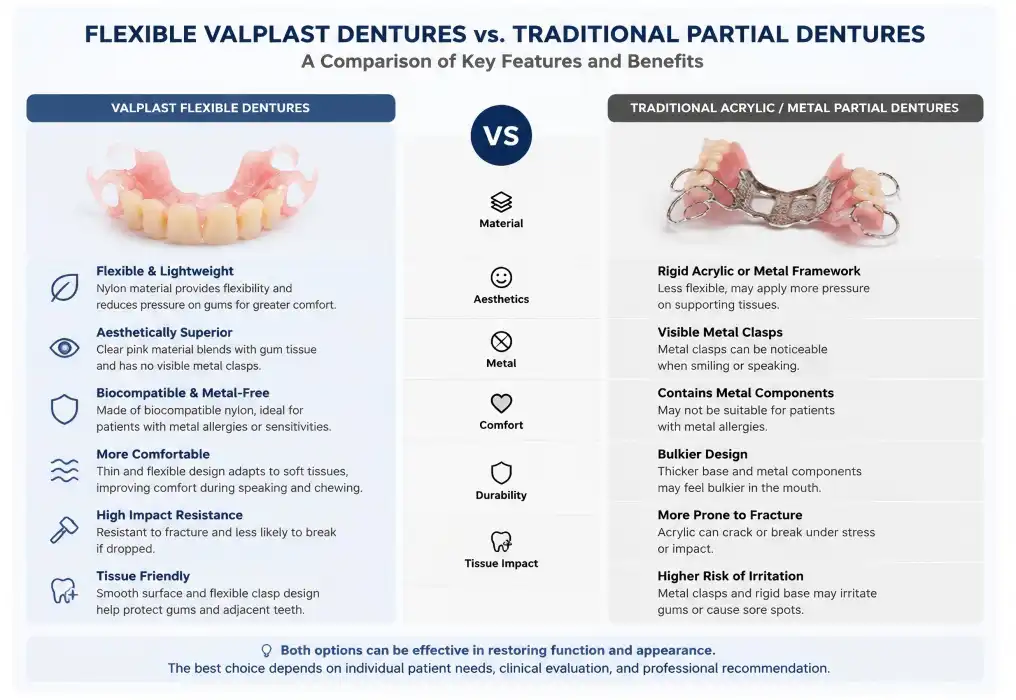
These partial dentures are designed with tooth-colored flexible clasps that may provide improved aesthetics compared with conventional metal clasps in selected cases. Their clear pink plastic mixes in with the gingival tissue, so the veneers are very hard to see. Maintaining this look needs cleaning methods that are gentle and don't damage the surface. The thinner profile than plastic bases makes them more comfortable, but they need to be handled carefully during regular maintenance to avoid warping or damage to the structure.

Clinical Performance and Patient Compliance
Many patients appreciate flexible partial dentures because their lightweight design may contribute to improved comfort and acceptance. Better oral health results from following good hygiene habits, which is why compliance has gone up. In our 20 years of experience in manufacturing, we've seen that practices that provide detailed maintenance instructions may help reduce avoidable damage and improve patient satisfaction.
The 5 Most Common Mistakes When Cleaning Valplast Dentures
Knowing about these major mistakes helps dental offices teach their patients better and cut down on policy claims for damage that could have been avoided.
Mistake 1: Using Harsh Chemical Cleaners and Bleaching Agents
A lot of patients use bleach or strong chemical solutions on the wrong idea that they are better at disinfecting. These harmful chemicals get into the nylon structure and change the colour, make the surface rough, and break down the material. Products with chlorine damage thermoplastics the most because they break down plasticisers that keep the materials flexible. Instead, dentists should suggest cleansers that are pH-neutral and are made especially for Valplast Dentures. These specialised items get rid of bacteria and stains effectively without harming the material.
Mistake 2: Scrubbing With Abrasive Brushes or Pastes
Regular denture brushes with stiff bristles leave microscopic scratches on the surface of the denture, which makes it less clear and gives bacteria a place to stay. In the same way, rough toothpastes with silica or calcium carbonate particles take away the smooth surface finish that makes patients feel better and look better. Patients' investments in good repairs are protected when you suggest soft-bristled brushes made just for flexible partials. Using the right tools and gentle cleaning motions to keep the surface in good shape throughout the prosthesis's lifecycle.
Mistake 3: Soaking in Hot Water or Boiling for Sterilization
One of the worst things that can happen to thermoplastic teeth is exposing them to very high or very low temperatures. When you put something in hot water above 120°F, the material softens and loses its custom fit. Excessive heat exposure may cause deformation or affect the fit of thermoplastic dentures, potentially requiring professional evaluation or replacement. Improper heat exposure is one of the common factors that may contribute to deformation or reduced performance of thermoplastic dentures. To keep the exact fit that was achieved during fabrication, always use room-temperature or lukewarm water for cleaning and storing.
Mistake 4: Neglecting Daily Cleaning Routines
If you don't clean your teeth properly, plaque and calculus can build up and hurt your oral health and the look of your dentures. Biofilm forms on bendable partials just as easily as it does on real teeth, and needs to be carefully removed every day. Patients who don't get their teeth cleaned regularly are more likely to get thrush, bad breath, and things staining faster. Establishing a consistent cleaning routine can help maintain hygiene and support the long-term performance of prostheses and improve the health of the gums around natural teeth that are still there.
Mistake 5: Applying Conventional Whitening Products
Whiteners made for real teeth have peroxides and other oxidising chemicals in them that don't work well with nylon-based materials. These products change colours in unpredictable ways, damage surfaces, and may weaken structures. If a patient wants to get their teeth back to their natural colour, they should talk to their dentist about professional cleaning choices instead of trying to whiten their teeth on their own. Managing what patients think about the normal ageing process can help stop them from trying to fix things that aren't broken.
Best Practices for Cleaning and Maintaining Valplast Flexible Partials
Using maintenance guidelines that are based on evidence will make sure that your Valplast Dentures work at their best for as long as they are supposed to.
Daily Cleaning Protocol
After each meal, patients should clean their partials well to get rid of food bits that might stick to the surfaces. Biofilm can be removed effectively by cleaning your dentures every night with lukewarm water and an approved bendable denture cleaner. The right way to do it is to move the toothbrush in gentle circles over all surfaces, including areas that touch the gum and fake teeth. Rinsing the prosthesis under running water is the last step, which gets it ready to be stored overnight.
Approved Cleaning Solutions
Flexible denture cleaners that are made just for that purpose keep the pH level neutral and kill common oral pathogens. These formulations protect the qualities of the cloth while keeping things clean. Dentist offices should carry suggested goods and give brand advice during delivery appointments. Some enzyme-based cleaners are great at getting rid of biofilm without being too hard on the skin, making them a suitable option for some patients with specific comfort or material considerations.
Proper Storage Conditions
Putting things away overnight in room-temperature water or a special soaking solution keeps them from drying out, which could change how stable their dimensions are. Especially for older prostheses, dry storage makes materials brittle and increases the chance of cracking. Cleaning the containers that hold your dentures regularly will keep bacteria from spreading to the surface of your teeth. Giving patients clear instructions on how to store their prostheses stops them from making common mistakes that damage them.
Professional Maintenance Schedule
A professional cleaning and exam once a year can spot problems before they get bad enough to need expensive repairs. At these visits, dentists can polish the surfaces, check the retention, and look at the general health. To get people to follow through, we suggest making these maintenance visits along with their normal hygiene meetings. This preventative method greatly increases the longevity of prostheses while maintaining their best functional and aesthetic performance.
Comparing Valplast Maintenance to Other Denture Types
When procurement professionals know about the differences in maintenance, they can make smart choices about which prosthetic solutions will best help their patients.
Acrylic Dentures: Maintenance Complexity
A wider range of cleaning products, including some mild abrasives, can be used on traditional acrylic bases without damaging them right away. But because of changes in size and wear, they need to be adjusted by a professional more often. Because the structure is hard, it needs to be relined as the tissues change over time. Even though the care guidelines may seem easier at first, the long-term costs of maintaining flexible partials often exceed the costs of keeping them in good shape.
Metal Framework Partials: Care Requirements
When you clean cast metal frames with acrylic saddles, be careful not to damage the metal parts because the wrong cleaners can tarnish or corrode them. The mix of materials makes cleaning more difficult because metal and acrylic sections need different methods. Clasps need to be adjusted every so often to keep their hold, which adds to the cost of professional care. Traditional designs are strong, but they don't have the aesthetic benefits or patient comfort that make flexible designs more popular.
Cost-Effectiveness Over Time
When properly maintained, Valplast Dentures can provide reliable functional performance over time. Since there are no metal clasps, there are no worries about corrosion or the need for adjustments. Less time spent at the chairside for delivery and change means that the practice works more efficiently. When comparing prosthetic options, procurement managers should look at both the material costs and these operational benefits when figuring out the lifecycle costs.
Where to Buy and How to Source Valplast Dentures
Selecting a reliable manufacturing partner can help dental practices and laboratories maintain consistent quality and service to make sure that your dentistry office or lab always meets regulatory standards and provides high-quality care.
Selecting Qualified Manufacturers
Working with well-known companies that make Valplast Dentures gives you access to materials that are on the FDA list and production methods that are ISO 13485:2016 certified. These quality systems make sure that stability from batch to batch and tracking are maintained, which is necessary for medical device compliance. When it comes to first-time fit accuracy, Experienced manufacturers typically use established quality control processes to support consistent fit and reduce avoidable adjustments, which are bad for practice processes and patient happiness. When looking at possible suppliers, make sure they have the right regulatory credentials and ask for proof of their material certifications.
Understanding Lead Times and Delivery Options
Production schedules have a big effect on clinical scheduling and patient comfort. Reliable suppliers usually finish work within three to five business days, but they do offer faster options for cases that need to be done right away. We've set up our logistics so that expedited shipping options may be available for urgent cases depending on location and logistics conditions. This gives practices the confidence to make meetings because they know the prostheses will show up on time. Talking about shipping options while evaluating a seller keeps schedules from clashing in the future and keeps patients from being let down.
OEM and Customization Capabilities
Partners who offer full customisation based on specific design tastes are good for dental labs that work with more than one practice. Full OEM capability means that each case is given the individual care it needs to meet the exact needs of the prescribing doctor. This accuracy cuts down on the time it takes to make changes and makes your whole case portfolio more predictable. When suppliers are willing to be flexible and meet specific needs, they become useful long-term partners who help the practice grow and build its image.
Conclusion
Taking good care of your Valplast Dentures is important to keep the big benefits these flexible partials offer over traditional options. If you avoid these five common cleaning mistakes, you can protect the prosthesis's material integrity, appearance, and patient comfort for its entire life. By following recommended protocols and teaching patients well, dental practices can lower the number of times they have to redo work and increase patient satisfaction. Choosing qualified suppliers who have a history of following regulations and making high-quality products is the first step to building successful flexible denture programs that improve patient outcomes and increase practice profits.
FAQ
Can I use regular denture cleaners on Valplast dentures?
Most regular denture cleaners are made with ingredients that are too strong for synthetic materials because they were made for acrylic. Valplast Dentures made of nylon or flexible plastic can be cleaned safely and effectively with products that are labelled for those types of dentures. Always make sure that a product is compatible before telling a patient to use it.
How often should flexible partials receive professional cleaning?
Professional maintenance appointments once a year let clinicians smooth out surfaces, check for retention, and spot problems before they get worse. Some practices may suggest that patients with heavy stains or the formation of calculus come in every six months. This preventive schedule makes prostheses last a lot longer.
Are Valplast dentures suitable for patients with metal allergies?
The nylon-based material does not contain metal components, which may make flexible partial dentures an option for patients who prefer metal-free solutions. This sensitive quality, along with the fact that it is more comfortable, makes it a popular choice among patients who can't handle traditional cast frames.
What happens if a patient loses additional teeth while wearing Valplast?
Compared to acrylic bases, the thermoplastic material is harder to work with when it comes to modifications. Patients who think they will lose more teeth should talk about this with their dentist when they are planning their treatment, since making a new prosthesis might be easier than trying to add more teeth. Clear communication about important limitations stops disappointment in the future.
Partner With HYC for Reliable Valplast Denture Manufacturing
Because HYC has been a trusted Valplast Dentures manufacturer for 22 years, they can make flexible partials that meet the high standards that dentists demand. Our facility is FDA-registered, CE-certified, and ISO 13485:2016-compliant, and it makes removable prosthetics that are designed to achieve accurate fit through controlled manufacturing processes and quality inspection. We offer customised production based on your exact design requirements. Standard shipping is 3 days, case turnaround is 4-5 days, and next-day delivery is available for emergencies. Our policy provides coverage for eligible removable restorations according to agreed terms and includes free repair or reproduction, which shows how much we care about your success. Get in touch with us at info@hycdentallab.com to talk about your needs for a flexible denture and enjoy the benefits of working together that improve clinical results and patient happiness.
References
1. Donovan, T.E., & Cho, G.C. (2019). Flexible denture materials: Physical and mechanical properties for clinical application. Journal of Prosthodontics, 28(4), 395-403.
2. Fueki, K., Ohkubo, C., Yatabe, M., Arakawa, I., Arita, M., Ino, S., & Kanamori, T. (2017). Clinical application of removable partial dentures using thermoplastic resin. Journal of Oral Rehabilitation, 44(3), 179-186.
3. Parvizi, A., Lindquist, T., Schneider, R., Williamson, D., Boyer, D., & Dawson, D.V. (2004). Comparison of the dimensional accuracy of injection-molded denture base materials to that of conventional pressure-pack acrylic resin. Journal of Prosthodontics, 13(2), 83-89.
4. Singh, K., Aeran, H., Kumar, N., & Gupta, N. (2018). Flexible thermoplastic denture base materials: A review. Journal of Clinical and Diagnostic Research, 12(1), 01-04.
5. Vojdani, M., Bagheri, R., & Khaledi, A.A. (2012). Effects of aluminum oxide addition on the flexural strength, surface hardness, and roughness of heat-polymerized acrylic resin. Journal of Dental Sciences, 7(3), 238-244.
YOU MAY LIKE
.webp "Ni-Cr PFM (Nickel-Chrome)")
 Framework.webp "High-Performance Polymer (HPP) Framework")