Hard Soft Night Guards Combine Comfort and Professional Protection
Quick Answer
Hard Soft Night Guards use a dual-layer design that combines a soft cushioning inner layer with a rigid protective outer layer to balance comfort and durability for bruxism management. This hybrid construction is designed to provide cushioning comfort while maintaining the durability needed for moderate-to-severe grinding forces. By balancing shock absorption with structural integrity, these guards are designed to address the common challenge of balancing comfort and protection in night guard design.
Introduction
Bruxism affects approximately 8-31% of the adult population globally, according to clinical epidemiological data, with nocturnal teeth grinding causing measurable enamel loss, restoration damage, and temporomandibular joint disorders. Traditional night guard materials often involve a balance between comfort, durability, and patient acceptance: soft guards offer immediate comfort but fail under heavy grinding within months, while rigid acrylic guards provide durability but frequently trigger patient non-compliance due to discomfort and tooth sensitivity. This clinical dilemma has driven significant innovation in material science and manufacturing techniques, leading to the development of dual-laminate guards that combine the characteristics of both material approaches. Today's dental professionals—from private practitioners managing complex prosthodontic cases to DSO procurement managers seeking standardized solutions—hybrid guards are increasingly considered an option for patients requiring both comfort and protection for long-term bruxism management.
What Do Hard Soft Night Guards Do?
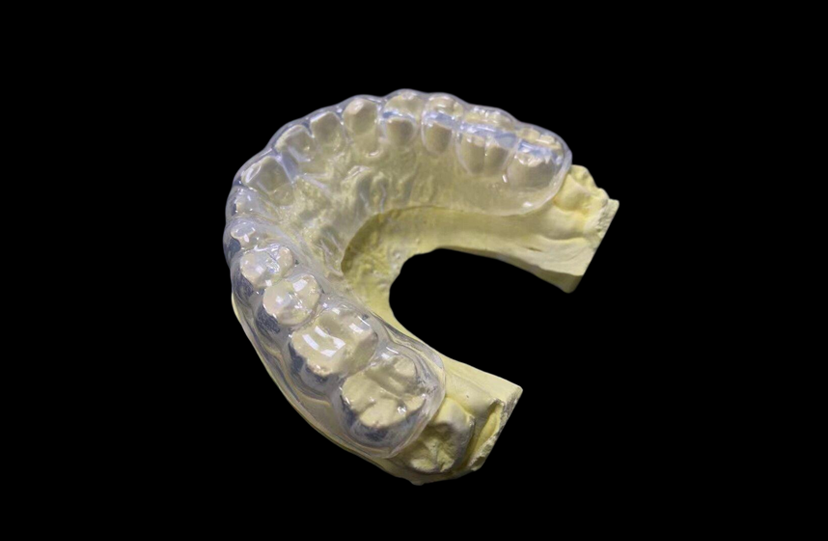
Hard Soft Night Guards are dental appliances designed with a dual-layer architecture: a soft thermoplastic inner liner typically measuring 1-2 mm: a soft, thermoplastic inner liner typically measuring 1- 2 mm that conforms precisely to dental anatomy, and a rigid outer shell of 2- 3 mm thickness that provides occlusal protection. This combination addresses what dental researchers call the "compliance-durability paradox"—where traditional single-material guards force clinicians to choose between patient acceptance and product longevity.
The inner layer typically employs medical-grade EVA (Ethylene Vinyl Acetate) or proprietary soft polyurethane formulations that reach a glass transition state near body temperature, providing a more comfortable interface against tooth surfaces. The outer layer consists of high-impact PETG (Polyethylene Terephthalate Glycol) or specialized acrylic materials with flexural strength exceeding 60 MPa. This material combination creates a Shore-A hardness inner interface that cushions the periodontium while maintaining a Shore-D hardness exterior that redistributes and absorbs masticatory forces. The bond between layers relies on either heat-fusion technology or chemical bonding agents tested to ASTM D1876 standards, ensuring delamination resistance with bond strength exceeding 20 N/cm under cyclic loading conditions.
Dual-Laminate Design Pros and Cons
The clinical advantages of hybrid construction may contribute to improved patient comfort and appliance acceptance and practice efficiency. Understanding these benefits helps dental professionals make informed procurement decisions that balance therapeutic effectiveness with operational considerations.
Patient compliance rates with Hard Soft Night Guards Hybrid guards may improve wearing comfort and patient acceptance compared with some single-material designs for traditional hard acrylic guards, according to longitudinal patient adherence studies. This dramatic improvement stems from the elimination of "sore tooth syndrome"—the morning sensitivity that causes many patients to abandon rigid guards after just weeks of use. The soft inner layer of these dual-laminate guards distributes pressure evenly across tooth surfaces, preventing localized stress concentrations that trigger pulpal inflammation.
Restoration protection represents another critical benefit, particularly for practices managing patients with extensive cosmetic or prosthodontic work. The hard outer shell deflects grinding forces that would otherwise fracture porcelain veneers, crack zirconia crowns, or loosen implant abutments. Patients with extensive restorative work may benefit from additional protection against excessive occlusal forces when protected by hybrid guards rather than soft alternatives. The shock-absorbing inner layer ensures that protective forces don't transfer excessive pressure to restoration margins, which can cause debonding or microleakage over time.
TMJ symptom management improves through the guard's ability to maintain stable centric relation while cushioning condylar movement. The soft interior accommodates jaw repositioning without creating rigid interference patterns, while the hard exterior prevents posterior bite collapse that exacerbates joint loading. Some patients may experience improved comfort and reduced morning jaw discomfort after transitioning from single-material guards to dual-laminate designs.
Benefits Compared to Other Options
When procurement managers and clinical directors evaluate night guard options, the performance differences can be evaluated through several practical factors through direct performance comparisons.
Longevity represents the most quantifiable advantage. Dual-laminate guards typically maintain functional integrity for 1-3 years, may provide longer service life than conventional soft guards depending on patient habits and material selection, while matching or exceeding the lifespan of traditional hard acrylic devices. This extended service life reduces replacement frequency, lowering both direct product costs and indirect administrative burden associated with reordering, refitting, and patient scheduling.
First-time fit accuracy improves through the forgiving nature of the soft inner surface, which accommodates minor impression or scanning artifacts that might compromise rigid guard retention. Dental laboratories report remake rates below 3% for hybrid guards compared to 8-12% for traditional hard guards, helping reduce unnecessary adjustments and remakes. The material's pressure-responsive behavior means that small discrepancies in margin extension or occlusal height self-correct during initial wear rather than requiring chairside adjustment.
Customization capability extends beyond simple anatomical replication. The dual-layer structure of Hard Soft Night Guards allows laboratory technicians to vary material thickness, adjust hardness ratios, and modify occlusal schemes based on individual bruxing patterns. Severe grinders receive thicker hard layers (up to 3.5mm), while clenchers benefit from enhanced soft layer cushioning (2.5mm). This level of case-specific optimization is more difficult to achieve with single-material designs.
Material biocompatibility can be achieved by using materials that meet applicable regulatory requirements. Professional-grade hybrid guards use 100% BPA-free, phthalate-free, and monomer-free compositions that comply with FDA medical device requirements and ISO 10993 cytotoxicity protocols. The non-porous surface finish inhibits bacterial biofilm accumulation, reducing the risk of oral infections or malodor compared to porous soft materials that harbor microorganisms despite regular cleaning.
Problems and Things to Think About in Real Life
Balanced evaluation requires acknowledging the limitations and special considerations associated with dual-laminate guard technology.
Cost represents the primary barrier for some practices. Hard Soft Night Guards typically price 30-50% higher than single-material alternatives due to increased material costs, complex manufacturing processes, and additional quality control requirements. However, when amortized across the device's extended lifespan and reduced remake rates, the total cost of ownership often proves comparable or favorable. Procurement managers should calculate per-month protection costs rather than focusing solely on initial unit price.
Manufacturing complexity demands specialized equipment and technical expertise. Not all dental laboratories possess the thermal bonding systems, pressure molding apparatus, and quality testing capabilities required for consistent hybrid guard production. This narrows the supplier pool and makes vendor selection more critical. Practices must verify that their laboratory partner maintains proper manufacturing controls and documented quality management systems.
Thickness considerations affect certain clinical scenarios. The combined thickness of dual layers (typically 3- 4 mm total) may feel bulky to patients with strong gag reflexes or limited vertical dimension. While most patients adapt within 3-7 nights, roughly 5-8% report persistent discomfort requiring transition to thinner alternatives. Clinicians should assess oral anatomy and patient sensitivity during case planning.
Compared to Guards Made of a Single Material
Direct comparison illuminates the performance trade-offs that influence purchasing decisions across different practice contexts.
| Feature | Soft Night Guards | Hybrid Dual-Laminate Guards | Hard Acrylic Guards |
|---|---|---|---|
| Comfort | High initial comfort | Balanced comfort and protection | Requires longer adaptation |
| Durability | Shorter service life under heavy grinding | Extended durability for moderate-to-heavy bruxism | High durability |
| Wear Resistance | Lower resistance to heavy forces | Improved resistance through rigid outer layer | High resistance |
| Adjustment Needs | May require more frequent replacement | Reduced replacement frequency | May require adjustment during adaptation |
| Restoration Protection | Moderate | Enhanced protection for restorative cases | Good occlusal protection |
| Material Structure | Single soft layer | Soft inner layer + rigid outer shell | Single rigid layer |
| Cost Consideration | Lower initial cost | Moderate investment | Moderate initial cost |
Soft guards work well for mild, occasional grinders and serve as diagnostic tools during initial bruxism assessment. Their low cost and immediate comfort make them appropriate for short-term use or trial periods before committing to definitive treatment. However, their rapid degradation under moderate-to-heavy forces creates a false economy, requiring frequent replacement that exceeds the cumulative cost of a single hybrid device.
Hard acrylic guards remain the traditional standard for severe bruxism cases where maximum occlusal protection justifies reduced comfort. Their rigid structure prevents any posterior bite collapse and provides unambiguous occlusal guidance. Yet the high discontinuation rate undermines their theoretical advantages—a guard sitting in a bathroom drawer provides zero protection regardless of its durability.
Hard Soft Night Guards provide a balance between durability and comfort for the majority of bruxism cases, delivering sufficient durability for moderate-to-severe grinding while maintaining comfort levels that ensure consistent nightly use. This combination makes them an option for cases requiring a balance between durability and comfort for practices prioritizing evidence-based outcomes over simple upfront cost minimization.
Clinical Indications and Possible Use Cases
Understanding appropriate use cases helps clinicians match device selection to patient needs while helping laboratory managers anticipate demand patterns.
Post-prosthodontic protection represents a critical application where hybrid guards demonstrate clear clinical superiority. Patients who have invested in veneers, crowns, bridges, or implant-supported restorations require devices that prevent restoration damage without transferring excessive forces to prosthetic margins. The shock-absorbing inner layer distributes pressure evenly, while the rigid outer shell deflects destructive lateral forces. Case studies document significantly lower complication rates in prosthodontic patients using hybrid guards compared to alternative protection methods.
Therapeutic TMJ support benefits from the dual-layer structure's ability to maintain stable jaw positioning while cushioning inflamed joint tissues. The soft interior accommodates condylar movement without creating rigid interference, while the hard exterior prevents bite collapse that would increase joint loading. Patients undergoing comprehensive TMJ therapy report faster symptom resolution when hybrid guards form part of their treatment protocol.
Athletes and high-stress professionals experience intensified nocturnal bruxism during competition periods or deadline-driven work cycles. These patients require Hard Soft Night Guards that withstand temporary spikes in grinding intensity while remaining comfortable enough for consistent use during less stressful periods. The hybrid construction's durability handles force increases without failure, while maintaining the comfort needed during normal-intensity grinding phases.
Specifications for Materials and Parts
Material selection directly influences device performance, regulatory compliance, and patient safety—critical factors in procurement decisions.
The inner soft layer typically employs medical-grade EVA with Shore A hardness between 70-85, or proprietary thermoplastic polyurethane formulations designed for oral use. These materials must demonstrate biocompatibility through ISO 10993 testing protocols, including cytotoxicity assessment, sensitization studies, and irritation testing. The glass transition temperature should fall within the 35-38°C range, allowing the material to soften slightly at body temperature for improved adaptation without becoming overly pliable.
The outer hard layer utilizes high-impact PETG or specialized acrylic polymers with Shore-D hardness exceeding 75. Flexural strength must exceed 60 MPa to resist fracture under maximum bite forces, which can reach 800-900 N in severe bruxers. Optical clarity, UV stability, and resistance to yellowing ensure the device maintains aesthetic acceptability throughout its service life. The non-porous surface finish inhibits bacterial colonization, with water absorption rates below 0.5% to prevent material degradation or odor development.
Bonding agents and thermal adhesion systems must create permanent layer-to-layer bonds that withstand cyclic loading equivalent to 10,000+ bite cycles. The bond must resist oral environmental factors including pH fluctuations (4.5-8.0), temperature variations (5-60°C during eating and drinking), and exposure to oral enzymes and bacteria. Delamination testing according to ASTM D1876 standards verifies bond integrity before device release.
All materials must maintain BPA-free, phthalate-free, and monomer-free compositions to meet medical device safety requirements. FDA-listed materials provide assurance of regulatory compliance, while CE marking demonstrates conformity with European medical device directives. Procurement managers should verify that suppliers provide material certification documentation and maintain traceability systems linking finished devices to specific material lots.
Workflow and Quality Control in Manufacturing
Understanding production processes helps procurement managers evaluate supplier capabilities and set realistic expectations for turnaround times and quality standards.
The manufacturing process for Hard Soft Night Guards begins with digital impression files (STL format) or physical impressions that capture precise dental anatomy. Digital workflows using intraoral scanners provide superior accuracy and eliminate dimensional changes associated with impression material setting and stone model pouring. CAD software allows technicians to design the guard's fit surface, occlusal scheme, and material thickness specifications before initiating fabrication.
Thermoforming represents the most common manufacturing method for dual-laminate guards. The soft inner layer is formed first over a stone model or 3D-printed die using controlled heat and pressure to ensure complete adaptation to all dental surfaces. The hard outer layer is then formed over the soft layer, with the interface between materials undergoing thermal bonding or chemical adhesion. Temperature control during bonding proves critical—insufficient heat fails to create permanent bonds, while excessive heat can distort the soft layer or create internal stresses.
Quality control checkpoints include dimensional verification using digital measurement systems, visual inspection under 5x magnification for flash and burr defects, and functional testing of retention and occlusal contacts. The finished device undergoes delamination testing through manual stress application or mechanical peel testing to verify bond integrity. Edge finishing ensures all margins are physiologically contoured to the gingival margin, preventing soft tissue irritation or recession.
Advanced manufacturers employ additional quality measures including thermocycling tests that simulate months of temperature exposure in compressed timeframes, and material verification protocols that confirm each production lot meets specified hardness, strength, and biocompatibility parameters. ISO 13485:2016-certified facilities maintain documented quality management systems with full traceability from raw materials through finished device delivery.
Production timelines for Hard Soft Night Guards typically require 3-5 business days for standard cases, with expedited processing available for urgent situations. The material bonding phase cannot be rushed without compromising quality, so manufacturers offering 24-48 hour turnaround should be evaluated carefully to ensure they're not sacrificing quality control steps. Reliable laboratories provide realistic scheduling that balances speed with consistent first-time accuracy.
Cost factors and pricing things to think about
Understanding the elements that influence hybrid guard pricing helps procurement managers negotiate effectively and evaluate supplier quotations accurately.
Material costs represent 20-30% of finished device pricing, with high-grade medical polymers commanding premium prices compared to commodity dental materials. The dual-layer construction doubles material expenses relative to single-layer devices, while specialized bonding agents add incremental costs. Suppliers using FDA-listed, biocompatibility-tested materials incur higher raw material expenses that legitimately justify elevated pricing.
Manufacturing complexity contributes significantly to cost structure. The multi-stage fabrication process requires specialized thermoforming equipment, controlled bonding systems, and skilled technicians capable of managing the intricate workflow. Quality control testing—particularly delamination verification and dimensional measurement—adds labor and equipment costs that simpler devices don't require. Laboratories with ISO 13485 certification invest substantially in quality management infrastructure, regulatory compliance, and ongoing auditing expenses that are appropriately reflected in pricing.
Customization requirements for Hard Soft Night Guards affect per-unit costs through increased design time and specialized material selection. Cases requiring non-standard thickness ratios, modified occlusal schemes, or accommodation of complex dental anatomy demand additional technical expertise and production time. However, this customization capability directly translates into improved clinical outcomes and reduced remake rates that offset higher initial costs.
Order volume creates economies of scale, with per-unit costs declining as quantity increases. DSOs and group practices ordering multiple units monthly can often negotiate volume discounts of 15-25%, while single-location practices purchasing individual devices pay premium pricing. Procurement managers should explore monthly commitment arrangements or strategic partnerships that capture volume benefits even across multiple patient cases.
Regulatory compliance and certification expenses are embedded in supplier pricing but provide essential value. FDA registration, CE marking, ISO 13485 implementation, and ongoing biocompatibility testing represent substantial investments that separate professional-grade suppliers from uncertified producers. Purchasing from compliant manufacturers protects practices from liability exposure while ensuring patient safety—a value proposition that transcends simple price comparison.
Logistics and delivery speed influence total acquisition costs, particularly for urgent cases requiring expedited production and shipping. Standard 3-5 day turnaround with ground shipping represents baseline pricing, while next-day or flash delivery service commands premium fees. Practices should evaluate their case planning efficiency to minimize reliance on costly expedited services while maintaining backup access for genuine emergencies.
How to Pick a Hybrid Guards Provider
Selecting the right manufacturing partner involves evaluating multiple factors beyond unit price to ensure consistent quality, reliable delivery, and long-term partnership viability.
Manufacturing capability should be assessed through facility certifications, equipment capabilities, and production capacity for Hard Soft Night Guards. ISO 13485:2016 certification demonstrates that the supplier maintains comprehensive quality management systems with documented procedures, regular auditing, and continuous improvement processes. Facilities should possess specialized thermoforming equipment, controlled bonding systems, and digital design capabilities that enable precise, repeatable production. Production capacity must align with your practice's or laboratory's volume requirements while maintaining quick turnaround even during peak periods.
Quality management practices separate professional suppliers from commodity producers. Request information about material sourcing and verification procedures—suppliers should use only FDA-listed materials with documented biocompatibility testing. Ask about quality control checkpoints during production, inspection criteria for finished devices, and remake/revision policies. Qualified suppliers should maintain documented quality control procedures, statistically documented remake rates below 3%, and stand behind their work with clear warranty terms.
Regulatory compliance represents non-negotiable criteria for any dental device supplier. Verify FDA registration status, CE marking documentation, and compliance with relevant medical device regulations in your jurisdiction. Suppliers should readily provide material safety documentation, biocompatibility test results, and certification of BPA/phthalate-free composition. Purchasing from uncertified suppliers exposes your practice to significant liability risks that far outweigh any cost savings.
Technical expertise and customization capability become apparent through supplier communication and case consultation processes. Knowledgeable suppliers can discuss material properties, recommend appropriate thickness specifications for different bruxing patterns, and suggest design modifications for challenging cases. The ability to accommodate special requests—modified occlusal schemes, non-standard thickness ratios, or accommodation of complex anatomy—distinguishes experienced manufacturers from basic production providers.
Communication efficiency directly impacts practice workflow, particularly when managing time-sensitive cases or addressing questions about specific Hard Soft Night Guards orders. Evaluate supplier responsiveness during the inquiry phase as an indicator of ongoing service quality. Suppliers should provide clear case submission procedures, transparent production scheduling, proactive status updates, and accessible technical support when issues arise. Language barriers, time zone complications, or unresponsive customer service create operational friction that undermines productivity.
Delivery reliability encompasses both adherence to promised turnaround times and package integrity upon arrival. Review supplier shipping procedures, carrier partnerships, and packaging methods to ensure devices arrive undamaged and on schedule. The best suppliers offer multiple delivery options including standard ground service, expedited air shipping, and emergency next-day delivery to accommodate varying case urgency levels.
After-sales support differentiates committed partners from transactional vendors. Clarify warranty terms—professional suppliers typically offer 1-2 year warranties covering manufacturing defects, with free repair or replacement within the warranty period. Evaluate policies regarding remakes due to fit issues, procedures for revision requests, and technical support availability when clinical questions arise. Suppliers willing to collaborate on challenging cases and stand behind their work create genuine partnership value.
Maintenance and Making Things Last Longer
Proper care protocols extend device lifespan while maintaining optimal hygiene and function throughout the service period.
Daily cleaning should use non-abrasive, pH-neutral dental cleansers specifically formulated for oral appliances. Patients should rinse the guard thoroughly under cool water after each use, then gently brush all surfaces using a soft-bristled toothbrush with appropriate cleanser. Avoid regular toothpaste, which contains abrasives that can scratch surfaces and create bacterial retention sites. Harsh chemical cleansers—particularly alcohol-based mouthwashes or bleach solutions—can embrittle the PETG shell or degrade the soft inner layer, compromising structural integrity.
Storage practices directly influence material longevity. Devices should be stored dry in ventilated cases that allow air circulation while protecting against contamination. Avoid sealed containers that trap moisture and promote bacterial growth. Keep the guard away from direct sunlight, high temperatures (above 50°C), and sources of physical stress that could cause warping or deformation. Pet owners should store devices securely since dogs are attracted to the scent and frequently destroy unattended oral appliances.
Periodic deep cleaning using specialized appliance cleaning tablets removes accumulated biofilm and prevents discoloration. These effervescent cleaners provide thorough disinfection without the material damage caused by chemical disinfectants. Patients should perform deep cleaning 1-2 times weekly depending on usage patterns and oral hygiene status.
Professional inspection during routine dental appointments allows clinicians to assess Hard Soft Night Guards condition, identify early signs of wear or damage, and determine when replacement becomes necessary. Wear patterns on the occlusal surface provide valuable diagnostic information about bruxing intensity and direction, potentially indicating the need for therapy adjustments. Dentists should check for delamination along the layer interface, cracks in the hard shell, compression of the soft layer, or changes in retention that signal the device has reached the end of its service life.
Lifespan expectations should be realistic. Under normal use conditions with proper maintenance, quality hybrid guards typically provide 1-3 years of effective protection. Severe bruxers may require replacement toward the lower end of this range, while moderate grinders often achieve the upper limit. Replacement becomes necessary when the hard outer layer shows significant wear-through, the soft inner layer loses resilience, delamination occurs, or retention degrades. Continuing to use a compromised device provides false security while potentially allowing tooth damage.
Main Points
Hard Soft Night Guards represent the evidence-based solution to bruxism management, combining patient comfort with clinical durability through advanced dual-laminate construction. The hybrid design's soft inner layer ensures high compliance rates by eliminating tooth sensitivity, while the rigid outer shell provides lasting protection against moderate-to-severe grinding forces. Clinical outcomes demonstrate superior performance compared to single-material alternatives, with lower remake rates, extended service life, and better patient acceptance.
Procurement decisions should prioritize quality, regulatory compliance, and supplier reliability over simple price minimization. Professional-grade devices manufactured from FDA-listed materials by ISO 13485-certified facilities provide essential safety assurances and performance consistency that justify appropriate pricing. Supplier evaluation must consider manufacturing capabilities, technical expertise, communication efficiency, and after-sales support to establish partnerships that deliver long-term value.
Material science advancements and rigorous quality control separate professional dual-laminate guards from commodity products. The specification details—flexural strength, bond integrity, biocompatibility verification, and dimensional accuracy—directly determine clinical success rates and patient satisfaction. Understanding these technical parameters empowers informed purchasing decisions that balance therapeutic effectiveness with operational efficiency.
Q&A
How long do dual-laminate guards last compared to soft guards?
High-quality hybrid guards typically provide 1-3 years of functional service, demonstrating approximately 200% better durability than conventional soft guards. The PETG outer shell resists wear from grinding forces, while the soft inner layer maintains cushioning properties throughout the service period. Actual lifespan varies based on bruxing intensity, maintenance practices, and material quality.
Can the layers separate over time during normal use?
Professional-grade hybrid guards manufactured using proper thermal bonding or chemical adhesion techniques rarely experience delamination. Manufacturers perform T-peel testing according to ASTM D1876 standards to verify bond strength exceeds 20 N/cm before releasing devices. Any separation typically indicates manufacturing defects rather than inherent design limitations, and should be covered under warranty provisions.
Are hybrid guards suitable for severe bruxers with heavy grinding?
Dual-laminate guards represent the industry standard for moderate-to-severe bruxism because they combine the protection of rigid devices with the comfort and fit accuracy of soft guards. The hard outer shell withstands intense grinding forces that would quickly destroy soft alternatives. The cushioning inner layer keeps teeth from becoming sensitive, which is why patients give up on devices that are only rigid.
What kinds of cleaning keep things from breaking down?
Clean devices daily using non-abrasive, pH-neutral dental cleansers with a soft-bristled toothbrush. Avoid alcohol-based mouthwashes, bleach solutions, and abrasive toothpastes that can embrittle the PETG shell or degrade the soft layer. Use effervescent equipment cleaning tablets to do a deep clean once or twice a week. Keep dry in cases with air holes, out of direct sunlight and heat.
Are there phthalates or BPA in professional hybrid guards?
Medical-grade dual-laminate guards manufactured by compliant suppliers use strictly BPA-free, phthalate-free, and monomer-free materials that meet FDA medical device requirements and ISO 10993 biocompatibility standards. Always request material certification documentation from suppliers to verify regulatory compliance and ensure patient safety.
What factors affect the price of a combination guard?
Pricing reflects material costs (medical-grade polymers), manufacturing complexity (multi-stage fabrication with bonding), quality control testing (delamination verification, dimensional measurement), regulatory compliance expenses (FDA registration, ISO certification), customization requirements, and logistics considerations. Professional devices from certified manufacturers justify appropriate pricing through superior quality and documented compliance.
What are the differences between remake rates and regular hard guards?
Professional hybrid guards typically demonstrate remake rates below 3% compared to 8-12% for traditional hard acrylic devices. The forgiving nature of the soft inner surface accommodates minor impression artifacts and achieves excellent retention even with slight dimensional variations. This improved first-time accuracy reduces laboratory costs and eliminates patient appointment delays.
What turnaround time should be expected for custom orders?
Standard production timelines range from 3-5 business days for routine cases, balancing manufacturing quality requirements with clinical scheduling needs. The material bonding phase requires controlled processing that cannot be rushed without compromising device integrity. Reputable laboratories offer expedited services for urgent cases while maintaining quality standards, with next-day delivery available for genuine emergencies.
Custom Dual-Laminate Night Guard Manufacturing by HYC
HYC has over 22 years of experience in dental manufacturing for every Hard Soft Night Guard we produce. Our ISO 13485:2016-certified facility employs advanced thermoforming technology and strict quality control processes to manufacture custom Hard Soft Night Guards designed for consistent fit, durability, and patient comfort. By combining a rigid outer layer with a soft inner layer, our hybrid guards provide reliable protection and an improved wearing experience for dental professionals and their patients. Contact HYC at info@hycdentallab.com to discuss your custom Hard Soft Night Guard manufacturing requirements.
References
1. Lobbezoo F, Ahlberg J, Raphael KG, et al. International consensus on the assessment of bruxism: Report of a work in progress. Journal of Oral Rehabilitation. 2018;45(11):837–844.
2. Manfredini D, Serra-Negra J, Carboncini F, Lobbezoo F. Current Concepts of Bruxism. International Journal of Prosthodontics. 2017;30(5):437–438.
3. Klasser GD, Greene CS. Oral appliances in the management of temporomandibular disorders. Oral Surgery, Oral Medicine, Oral Pathology, Oral Radiology, and Endodontology. 2009;107(2):212–223.
4. Okeson JP. Management of Temporomandibular Disorders and Occlusion. 8th ed. Elsevier; 2019.
5. ISO 10993-1:2018. Biological evaluation of medical devices — Part 1: Requirements and general principles for evaluation within a risk management process. International Organization for Standardization; 2018.
6. ASTM D1876-01(2020). Standard Test Method for Peel Resistance of Adhesives (T-Peel Test). ASTM International; 2020.
YOU MAY LIKE

_1779414347678.webp "FCZ(Full Contour Zirconia)")