Why Choose Metal Chrome Partial Framework for Long-Term Denture Use?
Quick Answer
Metal Chrome Partial Frameworks are widely recognized as a reliable option for long-term removable partial dentures, offering excellent durability, stability, and functional performance. These cobalt-chromium frameworks provide excellent durability, precise fitting characteristics, and a reduced oral footprint compared with many conventional acrylic designs. With proper maintenance and case selection, these frameworks can provide long-term service, and cobalt-chromium alloys are widely used for their favorable biocompatibility characteristics. Chrome partial frameworks may contribute to improved comfort, speech adaptation, and chewing efficiency for appropriately selected patients. While initial costs run higher than acrylic frameworks, their longevity and potential reduction in remake frequency may contribute to improved long-term cost efficiency.
Introduction
Removable partial dentures remain a cornerstone solution for patients with multiple missing teeth who require functional and aesthetic restoration. Within the dental restoration industry, material selection directly impacts patient satisfaction, clinical longevity, and practice efficiency. Over the past two decades, cobalt-chrome frameworks have become a commonly selected material for cases requiring strength, rigidity, and dimensional stability where durability and precision matter most.
Dental laboratories and prosthodontists face mounting pressure to deliver restorations that fit accurately on the first attempt, resist wear over extended periods, and minimize patient complaints about bulkiness or taste interference. Traditional acrylic partial dentures, while economical upfront, often require frequent adjustments and earlier replacement. This creates hidden costs in chair time, material waste, and compromised patient trust. Understanding the advantages and limitations of chrome frameworks helps procurement managers, lab owners, and clinicians evaluate restorative options and make informed decisions that balance initial investment against long-term value.
What is a Metal Chrome Partial Framework?
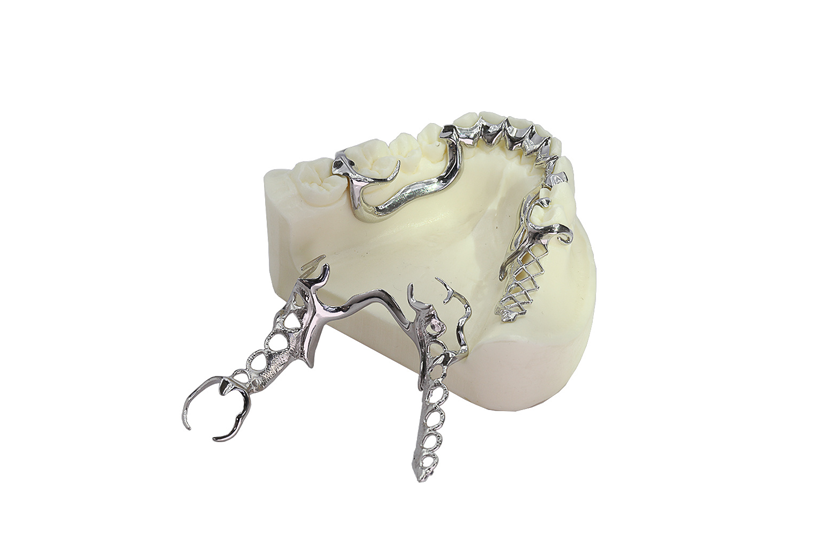
A Metal Chrome Partial Framework is made up of a cobalt-chromium metal framework that is precision-cast or CAD/CAM-milled and is meant to hold false teeth and clasps in place when making a removable partial denture. The framework is made up of major and minor connectors, rest seats, and retentive clasps that are designed to properly spread occlusal forces across the natural teeth that are still there and the ridges that don't have any teeth.
Core Structural Components
Several useful zones are built into the framework design. Major connectors, like palatal bars and lingual plates, make the structure rigid and link all the framework parts together. Little connectors connect big connectors to rests and clasps. Occlusal rests apply vertical pulls to the teeth that are connected, and retentive clasps engage tooth undercuts to keep the teeth from coming loose. Through its linked design, this structure provides stability and maintains its shape under normal functional loading.
Material Composition
Most cobalt-chromium alloys have between 60 and 65% cobalt, 25 to 30% chromium, and smaller amounts of molybdenum, nickel, or tungsten. This mixture has a tensile strength of more than 600 MPa, an elastic modulus of about 200 GPa, and great corrosion resistance in oral environments. The material provides high rigidity and resistance to deformation during functional use, and it meets the biocompatibility standards set out in ISO 22674 for dental casting alloys.
Benefits
When you choose Metal Chrome Partial Frameworks, you can see gains in clinical, operational, and patient-centered measures. These benefits solve certain problems that dental practices and their lab partners have.
Extended Service Life
With proper care, with proper maintenance, and appropriate case selection, Metal Chrome Partial Frameworks can provide long-term service, with many restorations remaining functional for 10 years or more. The alloy's resistance to stress breakage, wear, and chemical breakdown makes it last so long. Less frequent remakes and fewer emergency fixes mean lower lifetime costs for practices and more patients staying with them.
Superior Fit Accuracy
The material stays the same size during casting or milling, so frames can be made to fit digital patterns to within 50 microns. This level of accuracy can help reduce adjustment requirements and improve workflow efficiency, which cuts down on the time needed for chairside adjustments. This accuracy may help reduce adjustment requirements after delivery and improve workflow efficiency.
Enhanced Patient Comfort
Metal Chrome Partial Frameworks have thin profiles (usually 0.5 to 1.5 mm thick) that don't take up much space in the mouth or on the tongue. The low-profile design may help reduce tongue interference and support easier adaptation compared with bulkier designs. The thermal conductivity of metal frameworks may allow patients to perceive temperature changes differently compared with thicker acrylic designs.
Improved Oral Hygiene
The stiff framework needs less tissue covering than flexible acrylic, which means that more of the natural tooth surfaces and gingival tissues can be cleaned regularly. This design can facilitate easier cleaning around remaining teeth and supporting tissues when combined with proper oral hygiene under the prosthesis.
Advantages
When compared to other removable partial denture frameworks, Metal Chrome Partial Frameworks show clear performance differences that clinical teams and people who make procurement decisions care about.
When it comes to disposable prosthetics, Metal Chrome Partial Frameworks are designed with a thin and rigid structure that can help preserve available oral space. In many cases, they make it easier to speak clearly and eat naturally because they take up much less space in the mouth than acrylic alternatives. Patients transitioning from bulkier designs may experience easier speech adaptation and improved comfort. The framework's thin design keeps tongue space and normal palatal contours, which makes it easier for the muscles and nerves to adapt quickly.
When you look at the total cost of ownership, the economic equation changes in a big way. Metal Chrome Partial Frameworks cost more to make in the beginning—usually 40 to 60 percent more than acrylic—but they last longer than plastic alternatives by several years. Because they last longer, they end up being much cheaper in the long run. When an investment is spread out over the restoration's useful life, it costs less each year, needs fewer emergency repairs, and requires less chair time to fix problems before they happen.
Chrome's mechanical properties make it a highly reliable material for managing repeated functional loading. The metal can withstand forces greater than 200 Newtons without permanently changing shape. This means that the clasp stays in place and the teeth stay in place. This long-lasting quality is especially helpful for people who bite hard or brux a lot, because acrylic frameworks often break at the connector points.
Chrome casting and CAD/CAM cutting can make parts with tighter precision than processed plastic. When digital workflows are combined with high-modulus alloys, frameworks that meet design requirements within small error margins are made. This accuracy may help reduce remake rates and improve consistency.
Disadvantages
To do an objective evaluation, you need to be aware of the limits of Metal Chrome Partial Frameworks and the factors that affect their usefulness for certain situations.
Higher Initial Investment
Metal Chrome Partial Frameworks usually cost 40 to 70 percent more to build in a lab than acrylic frameworks. This difference in upfront costs makes it hard for practices with small profit margins or that serve patients who care a lot about cost. Procurement managers have to decide if the practice's mix of patients and types of cases make the higher price worth it.
Increased Weight
Because chrome is denser than acrylic (about 1.2 g/cm³), replacements made of Metal Chrome Partial Framework are heavy. Even though the slim design helps a little, some patients with weak ridge anatomy or less salivary flow feel less comfortable at first. This problem can be solved by designing the framework in a way that minimises bulk, but this requires skilled technicians.
Adjustment Complexity
Metal Chrome Partial Frameworks can't be bent or ground down as acrylic bases can, but chairside adjustments can easily change acrylic bases. Modifications made after delivery need special tools and methods. If a practice doesn't have spinning tools or polishing materials, it might be hard to fix fit issues, which could mean going back to the lab and waiting longer for results.
Allergic Reactions
Cobalt or nickel sensitivity can cause skin inflammation or contact dermatitis, but it is very rare (less than 1% of people have it). A full patient history check can find people who are at risk, but sometimes sensitivities that weren't found before delivery show up and need to be replaced with different alloys.
Comparison
Metal Chrome Partial Frameworks are great when durability, accuracy, and a small oral footprint are important factors in the decision-making process. Acrylic can still be used for short-term fixes or when money is tight. Flexible nylon can be used for some aesthetic purposes, but it doesn't have the strength to meet tough functional needs.
| Feature | Chrome Partial Framework | Acrylic Framework | Flexible Nylon Framework |
|---|---|---|---|
| Material characteristics | Rigid cobalt-chromium alloy | Acrylic resin base | Flexible thermoplastic material |
| Strength & rigidity | High rigidity and dimensional stability | Lower rigidity, depends on design | Flexible with lower stiffness |
| Design profile | Thin framework design possible | Usually requires more material volume | Flexible design approach |
| Maintenance | Professional adjustment recommended | Chairside adjustment options available | Maintenance depends on material condition |
| Best suited for | Cases requiring strength and stability | Cost-conscious or temporary solutions | Selected aesthetic-focused cases |
Clinical Indications
Metal Chrome Partial Frameworks work best with a wide range of patient conditions and clinical situations that are common in both general and speciality practices.
Kennedy Class I and II Cases
Metal Chrome Partial Frameworks' ability to be rigid and spread stress out helps with both unilateral and bilateral distal extension. The framework's ability to resist bending under posterior loads keeps the occlusion fixed during chewing and avoids tissue irritation.
Long-Span Edentulous Areas
Patients who are missing several teeth in a row need frames that can spread pressure across their remaining teeth. Metal Chrome Partial Frameworks' high stiffness keeps connectors from breaking in the middle, which can occur more frequently with less rigid acrylic designs.
Bruxism and Heavy Occlusal Forces
Extreme cyclic stresses are put on people who have parafunctional habits or strong masticatory patterns. Metal Chrome Partial Frameworks can handle these stresses without permanently changing shape, so the clasp stays in place and the shape of the frame stays the same.
Multi-Unit Implant-Supported Overdentures
When natural abutments are combined with implant attachments, Metal Chrome Partial Frameworks can handle a variety of retention mechanisms while still maintaining precise fit relationships. The material's dimensional stability makes sure that connection patterns always work with it.
Full-Mouth Rehabilitation Cases
Metal Chrome Partial Framework's reliable performance is well-suited to complex prosthodontic repairs involving multiple partial teeth. Clinicians can safely use frameworks because they know they'll maintain the planned occlusal schemes over long periods.
Materials
The type and amount of raw materials used directly affect how well the Metal Chrome Partial Framework works, how long it lasts, and how well it meets regulations. Knowing these standards helps procurement teams figure out what a seller can do.
Cobalt-Chromium Alloy Specifications
Dental-grade cobalt-chromium alloys that meet ISO 22674 Type 5 norms are used in high-end frames. Typical formulas have between 58 and 68% cobalt, 23 to 32 % chromium, and 4 to 6 % molybdenum. Trace elements are kept below certain limits. These ratios make the material as strong as possible (tensile >600 MPa), resistant to corrosion (passive oxide layer formation), and biocompatible (minimal ion release).
Biocompatibility and Regulatory Standards
According to ISO 10993 testing procedures for cytotoxicity, sensitisation, and irritation, all metals must show that they are biocompatible. Materials supported by appropriate FDA regulatory documentation and biological safety evaluations make sure that they follow the rules for selling in the U.S. European markets are served by materials that are CE-certified and meet the requirements of MDR 2017/745. Manufacturing processes that are ISO 13485:2016-certified ensure that quality management systems are working properly.
Material Traceability
Reliable providers keep full records of all materials, including alloy batch numbers, composition certificates, and biocompatibility test results. This paperwork is needed for quality checks, government inspections, and dealing with rare bad events.
Artificial Teeth and Acrylic Components
While Metal Chrome Partial Framework alloys are used for the structure, most artificial teeth are made of cross-linked acrylic resin or composite materials, which give you a lot of options for how they look. Heat-cured or light-cured acrylics are mechanically attached to framework retaining beads or mesh to make denture base materials that go over ridges of missing teeth. When metal and polymer parts are compatible with each other, they don't delaminate, and the structure stays strong over time.
Manufacturing Workflow
Traditional handiwork and cutting-edge digital technologies are used together in modern Metal Chrome Partial Framework production to make sure accuracy and speed at key quality control points.
Digital Impression and Design
First, an intraoral scan or model digitisation is done to record the shape of the intermediate teeth, the anatomy of the edentulous ridge, and the relationships between the teeth that are biting together. CAD software engineers use biomechanical principles to plan structural routes, connector sizes, and clasp setups. Iterations of the design include prosthodontist instructions on how to choose the major connectors, where to put the rest seats, and how they should be retained.
Manufacturing Method Selection
There are two main ways to make things: investment casting and CAD/CAM milling. To cast something, you need to 3D print plastic models, buy phosphate-bonded material, burn out the material, and use centrifugal or vacuum-assisted metal injection. Milling uses 5-axis CNC tools to take away framework shape from cobalt-chrome blanks that have already been sintered. When done right, both milling and casting can achieve clinical tolerances, but milling is better for repeatability and casting is better for complex geometries.
Quality Control and Inspection
After they are made, the frames are checked for accuracy by comparing the produced shape to the digital designs. Coordinate measuring tools or structured-light scanners make sure that objects fit within certain limits. Visual inspection finds casting porosity, milling tool marks, or surface flaws that need to be fixed. Airborne particle abrasion and electropolishing are used to remove metal oxide layers until the surface is as hard as required (Ra <0.5 μm).
Finishing and Polishing
Rubber wheels, brushes, and rouge compounds are used to polish the framework's surfaces one layer at a time. This process gets rid of sharp edges, smooths out areas that touch tissue inside, and gives the outside a high shine. Controlled thickness and the right heat treatment keep important retention parts like clasp tips flexible the way they were meant to be.
Trial Fitting and Adjustments
Before the final acrylic processing, frames are tested in a hospital setting to make sure they fit properly and stay in place. If there are any problems, the lab comes back to make changes. This pause in the middle stops expensive remakes after the replacement has been fully made.
Final Processing and Delivery
Once the trial is approved, the false teeth are put in place on the framework, and the plastic is processed to finish the repair. For shipments, a final check makes sure that the teeth are properly aligned, that the sealing is strong, and that there are no problems. Material certificates, processing parameters, and care instructions are all included in documentation packages.
Cost Factors
Metal Chrome Partial Framework prices are affected by many factors, so procurement managers need to know more than just the cost of materials to understand what drives value.
Material Expenses
The price of cobalt-chromium alloy changes with the price of other metals, but it usually makes up 15 to 25 percent of all lab fees. Premium materials that are on the FDA list cost more than generic metals that don't have as much biocompatibility paperwork.
Manufacturing Complexity
Designs with a lot of clasps, complicated connecting shapes, or tight tolerance needs take longer to make and require more skill. Costs for CAD/CAM milling depend on machine time and tools, while costs for casting depend on the complexity of the design and the amount of work that needs to be done to finish it.
Customization Requirements
Standard Kennedy classification boxes are made using well-known design models, which saves engineers time. If you have an unusual anatomy, need support for both teeth and implants at the same time, or have specific aesthetic needs, you will need more design iterations and custom solutions, which will raise the cost.
Certification and Proof of Compliance
Frameworks that come with all the necessary regulatory paperwork (material certificates, biocompatibility reports, and ISO compliance statements) cost more because the supplier has to spend more time and money on quality management. This paperwork is very helpful during exams or when dealing with rare bad events.
Order Volume and Relationship
It costs more per unit for single-unit cases than for bulk sales from known accounts. When suppliers give bulk discounts or special prices to key partners, it lowers the real costs for DSOs and practices that do a lot of business.
Shipping and Time Frame
Normal price structures are reflected in standard production times (3-5 business days). When you ask for next-day or 48-hour turnaround, expedited handling usually costs 30–50% more because of the extra work and priority schedule.
How to Choose a Supplier
Case success rates, practice efficiency, and long-term relationship value all depend on choosing a trustworthy Metal Chrome Partial Framework maker. Evaluation should look at a number of important factors.
Manufacturing Capability and Technology
Check to see if the suppliers use modern digital workflows, keep up-to-date casting or milling equipment, and show that they can control the process. Ask for certifications for the facility, lists of the equipment it has, and examples of difficult cases that were successfully solved. When suppliers spend money on new technology, they usually deliver better accuracy and faster turnaround times.
Quality Management Systems
Check that the ISO 13485:2016 approval shows that the quality management is strong. Check out the suppliers' internal quality control methods, inspection schedules, and ways of taking corrective action. Request remake rate data and customer happiness metrics to show that the work is always being done well.
Regulatory Compliance
Make sure that suppliers keep their FDA registration up to date for sales in the U.S., only use FDA-listed materials, and have CE certification for sales in Europe. Ask for copies of the material's makeup certificates and biocompatibility test results. Compliance risks could be present if there isn't enough detailed documentation.
Technical Expertise and Communication
Check to see how quickly the supplier's technical help responds, how ready they are to talk about complicated cases, and how well they can make design suggestions. Dental technicians with a lot of experience who know about prosthodontics and can fix problems are hired by strong suppliers.
Customization Flexibility
Make sure the provider can handle special design requests, unusual materials, or the needs of a specific patient. Premium suppliers are different from rigid production shops because they can make solutions that are 100% customised and exactly what the customer wants.
Delivery Reliability
Look into how often deliveries are made on time, the shipping methods used, and whether faster services are available. Suppliers who offer standard turnaround times of 3–5 days and emergency next-day options give operations the flexibility they need to meet patient expectations.
After-Sales Service and Warranty
Review the terms of the warranty, the policies for remakes, and the ways that complaints are handled. Suppliers with a good reputation back up their work with warranties that cover manufacturing flaws for one to two years and cover free repairs or replacements during warranty periods.
Maintenance
Taking good care of your Metal Chrome Partial Framework will make it last longer, keep it working at its best, and stop typical failure modes from happening.
Daily Cleaning Protocols
Patients should take out their partials after meals so that they can be cleaned with soft brushes and cleaners that don't scratch the dentures. Do not use rough abrasives or bleach-based products on metal surfaces because they will rust them. Plaque and food particles are removed by thorough cleaning, which stops calculus from building up on structural parts.
Overnight Storage
Take out your partial teeth before bed to let your tissues heal and lower your risk of parafunction. Keep frames in water or denture solution to keep plastic parts moist and stop them from warping.
Professional Maintenance
Professional cleanings every six months will remove calculus deposits with ultrasonic waves and polish metal surfaces. As needed, prosthodontists should check the stability of the framework, the rest seat's integrity, and the retention of the clasp.
Abutment Tooth Monitoring
Caries and gum disease must be closely watched for people who still have real teeth. Regular cleaning and fluoride use keep the abutments from decaying at the edges of the rest seats and under the clasp contacts.
Reline and Rebase Considerations
As edentulous ridges change shape over time, tissue-contacting acrylic bases need to be relined every so often to keep them fitting right. Metal Chrome Partial Frameworks can handle more than one reline process over the course of their service life without affecting the structure.
Key Takeaways
When longevity, accuracy, and patient comfort are the most important factors, Metal Chrome Partial Frameworks are the best long-term option. Their thin design keeps natural eating experiences and reduces speech interference, and the high-quality materials ensure that they will last for a decade or more. Even though they cost 40–60% more at first, acrylic alternatives have better lifecycle economics because they last longer and need less replacement. To be successful in clinical trials, you need to choose the right cases, have skilled workers make them, and work with trusted suppliers to make sure they follow the rules and handle quality. When purchasing framework suppliers, purchasing managers should look for ISO 13485 certification, FDA-registered materials, the ability to customise, and full warranty support to make sure consistent results and efficient operations.
FAQ
How much longer do you think Metal Chrome Partial Frameworks will last than plastic ones?
Metal Chrome Partial Frameworks usually work well for 10 to 15 years with regular upkeep, while acrylic options only last 5 to 7 years. This longer life is due to better resistance to fatigue and steadiness in dimensions when chewing.
Will Metal Chrome Partial Frameworks make it hard to speak or feel bulky?
Metal Chrome Partial Frameworks generally feature a thinner and more rigid design compared with many acrylic alternatives because they take up a lot less space in your mouth than big plastic dentures. Many patients can adapt well to the thinner design, although adaptation time varies depending on individual conditions.
Are Metal Chrome Partial Frameworks good for people who are allergic to metal?
Cobalt or nickel sensitivity can happen, but it's not common (Metal sensitivity reactions are uncommon but should be considered during patient evaluation). People who are at risk are found through a thorough patient history screening. Other biocompatible alloys can be used for known sensitivities.
What effect do industrial tolerances have on the quality of a clinical fit?
Digital processes and precision casting or milling are used to make premium Metal Chrome Partial Frameworks with tolerances of ±50 microns. This accuracy leads to first-time fit rates of more than 95%, which means that chairside changes are made less often.
How do Metal Chrome Partial Frameworks save you money in the long run?
The lab fees for chrome are 40–60% higher than those for plastic at first, but the repair will last longer and cost less each year because it doesn't need to be redone as often.
Can implant attachments be used with Metal Chrome Partial Frameworks?
Metal Chrome Partial Frameworks can be used in selected tooth- and implant-supported removable prosthetic designs when clinically appropriate because it is structurally strong and doesn't change shape easily. Different types of retention devices can be used with this material, and it still maintains perfect fit relationships.
What kinds of legal licenses should Metal Chrome Partial Frameworks have?
Quality frameworks are made with materials that are on the FDA list, come from manufacturers that are ISO 13485:2016 certified, and include biocompatibility documentation. For distribution in Europe, CE certification is needed.
How fast can labs make Metal Chrome Partial Frameworks?
From the impression to delivery, standard production usually takes three to five business days. For urgent clinical needs, premium suppliers offer faster services with turnaround times of the next day or 48 hours.
Partner with HYC for Premium Metal Chrome Partial Framework Manufacturing
HYC has been providing precise Metal Chrome Partial Framework solutions to dental practices, labs, and DSOs around the world for 22 years. Our factory is FDA-registered and ISO 13485:2016-certified. We use dental-grade cobalt-chrome alloys supported by appropriate regulatory documentation for applicable markets to make frames, supporting compliance requirements for international markets. Our digital workflow and quality control processes are designed to achieve consistent fitting accuracy. This cuts down on your chair time and remake rates by a large amount. Our flexible production plans allow for regular turnaround times of three to five days and next-day delivery for important cases, which helps your business run more efficiently. Every framework is backed by warranty coverage against manufacturing defects. Warranty periods vary depending on restoration type and product category. Whether you're a Metal Chrome Partial Framework provider looking for a reliable OEM partner or a practice that needs unique prosthetic solutions, our technical team can make frameworks tailored to your specific clinical and laboratory requirements. Get in touch with HYC at info@hycdentallab.com right away to talk about your needs and experience the quality difference that supports efficient clinical workflows and predictable restoration delivery.
References
1. Phoenix, R. D., Cagna, D. R., & DeFreest, C. F. (2008). Stewart's Clinical Removable Partial Prosthodontics (4th ed.). Quintessence Publishing.
2. Carr, A. B., & Brown, D. T. (2016). McCracken's Removable Partial Prosthodontics (13th ed.). Elsevier Health Sciences.
3. Brudvik, J. S. (2012). Advanced Removable Partial Dentures. Quintessence Publishing Co.
4. Davenport, J. C., Basker, R. M., Heath, J. R., & Ralph, J. P. (2000). A Colour Atlas of Removable Partial Dentures. Manson Publishing Ltd.
5. Anusavice, K. J., Shen, C., & Rawls, H. R. (2013). Phillips' Science of Dental Materials (12th ed.). Elsevier Saunders.
6. Zarb, G. A., Hobkirk, J. A., Eckert, S., & Jacob, R. (2013). Prosthodontic Treatment for Edentulous Patients: Complete Dentures and Implant-Supported Prostheses (13th ed.). Mosby.
YOU MAY LIKE
.webp "Silver-Palladium PFM (Ag-Pd)")
.webp "Silver-Palladium Crown (Ag-Pd)")