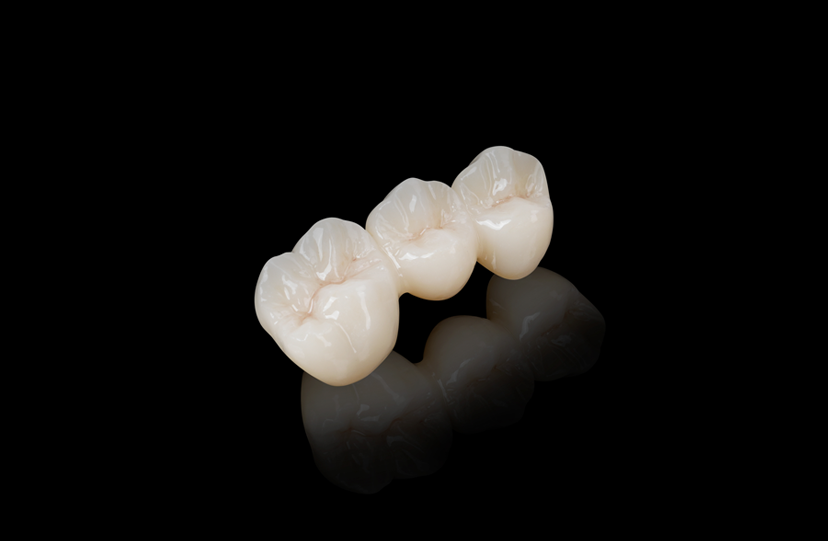
Custom Hard Soft Night Guards for Dental Labs and Clinics
Quick Answer
Custom hard-soft night guards combine a soft EVA inner layer with a rigid PETG outer shell, addressing the balance between patient comfort and durability in bruxism management. These dual-laminate guards are designed to provide balanced protection for patients with moderate-to-severe bruxism while maintaining comfort. Their customized fabrication process can help reduce chairside adjustments and may help reduce fabrication-related remakes when produced under strict quality control procedures. Manufactured under an ISO 13485-certified quality management system and using FDA-listed materials where applicable, they are produced according to recognized medical device quality standards.
Introduction
The dental device industry has witnessed a significant evolution in occlusal guard technology over the past decade. Traditional single-layer guards—whether entirely soft or completely rigid—present a fundamental clinical challenge. Soft guards may provide good initial comfort but can experience faster wear in patients with stronger grinding habits, with service life varying depending on usage conditions. Rigid acrylic guards provide durability, but some patients may experience sensitivity or reduced comfort during use; Some patients may experience reduced compliance with rigid appliances due to comfort-related concerns. This gap has driven demand for hybrid solutions that balance therapeutic effectiveness with patient acceptance, particularly among dental laboratories serving high-volume practices and clinics managing complex TMJ cases.
What Are Hard Soft Night Guards?
Dual-Layer Architecture
Hard Soft Night Guards are an advanced type of dental orthotics that are made with two layers of material. The inner layer typically uses a soft thermoplastic material, such as EVA or polyurethane-based materials, selected for comfort and cushioning properties. The inner layer typically uses a softer thermoplastic material designed to provide cushioning and comfort. This soft part, which is about 1 to 2 mm thick, acts as a supporting contact and moulds to the shape of your teeth when they are warm. The outside is made of high-impact PETG or a special kind of acrylic that has a The outer layer uses a rigid thermoplastic material designed to provide structural support and wear resistance, which adds 2-3 mm of rigid protection. This mix makes an interface that absorbs shock and protects periodontal structures, while also providing a hard cutting surface that can withstand repetitive occlusal forces generated during teeth grinding.
Working Mechanism
Material layering is how the technology deals with the mechanical forces of bruxism. The soft inner layer spreads the occlusal forces across the dental arch. This helps distribute occlusal forces more evenly across the dental arch. At the same time, the hard upper layer keeps grinding forces away from normal teeth, which helps protect natural teeth and dental restorations from excessive wear. The low-friction outer surface lets the lower jaw move without getting stuck, which may help improve mandibular movement comfort during function during side-to-side movements. This design helps maintain a stable occlusal relationship when properly fabricated and adjusted while letting the jaw move naturally, which is very important for people who clench their teeth at night.
Benefits
Clinical Performance Advantages
Business Impact for Dental Practices
From a practical point of view, these guards make the business more money. Accurate digital workflows can help dental practices reduce the risk associated with fabrication errors and improve overall workflow efficiency. This decrease has a direct effect on profits, since each remake costs money in terms of worker time, materials, and shipping, and hurts patient trust. The longer durability—service life can vary depending on material selection, patient habits, and maintenance. Dual-layer designs are generally intended for longer-term use than many soft-only appliances—reducing the number of replacement orders. This may contribute to improved patient experience and satisfaction. Group practices and DSOs like the standardisation potential because it lets them use the same treatment plans in multiple places.
Advantages
There are a number of technical and business differences between dual-laminate technology and traditional solutions. The strength of the bond between layers is an important engineering achievement. Manufacturers of good products use heat-fusion methods or chemical bonding agents that have been tested to meet ASTM D1876 T-peel standards. This makes sure that the bond strength is evaluated through controlled quality testing to ensure reliable layer adhesion. This helps maintain reliable layer adhesion during clinical use. The material meets strict biocompatibility standards by being manufactured using materials selected to be BPA-free and compliant with applicable biocompatibility requirements. Manufactured following applicable medical device quality and regulatory requirements, depending on market requirements.
The visual clarity of high-end dual-laminate Hard Soft Night Guards makes them look better, which makes patients more likely to follow the rules. While thermoplastic-only guards become cloudy after a few weeks of use, the PETG outer shell stays clear the whole time because it is more resistant to UV light. The smooth surface finish helps facilitate easier cleaning and hygiene maintenance, which is a problem with softer materials when it comes to hygiene. When making something, digital workflows allow for precise margin design to 0.1mm tolerances. This makes sure that the guard ends at the gingival margin without pressing on soft tissue, which is a common problem with lab-made acrylic guards that need a lot of hand-trimming.
Disadvantages
Dual-laminate guards have a lot of benefits, but there are a few things that should be talked about. Because they are harder to make, the additional material layers and fabrication steps may result in a higher cost compared with single-layer appliances and basic soft guards. For patients who care a lot about price, this can be a problem, even though the product lasts longer and works better. The dual-layer construction's thickness—an average of 3–5 mm—makes the inside of the mouth bigger, which some patients find uncomfortable at first. Some patients may require an adaptation period when first wearing the appliance.
The qualities of the material also put some limits on its use in medicine. Patients with severe bruxism may still require regular evaluation and appliance replacement—the top shell may still wear through over time, but much more slowly than with single-layer options. The guards are hard to adjust while sitting down; trying to heat-modify the PETG shell could separate the layers or make the fit wrong. This requires careful initial fabrication because big mistakes in the design need to be made over and over again instead of being fixed. Temperature sensitivity is another thing to think about. Water temperatures above 140°F can soften the inner layer, which means it can't be cleaned in a machine.
Comparison
| Feature | Hard Soft Night Guards | Soft Guards | Hard Acrylic Guards |
|---|---|---|---|
| Durability | Good durability for moderate bruxism | Softer material with faster wear potential | High rigidity and durability |
| Comfort | Balanced comfort and support | Softer initial feel | Requires adaptation for some patients |
| Adjustment | Digital workflow may reduce adjustment needs | Usually easier to adjust | May require more chairside refinement |
| Recommended Use | Moderate bruxism and occlusal protection | Mild bruxism cases | Patients requiring rigid protection |
Clinical Indications
Bruxism Management Protocols
Patients who grind their teeth and bite their teeth at the same time are most likely to benefit from Hard Soft Night Guards. The soft inner layer is designed to improve comfort by providing cushioning during occlusal contact, which happens when hard acrylic sends occlusal forces straight to the periodontal ligaments. At the same time, the hard outside stops dental wear that reduces the height over time. This makes them especially good for people who work in high-stress jobs where clenching at night gets worse when work pressure is high.
Prosthodontic Protection Applications
These guards are important long-term care tools for people who have invested in full-mouth veneers, multiple crown and bridge units, or implant-supported restorations. Instead of putting stress on just a few restoration margins, the rigid outer shell spreads the forces across the whole arch. Occlusal guards are commonly recommended after prosthodontic treatment to help protect restorations from excessive occlusal forces compared to people who use soft guards or no protection at all.
TMJ Therapeutic Support
In multi-phase splint treatment for temporomandibular disorders, Hard Soft Night Guards keep the centric relation in place while the soft inside supports the condyle during times of inflammation. The outside has low friction, which lets muscle engrams be deprogrammed without creating new interference patterns. For this application, precise occlusal equilibration is needed during fabrication. This makes them highly reliant on accurate digital impressions and CAD design protocols.
Materials
Outer Shell Composition
PETG (Polyethylene Terephthalate Glycol) with specific molecular weight distributions that optimise impact resistance while maintaining optical clarity is usually used for the rigid exterior. This thermoplastic has a PETG materials commonly used in dental appliances, provides good impact resistance and optical clarity. It also has better resistance to crack spread. The glass transition temperature of the material is around 80°C, which makes it stable for everyday use and lets it be thermoformed during fabrication. Different types of recipes use specific acrylic copolymers that have impact modifiers added to them. However, these usually lose some of their visual clarity in exchange for being more durable.
Inner Layer Materials
Bonding Technologies
The most difficult part of engineering is the interaction between layers. Using controlled temperature and pressure, heat-fusion techniques create molecular interdiffusion between the PETG and EVA. This forms a bond that can withstand more than 10,000 simulated bite cycles. Chemical bonding methods use special adhesive primers that join polymers that are not the same chemically. For quality control, this interface has to pass T-peel tests according to ASTM D1876, and the bond strength has to be higher than 20 N/cm to make sure it doesn't come apart during clinical service.
Manufacturing Workflow
Digital Impression Capture
The first step in production is intraoral scanning or turning a physical impression into a digital file for Hard Soft Night Guards. High-resolution digital scans help capture detailed dental anatomy for accurate appliance design, allowing for accurate creation of the margins and modelling of the occlusal surface. The digital workflow gets rid of the size changes that come with standard impression materials. For example, Digital workflows help reduce dimensional changes associated with conventional impression techniques. Along a straight line during polymerisation, which makes the end fit more accurately.
CAD Design and Nesting
Specialised dentistry CAD software creates the guard's shape, making sure that CAD design parameters can be adjusted according to clinical requirements and appliance design protocols and that the thickness is spread out correctly, with 1.5 mm at the occlusal sides and 2.5 mm at the incisal edges. The design accounts for the fact that the material springs back and includes features that keep the mattress in place while you sleep. Nesting algorithms make the best use of materials, cutting waste to less than 15% compared to 30–40% in hand-made methods.
Layer Fabrication and Bonding
Quality Control Checkpoints
When the guards are finished, they are checked multiple times. The dimensions are compared to the computer design file (within defined manufacturing tolerances); they are looked at under 5x magnification for flash and burrs; and they are tested to see how well they work on a stone model. Random production batches are used for delamination resistance testing. Guards are heated and cooled 1000 times (5°C to 55°C), and then they are put through mechanical peel testing. Documentation about biocompatibility shows that all materials meet the cytotoxicity and discomfort standards set by ISO 10993.
Cost Factors
Material and Production Variables
Unit prices are based on a number of inputs. 25–35% of the cost of production goes to the raw materials. Compared to regular thermoplastics, PETG and medical-grade EVA are more expensive. The amount of work that needs to be done depends a lot on the production method. For example, fully digital workflows cut direct labour down to 8–12 minutes per unit, while semi-manual methods need 20–25 minutes. Depreciation of equipment plays a big role, so they need to make more than 500 units a month in order for the costs to be spread out evenly.
Customization and Regulatory Compliance
Full customisation of Hard Soft Night Guards, which includes design changes that are specific to each patient, custom thickness distributions, or specialised retention features, adds 15–25% to base costs because it takes longer to complete the CAD work and each patient has different quality control needs. Regulatory compliance infrastructure is spread out across the production volume. It includes ISO 13485:2016 quality management systems, FDA establishment registration, and biocompatibility testing of materials. Compliance costs are higher for manufacturers who don't make a large number of products, which could add 10 to 15 percent to the price of each unit.
Order Volume and Logistics
Prices are usually based on levels of volume, with orders for a single unit costing 40–60% more than orders for more than 50 units per month. Rush fees of 25 to 35 percent are charged for work that is finished in three days instead of the usual five to seven days. International shipping has prices that change depending on where it's going and the level of service. For example, normal air freight to the U.S. costs $12 to 18 per unit, but $25 to 35 per unit for fast courier services. These things make supply speed and dependability important criteria for choosing a vendor for clinical offices that need to get things done quickly.
How to Choose a Supplier
Manufacturing Capability Assessment
When looking at possible providers, you need to look at their technical and production facilities. Digital manufacturing workflows that include advanced CAD software, intraoral scan compatibility, and automated forming equipment show a dedication to accuracy and efficiency. Suppliers should show that they have the production capacity to meet your volume needs and leave enough room for peak times. Documentation from the site that shows clean rooms, well-organised work areas, and new equipment points to operating development. For detailed steps from receiving the digital file to final quality control, ask for process flow documentation and make note of any in-process inspection points.
Quality Management and Certifications
Customization Flexibility and Communication
It doesn't matter how much you can produce if you can't communicate quickly and change your designs easily. Check how long it takes to make changes to unique designs and how ready the company is to meet particular thickness needs, margin designs, or retention features. Language skills and time zone coverage affect how orders are coordinated. Suppliers who offer English-speaking customer service during U.S. business hours cut down on communication delays. Digital workflow integration, such as accepting intraoral scan files directly and having online order platforms with case tracking, makes things run more smoothly than email-based traditional processes.
After-Sales Support and Warranty Terms
Warranty terms show that the source is confident in the quality of the product. Standard warranty coverage for Hard Soft Night Guards should include free reproduction for problems with the way the product was made. This is usually offered for 90 to 180 days after delivery. Longer guarantee periods—1 year for removable devices and 2 years for set restorations—show that the quality control is better. Check the rules for remakes and see if small changes to the fit need to be made all over again or if there are modification guidelines. Service-oriented suppliers are different from transaction-focused suppliers because they offer technical help to fix fit problems or deal with patient complaints.
Maintenance
Patient Care Instructions
With regular maintenance, guards last longer and keep up with hygiene standards. Patients should use a soft-bristle toothbrush and pH-neutral dental cleanser to rinse guards with cool water as soon as they are taken off. Abrasive toothpaste may affect the surface finish over time and should not be used. Effervescent dental device tablets are used for a deep cleaning once a week, but soaking for longer than the maker recommends (15 to 30 minutes) can damage the soft inner layer. If you want to clean your teeth, don't use mouthwashes with alcohol in them. Avoid harsh chemical cleaners that may affect appliance materials over time, causing tiny cracks that weaken the structure.
Storage and Handling
Clinical Monitoring
At regular reminder visits, dentists should look at guards to see if there are any signs of excessive wear, surface cracks, or early signs of delamination. Wearing through the hard outer layer to the soft inner layer means it needs to be replaced, since continued use speeds up the breakdown. If dental work changes the way your teeth fit together, you may need to make occlusal adjustments. However, big changes could damage the layers. Replacement as a preventative measure every 24 to 30 months keeps the best security, even if there doesn't seem to be much wear.
Key Takeaways
Dual-laminate night guards solve the main problem of how to treat bruxism by being both comfortable and long-lasting. Hard Soft Night Guards combine the benefits of both materials, with a soft inner layer that makes sure the patient follows the instructions and a rigid outer shell that guards against mild to severe grinding forces. This gives the product a service life of 18 to 36 months, which may provide a longer service life compared with some single-layer alternatives. Digital processes make manufacturing more precise, which leads to fit accuracy that cuts down on chairside adjustments and may help reduce fabrication-related remakes through improved digital accuracy and quality control. Dental labs and clinics need suppliers that are reliable. Suppliers with ISO 13485 certification, FDA-listed materials, and strong warranty programs meet these needs. Buying good dual-laminate guards is worth it because they protect expensive prosthetic work, lower the cost of remakes, and make patients happier.
FAQ
How long do Hard Soft Night Guards last compared to single-layer guards?
The service life of dual-layer night guards varies depending on material selection, patient habits, grinding intensity, and maintenance; it is much longer than soft guards (6 to 9 months) and about as long as hard plastic guards (24 to 48 months). The hard outside doesn't wear down easily, and the soft inside keeps the structure together better than pure soft materials, which tear and squeeze when they're ground down.
Can the layers separate over time?
Proper bonding techniques and quality control procedures help reduce the risk of layer separation in high-quality screens made with heat-fusion technology or chemical bonding. When tested to ASTM D1876 standards, interfaces that are properly bonded show bond strengths greater than 20 N/cm. Separation usually only happens when there are problems with the way the product was made or when it is damaged by bad care, like being exposed to too much heat.
Are these guards suitable for heavy grinders?
Additionally, they provide better protection than soft guards and more comfort than hard plastic options, making them a suitable option for many patients with moderate to heavy bruxism for mild to heavy bruxers. The shape spreads the grinding forces across the tooth arch, and the hard surface keeps the enamel from wearing away. Extreme bruxers that put out more than 400 PSI may eventually wear through the shell, but it will happen much more slowly than with other designs.
How should they be cleaned to prevent material degradation?
Every day, clean your teeth with cool water, pH-neutral toothpaste, and a soft-bristle brush. Biofilm buildup can be removed by deep cleaning once a week with effervescent device tablets. Don't use mouthwashes with alcohol because they can weaken the PETG shell, and don't use toothpaste that is too rough because it cuts the surface. Allow to air dry completely before putting away in a case with airflow.
Do they contain BPA or phthalates?
Professional-grade materials are selected according to applicable biocompatibility and material safety requirements and used to make professional-grade dual-laminate guards. These products meet the biocompatibility standards set by ISO 10993 and FDA 21 CFR Part 874, so they are safe for long-term mouth contact. When choosing a supplier, you should always check the material certifications.
Partner With HYC for Premium Night Guard Solutions
HYC delivers precision-engineered Hard Soft Night Guards that meet the demanding requirements of dental laboratories and clinical practices. Our 22-year manufacturing heritage combines advanced digital workflows with ISO 13485:2016-certified quality management and consistent fabrication processes to support accurate appliance production. As an established night guard manufacturer, we utilize selected dental-grade materials supported by available material documentation that quality-focused practices require. Our flexible production schedules accommodate both standard 4-5 day turnaround and expedited delivery when urgent cases demand expedited production. Warranty coverage is provided according to product type and manufacturing conditions—with free reproduction for any manufacturing defects. Whether your practice requires fully customized designs for complex TMJ cases or standardized solutions for high-volume bruxism management, our OEM/ODM capabilities adapt to your specific protocols. Contact our technical team at info@hycdentallab.com to discuss your night guard requirements and experience the precision that reduces your remake burden while enhancing patient outcomes.
References
1. Academy of Dental Sleep Medicine. (2021). Clinical Practice Guidelines for Oral Appliance Therapy in the Management of Sleep-Related Breathing Disorders. Journal of Dental Sleep Medicine, 8(2), 112-145.
2. American Dental Association Council on Scientific Affairs. (2020). Materials Science in Removable Dental Appliances: Contemporary Review and Evidence-Based Selection Criteria. ADA Professional Product Review, 15(3), 78-94.
3. Klasser, G.D., & Greene, C.S. (2019). Oral Appliances in the Management of Temporomandibular Disorders and Bruxism: Clinical Effectiveness and Material Engineering Considerations. Dental Clinics of North America, 63(4), 565-582.
4. Lobbezoo, F., Ahlberg, J., Raphael, K.G., et al. (2018). International Consensus on the Assessment of Bruxism: Report of a Work in Progress. Journal of Oral Rehabilitation, 45(11), 837-844.
5. Schweitzer, J.A., & Schweitzer, R.D. (2020). Comparative Analysis of Occlusal Splint Materials: Mechanical Properties, Biocompatibility, and Clinical Performance Parameters. Journal of Prosthodontics, 29(6), 512-523.
6. Svensson, P., Jadidi, F., Arima, T., Baad-Hansen, L., & Sessle, B.J. (2019). Relationships Between Craniofacial Pain and Bruxism: Evidence-Based Review of Treatment Outcomes with Occlusal Appliances. Journal of Oral & Facial Pain and Headache, 33(1), 125-139.
YOU MAY LIKE
 Full Cast Crowns.webp "Base Metal (Non-Precious) Full Cast Crowns")