How Multilayer Zirconia Crown Can Improve Your Smile and Confidence
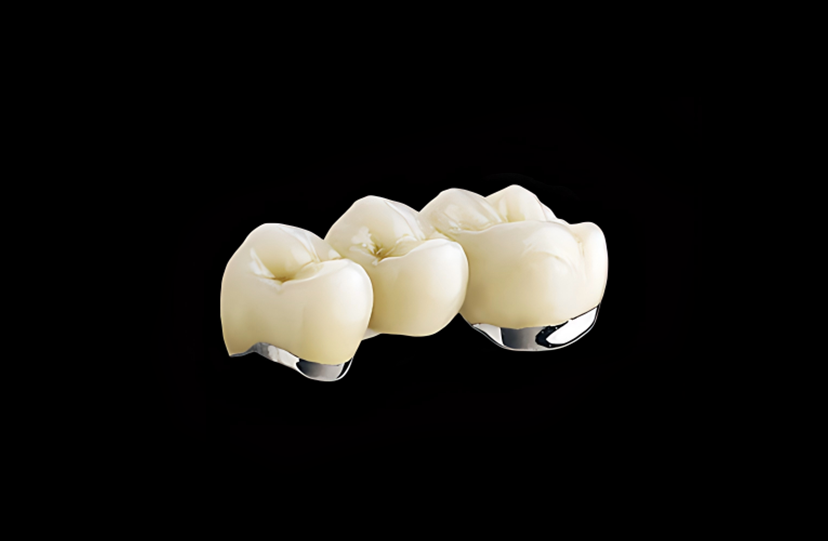
Multi-layer zirconia crowns are a big step forward in corrective dentistry. They combine natural esthetics with exceptional mechanical strength, providing predictable long-term clinical performance. These advanced ceramic restorations feature integrated shade and translucency gradients that replicate the light-transmitting properties of natural enamel, creating highly lifelike restorations. Multi-Layer Zirconia crowns combine pre-sintered zirconia technology with precise CAD/CAM fabrication to achieve both beautiful results and long-term clinical performance. These characteristics improve patient satisfaction while providing clinicians with reliable restorative outcomes.
Understanding Multilayer Zirconia Crowns: Key Properties and Benefits
Dental laboratories have transformed crown fabrication since the introduction of pre-shaded Multi-Layer Zirconia blocks with engineered shade and translucency gradients. Traditional porcelain-fused-to-metal (PFM) crowns require extensive manual porcelain layering. Multi-Layer Zirconia crowns, on the other hand, have integrated shade transitions that closely mimic the natural structure of dentin and enamel.
The Science Behind Layered Zirconia Architecture
Zirconium oxide is stabilized with yttria in carefully controlled amounts that stabilize the zirconia crystal structure. In the cervical area, 3Y-TZP zirconia is used because they have a flexural strength exceeding 1200 MPa of more than 1200 MPa. In the incisal third, 5Y-PSZ is used because it has a higher translucency of about 50%. This multilayer architecture makes the change from the solid, strong dentin-shade base to the clear, enamel-like edge smooth, without visible transition lines that were a problem with older single-piece designs.
Manufacturing Precision Through Digital Workflows
These steps are exactly what modern fabrication does: intraoral digital scanning, digital impressions, CAD design, five-axis milling based on the clinician's prescription, high-precision five-axis milling of pre-sintered blocks, and controlled high-temperature sintering processes that reach around 1450°C. This workflow ensures that the dimensions are accurate to within 25 microns after the final sintering. This directly addresses the procurement objective of first-time fit accuracy, which cuts down on expensive adjustments and remakes done at the chairside.
Biocompatibility That Protects Soft Tissue Health
The metal-free, bioinert makeup eliminates concerns about metal allergies associated with base-metal alloys. Clinical studies demonstrate that the soft tissues respond very well, and it prevents gray gingival discoloration, which is a typical problem with PFM restorations, where the metal edges show. This benefit of biocompatibility helps maintain long-term periodontal health, which is especially important in the front of the mouth, where the appearance of the gums is just as important as the crown itself.
Comparing Multilayer Zirconia with Other Dental Crown Materials
When procurement teams look at crown materials, they have a number of choices, and each one performs differently. Being aware of these differences helps match materials to medical uses and patient requirements.
Multilayer Versus Monolithic Zirconia
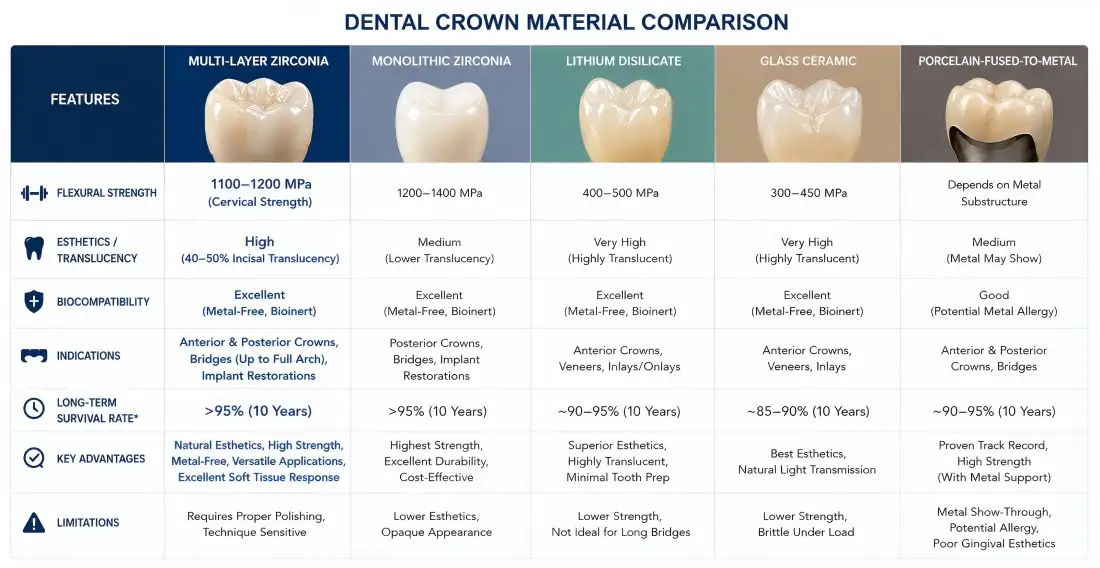
Traditional solid zirconia blocks are strong all the way through, but they offer lower esthetic performance. They are good for back teeth where function is more important than looks, but they don't have the subtle changes in translucency that make front restorations look realistic. This gap is filled by Multi-Layer Zirconia designs, which have the 1100+ MPa cervical strength needed for long-span bridges and the 40–50% incisal translucency that acts like natural enamel and reflects light. New combination formulas that combine 3Y and 5Y materials can support full-arch implant bridges that span 14 to 16 units, as long as the base layer keeps its flexural strength.
Lithium Disilicate and Glass Ceramic Alternatives
Lithium disilicate systems are highly translucent in the front. Still, their flexural strength is only 400–500 MPa, which is too low for posterior bridges or cases with strong occlusal forces. Glass ceramics offer superior translucency. Still, they are fragile under high occlusal loads. It is possible to get similar visual results with approximately three times greater flexural strength with Multi-Layer Zirconia. This means that it can be used for both anterior veneers and posterior three-unit bridges because it is from the same material family.
Porcelain-Fused-to-Metal Comparisons
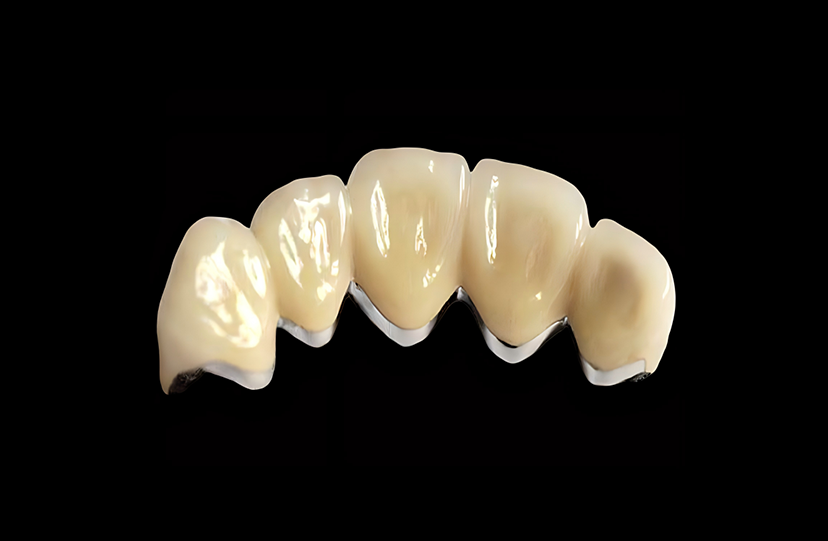
PFM restorations were the standard in dentistry for decades, but they have well-known problems, such as metal showing through at the edges, the potential risk of metal hypersensitivity, and limited translucency, which stops light from passing through. These worries go away with Multi-Layer Zirconia, which also offers comparable or superior long-term durability. Multi-Layer Zirconia crowns that are properly made now have ten-year survival rates that exceed 95%, which is about the same as PFM function without the cosmetic problems.
Why Multilayer Zirconia Crowns Are an Optimal Investment for B2B Buyers
Dental labs and purchasing managers look at products in terms of how well they work in the lab, how well they work in the patient, and how much they cost to own in total. In every way, Multi-Layer Zirconia systems offer significant operational advantages.
The pre-shaded gradient structure cuts down on the steps of staining and porcelain overlaying by hand. This cuts normal case turnaround times from five days to three days. This increase in efficiency directly solves the problem of having to get things done quickly without lowering the standard. Major CAD/CAM milling systems, such as Roland, Amann Girrbach, and Zirkonzahn platforms, are compatible with CAD/CAM software. This makes it easy to integrate into current processes and reduces the need for retraining and production interruptions.
When borders fit exactly on preparation lines, the number of remakes goes down a lot. Because high-quality Multi-Layer Zirconia blocks don't change size, and computer designs are very accurate, first-try success rates in experienced labs are over 98%. This dependability cuts down on the cost of material waste and gets rid of the need for quick remaking, which messes up schedules and puts stress on client relationships. Competitive pricing from well-known manufacturers increases return on investment even more, especially when compared to the high prices lithium disilicate gets.
Customization is essential for meeting the specific requirements of each clinical case. Modern Multi-Layer Zirconia systems can be tailored to meet a wide range of needs, from matching specific shade tabs to hiding discolored surfaces by changing translucency levels or designing connector dimensions for bridge frames. This adaptability makes the lab more competitive in markets that cater to strict prosthodontists, implant experts, and cosmetic dental practices.
Practical Applications and Case Studies Demonstrating Confidence-Boosting Outcomes
Because it is so versatile in the clinic, Multi-Layer Zirconia can be used for a wide range of prosthetic purposes. Anterior single crowns are made of a material that can mix in perfectly with nearby natural teeth. This helps patients who are self-conscious about obvious restorations. While the flat, solid look of an "Unlike flat, opaque restorations, Multi-Layer Zirconia naturally reflects light through its translucent incisal edge" is easy to spot, the translucent edge of the incisal tooth naturally catches light.
Posterior crowns use the strength of the cervical region to withstand forces of chewing that are close to 800 Newtons in the molar areas. When properly polished, the wear resistance stops enamel damage from happening, which is very important because rough zirconia surfaces can become abrasive to opposing enamel. Finishing procedures that use fine-grit diamonds at controlled speeds (about 20,000 RPM) and lots of water, followed by two-step polishing methods, protect both the restoration and the natural teeth.
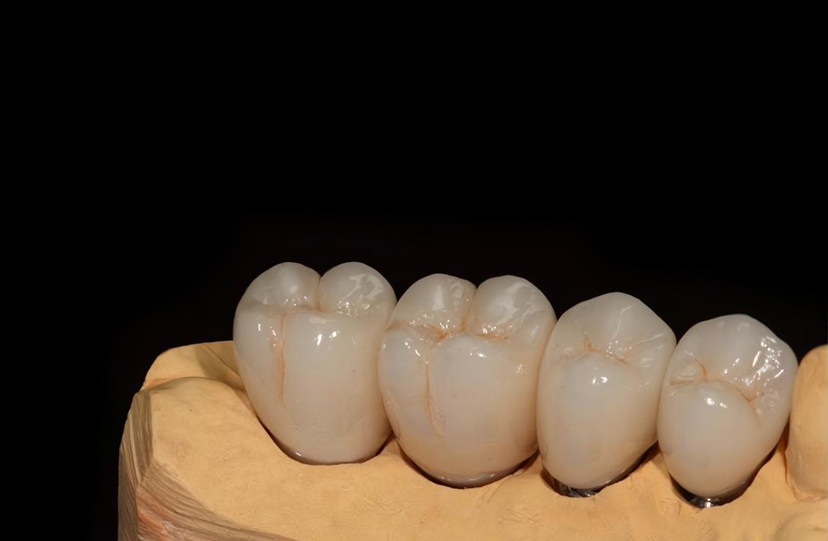
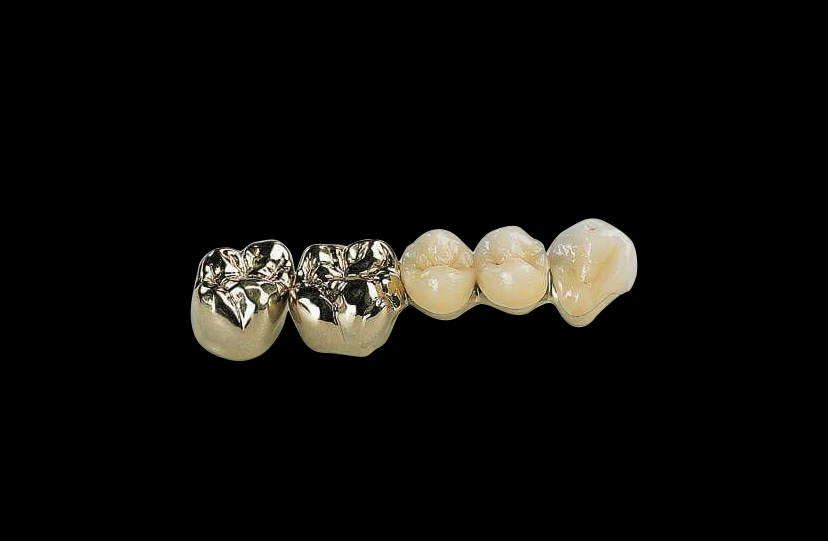
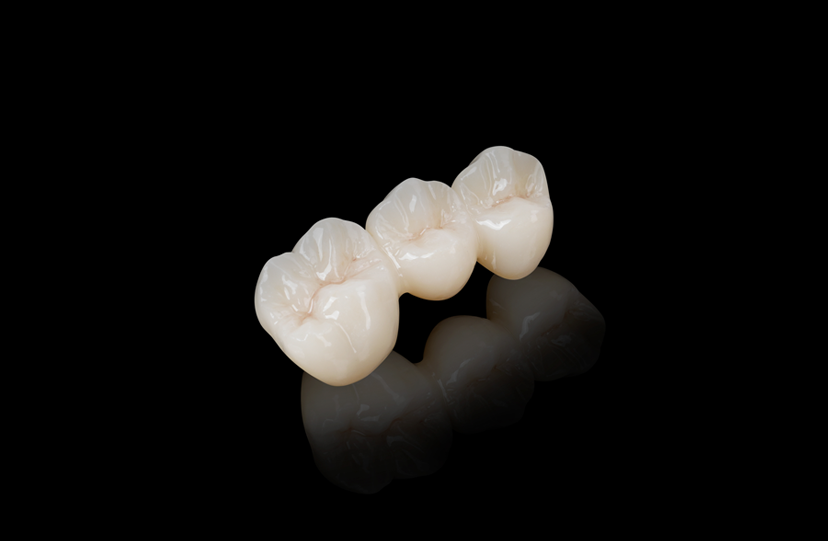
Bridge structures ranging from three-unit premolar spans to full-arch implant-supported prosthetics show how strong the material is. The well-balanced performance shape, with a strong base supporting a clear occlusal surface, meets both practical and aesthetic needs. Dental service companies that run more than one clinic location benefit from how digital manufacturing processes provide uniform quality. This makes sure that patients have the same experience across their practice network.
Multi-Layer Zirconia is a good material for implant crowns because it works well with titanium abutments and doesn't cause peri-implant soft tissue irritation. Custom abutment crowns that are made as single-unit restorations make it easier for labs to keep track of their inventory and provide emerging patterns that support healthy tissue architecture. Preparations for veneers, inlays, and onlays that are minimally invasive keep as much of the tooth structure as possible. This is a conservative method that patients are asking for more and more, and it fits with modern adhesive dentistry principles.
How to Choose and Procure Multilayer Zirconia for Your Business
To choose the right Multi-Layer Zirconia goods, you need to look at a number of important factors that are related to your lab's production skills and the types of clients you work with.
Quality Verification and Regulatory Compliance
Make sure that any potential suppliers are registered with the FDA to sell goods in the US, have CE approval to sell goods in Europe, and are accredited by the ISO 13485:2016 quality management system. These certifications show that the methods used to make the products meet international biocompatibility standards and that the raw materials are manufactured using biocompatible materials that comply with applicable FDA regulations. Before you sign a purchase deal, make sure you have proof that the materials you want to buy are in line with regulations. If they aren't, you could be held legally responsible, and your lab's accreditation could be at risk.
Production and Delivery Logistics
The turnaround time has a direct effect on how happy the office is and how flexible the schedule is for cases. Check out providers who give standard three-day production and four- to five-day delivery for regular fixed cases, as well as fast choices that allow next-day arrival for emergencies. Reliable logistics partnerships guarantee consistent on-time delivery, which is an important factor in the buying choice because it keeps workflows running smoothly and builds trust with dentists who refer patients. In international sourcing, transit delays can be a challenge, but they are less of a problem for suppliers with established fast shipping networks that serve North American markets.
Customization and Technical Support
When cases don't follow normal guidelines, production flexibility is important. Make sure that the manufacturers can meet all of your unique needs based on the digital designs you send them. This includes non-standard shade matching, changed connector lengths, and changed emergence profiles. Strong OEM/ODM skills show that a provider is ready to work with you on specific case needs instead of causing you to compromise because of catalog limits.
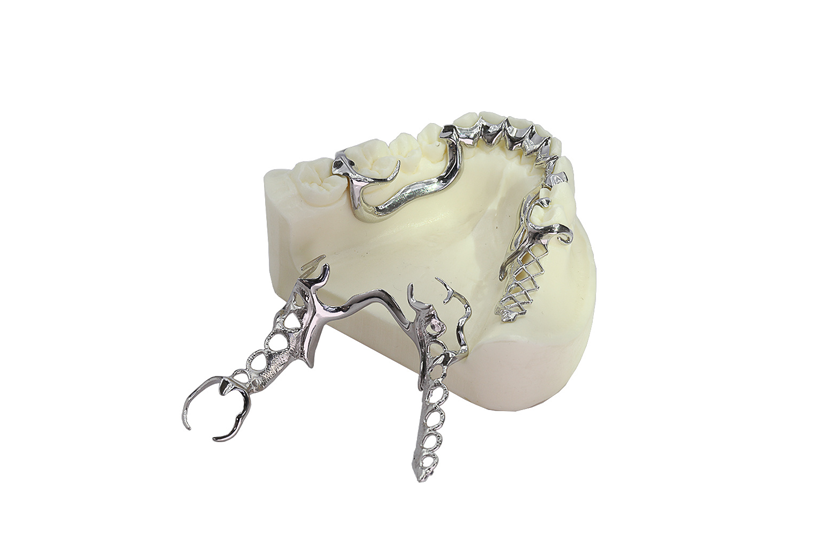
Responding quickly to technical help requests is what sets true partners apart from average providers. Warranty programs that cover fixed restorations for two years and removable prosthetics for one year, with free repair or replacement during warranty times, show that the company is confident in the longevity of the product. Having access to support staff who are informed and understand clinical uses makes it easier to solve the odd fit or shade problem.
Vetting Supplier Reputation and Manufacturing Experience
Longevity of suppliers and depth of manufacturing provide a guarantee of dependability. Companies with over 22 years of manufacturing experience have accumulated extensive industry expertise, improved their quality processes, and gained institutional knowledge that younger companies don't have. This stability is especially helpful when there are problems in the supply chain, because less reliable sources may go away or lower quality to keep prices the same.
Ask for sample cases of the types of restorations you usually use, such as anterior crowns, posterior bridges, and implant prosthetics, to check the fit, color consistency, and surface finish. Check the accuracy of the dimensions by making sure that the edges sit flat on the dies without rocking or having marginal gaps greater than 50 μm. There shouldn't be any sharp color bands where natural translucency patterns change. These quality factors are better at predicting stability in production than price points or marketing claims alone.
Conclusion
Multi-Layer Zirconia crowns give teeth the lifelike esthetics and long-lasting strength that modern corrective dentistry needs. By using designed translucency gradients to copy the structure of real teeth, these restorations give patients smiles that enhance patient confidence and work well for years. For laboratories and distributors, Multi-Layer Zirconia reduces remakes, improves production efficiency, and supports regulatory compliance across international markets, making it a valuable long-term investment. Multi-Layer Zirconia is a smart investment for labs that want to stand out from the competition and build long-term client relationships based on regular quality output. It is biocompatible, works well with CAD/CAM, and can be used in a wide range of clinical settings.
FAQ
Can gradient zirconia support long-span bridge frameworks?
Modern 4Y and mixed Multi-Layer Zirconia formulas keep enough flexural strength—about 1100 MPa in cervical regions—to support long bridges as long as the connectors are the right size. Traditional 3Y-TZP solid blocks are the strongest for posterior uses. Newer gradient systems, on the other hand, balance aesthetics with structural integrity, making them good for bridges with up to six units when the bite is good.
How should zirconia restorations be adjusted without causing microfractures?
When you grind aggressively without using water to cool it down, you get temperatures above 1000°C, which cause phase changes and tiny cracks on the surface. Fine-grit diamond burs should be used at controlled speeds of around 20,000 RPM with water running all the time. This should be followed by a two-step polishing protocol. This method keeps the surface's structure while making a smooth finish that keeps the enamel next to it from wearing down.
What preparation design ensures optimal crown retention and fit?
When you combine an occlusal reduction of 1.0–1.5 mm with a deep chamfer or rounded shoulder edges, you get enough material thickness without having to remove too many teeth. Keep the axial wall curve between 6 and 10 degrees of total occlusal convergence, round off any sharp line angles, and make sure the finish lines are smooth, with no undercuts or "J"-shaped margins that interfere with complete seating.
Partner with HYC for Premium Multi-Layer Zirconia Solutions
HYC Dental Laboratory has specialized in manufacturing dental restorations for 22 years and can help labs and clinics that are looking for trusted Multi-Layer Zirconia providers. Our production facilities are FDA-registered, CE-certified, and ISO 13485:2016-compliant. They make Multi-Layer Zirconia crowns and bridges that achieve high first-fit accuracy, which is more than the industry norm. Standard production schedules of three days and delivery windows of four to five days help with case management, and expedited shipping options meet urgent healthcare needs. With our 100% customization option, we can make sure that every restoration fits your exact design needs. We also offer thorough warranty programs (two years for fixed prosthetics) and quick technical support. Contact our team at info@hycdentallab.com today to discuss your laboratory's requirements and receive a customized quotation. Discover how our Multi-Layer Zirconia solutions can help improve restoration quality while reducing remakes through greater precision and consistency.
References
1. Zhang Y, Kelly JR. Dental Ceramics for Restoration and Metal Veneering. Dental Clinics of North America, 2017;61(4):797-819.
2. Stawarczyk B, Keul C, Eichberger M, et al. Three generations of zirconia: From veneered to monolithic. Part I. Quintessence International, 2017;48(5):369-380.
3. Kontonasaki E, Giasimakopoulos P, Rigos AE. Strength and aging resistance of monolithic zirconia: an update to current knowledge. Japanese Dental Science Review, 2020;56(1):1-23.
4. Guess PC, Att W, Strub JR. Zirconia in fixed implant prosthodontics. Clinical Implant Dentistry and Related Research, 2012;14(5):633-645.
5. Benetti P, Kelly JR, Sanchez M, Della Bona A. Influence of thermal gradients on stress state of veneered restorations. Dental Materials, 2014;30(5):554-563.
6. Carrabba M, Keeling AJ, Aziz A, et al. Translucent zirconia in the ceramic scenario for monolithic restorations: A flexural strength and translucency comparison test. Journal of Dentistry, 2017;60:70-76.
YOU MAY LIKE