Duraflex vs Valplast Dentures: Comparing Flexible Partial Denture Options


Duraflex and Valplast Dentures are two well-known options in the flexible partial denture market. Both are designed to provide a metal-free alternative to conventional removable partial dentures, but the materials, adjustment methods, and laboratory workflows are not identical. For dental labs and clinicians, the better choice depends on the case, the material requirements, and the laboratory's experience with the system.
Introduction
Flexible partial dentures have become a practical option for patients who want to replace missing teeth without visible metal clasps. Compared with traditional cast-metal removable partial dentures, flexible designs can provide a different balance of appearance, retention, comfort, and adjustability.
Two names that frequently come up in this category are Duraflex and Valplast. Although they are often grouped as flexible partial denture systems, they should not be treated as interchangeable materials.
For dental professionals and laboratory teams, the useful questions are straightforward: What is the material made from? How does it behave during fabrication and adjustment? Can the appliance be repaired or modified? Which cases are suitable? And what does the laboratory need to know before fabrication?
What Are Flexible Partial Dentures?
Defining the Thermoplastic Partial
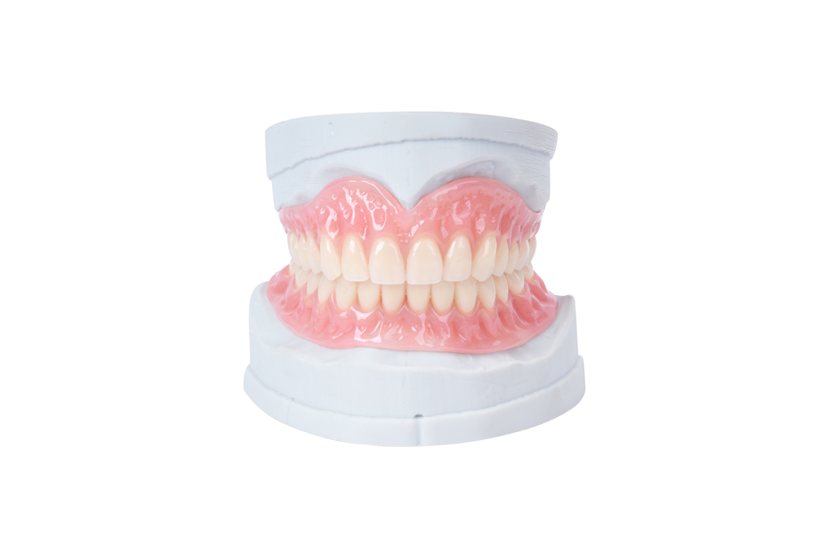
A flexible partial denture is a removable dental appliance made from a thermoplastic resin. The material is processed into a denture base and flexible retentive components that are designed around the patient's existing teeth and oral tissues.
Unlike a conventional cast-metal partial denture, a flexible partial does not rely on a rigid metal framework. This can make the appliance less visually noticeable, particularly when the flexible components are matched to the gingival area.
Flexible does not mean that every thermoplastic partial has the same level of flexibility. Different materials have different strength, stiffness, moisture absorption, finishing, and adjustment characteristics. Those differences matter when a dental lab is selecting a system.
How Flexible Partial Dentures Work
During fabrication, the dental laboratory creates a working model from the dentist's impression or digital workflow, designs the appliance, and processes the selected thermoplastic material according to the manufacturer's instructions.
The finished appliance uses the material's flexibility to engage selected areas of the oral anatomy for retention. Proper case planning remains important because the material alone does not determine the fit, stability, or long-term performance of the partial.
Duraflex vs. Valplast at a Glance
Valplast is a flexible partial denture material made from a medical-grade nylon resin. Valplast's manufacturer describes the material as flexible, durable, metal-free, and suitable for partial denture applications.
DuraFlex is a flexible partial denture material manufactured by Myerson. Myerson describes DuraFlex as a thermoplastic material that is not nylon, with low moisture absorption, stain resistance, and the ability to be adjusted, repaired, and polished.
The material difference is important. Calling both products simply "nylon flexible partials" can lead to an inaccurate comparison.
Benefits of Flexible Partial Dentures
Flexible partial dentures are often selected when appearance, the absence of visible metal, and a removable treatment approach are important considerations.
Metal-Free Design
Both DuraFlex and Valplast are designed as metal-free flexible partial denture systems. For patients who prefer not to have visible metal clasps, this can be an important aesthetic consideration.
Natural-Looking Appearance
Flexible denture bases and gingival-colored retentive components can make the appliance less noticeable than a conventional partial with visible metal clasps. The final appearance still depends on case design, material selection, tooth arrangement, tissue conditions, and laboratory finishing.
Comfortable Removable Design
Many patients prefer a removable appliance that is relatively lightweight and does not include a visible metal framework. Comfort depends on the fit, extension, occlusion, tissue anatomy, and overall design of the partial.
No Metal Framework
For cases in which a patient specifically wants a metal-free removable partial, thermoplastic materials provide an alternative to cast-metal frameworks. The dentist should still determine whether a flexible partial is appropriate for the patient's clinical situation.
Advantages Over Conventional Options
Aesthetic Considerations
One of the most obvious advantages of a flexible partial is appearance. Gingival-colored flexible components can reduce the visibility associated with conventional metal clasps.
This can be especially relevant when replacing anterior teeth or when the patient is concerned about the appearance of a removable appliance.
Metal-Free Treatment Option
Patients who want to avoid a metal framework may consider a flexible partial as one of several removable treatment options. A dentist should evaluate the patient's history and material requirements before recommending a specific system.
Ease of Seating
The flexibility of the material can allow the appliance to engage designed undercuts during insertion and removal. The exact insertion path and retention depend on the design of the appliance and the patient's oral anatomy.
Disadvantages to Consider
Adjustment, Repair, and Modification
One of the biggest differences between flexible partial denture systems is how they can be adjusted and modified.
DuraFlex is marketed by Myerson as easy to adjust, repair, and polish. Valplast also provides manufacturer-supported adjustment and modification techniques, including procedures for adding teeth and rebasing certain appliances. Therefore, it is not accurate to state that flexible partial dentures can never be repaired or modified.
However, modification is not always appropriate. A patient's oral tissues, fit, occlusion, material condition, and the age of the appliance may make replacement a better option than modification. The prescribing dentist and qualified laboratory should evaluate the case before deciding.
Case Selection Matters
Flexible partial dentures are not automatically the best choice for every missing-tooth situation. Cases with significant distal-extension requirements, limited support, changing dentition, or complex occlusal demands may require a different removable or fixed treatment design.
The decision should be based on the patient's oral condition and treatment goals rather than appearance alone.
Long-Term Maintenance
Like other removable dental appliances, flexible partials require routine cleaning, professional evaluation, and appropriate handling. Changes in the patient's teeth, gums, ridge anatomy, and occlusion can affect fit over time.
Duraflex vs. Valplast: Side-by-Side Comparison
| Factor | DuraFlex | Valplast |
|---|---|---|
| Manufacturer | Myerson LLC | Valplast International Corp. |
| Material | Thermoplastic material; Myerson states it is not nylon | Medical-grade nylon resin |
| Design | Flexible partial denture base and retentive components | Flexible partial denture base and retentive components |
| Appearance | Thin, translucent, designed to be less noticeable | Gingival-colored, designed for a natural appearance |
| Moisture absorption | Myerson states very low moisture absorption | Nylon-based material |
| Adjustment | Manufacturer provides adjustment procedures | Manufacturer provides adjustment and modification procedures |
| Repair/modification | Manufacturer describes repair capability | Teeth can be added, and rebasing can be performed in appropriate cases |
| Laboratory processing | Follow Myerson's prescribed processing workflow | Follow Valplast's prescribed laboratory techniques |
| Best comparison point | Material behavior, adjustment, repair, and finishing | Nylon flexibility, clinical technique, and laboratory support |
The two systems should be compared according to their current manufacturer instructions rather than assuming that all flexible partial denture materials behave the same way.
Clinical Indications
Ideal Patient Profiles
Flexible partial dentures may be considered for patients who:
Need a removable partial denture to replace missing teeth.
Prefer a metal-free appliance.
Are concerned about visible metal clasps.
Have clinical anatomy that can provide appropriate retention for a flexible design.
Need a removable option while considering other long-term treatment choices.
The final indication should be determined by the prescribing dentist after evaluating the patient's teeth, supporting tissues, occlusion, and overall treatment plan.
Less Suitable Scenarios
A flexible partial may be less suitable when a case requires a highly rigid framework, extensive support, complex occlusal control, or predictable future modification that is better achieved with a conventional removable partial denture.
Patients who are expected to lose additional teeth should discuss future treatment options with their dentist before choosing a removable appliance. Planning for possible changes can help avoid unnecessary replacement costs.
Pediatric and Transitional Cases
Flexible partial dentures may sometimes be used as transitional appliances in selected patients. The treatment plan should account for growth, changes in the dentition, eruption, and the expected duration of use.
Materials
DuraFlex Material
Myerson describes DuraFlex as a flexible thermoplastic material and specifically notes that it is not nylon. The manufacturer also highlights low moisture absorption, stain resistance, and the ability to adjust, repair, and polish the material.
Valplast Material
Valplast describes its denture base resin as a medical-grade nylon material. The manufacturer provides specific laboratory techniques for fabrication, adjustment, tooth addition, and rebasing.
Because the two materials have different compositions and processing characteristics, dental laboratories should use the manufacturer's recommended equipment, temperatures, finishing methods, and adjustment techniques rather than applying one material's workflow to the other.
Manufacturing Workflow
Step 1 — Impression and Model Fabrication
An accurate impression or approved digital workflow is the foundation of a predictable partial denture. The laboratory needs a model that clearly records the teeth, soft tissues, and areas relevant to retention and appliance design.
Step 2 — Design and Wax Setup
The laboratory establishes the tooth position, tissue coverage, retention design, and injection or processing requirements according to the selected material system.
Step 3 — Processing
The selected thermoplastic material is processed according to the manufacturer's instructions. Temperature, pressure, equipment setup, sprue design, and processing time can affect the quality of the finished appliance.
Step 4 — Finishing and Adjustment
After processing, the appliance is separated from the model, excess material is removed, surfaces are finished, and the appliance is checked for fit and function. Material-specific burs, stones, and polishing procedures should be used where required.
Cost Factors
The cost of a flexible partial denture varies by laboratory, case complexity, number of teeth, material system, tooth selection, shade requirements, and finishing requirements.
Dental labs should calculate pricing according to the actual laboratory workflow and materials required for each case.
How to Choose a Supplier or Dental Laboratory
A reliable dental laboratory or material supplier should be able to clearly identify the material being used and follow the manufacturer's processing requirements.
When comparing suppliers, dental labs should consider:
Material authenticity and traceability.
Manufacturer-approved processing procedures.
Laboratory experience with the selected flexible system.
Quality control during fabrication and finishing.
Communication and turnaround time.
Remake and adjustment procedures.
Ability to support dentists with case planning when needed.
For branded materials such as Valplast, documentation and authenticity information can also be important. Valplast states that its appliances are supplied with authenticity documentation and provides a registration process for qualifying appliances.
Maintenance
Patients should follow the cleaning and care instructions supplied by their dentist and the manufacturer. Flexible partial dentures should be handled carefully during insertion, removal, and cleaning.
Cleaning products are not necessarily interchangeable between materials. For example, Valplast specifically recommends its Val-Clean denture cleanser and advises patients to follow its care instructions.
Patients should also avoid using excessive heat or unapproved cleaning methods that could affect the shape or surface of a thermoplastic appliance.
Duraflex vs. Valplast: Which One Should a Dental Lab Choose?
DuraFlex may be attractive to laboratories that prioritize a non-nylon thermoplastic material with low moisture absorption and manufacturer-supported adjustment, repair, and polishing.
Valplast may be attractive to laboratories that prefer a well-established nylon flexible partial system with dedicated clinical techniques and laboratory support for adjustments, tooth additions, and rebasing.
The choice should reflect the clinical case, the dentist's treatment plan, the laboratory's equipment and experience, and the manufacturer's processing requirements.
Key Takeaways
DuraFlex and Valplast are both established options for flexible partial dentures, but they are not the same material.
DuraFlex is a non-nylon thermoplastic material marketed by Myerson for flexible partial dentures, with an emphasis on low moisture absorption and adjustment, repair, and polishing.
Valplast is a medical-grade nylon flexible partial denture material supported by manufacturer-specific techniques for fabrication, adjustment, tooth addition, and rebasing.
For dentists and dental laboratories, case selection, material properties, laboratory technique, fit, maintenance, and future treatment needs should all be considered before fabrication.
FAQ
What is the difference between DuraFlex and Valplast?
DuraFlex and Valplast are both flexible partial denture systems, but their materials are different. Myerson describes DuraFlex as a non-nylon thermoplastic material, while Valplast uses a medical-grade nylon resin. Their adjustment and laboratory techniques also differ.
Is DuraFlex nylon?
No. Myerson specifically describes DuraFlex as a flexible thermoplastic material that is not nylon. This is an important distinction when comparing DuraFlex with nylon-based flexible partial denture materials.
Is Valplast made from nylon?
Yes. Valplast describes its denture base resin as a medical-grade nylon material. The material is designed for flexible, metal-free partial dentures.
Which is better, DuraFlex or Valplast?
Neither is universally better. The appropriate material depends on the clinical case, material characteristics, laboratory workflow, and the dentist's treatment plan.
Can you add a tooth to a Valplast partial?
Yes. The manufacturer of Valplast provides a laboratory technique for adding teeth to an existing Valplast partial. Whether an existing appliance should be modified or replaced depends on its condition, fit, function, and the patient's current oral condition.
Can DuraFlex partial dentures be repaired?
Myerson describes DuraFlex as easy to adjust and repair. The laboratory should follow the manufacturer's recommended repair and finishing procedures and determine whether repair is appropriate for the specific appliance.
Are flexible partial dentures comfortable?
Many patients find flexible partial dentures comfortable, but comfort depends on the fit, extension, tissue anatomy, occlusion, retention, and overall design of the appliance.
How long does a flexible partial denture last?
There is no single service-life number that applies to every flexible partial. Longevity depends on the material, case design, oral conditions, hygiene, wear, fit, and changes in the patient's dentition. Regular dental evaluations can help determine when an appliance needs adjustment, repair, or replacement.
Can you sleep with a flexible partial denture?
Patients should follow the instructions provided by their dentist. In many cases, removing a removable partial at night allows the oral tissues to rest and makes routine cleaning easier. The appropriate wearing schedule can vary by patient and treatment plan.
Is a flexible partial denture better than a cast metal partial denture?
Not in every case. A cast-metal partial provides a rigid framework and may be preferable when rigidity, support, stability, or long-term modification is especially important. A flexible partial may be attractive when a metal-free design and aesthetics are higher priorities. The dentist should select the design based on the patient's clinical needs.
Partner With HYC for Your Flexible Partial Denture Needs
HYC Dental Lab provides flexible partial denture solutions for dental laboratories and dental professionals across the United States. Our laboratory team focuses on consistent fabrication, quality control, communication, and reliable turnaround for removable prosthetic cases.
If your laboratory is comparing flexible partial denture materials or looking for support with a specific case, contact HYC Dental Lab to discuss your requirements.
You can email our team at info@hycdentallab.com or visit hycdentallab.com.
References
Myerson Tooth — DuraFlex product information.
Valplast International Corp. — Valplast Flexible Partials FAQ.
Valplast International Corp. — Clinical Techniques.
Valplast International Corp. — Adjusting Your Valplast.
Valplast International Corp. — Patients and Tooth Replacement Options.
YOU MAY LIKE