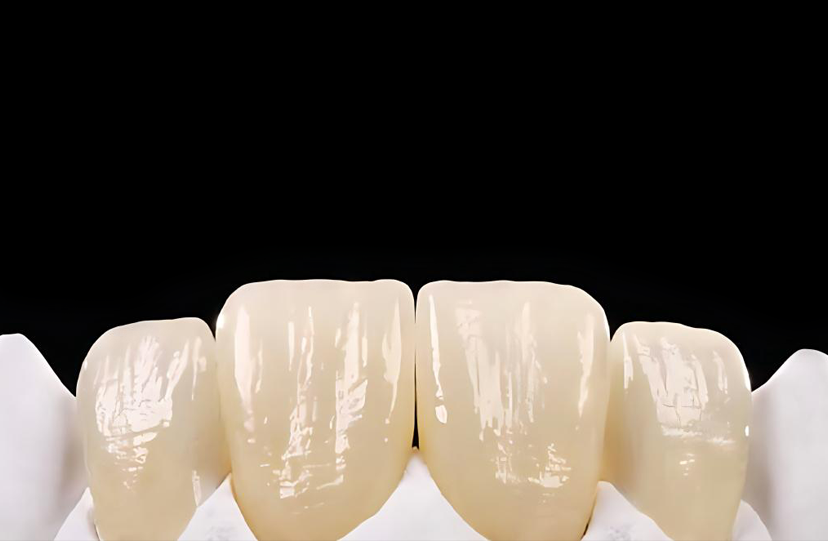
Co-Cr PFM Crowns: Features, Benefits and Applications in Dentistry
Co-Cr PFM (Cobalt-Chrome) crowns are metal replacements made of porcelain that are fused together. They are built on a base of cobalt-chromium material. They have a service life of more than 20 years, are very strong under load, and don't rust. They are one of the most cost-effective and clinically proven solutions in modern restorative dentistry. They are widely used for posterior crowns, long-span bridges, and restorations that are supported by implants.
Introduction
In the last 20 years, there have been a lot of new dental restoration materials. However, Co-Cr PFM (Cobalt-Chrome) crowns are still widely used in private offices, dental service organizations, and contract labs across the United States. Their long time on the market is one reason they remain a familiar option for fixed restorations. According to a study published in the Journal of Dental Research (2018), metal-ceramic restorations, such as Co-Cr PFM (Cobalt-Chrome) frames, have survival rates above 90% after 10 years.
Choosing the right restoration material has a direct effect on the number of remakes, patient satisfaction, and operational costs for dental labs and procurement teams. Clinicians and buyers can make smart, evidence-based decisions when they know what Co-Cr PFM (Cobalt-Chrome) crowns can do and what they can't do.
What Is a Co-Cr PFM Crown?
A Co-Cr PFM (Cobalt-Chrome) crown has two parts: a hard cobalt-chromium metal framework that supports the tooth's structure, and a porcelain veneer that is fired onto its surface for aesthetics. The alloy is mainly made up of cobalt and chromium, with small amounts of other base metals present. This combination provides high bending strength and good resistance to oral corrosion.
Material Composition
The alloy usually has between 60 and 65% cobalt, 25 to 30 percent chromium, and trace amounts of molybdenum or tungsten. This formula gives a high modulus of elasticity and good shape stability when the teeth are closed.
How the Metal-Ceramic Bond Works
The metal coping forms a controlled oxide layer on the surface while it is being made. As the firing cycle goes on, dental porcelain, which has a similar Coefficient of Thermal Expansion (CTE), bonds to this oxide layer. For optimal results, the alloy and porcelain must be CTE compatible; if they are not, the porcelain can delaminate, "pop-off," or fracture.
Service Life Expectation
With good patient hygiene and occlusal management, Co-Cr PFM (Cobalt-Chrome) restorations can last 20 years or longer, making them one of the more durable fixed prosthetic options in restorative dentistry.
Benefits of Co-Cr PFM Crowns
Cobalt-chrome frameworks are chosen by dentists for clear clinical and operational reasons. Here are the main reasons why people choose to adopt:
Superior structural strength: Co-Cr metals can handle high bite forces and don't break under heavy occlusal loads. This lowers the risk of restoration failure in the back teeth.
Cost-effectiveness: Base metal alloys are much cheaper than gold or high-noble alternatives. This makes Co-Cr PFM (Cobalt-Chrome) a cost-effective choice for a set crown when long-term function is important.
Conservative tooth preparation: Because the metal is strong at very thin cross-sections (as little as 0.3 mm), less of the natural tooth structure needs to be taken away than with some all-ceramic restorations, which need more space for the restorative material.
Precision marginal fit: For precise marginal fit, lab workers use digital scans and milling or DMLS (Direct Metal Laser Sintering) to get tight marginal adaptation that helps reduce microleakage and secondary decay.
These clinical benefits can lead to fewer remakes, shorter chair times, and more stable patient results, all of which are important to dentists, lab owners, and clinic operations managers.
Advantages Over Alternative Crown Types
It's easy to see where Co-Cr PFM (Cobalt-Chrome) stands out structurally when you compare it to other types of restorations.
| Feature | Co-Cr PFM | Full Zirconia | All-Ceramic (e-max) | Gold |
|---|---|---|---|---|
| Flexural Strength | Very High | High | Moderate | High |
| Aesthetics | Moderate | High | Very High | Low |
| Cost | Low | Medium | Medium–High | Very High |
| Occlusal Space Required | Minimal | Moderate | Moderate | Minimal |
| Long-Span Bridge Suitability | Excellent (up to 14 units) | Moderate | Limited | Excellent |
| Service Life | 20+ years | 15+ years | 10–15 years | 20+ years |
Co-Cr PFM (Cobalt-Chrome) is still a practical choice for cases with limited vertical space, long-span bridges, or implant-supported abutments. DMLS (3D-printed) frameworks have an internal fit that can be highly consistent with digital fabrication and avoid some of the variations associated with traditional lost-wax casting.
Disadvantages and Clinical Considerations
Co-Cr PFM (Cobalt-Chrome) is not an ideal choice for every case because it has some limitations. Clinicians can choose the right cases with the help of a fair evaluation.
Aesthetic Constraints
The metal substructure stops light from passing through, leaving a gray shadow at the gum line. This effect is sometimes called "gingival tattooing." This effect is most noticeable in people whose gums are thin or whose lip lines are high. A porcelain-shoulder border or a high-opacity layer can make the metal less noticeable.
Porcelain Chipping Risk
Even though the metal frame is strong, the porcelain veneer can still chip when it is exposed to heavy occlusal or parafunctional loads. A vacuum-firing oxide wash cycle should be used in labs to create a thin, dense oxide layer. An oxide layer that is too thick can weaken the porcelain bond and raise the risk of fracture. Tooth reduction should follow the requirements of the restoration design and the material being used.
Biocompatibility Considerations
For example, nickel is found in some alloys, which can cause allergic reactions in susceptible patients. If a patient is allergic to nickel, nickel-free Co-Cr PFM (Cobalt-Chrome) formulas or other materials should be considered to reduce the risk of irritation in the gingival area.
Clinical Indications
There are many times when Co-Cr PFM (Cobalt-Chrome) crowns are useful in the dental field. Because the metal core is strong, it is especially useful in areas exposed to higher occlusal forces.
Posterior Crowns and Bridges
It is reliable for the metal to handle high molar forces. The Co-Cr PFM (Cobalt-Chrome) framework can support bridges with up to 14 units without excessive flexing when the case is properly designed. This makes it suitable for certain long-span applications where other ceramic options may be limited.
Implant-Supported Restorations
A lot of implant abutments use Co-Cr PFM (Cobalt-Chrome) copings because the metal can handle the stiff implant connection without putting too much stress on the restoration. The fit around the abutment platform is important for the overall performance of the restoration and the surrounding tissue.
Periodontal Splinting
Co-Cr PFM (Cobalt-Chrome) frames give patients who need splinted crowns to support mobile teeth the rigidity they need across multiple units without making the preparation too bulky.
Manufacturing Workflow
The final fit and bond quality depend on a consistent production process. I go over the main steps below.
Digital Scanning and Design
A computer model is made from impressions or intraoral scans. Before cutting or printing starts, the margin lines are checked in CAD software to make sure the coping design is finished.
Framework Fabrication
Traditional lost-wax casting with high-heat induction or DMLS (Direct Metal Laser Sintering) are the two ways to do it. DMLS reduces some of the effects of hand waxing and thermal shrinkage, making the fit inside more consistent. A chamfer margin of about 0.8–1.0 mm makes the finish line clear for the digital camera and lowers the chance of over-extended metal that can affect the porcelain fit.
Porcelain Layering and Firing
The coping is cleaned and sandblasted, and then it goes through an initial oxide fire under pressure. After that, matching ceramic is stacked and fired one layer at a time. The final application of glaze and stain completes the look.
How to Choose a Co-Cr PFM Supplier
The provider you choose for Co-Cr PFM (Cobalt-Chrome) restorations affects how often you fix cases, how reliable their deliveries are, and how many cases they handle overall. Use these factors to judge candidates:
Regulatory compliance: Make sure the company is registered with the FDA, has CE certification, and follows ISO 13485:2016 quality management. The FDA should list the materials and test them for biocompatibility.
Production method: Suppliers who offer both standard casting and DMLS frames give you more choices for accuracy in difficult cases.
Time to turn around: For clinical practice needs, a standard production cycle of 3–5 days with the ability to ship quickly is the standard.
Warranty and after-sales support: A 2-year promise that covers free repairs or copies shows that you really believe in the quality and lowers your financial risk when it comes to remakes.
Customization ability: Each case is different. Make sure the provider makes restorations that are 100% unique and fit your style and prescription.
If you choose a seller with 20 years or more of production experience and compliance documents that can be checked, the evaluation process goes much faster, and the risk of buying from that supplier is much lower.
Conclusion
Co-Cr PFM (Cobalt-Chrome) crowns are well-known in restorative dentistry because they offer strong structural performance, a wide range of clinical applications, and low cost. They work well with posterior crowns, long-span bridges, implant restorations, and cases requiring periodontal splinting. Dental experts and procurement managers can get the most out of this type of restoration by understanding how to prepare the material, how porcelain bonds, and how to choose a suitable source.
FAQ
How long does a Co-Cr PFM crown last?
If you take care of your teeth and go to the dentist regularly, a Co-Cr PFM (Cobalt-Chrome) crown can last 20 years or longer. Actual service life depends on factors such as occlusion, preparation, oral hygiene, material quality, and patient habits.
Is Co-Cr PFM safe for people who are allergic to metal?
Patients with a known allergy to nickel, cobalt, chromium, or other metals should have the alloy composition checked before treatment. Nickel-free Co-Cr PFM (Cobalt-Chrome) formulas or other restorative materials may be considered when appropriate.
Why does a dark line show up where the gum meets the crown of a PFM?
This dark shadow is caused by the metal substructure limiting light transmission at the edge of the crown. It can be more noticeable when the gingival tissue is thin, or the patient has a high smile line. A porcelain-shoulder preparation or suitable opaque porcelain can make the metal less noticeable.
How much of a tooth needs to be cut down for a Co-Cr PFM crown?
Standard preparation guidelines often call for an occlusal reduction of 1.5 to 2.0 mm and a chamfer margin of 0.8 to 1 mm. The exact reduction depends on the clinical case, restoration design, and material requirements.
Why does the porcelain chip on a PFM crown?
The main reasons can include insufficient occlusal clearance, inadequate framework support, inappropriate porcelain thickness, heavy occlusal loading, or processing variables. Proper preparation, framework design, porcelain layering, and occlusal adjustment can help reduce this risk.
Can Co-Cr PFM crowns be put on implants?
Yes. Co-Cr PFM (Cobalt-Chrome) frameworks are often used for crowns and bridges that are supported by implants because they provide good strength and rigidity. The framework design and fit around the implant or abutment platform are important for the restoration.
What makes DMLS different from cast Co-Cr frameworks?
DMLS uses a digital design and additive manufacturing process to produce the Co-Cr framework. Compared with standard casting, it reduces some of the variables associated with hand-waxing and casting shrinkage. This can provide a more consistent digital workflow and internal fit.
What is the cost difference between Co-Cr PFM and zirconia crowns?
Co-Cr PFM (Cobalt-Chrome) is usually less expensive than full-contour zirconia, although the final price depends on the restoration design, material, manufacturing method, and laboratory.
What is the difference between Co-Cr PFM and zirconia crowns?
Co-Cr PFM combines a cobalt-chromium metal framework with porcelain, while zirconia crowns are made from ceramic material. Co-Cr PFM is often selected when strength, rigidity, and limited space are important. Zirconia may be selected when a metal-free restoration and different aesthetic properties are preferred.
Is Co-Cr PFM suitable for posterior crowns and bridges?
Yes. Co-Cr PFM is commonly used for posterior crowns and bridges because the cobalt-chromium framework provides high strength and rigidity. The suitability of a long-span bridge depends on the case design, abutment condition, occlusion, and available space.
Can dental labs outsource Co-Cr PFM production?
Yes. Dental laboratories can outsource selected Co-Cr PFM cases when they need additional production capacity or external manufacturing support. Before working with an outsourcing partner, labs should check material information, quality procedures, turnaround time, communication, and remake or warranty policies.
What should a dental lab provide when sending a Co-Cr PFM case?
The laboratory should provide the prescription, tooth numbers, preparation or scan data, margin information, shade requirements, occlusal instructions, and implant or abutment information when applicable. Any specific design requirements should also be included with the case.
What should a dental lab check before choosing a Co-Cr PFM supplier?
A dental lab should check the supplier's alloy information, production method, quality control process, turnaround time, communication, remake policy, and applicable quality or regulatory documentation. For laboratories handling regular outsourced cases, consistent production quality and delivery are also important.
Partner With HYC — Your Trusted Co-Cr PFM Manufacturer
For 22 years, HYC has made precise dental restorations. Our Co-Cr PFM (Cobalt-Chrome) crowns are made with products that are FDA-listed and certified by ISO 13485:2016, CE, and the US Food and Drug Administration. We offer normal shipping in three days, flash next-day delivery for urgent cases, and a guarantee that lasts two years and includes free copies. To get a quote, email our team at info@hycdentallab.com or go to hycdentallab.com.
References
1. Pjetursson, B. E., et al. "A systematic review of the survival and complication rates of fixed dental prostheses supported by implants." Journal of Dental Research, 2018.
2. Anusavice, K. J., Shen, C., & Rawls, H. R. Phillips' Science of Dental Materials. Elsevier, 2013.
3. Donovan, T. E., & Chee, W. W. L. "Current concepts in gingival displacement." Dental Clinics of North America, 2004.
4. Leinfelder, K. F. "Porcelain-fused-to-metal crowns: clinical considerations and performance." Journal of the American Dental Association, 1992.
5. Denry, I., & Holloway, J. A. "Ceramics for dental applications: a review." Materials, 2010.
6. Goodacre, C. J., et al. "Clinical complications in fixed prosthodontics." Journal of Prosthetic Dentistry, 2003.
YOU MAY LIKE
_1779414359377.webp "FMZ (Fully Milled Zirconia)")
.webp "Full Gold Crown (FGC)")
.webp "Silver-Palladium Crown (Ag-Pd)")
 Full Cast Crowns.webp "Base Metal (Non-Precious) Full Cast Crowns")