PEEK Framework Supports Advanced CAD/CAM Dental Manufacturing
The Peek Framework represents a breakthrough in modern dental restoration, offering biocompatible, lightweight structural components engineered from Polyetheretherketone thermoplastic. This high-performance solution integrates seamlessly with CAD/CAM workflows, delivering CAD/CAM-compatible frameworks manufactured from medical-grade PEEK materials supported by applicable regulatory and material documentation while maintaining superior mechanical strength across implant-supported and removable prosthetic applications.
Introduction
Digital dentistry has transformed how restorative solutions reach patients, yet material selection remains a critical factor affecting clinical outcomes. Traditional metal frameworks remain widely used and clinically established, but they can present considerations related to weight, radiographic artifacts, metallic sensitivities in susceptible patients, and differences in elastic modulus compared with bone. The dental industry now demands materials that align with precision milling technologies while addressing patient comfort and long-term tissue health.
Polyetheretherketone has emerged as a transformative material in prosthodontics, bridging the gap between mechanical performance and biological compatibility. As CAD/CAM systems become standard in dental laboratories, material science innovations enable practitioners to design and manufacture restorations that mirror natural dentition properties. This convergence of digital workflows and advanced polymers reshapes expectations for precision, aesthetics, and clinical reliability.
What is a PEEK Framework?
A PEEK Framework is the load-bearing skeleton for dental prosthetics. It is made of semi-crystalline thermoplastic, which is known for being very stable mechanically and being compatible with tissue. Unlike usual cobalt-chromium or titanium structures, this polymer-based solution, unfilled PEEK, typically has an elastic modulus of approximately 4 GPa, although the exact value varies with formulation, grade, processing, and reinforcement. This means that less stress is put on the tissues around it.
Core Material Properties
PEEK's chemical makeup makes it very resistant to mouthwash, changes in temperature, and enzyme breakdown. PEEK has a high glass-transition temperature and melting temperature, providing good thermal resistance for commonly used sterilization conditions when the specific material grade and sterilization protocol are validated. With a density of approximately 1.32 g/cm³, PEEK is substantially less dense than titanium, which has a typical density of approximately 4.5 g/cm³, which makes it much more comfortable for patients to wear in multi-unit implants. Depending on the specific grade and processing conditions, PEEK can provide tensile strength suitable for a range of dental framework applications without permanently changing shape.
Radiolucent Imaging Advantage
One big benefit of medical imaging is that PEEK is radiolucent and produces substantially less radiographic artifact than conventional metallic frameworks, so doctors can see how well the bones are integrating and how the soft tissues are doing without seeing any silver spread. Radiolucency can facilitate radiographic visualization of the surrounding bone and implant interfaces by reducing the radiographic artifacts associated with metallic frameworks.
Benefits of Integrating Peek Frameworks in Dental Workflows
These days, dentists only use products that make their work easier and the patients' experiences better. This modern material solves several problems at the same time.
As a metal-free framework material, PEEK can be a useful alternative for patients with known sensitivities to certain dental metals, especially for people who are known to be sensitive to nickel, cobalt, or chromium. Biocompatibility testing according to ISO 10993 standards shows that the material is safe for long-term oral contact, which lowers inflammatory reactions that shorten the life of prosthetics. Clinicians say there are fewer problems with the tissue compared to traditional alloy frameworks, which means that doctors can predict when the patient will heal.
Losing weight has a direct effect on how well the patient accepts the new frame, especially in full-arch rehabilitations where reducing prosthesis weight may improve perceived comfort, particularly in larger or full-arch prostheses. The low density of the material makes it easy to wear for long amounts of time, which may contribute to improved patient comfort and acceptance, particularly in larger prostheses and depending on implant-supported overdentures. Its relatively low elastic modulus may contribute to a more compliant distribution of occlusal forces and may help reduce mechanical mismatch between the framework and surrounding structures.
CAD/CAM compatibility speeds up production because the PEEK is generally easier to machine than many conventional metal framework materials, although appropriate tooling and machining parameters remain important, so it can be machined cleanly. Through subtractive production, design files are correctly turned into physical repairs; high-precision CAD/CAM manufacturing can achieve tight dimensional tolerances, depending on the milling system, tooling, framework geometry, and verification method. This accuracy cuts down on the time needed for adjustments at the chairside, shortening appointments and raising the success rate of the first fit, which directly affects the percentage of remakes.
Advantages Over Conventional Framework Materials
By comparing performance traits, we can see why PEEK is increasingly considered as an alternative framework material for selected dental applications.
Mechanical Performance Without Stress Shielding: While traditional titanium structures are strong, their elastic moduli are much higher than those of bone tissue. This causes structural mismatches that change how stress is distributed naturally. The PEEK Framework's 4 GPa modulus is very similar to that of mandibular cortical bone. Its bone-like elastic modulus may help provide a more compliant framework and more favorable load distribution in selected clinical applications.
Superior Fatigue Resistance: Laboratory fatigue studies have demonstrated promising fatigue performance for certain PEEK formulations and designs; however, laboratory cycling results should not be interpreted as a direct prediction of clinical service life. Compared with conventional metal frameworks, PEEK offers different fatigue and deformation characteristics that may be advantageous in selected prosthetic designs; the polymer keeps its structural integrity throughout its service life, which helps prosthetics last longer.
Aesthetic Flexibility: The light gray color mixes easily under gingival-colored acrylics and composite veneers, so there is no metallic show-through that can ruin the look of thin tissue biotypes. Appropriate surface-conditioning protocols can improve adhesion between PEEK and compatible veneering or resin materials, although bond performance depends on the specific materials and treatment protocol.
Chemical Inertness: The substance doesn't break down when exposed to salivary enzymes, acidic foods, or oral hygiene products. PEEK is highly resistant to chemical degradation under many oral conditions and does not undergo the electrochemical corrosion processes associated with metallic frameworks. As a non-metallic material, PEEK does not participate in galvanic interactions in the same way as metallic frameworks, which may be advantageous in selected clinical situations.
Disadvantages and Clinical Considerations
To do an objective review, you have to be aware of the limits that affect how cases are chosen and how treatments are planned. The cost of the material is higher than that of regular cobalt-chromium alloys, which changes how prices are set in laboratories, especially for places where a lot of products are made. When dental service companies look at material transitions, they need to weigh the initial investment against the long-term benefits, such as lower rates of remakes and higher patient satisfaction scores.
When doing an economic analysis, it's important to include warranty costs, since fixing metal frames that don't fit right often costs more than the extra materials themselves. Milling factors for the PEEK Framework are very different from metal machining processes, so you need to get technical training. To keep materials from deforming during manufacturing, CAD/CAM workers need to learn how to choose the right tools, set the right feed rates, and cool materials in the right way.
Surface treatment methods must be strictly followed before veneering, because not doing so weakens the bond and raises the risk of delamination. Radiolucency helps diagnose, but it makes it harder to see the framework of a prosthetic device when using radiography to check its position. Clinicians who are used to checking metal framework seats with X-rays will need to change how they do things. For applications where radiographic identification of the framework is required, radiopaque formulations or markers may be considered, subject to the specific material and regulatory requirements.
Comparison with Traditional Framework Materials
Material selection impacts clinical outcomes across multiple dimensions, requiring careful evaluation of performance trade-offs.
| Property | PEEK Framework | Cobalt-Chromium (Co-Cr) | Titanium |
|---|---|---|---|
| Density (g/cm³) | Approx. 1.3 | Approx. 8.3–8.5 | Approx. 4.5 |
| Elastic Modulus (GPa) | Approx. 3–4* | Approx. 200–230* | Approx. 100–120* |
| Weight | Lightweight | Relatively heavy | Moderate |
| Biocompatibility | Generally favorable for medical/dental applications | Generally favorable; composition should be considered | Generally favorable |
| Radiographic Properties | Radiolucent; produces minimal radiographic artifact | Radiopaque | Radiopaque |
| Metal Content | Metal-free | Metal alloy | Metal |
| Metal-Related Sensitivity | Avoids nickel-, cobalt-, and chromium-containing framework alloys | May be a consideration for patients with documented metal sensitivities | Generally low; individual sensitivity should be considered |
| Machinability | Well suited to CAD/CAM milling | More demanding than PEEK | Requires specialized machining |
| CAD/CAM Compatibility | Excellent | Excellent | Excellent |
| Aesthetic Considerations | Tooth-/tissue-compatible framework color; no metallic show-through | Metallic appearance may require masking | Metallic appearance may require masking |
| Thermal Properties | High thermal resistance | Excellent thermal stability | Excellent thermal stability |
| Corrosion Behavior | High chemical resistance; non-metallic | Corrosion-resistant alloy; performance depends on composition and surface condition | High corrosion resistance due to stable oxide layer |
| Typical Applications | Removable frameworks, implant-supported prostheses, selected fixed frameworks | Removable partial dentures, implant frameworks, fixed prostheses | Implant-supported frameworks and prostheses |
| Key Consideration | Lightweight, compliant, radiolucent, and CAD/CAM-friendly | High strength and long-established clinical use | High strength, excellent biocompatibility, and established implant applications |
| Values are representative ranges and vary according to material grade, formulation, alloy composition, processing method, and manufacturer specifications | |||
In full-arch applications, the difference in material density can become particularly noticeable. Because PEEK has a substantially lower density than titanium and cobalt-chromium alloys, PEEK frameworks can help reduce the overall weight of larger prosthetic designs. The final framework weight depends on the design, dimensions, material grade, and manufacturing configuration.
Cost considerations extend beyond raw material prices. For digitally milled PEEK frameworks, CAD/CAM manufacturing can eliminate conventional casting steps and may simplify the overall production workflow. Depending on case complexity, milling equipment, and finishing requirements, this streamlined process may help reduce manufacturing time and improve production efficiency compared with workflows involving casting and extensive finishing.
Clinical Indications for Optimal Application
Knowing the right use cases helps doctors get the most out of the benefits while staying away from the risks associated with the PEEK Framework.
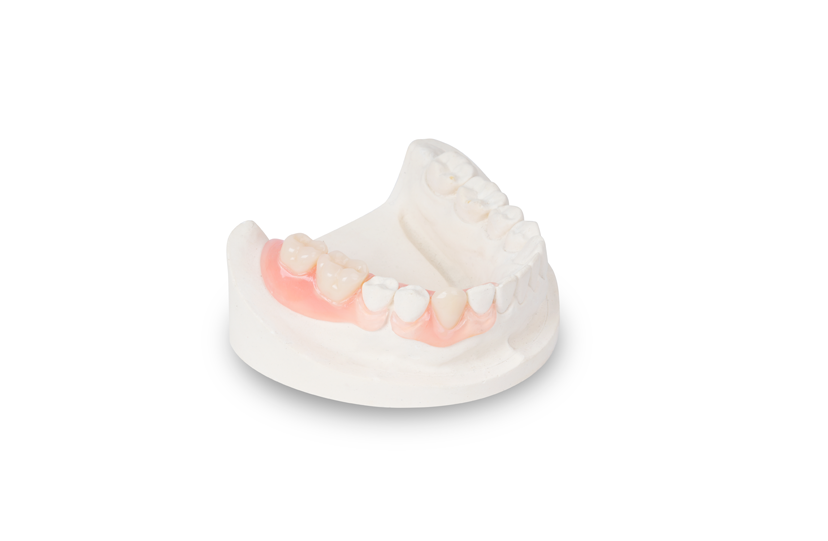
Removable Partial Denture Frameworks
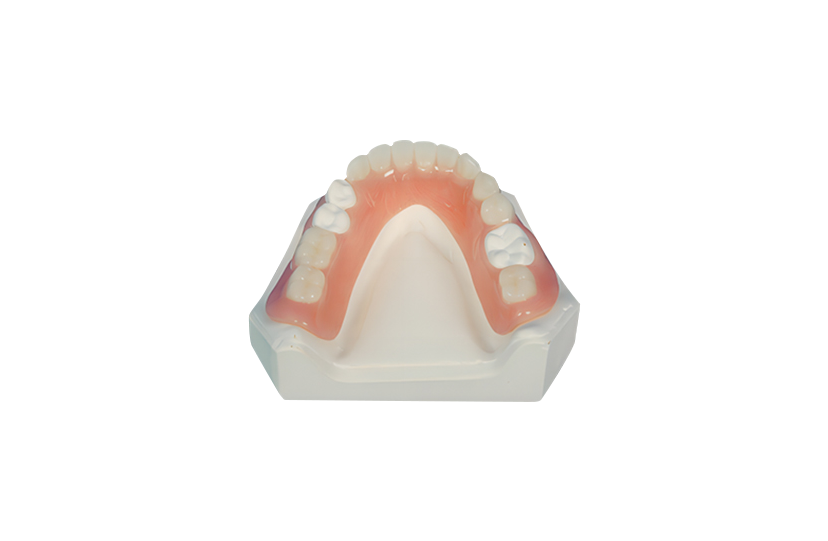
The material's flexibility is very helpful for clasp-retained prosthetics because its lower stiffness and tooth-colored appearance make PEEK an attractive option for selected clasp-retained prostheses, although clasp design, thickness, and undercut depth must be carefully controlled. Because they are elastic, they can slightly bend when they are put in and taken out, which lowers the mechanical stress on teeth with weakened gums. This choice is especially good for people who are allergic to metal or who are worried about how visible clasps will look. The neutral color blends better with oral tissues than metal parts.
Implant-Supported Overdentures
Multi-implant cases that need bar-retained attachments show that the polymer can absorb shock. The material's flexibility lets go of occlusal forces more naturally than rigid metal bars, keeping fixtures from being overloaded, which can lead to bone loss. The mechanical compliance of PEEK may provide an alternative approach to managing occlusal load distribution; however, clinical outcomes depend on implant positioning, prosthetic design, occlusion, hygiene, and other patient-specific factors.
Fixed Implant Bridges
In full-arch screw-retained prostheses, the framework acts as a support layer between the implant platforms and the biting surfaces. The structure spreads the biting forces across several fixtures while still being flexible enough to deal with small differences in how the implants are angled. The radiolucent nature of PEEK can facilitate radiographic assessment of the surrounding implant and bone structures by reducing metal-related artifacts and letting you see the bone-to-implant interfaces clearly without any metallic artifacts.
Materials and Manufacturing Standards
Quality results depend on how pure the materials are and how well the PEEK Framework is made according to rules for making medical devices. For dental applications, manufacturers should select PEEK materials with appropriate medical-grade specifications and provide material, biocompatibility, and regulatory documentation relevant to the intended use. It also has to have lot-specific biocompatibility paperwork that goes back to the producers of the raw resin. Biological evaluation of the finished device should be conducted according to the applicable ISO 10993 framework and based on the device's intended use, materials, contact type, and duration of contact.
Where applicable, suppliers may provide USP Class VI or other relevant material-grade documentation to support the material's suitability for its intended application, which means they have passed strict biological safety tests. Choosing the right raw materials has a big effect on the mechanical qualities. Recycled materials may cause performance variability, while virgin resin has stable molecular weight distributions that lead to expected strength traits. Reliable suppliers have strict rules about the raw materials they use. Before letting the material be used to make medical devices, they test each production lot for tensile strength, elongation at break, and notched impact resistance.
When frameworks need to be veneered with composite or acrylic tops, surface treatments make bonding more likely. Plasma activation or sulfuric acid etching methods change the surface energy, which makes micromechanical retention that primers use to stick well. Controlling the hardness of the surface between 1 and 5 microns improves bond strength without affecting the structure's stability.
Manufacturing Workflow for Precision Outcomes
Through controlled subtractive manufacturing processes, digital integration turns design ideas into real restorations.
Digital Impression and Design: Intraoral scanning sends data straight to CAD software, where it records the preparation shapes, opposite teeth, and tissue contours. Prosthodontists or dental workers design framework structures based on physical principles. They also design positioning, retention elements, and support structures based on biomechanical needs. Design files can be exported as STL or a similar format that can be read by CAM tools.
CAM Programming and Material Setup: Milling software creates toolpaths that are best for the polymer's machinability. It figures out the feed rates and spindle speeds that keep the material from getting too hot while it's being cut. Blanks of material are held in place by multi-axis milling systems with high positional accuracy, which can support precise reproduction of the digital framework design. This makes sure that final PEEK Frameworks exactly match digital designs.
Subtractive Manufacturing: Cutting tools covered in carbide or diamond remove material along pre-programmed paths, turning solid flats into three-dimensional shapes. Coolant systems keep temperatures stable during machining cycles, which stops thermal distortion that lowers the accuracy of measurements. Automatic tool changers switch out tools for roughing, detailing, and finishing without any help from an operator.
Quality Verification: Once the frameworks are finished, they are measured using coordinate measuring machines or structured light scanners, and the results are compared to the original CAD files to make sure they are correct. High-precision CAD/CAM manufacturing can achieve tight dimensional tolerances, depending on the milling system, tooling, framework geometry, and verification method. Visual inspection finds flaws on the surface that need to be fixed before moving on to the finishing steps.
Surface Conditioning and Finishing: Frameworks that are going to be veneered get surface treatments that make them more likely to stick together. Polishing protocols make the outside smooth while keeping the retention features that were designed to stay in place. Before being sent to dentistry offices, autoclaving makes sure that the sterilization is complete. This workflow is usually finished within three business days.
Cost Factors Influencing Procurement Decisions
The way prices for the PEEK Framework are set takes into account more than just the cost of raw materials. The base price for materials is medical-grade PEEK, which costs more because it has to go through biocompatibility tests and have FDA compliance paperwork. Full-arch cases use more material than single-unit frames, so blank sizes affect unit costs. When considering volume contracts, purchasing managers should look at cost-per-case measures instead of just the price of the raw materials.
Customization complexity affects labor investment. For example, complex clasp designs or structures that fit the body's contours need longer machining times and close supervision by a skilled technician. CAD design work adds a lot to the total cost, especially for complicated cases that need to be revised several times before the shapes are finalized.
Regulatory compliance costs more because of the upkeep of quality management systems, the rules for testing materials, and the paperwork that needs to be kept up to date according to ISO 13485:2016 standards. Suppliers should maintain applicable FDA registration and device listing requirements, as well as appropriate CE marking and conformity documentation for products marketed in Europe put a lot of money into quality infrastructure that makes sure production results are consistent but raises running costs that are displayed in prices.
Shipping processes affect total landed costs, especially when buying things from other countries that need fast shippers. When dental labs have to meet tight clinical deadlines, they often choose suppliers that offer faster delivery options, even if it means paying more for freight. This is done to keep their case turnaround promises.
How to Choose a Reliable Supplier
The choice of supplier has a direct effect on the success rates of clinical trials and the speed of operations. The first step in figuring out a manufacturing capability is to look at how complex the equipment is and how much it can make. Suppliers who use multi-axis milling centers and have a history of success with dental prosthetics show the technical know-how needed for consistent quality results. Quality control infrastructure is shown during site visits or virtual facility trips.
Regulatory certifications are an objective way to show that quality management for the PEEK Framework is mature. Suppliers should provide appropriate material documentation and biocompatibility data relevant to the intended use of the dental device, and the ISO 13485:2016 certification makes sure that there are systematic approaches to design controls, production monitoring, and corrective action procedures. CE marking indicates conformity with applicable European Union requirements for the relevant medical device, which is a sign of quality recognized around the world.
Commodity providers and key partners are different when it comes to customization. Providers who are willing to work with design changes, offer a range of material colors, and help with urgent case handling show that they are committed to professional partnerships rather than transactional relationships. Technical support in multiple languages and case management portals are part of the communication infrastructure that makes working together across time zones easier.
Service promises made after the sale show that the seller trusts the quality of the goods. Premium suppliers are different from cheaper ones because they offer warranty programs that cover manufacturing defects, free remakes for fit problems within certain timeframes, and quick technical support. Our company stands behind the products we sell by offering two-year warranties on fixed restorations and one-year warranties on portable prosthetics. During warranty times, if a confirmed manufacturing defect is identified within the applicable warranty period, we will repair or remake the affected restoration in accordance with our warranty policy.
Maintenance and Long-Term Care Protocols
Handling things the right way increases their useful life and keeps them working at their best in the clinic. When teaching patients how to clean their teeth, it's important to use gentle methods like non-abrasive toothpaste and soft-bristle brushes, and not to use too much force, which could damage retention clasps or connection mechanisms. The PEEK Framework doesn't break down easily with chemicals, but patients should stay away from extreme pH settings for a long time.
During recall appointments, professional maintenance includes looking for wear patterns that show occlusal imbalances that need to be fixed. Clinicians should check the retention mechanisms on a regular basis, since putting and taking out things over and over again weakens the clasp grip. Using pumice or diamond polishing pastes that are safe for thermoplastic substrates, surface polishing gets rid of buildup without damaging the material.
For long-term storage between clinical appointments, polymers should be kept in dry, room-temperature places out of direct sunlight. This is because UV light can break down polymers over time. When frameworks are taken down for long periods of time, they should be cleaned well and put away in safe cases to keep them from getting damaged by chance.
The service life of a PEEK framework varies according to framework design, occlusal loading, oral hygiene, maintenance, material formulation, and clinical conditions. Long-term clinical follow-up is recommended to assess individual performance. However, how long it lasts for you depends on your occlusal forces, how well you clean your teeth, and the overall design of your prosthesis. PEEK offers a different combination of weight, flexibility, radiolucency, and manufacturability compared with conventional metal framework materials, while long-term performance depends on the specific design and clinical application because it doesn't rust or break down over time like metal does.
Key Takeaways
PEEK Frameworks are a big step forward in prosthetic materials. They offer clinical benefits that solve problems that have been around for a long time with metal alternatives. This technology is perfect for doctors who want to improve patient results because it is biocompatible, has mechanical qualities that are similar to natural tissues, and seamlessly integrates CAD/CAM.
When choosing materials, you should think about both the short-term and long-term benefits, such as fewer remakes, happier patients, and better diagnostic tools. As labs switch to digital workflows, the polymer's ability to be machined and its high level of precision are especially helpful, allowing for quick production times that meet clinical needs.
Dental offices and labs that serve picky patients can gain a competitive edge by forming relationships with suppliers that are based on quality certifications, the ability to customize products, and quick service. When you invest in relationships with manufacturers that show they follow the rules and have the right technical knowledge, you get regular results that boost your professional image.
Conclusion
Adding advanced thermoplastic frames to digital dentistry manufacturing processes meets important needs in the industry for prosthetics that are biocompatible, accurate, and look better. New developments in material science and accurate CAD/CAM technology allow dentists to make restorations that match the properties of natural teeth while also speeding up the production process. Choosing the right supplier is still very important because manufacturing know-how and quality systems have a direct effect on clinical success rates. When dentists and lab managers look at material changes, they should focus on partners that can show they follow regulations, are flexible with customization, and have a track record of making precision PEEK Frameworks that work well for patients. This will improve patient results and lab efficiency.
FAQ
Does the Peek Framework suit patients with metal allergies?
Of course. The substance doesn't have any solid parts, so it doesn't pose the allergy risks that come with nickel, cobalt, or chromium, which are common in alloys. Biocompatibility evaluation supports the material's suitability for its intended clinical use, making PEEK a potential metal-free alternative for patients with documented sensitivities to certain dental metals.
How does weight compare to titanium structures?
The polymer weighs about a third of the same-sized titanium frameworks, which makes the prosthetic much lighter. This weight loss makes them more comfortable to wear for long periods of time. It helps patients whose mouth muscles are weak or who have full-arch fillings, where every gram affects their daily function.
Can frameworks be repaired if damaged?
Changes can still be made with special carbide burs and surface cleaning methods. Depending on the framework design and damage involved, certain repairs or modifications may be possible using appropriate mechanical surface preparation and compatible bonding systems. The repair protocol should be validated for the specific material combination. This lets you make small changes or repairs without having to replace the whole framework. This ability to be fixed increases service life and lowers costs over time.
Does the material cause wear on natural teeth?
Properly finished PEEK surfaces may exhibit favorable wear characteristics against opposing dentition, although wear behavior depends on the specific PEEK formulation, surface finish, opposing material, and occlusal conditions. Its bone-like elastic modulus spreads forces in a way that is healthy for the body. This keeps natural teeth and supporting structures safe from the excessive mechanical stress that harder materials put on them.
Is the framework visible on dental X-rays?
The substance stays radiolucent, which means it shows up clear on X-rays like soft tissues. This feature makes it easier to see how well the underlying bone and implant are integrating without metal artifacts getting in the way of diagnosis. When certain methods need to see the structure, radiopaque fillers can be used.
What turnaround time should laboratories expect?
Standard production is finished three business days after receiving the digital file, which supports clinical timelines that keep temporary repair times to a minimum. Expedited handling can handle cases that need to be delivered faster. CAD/CAM processes that are simplified and machining methods that are optimized make production more efficient.
How does cost compare to traditional metal frameworks?
Initial material costs are higher than for cobalt-chromium alloys, but total case costs are still competitive when you consider lower remake rates and easier production processes. Cutting out casting and finishing work can help lower the cost of raw materials, and making sure the fit is right the first time cuts down on costly adjustments and unhappy patients.
What quality certifications should buyers verify?
Reliable suppliers keep their materials registered with the FDA to make sure they are biocompatible, certified by ISO 13485:2016 to make sure their quality management systems are sound, and marked with the CE logo to show they follow European rules. Material certificates should show that the products have been tested and approved by ISO 10993 and USP Class VI, which makes sure that the products meet strict medical device standards for long-term mouth contact.
Partner with HYC for Premium PEEK Framework Solutions
HYC has been making dental products for 22 years and can help prosthodontic professionals who are looking for reliable PEEK Framework suppliers who are committed to accuracy and compliance. Our medical-grade PEEK materials are supported by applicable regulatory documentation, and our production system is certified to ISO 13485:2016 and designed to support accurate first-fit outcomes and reduce the need for chairside adjustments, which may help reduce chairside adjustment time and the likelihood of remakes. We know how hard it is for dental labs to meet tight deadlines; that's why we offer both standard three-day response and fast two-to-three-day delivery options that will help you keep your clinical obligations.
Every framework we make goes through strict quality control and measurement checks to make sure your cases meet the highest standards. Our ability to completely customize means that we can turn your specific design needs into physical repairs that go above and beyond what the patient expects. We offer a two-year warranty for fixed restorations and a one-year warranty for removable prosthetics, subject to the applicable warranty terms and conditions of our manufacturing. If there are any problems during the coverage periods, we will fix them or make a new one for free.
Connect with our technical team at info@hycdentallab.com to discuss your specific case requirements or request detailed material documentation. Visit hycdentallab.com to explore our full range of digital dental solutions designed for laboratories and practices demanding superior outcomes. Let us demonstrate how strategic supplier partnerships built on quality, responsiveness, and regulatory excellence can elevate your clinical results and strengthen patient relationships.
References
1. Najeeb S, Zafar MS, Khurshid Z, Siddiqui F. Applications of polyetheretherketone (PEEK) in oral implantology and prosthodontics. Journal of Prosthodontic Research. 2016;60(1):12-19.
2. Bathala L, Majeti V, Rachuri N, Singh N, Gedela S. The role of polyetheretherketone (PEEK) in dentistry – A review. Journal of Medicine and Life. 2019;12(1):5-9.
3. Schwitalla AD, Spintig T, Kallage I, Müller WD. Flexural behavior of PEEK materials for dental application. Dental Materials. 2015;31(11):1377-1384.
4. Stawarczyk B, Beuer F, Wimmer T, Jahn D, Sener B, Roos M, Schmidlin PR. Polyetheretherketone—a suitable material for fixed dental prostheses? Journal of Biomedical Materials Research Part B: Applied Biomaterials. 2013;101B(7):1209-1216.
5. Tannous F, Steiner M, Shahin R, Kern M. Retentive forces and fatigue resistance of thermoplastic resin clasps. Dental Materials. 2012;28(3):273-278.
6. Zoidis P, Papathanasiou I, Polyzois G. The use of a modified poly-ether-ether-ketone (PEEK) as an alternative framework material for removable dental prostheses: A clinical report. Journal of Prosthodontics. 2016;25(7):580-584.
YOU MAY LIKE
.webp "Co-Cr PFM (Cobalt-Chrome)")