Monolithic vs. Layered Zirconia: What’s Best for Cosmetic Restorations?
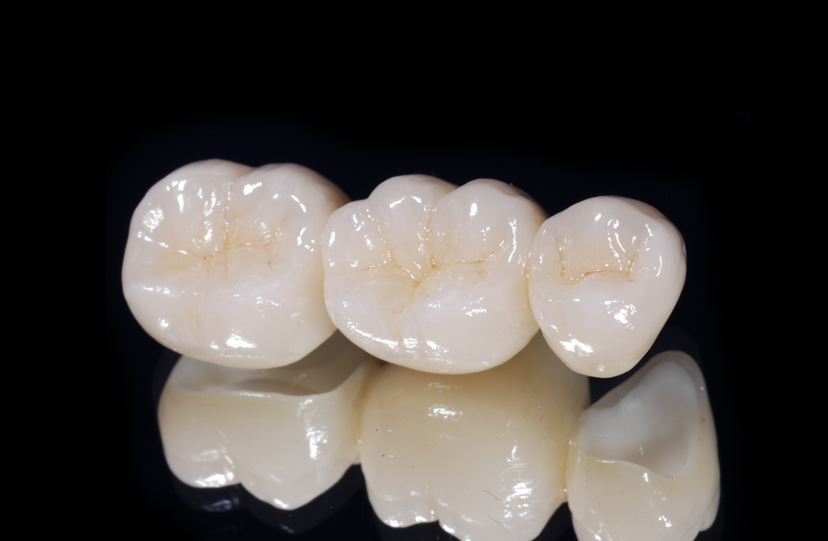
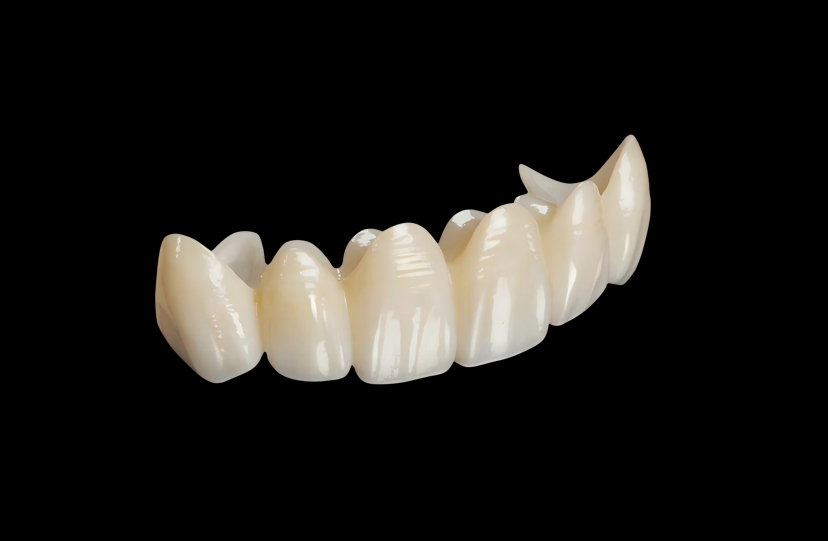
Monolithic zirconia and porcelain-layered zirconia are two commonly selected materials for aesthetic dental restorations. As a biocompatible choice for posterior uses, monolithic zirconia offers excellent durability and an efficient production workflow. Porcelain-layered zirconia, on the other hand, has feldspathic porcelain hand-layered over a high-strength yttria-stabilized zirconia core that provides enhanced translucency, depth, and shade customization for a more natural appearance. When it comes to anterior restorations, where patients expect the most, this mixture balances structural strength with natural aesthetics. Dental workers and procurement teams can better match clinical goals with supply chain efficiency if they understand the differences between these products.
Understanding Zirconia Types in Cosmetic Restorations
To choose the correct Porcelain Layered Zirconia restoration, you need to know a lot about the material's makeup and how it was made. There are different clinical needs for monolithic zirconia and Porcelain Layered Zirconia, and understanding the differences between them helps procurement workers make smart choices.
Monolithic Zirconia: Full-Contour Strength
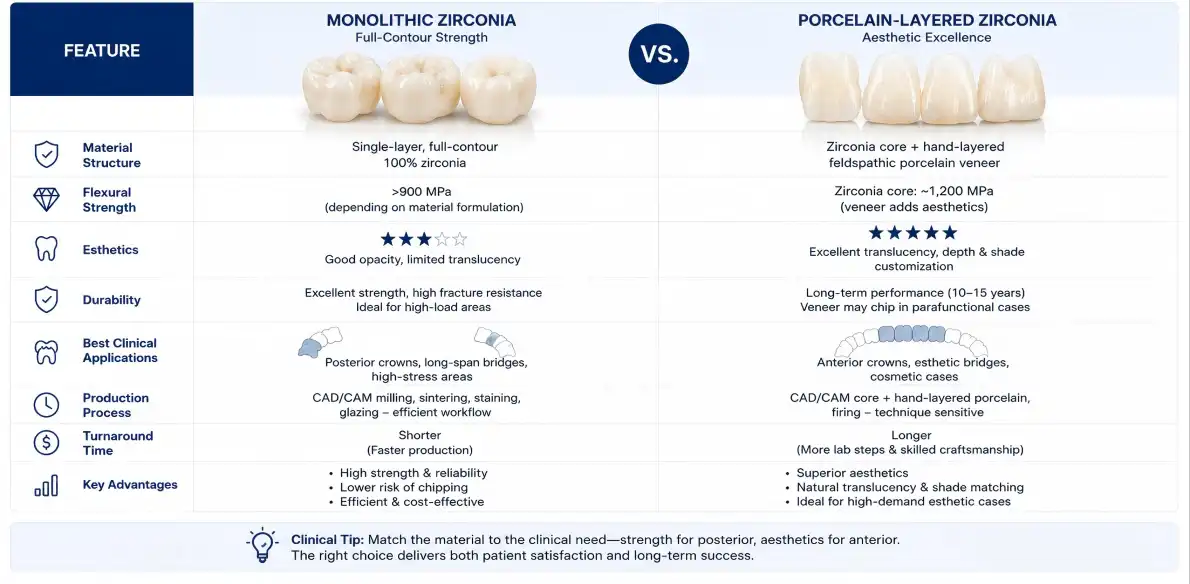
It is made from a single block of yttria-stabilized tetragonal zirconia polycrystal, and depending on the material formulation, monolithic zirconia can achieve flexural strengths exceeding 900 MPa. With vacuum high-temperature sintering, coloring, glazing, and finishing done by hand, the CAD/CAM digital process speeds up production. This full-contour method gets rid of the need for layers, which speeds up output and lowers the risk of chipping. When it comes to posterior crowns, where occlusal forces are high, dental labs prefer monolithic zirconia designs because they can predict when the work will be done and have a lower rate of remake cases.
Porcelain Layered Zirconia: Aesthetic Excellence
The advanced parts of both are brought together in Porcelain Layered Zirconia. The zirconia base has a flexural strength of about 1,200 MPa and is a high-strength basis. The hand-applied feldspathic porcelain veneer has the same color gradients and translucency as real teeth. The first step in making something is using CAD/CAM to cut the zirconia core. Next, the ceramic is layered by hand by skilled artisans. For this two-layer structure to work, the core and skin must have accurately matched coefficients of thermal expansion (CTE) to keep them from coming apart. The result is a restoration that works great in frontal situations where light transfer and shade matching are very important.
Key Differentiators in Application
Porcelain-layered zirconia is better for places that need to look good, while monolithic zirconia is better for high-stress areas in the back where strength is more important than looks. When choosing inventory for cosmetic dentistry clinics, the procurement teams that work with them have to think about case mix and customer data. The decision affects not only the patient's result but also the efficiency of the lab, since Porcelain Layered Zirconia restorations need skilled workers and longer production processes.
Performance Comparison: Durability, Aesthetics, and Functionality
Porcelain Layered Zirconia material selection is all about finding the right balance between technical efficiency and aesthetic appeal. To weigh the pros and cons of longevity and appearance, dental labs and buying managers need data-driven insights.
Durability and Fracture Resistance
Monolithic zirconia is better at keeping its shape in high-load situations and long-span bridges. Its uniform structure can handle chewing forces without the chance of delamination. Clinical studies have demonstrated reliable long-term performance of monolithic zirconia in posterior restorations when proper case selection and maintenance protocols are followed. But the lack of transparency in monolithic zirconia designs may limit aesthetic outcomes in anterior restorations, even with advanced color methods.
Porcelain-layered zirconia can be used for 10 to 15 years in front crowns and bridges. The zirconia core keeps the surface from breaking badly, but the porcelain layer can still chip if you have parafunctional habits like bruxism. This risk can be reduced by making smart changes to the design, like keeping the occlusal contacts inside the zirconia core. To make sure the right thickness of the material, labs must teach dentists how to properly prepare teeth by reducing them by 1.0 to 1.5 mm in the axial direction and by 1.5 to 2.0 mm in the occlusal/incisal direction.
Aesthetic Customization and Shade Matching
Porcelain Layered Zirconia offers extensive customization options for achieving natural-looking aesthetics. The multiple-layer veneer lets dentists add depth, make the veneer look like enamel that is clear, and create multicolored effects that fit in perfectly with natural teeth next to them. Spectrophotometer testing shows that VITA shades are accurate, which means that fewer changes need to be can contribute to improved patient satisfaction. This level of accuracy is very important for cosmetic dentistry offices that do high-end anterior rehabilitations.
Functional Considerations and Clinical Suitability
Case selection is very important for Porcelain Layered Zirconia. It works well for front crowns and bridges that are up to 38 mm long with two abutments or 47 mm long with more than two abutments. Some things that shouldn't be done are fine edge preparations, serious bruxism, and not enough occlusal room. Monolithic zirconia designs can handle these tricky situations and are flexible enough to be used in a wider range of situations. Purchasing workers who work with a variety of practice types should keep both types of materials on hand to meet the needs of different types of patients.
Comparing Zirconia with Other Cosmetic Restoration Materials
By comparing zirconia choices to more common ones, you can see what makes them valuable in terms of performance, biocompatibility, and total cost of ownership.
Porcelain Layered Zirconia vs. Metal Ceramic Crowns
For many years, metal ceramic crowns were the standard in corrective dentistry because they were strong and looked good. However, they cause problems with biocompatibility, such as allergic responses to base metals and darkening of the gums from metal edges. Porcelain Layered Zirconia gets rid of these problems because it doesn't contain any metals at all, so it has a great tissue response and doesn't stick to plaque. Because there are no metal edges, there is no "black line" at the gum line, which is an ugly problem that often happens with old metal ceramic replacements. Procurement teams that work with patient-centered practices know that this benefit leads to more cases being accepted and better long-term results.
Porcelain Layered Zirconia vs. Lithium Disilicate
Lithium disilicate restorations are popular for minimally invasive procedures because they are very clear. But because they only have a bending strength of 400–500 MPa, they can't be used in long-span bridges or other high-stress situations. Porcelain Layered Zirconia is a great option because it combines the good looks of lithium disilicate with the strength to fill large gaps left by missing teeth. The zirconia core covers up dark bases like metal posts and darkened dentin while keeping the tooth's natural look. Because it is cheaper, Porcelain Layered Zirconia is better for complicated cases that need both strength and beauty, since lithium disilicate usually needs careful signs and more tooth reduction.
Economic and Supply Chain Implications
Cost of ownership includes more than just the price of the materials. It also includes production time, remake rates, and guarantee claims. The efficient process of monolithic zirconia cuts down on labor costs and speeds up delivery, making it appealing to high-volume labs that value efficiency. Porcelain Layered Zirconia costs a lot because it needs skilled workers, but it's worth it because it looks great and makes patients happy. By making bulk purchases with reliable providers, you can save money and make sure the quality stays the same. To keep regulations in line and keep supply chain problems to a minimum, purchasing managers must look at seller certifications such as FDA registration, CE compliance, and ISO 13485:2016.
Practical Guidelines for Selecting Zirconia Solutions in B2B Procurement
It's getting harder and harder for procurement workers to find a good mix between quality, cost, and delivery reliability. Using strict evaluation criteria and strategic source selection can help protect against operational risks and increase clinical value.
Evaluating Product Quality and Performance Standards
Material tracking is the first step in quality security. Suppliers you can trust will give you batch-specific paperwork that confirms that applicable materials and manufacturing processes meet FDA requirements and that they have been tested for biocompatibility according to ISO 10993 standards. Achieving accurate marginal fit is essential for restoration success. A digital microscope should evaluate marginal accuracy through digital inspection and quality control procedures to stop secondary caries and improve the success of the first fit. By asking for example cases, you can check the shade accuracy, surface finish, and bond stability in-house before committing to large orders. Labs that work with cosmetic practices should give more weight to suppliers that have low remake rates and uniform translucency grading across production runs.
Supplier Capacity for Customization and Flexibility
For cosmetic restorations to work, they have to be completely customized to fit the dentist's instructions and the patient's body. Suppliers who have strong CAD/CAM skills and skilled ceramists can work with complex shade maps, unique descriptions, and differences in anatomy. Scalability in production is important—partners who can handle both regular cases and urgent transports give operations resilience. Check the response times. Standard 3-day dispatch and 4-5-day case finish meet most clinical deadlines, and flash delivery choices can help in an emergency. Order mistakes are less likely to happen when there are clear communication standards and quick technical help. Case management is also easier.
Strategic Cost Management and Supply Chain Stability
Porcelain Layered Zirconia helps dental labs and procurement teams balance aesthetics, strength, and cost efficiency in restorative applications. To negotiate large prices, you need to know about unit economics and promises to buy a certain amount. Suppliers who offer tiered prices based on the number of cases shipped each month reward customers for their trust and make costs more predictable. But price shouldn't be the only thing that matters. Consistent quality and on-time delivery protect against expensive remake cases and damage to your image. Diversifying suppliers lowers the risk of relying on a single source, but keeping key partnerships in place encourages cooperation and process improvement. Long-term contracts with performance promises, such as warranties that cover free repair or reproduction within certain time frames, protect the supplier's finances and show that they trust the product's reliability.
The Future of Zirconia Cosmetic Restorations: Trends and Innovations
Improvements in material science and digital manufacturing are changing how zirconia restorations are done, giving early users chances to make their service offers stand out.
Advances in Material Science
Ceramics made with nanotechnology are improving the look of zirconia without weakening it. Gradient zirconia structures with changeable translucency are being worked on by researchers. These structures will get rid of the need for different porcelain layers while still letting natural light through. These materials promise to combine the beauty of layers with the ease of a single piece, which may help reduce porcelain chipping concerns and allow for more therapeutic uses. Bioactive zirconia mixtures with calcium phosphate are meant to help with osseointegration and soft tissue adhesion, which is especially helpful for prostheses that are supported by implants.
CAD/CAM Enhancements and Digital Workflows
Better cutting accuracy and bigger shade libraries make it possible to copy dentist orders more accurately. The advanced margin placement and dental anatomy are automatically done by design software that is powered by artificial intelligence. This makes things more consistent and less dependent on the expert. Digital shade-matching devices that are built into CAD systems make it easier for hospitals and labs to talk about colors, which reduces the chance of mistakes caused by human interpretation. These process improvements shorten response times and support same-day or next-day delivery models, which are becoming more and more important for time-sensitive businesses.
Market Dynamics and Strategic Responses
The market for Porcelain Layered Zirconia options is growing because more and more demand for metal-free restorative options continues to increase. Case numbers in cosmetic dentistry are growing because people are living longer and having more money to spend. This is especially true for anterior rehabilitations. Suppliers investing in technician training, automated quality control, and transparent supply chain management position themselves as preferred partners. To stay ahead of the competition, procurement teams should keep an eye on provider innovation roadmaps and test out new technologies. Building partnerships with makers who are thinking ahead guarantees access to next-generation products and better prices as innovations are made available to more people.
Conclusion
Clinical reasons, patient expectations, and business goals all play a role in the decision to use monolithic zirconia or Porcelain Layered Zirconia. Monolithic zirconia is the most durable and cost-effective material for making prostheses for the back teeth and for high-volume processes. Porcelain Layered Zirconia is great for front teeth because it has a strong core and realistic translucency and shade accuracy. To make supply chains that are strong, procurement workers have to look at things like supplier quality standards, legal compliance, customization options, and delivery reliability. With 22 years of experience making things, smart relationships with approved suppliers make sure that results are always the same, that there are few remake cases, and that patients are happy in all kinds of clinical situations.
FAQ
What is the typical lifespan of Porcelain Layered Zirconia restorations?
If they are made and cared for properly, Porcelain Layered Zirconia restorations usually last between 10 and 15 years. Service life is affected by things like occlusal load, mouth health, and habits that aren't related to function. In tough cases, strategic changes to the design—like keeping the working contacts inside the zirconia core—extend the life of the device.
Can Porcelain Layered Zirconia be used for patients with bruxism?
Porcelain Layered Zirconia can work for people who brux as long as the lingual and occlusal sides are made of monolithic zirconia and a biocompatible splint is worn. When parafunctional forces are high, full porcelain layering on occlusal surfaces makes it more likely that the teeth will break. In these situations, monolithic zirconia is a better option.
How does Porcelain Layered Zirconia compare in cost to monolithic options?
Porcelain Layered Zirconia usually costs more because it takes longer to make and needs skilled workers. The higher price, on the other hand, shows better looks and improved patient satisfaction, which is especially useful in practices that focus on cosmetics, where case acceptance and referrals rest on how the patient looks.
What tooth preparation is required for optimal results?
The right amount of reduction is very important. An axial reduction of 1.0 to 1.5 mm and an occlusal/incisal reduction of 1.5 to 2.0 mm make enough room for both the zirconia core and porcelain veneer. A minimum bevel or shoulder finish line makes sure that the margins fit correctly and that the gums stay healthy in the long run.
Partner with HYC for Premium Porcelain Layered Zirconia Solutions
With over 22 years of experience, HYC specializes in high-precision aesthetic dental restorations and provides porcelain-layered zirconia solutions for dental professionals worldwide. Our production is FDA-registered, CE-certified, and ISO 13485:2016-compliant, which means that every restoration meets strict standards for quality and biocompatibility. We are experts at making customized solutions designed according to each dentist’s specifications. We continuously monitor quality metrics to maintain consistent accuracy and reduce remake rates. We meet pressing healthcare needs without lowering the quality of our products by offering a range of delivery choices, such as regular 3-day dispatch, 4-5 day turnaround, and expedited delivery options for urgent cases. Our warranty programs provide coverage according to agreed terms for different restoration types, and they cover free repairs or replacements during that time. Contact HYC at info@hycdentallab.com right away to discuss your purchasing needs and see for yourself why dental professionals worldwide choose HYC as a reliable manufacturing partner for advanced beauty results.
References
1. Conrad, H. J., Seong, W. J., & Pesun, I. J. (2007). Current ceramic materials and systems with clinical recommendations: A systematic review. Journal of Prosthetic Dentistry, 98(5), 389-404.
2. Denry, I., & Kelly, J. R. (2008). State of the art of zirconia for dental applications. Dental Materials, 24(3), 299-307.
3. Raigrodski, A. J., Hillstead, M. B., Meng, G. K., & Chung, K. H. (2012). Survival and complications of zirconia-based fixed dental prostheses: A systematic review. Journal of Prosthetic Dentistry, 107(3), 170-177.
4. Zhang, Y., & Lawn, B. R. (2018). Novel zirconia materials in dentistry. Journal of Dental Research, 97(2), 140-147.
5. Guess, P. C., Att, W., & Strub, J. R. (2012). Zirconia in fixed implant prosthodontics. Clinical Implant Dentistry and Related Research, 14(5), 633-645.
6. Pjetursson, B. E., Sailer, I., Makarov, N. A., Zwahlen, M., & Thoma, D. S. (2015). All-ceramic or metal-ceramic tooth-supported fixed dental prostheses: A systematic review of the survival and complication rates. Dental Materials, 31(6), 624-639.
YOU MAY LIKE

.webp "Co-Cr Crown (Cobalt-Chrome)")
 Full Cast Crowns.webp "Noble (Semi-Precious) Full Cast Crowns")