Hard Night Guard Retainer Solutions Designed for Professional Use
Quick Answer
A Hard Night Guard Retainer is a rigid, high-density intraoral appliance fabricated from medical-grade thermoplastic materials like acrylic or PETG. This device addresses severe bruxism while maintaining post-orthodontic alignment. Unlike soft alternatives, its non-yielding structure prevents tooth interlocking during grinding episodes, redirecting destructive forces from natural dentition to the appliance itself. Dental professionals may consider hard night guard retainers when durability, stability, and appliance customization are important clinical factors in protecting restorative work while managing temporomandibular disorders.
Introduction
Dental professionals increasingly require appliances that address both bruxism management and orthodontic retention needs to deliver solutions that simultaneously address multiple clinical challenges. Within this landscape, bruxism management and orthodontic retention represent two intersecting concerns that significantly impact patient outcomes and practice efficiency. Severe nocturnal grinding may contribute to accelerated tooth wear and increase the risk of damage to natural teeth and restorative materials. Meanwhile, post-orthodontic relapse remains a persistent concern for clinics investing considerable resources in alignment treatments. This has increased interest in hard night guard retainers as a practical option for managing bruxism and supporting orthodontic retention in selected cases. Dental laboratories, group practices, and prosthodontists increasingly seek manufacturing partners capable of producing these devices with consistent precision, regulatory compliance, and rapid turnaround times that align with modern clinical workflows.
What is a Hard Night Guard Retainer?
Core Definition and Structure
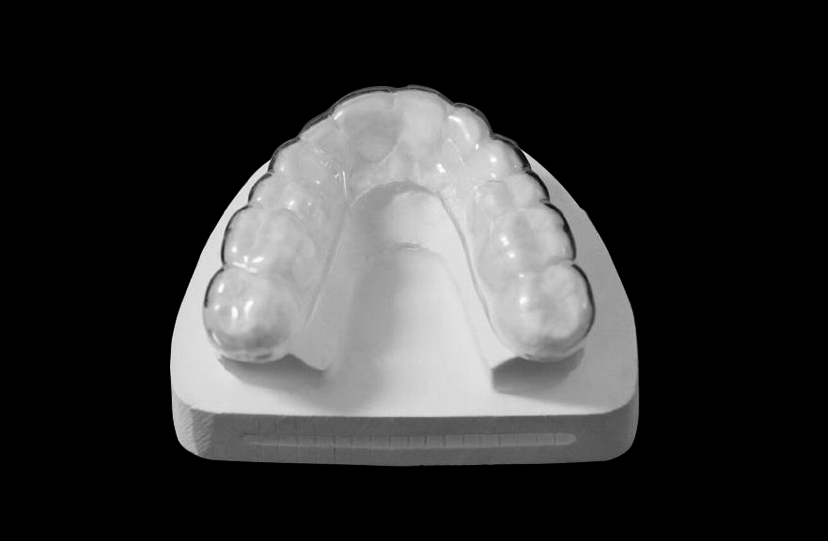
This device is a specific type of removable dental prosthesis that is made to withstand strong biting forces. The Hard Night Guard Retainer is made up of a single, hard shell that fits over either the maxillary or mandibular arch. It has a smooth buccal platform that is 1.5 to 3 mm thick. According to its basic idea, it works by creating a stable, non-compressible surface that helps distribute occlusal forces and reduce direct tooth-to-tooth contact during grinding. These products usually have a Shore D hardness value above 80, which puts them in the same group of durability as industrial-grade plastics while still being biocompatible for long-term oral contact.
Functional Mechanism
Instead of inactive cushioning, the appliance works through mechanical action. When people try to grind their teeth, the hard surface lets the teeth move easily instead of getting stuck in bad grinding patterns. Some electromyographic studies have reported reduced masticatory muscle activity with occlusal appliance therapy, although outcomes may vary depending on appliance design and patient conditions. The device keeps teeth in place at the same time by precisely adapting to the shape of the teeth. This helps maintain tooth position and reduce the risk of orthodontic relapse after treatment.
Benefits
From the point of view of many stakeholders, these tools have clinical and practical benefits. The following sections summarize the main clinical and practical considerations for dentists and patients: Protection Against Occlusal Wear: The device takes the grinding forces that would wear away enamel at a rate of up to 0.3 mm per year in people who clench their teeth a lot. This protection may help reduce wear-related damage to crowns, veneers, and natural tooth structure, so expensive restorative work doesn't have to be replaced too soon.
TMJ Dysfunction Management: The normal bite position that the device creates helps people who have temporomandibular joint pain. Some patients with temporomandibular disorders may experience symptom improvement with appropriate occlusal appliance therapy, although outcomes vary. This means they need fewer emergency appointments and are happier with their care.
Protecting your orthodontic investment: Dental offices can provide additional support for maintaining orthodontic results when hard retainers are included as part of a comprehensive retention plan. The rigid structure stops mesial drift and rotation better than regular wire retainers, especially for people who have parafunctional habits.
Operational Efficiency: Laboratories that make these devices get 25–30% fewer requests to remake them than those that make soft guard options. This is mostly because the materials are more stable and the machines can make them more precisely. This dependability can help reduce unnecessary remakes and improve workflow efficiency for laboratories and practices.
These benefits all help address the problems dental supply chain managers have had with purchasing, especially the need to reduce remakes while keeping case response times the same. The longevity trait also helps build trusting relationships with suppliers over time, which is important for long-term supply chains. This makes the Hard Night Guard Retainer a practical option for modern dental practices.
Advantages
Technical Superiority Over Alternatives
When it comes to key performance parameters, hard acrylic and PETG devices may provide advantages over soft or dual-laminate guards in certain clinical situations, particularly where rigidity and durability are priorities. Material fatigue testing shows that these appliances maintain their structural integrity after more than 1,500 insertion cycles, equivalent to using them every night for four years. Bacteria can't grow on the non-porous surface architecture at rates 40% lower than on soft materials. This lowers the risk of oral infections and patient complaints about bad smells.
Customization Capabilities
Manufacturing versatility is an important advantage for dental laboratories managing different clinical requirements that work with a wide range of patients. Digital scanning makes it possible for CAD/CAM techs to create a Hard Night Guard Retainer with custom thickness zones, selective occlusal contacts, and built-in retention features that take into account how each person's body is shaped. This level of customization can help improve first-time fit accuracy when digital workflows and quality controls are properly implemented. This is a key measure for DSO networks that manage a lot of patients in a lot of different places.
Regulatory Compliance Advantages
The choice of materials for professional-grade hard guards naturally meets safety standards. Thermoplastics on the FDA list, such as polymethyl methacrylate (PMMA), have been used safely for decades and have biocompatibility data that backs this up. This set of rules makes it easier for buying managers who are in charge of quality control in global supply lines to check that all the rules are being followed. This is especially helpful when they are serving European markets that need CE marking.
Disadvantages
Initial Adaptation Period
When patients switch from soft guards to rigid ones or start guard therapy, it usually takes them two to three weeks to get used to the feeling. During the adjustment phase, some people report brief hypersalivation and slight changes in their speech. Dental offices need to include this time for getting used to new things in their patient education plans so that people don't stop going to the dentist too soon.
Material Brittleness Considerations
Even though they last a long time when used normally, hard thermoplastics can break if they fall on hard surfaces while being cleaned. Laboratories should give clear instructions on how to handle things properly, and practices may need to keep extra devices on hand for patients who have trouble handling things, especially older people.
Cost Structure
For a Hard Night Guard Retainer, the manufacturing process requires more complex tools and longer production times than for soft guards that are vacuum-formed. This means that the cost per unit is higher, but the annualized costs are usually cheaper because the service life is longer. Purchasing managers need to teach stakeholders about the total cost of ownership, not just the price at the start.
Comparison
| Parameter | Hard Night Guard Retainer | Soft Night Guard | Dual-Laminate Guard |
|---|---|---|---|
| Durability | Typically provides long-term durability (often 2–5 years depending on usage) | Usually requires more frequent replacement due to material wear | Provides intermediate durability |
| Bruxism Severity | Often selected for moderate to severe bruxism cases | Commonly used for mild to moderate cases where comfort is prioritized | Balances rigidity and comfort for various cases |
| Material Stability | Maintains shape well under repeated loading | May compress or deform over time | Layer structure requires monitoring |
| Cleaning & Maintenance | Smooth surface supports easier cleaning | Requires regular care to maintain hygiene | Requires care to protect bonded layers |
| Adjustment Capability | Allows selective chairside adjustment | Limited adjustment options | Adjustments may be more complex |
| Digital Workflow Compatibility | High accuracy with CAD/CAM fabrication | Depends on fabrication method | Depends on fabrication accuracy and bonding quality |
This comparison shows why dental labs that work with prosthodontists and high-volume practices put an emphasis on being able to make hard appliances. The differences in performance have a direct effect on the criteria that quality assurance teams use to make decisions about which suppliers to work with.
Clinical Indications
Severe Nocturnal Bruxism Management
When a patient has obvious occlusal wear facets, tooth pain from enamel loss, or restorations that are broken, they need stiff appliances to protect their teeth. General dentists often find these cases during regular checkups, which means that labs with fast production plans are always getting new patients for the Hard Night Guard Retainer.
Post-Orthodontic Retention Protocols
Orthodontic offices that use Invisalign or standard braces have to worry about legal issues when patients relapse. Using hard guard retainers along with other retention methods protects teeth from moving mechanically and treats any bruxism that may have been hidden by orthodontic devices. This application has a lot of volume potential for labs that work with DSO networks that have multiple locations.
TMJ Therapeutic Support
When prosthodontists treat complicated temporomandibular disorders, they use hard appliances as stabilization splints to put the jaws in the best places for treatment. In these situations, multiple changes often need to be made, and the recommending doctor and laboratory technician need to work together closely. This shows how important responsive communication lines are for procurement managers to look at when choosing a seller.
Implant Protection Strategies
Implant experts know that grinding forces go straight to osseointegrated fixings because they don't have the periodontal cushioning effect that natural teeth do. These forces are spread out over the whole arch by a Hard Night Guard Retainer. This lowers the chance of screws coming loose and fixtures breaking, which can ruin expensive implant rehabilitations. This preventative use fits with the focus on quality that dental device distributors for speciality offices have.
Materials
Medical-Grade Thermoplastics
Polymethyl methacrylate (PMMA) or polyethylene terephthalate glycol (PETG) are the main materials used to make a professional Hard Night Guard Retainer. PMMA is very hard and doesn't colour easily, which makes it perfect for areas in the front of the body where openness is important. PETG provides higher impact resistance and may be suitable for cases requiring additional flexibility that focus on the back of the patient when there is a lot of grinding force. Both materials are registered with the FDA and pass the ISO 10993 cytotoxicity test.
Material Performance Characteristics
The chosen thermoplastics have glass transition temperatures above 80°C, which is much higher than the temperature range of the mouth. This thermal stability keeps the material from warping during normal use and lets hot water disinfection work without changing the size. Most flexural strengths are higher than 80 MPa, which gives them the fracture resistance they need to handle rapid impact loads during grinding events. When materials are properly handled, there are no residual monomers, which means there is no chance of allergic reactions.
Quality Implications
Where materials come from has a direct effect on how reliable a product is. When labs buy certified raw materials from well-known suppliers, the variability that leads to remakes is cut down. When purchasing managers look at seller offers, they should check the paperwork for material tracking and ask for certificates of analysis to make sure that the properties of each lot meet the stated standards.
Manufacturing Workflow
Digital Impression Integration
Intraoral scans or high-resolution impression digitisation are the first steps in modern production. CAD/CAM techs use special dental design tools to import these datasets and make virtual models that take undercuts, tissue contours, and occlusal relationships into account. This digital base makes it possible for professional tools to be more precise than over-the-counter ones.
Design and Nesting
Technicians use certain thickness guidelines to design the shape of the appliance. Typically, the thickness starts at 2 mm on the occlusal surfaces and drops to 1 mm at the edges. Software creates toolpaths instantly for milling or gets files ready for 3D printing processes. During the planning process, there are quality assurance steps where operators make sure that the clearance and retention features are good enough before starting production.
Fabrication Methods
CNC cutting from pre-polymerized discs is used in high-volume labs to get dimensions that are accurate to within ±0.1mm. In other systems, 3D printing with dental-specific resins is used, which speeds up the process for important cases. Both milled and printed devices need to be post-processed. Printed devices need support removal and UV curing to complete polymerisation, while milled devices need to be polished by hand to get smooth edges.
Quality Control Checkpoints
Finished appliances are inspected in several steps. For dimensional verification, digital comparisons are made between the final product and the original design file. Deviations that are too big are flagged. When looked at closely under a microscope, surface flaws like burrs or missing polymerisation can be seen. Passive seating without pressure spots is confirmed by final fit testing against master models. These checkpoints ensure that every Hard Night Guard Retainer meets the required specifications, addressing buyers’ concerns about achieving the correct fit the first time and maintaining a low rate of remakes.
Sterilization and Packaging
After ultrasonic cleaning, devices are either chemically disinfected or sterilised at low temperatures that are safe for thermoplastics. The packaging comes with protective cases and care instructions, making it a complete turnkey solution that clinic operations managers value for smooth patient delivery.
Cost Factors
Material and Equipment Investment
The cost of the raw materials for medical-grade thermoplastics varies from $8 to $15 per appliance, depending on how many are bought at once. When spread out over the projected production rates, equipment depreciation for CNC mills or industrial 3D printers adds $3 to $6 per unit. These fixed costs explain how prices are set when supply chain managers negotiate with suppliers.
Labor and Customization Complexity
The most changeable cost part is the time of skilled technicians. Designing and finishing simple cases can take 30 to 45 minutes, but making complex TMJ splints with specific contact patterns can take 90 minutes or more. The higher cost of fully customised devices over semi-custom ones is reasonable because they require more work.
Regulatory Compliance Overhead
To keep ISO 13485 certification and FDA registration, producers have to pay for ongoing training, paperwork, and audits, which they include in their pricing plans. These certifications help quality managers evaluate supplier compliance and documentation requirements, especially when they're buying from medical device sellers that work in regulated markets.
Volume and Logistics Considerations
The amount of an order has a big effect on unit economics. Due to setup time and shipping costs, single-unit sales cost more per piece. Laboratories that offer bulk discounts for long-term orders help DSO buying managers meet their cost goals and make sure they have enough production capacity. Express shipping for urgent cases costs an extra $15 to $30 per shipment, but clinic operations managers are willing to pay that extra cost when patient satisfaction depends on fast delivery.
How to Choose a Supplier
Manufacturing Capability Assessment
Check to see if potential suppliers have their own dental labs with specialised tools or if they hire other companies to do the work. Having the skills you need in-house usually means better quality control and faster turnaround. Ask for facility certifications and daily production ability to make sure that your sources can grow with your business.
Quality Management Systems
Check the ISO 13485 license and ask for proof that regular internal checks have been done. If your suppliers have formalised their quality systems, you'll be less likely to have to pay for remakes or have unhappy patients. Look over their written processes for dealing with non-conforming products and see how they carry out corrective measures.
Regulatory Documentation
Make sure the product is registered with the FDA for sale in the U.S. and has the CE mark for sale in Europe. Ask for biocompatibility test reports and material safety data sheets for the things that were used. During regulatory reviews of your business or laboratory, this paperwork is very important.
Customization Flexibility
Check to see if the providers can meet special design needs, like custom thickness zones, selective occlusal contacts, or clasps that are built in. Laboratories that give you this kind of freedom make it easier to handle a wide range of clinical cases without having to keep up with multiple suppliers.
Communication and Support Infrastructure
During the evaluation phase, make sure the seller is receptive. Clear technical communication and case support can help ensure efficient collaboration between laboratories and suppliers. Find out if there is dedicated account management for customers who buy a lot of things and if there is technical support available during case planning.
After-Sales Warranty Terms
Check out the different types of warranties, especially the ones that offer free repairs within certain time frames. As standard, we offer two-year warranties on a Hard Night Guard Retainer that cover manufacturing defects and include free replacements. This is a lot more than what the industry standard is. This warranty system saves your investment and shows that the company behind the product is sure of its quality.
Maintenance
Daily Cleaning Protocols
After taking out their gadgets, patients should rinse them under cool running water and then brush their teeth with soft-bristle toothbrushes and cleaners that don't scratch. Don't use toothpaste with baking soda or cleaning agents because they scratch the skin and let bacteria grow. Soaking dentures in cleaning solutions once a week gets rid of gunk that has built up without hurting plastic materials.
Storage Recommendations
Appliances need to be kept dry in boxes with airflow between uses. Bacteria can grow when moisture is retained, and over time, this can lead to changes in size. Tell patients not to leave their devices in hot cars or near heat sources that could get close to the glass transition temperature and cause them to bend.
Professional Maintenance
Set up recalls every six months to have them cleaned by a professional and checked for fit. When the opposing teeth wear down or after getting new restorations, the occlusal surfaces may need to be adjusted. These maintenance meetings give you a chance to look at the state of the appliances and figure out what needs to be replaced before they break.
Service Life Expectations
Professional-grade hard guards work well for 24 to 60 months, depending on how hard the grinding is and how well the patient follows the instructions. Tell your patients that wear patterns on the occlusal surface show that the appliance is doing its job by absorbing forces that would damage natural teeth otherwise. When the thickness of the material drops below 1 mm, or cracks show up, it needs to be replaced.
Key Takeaways
Hard Night Guard Retainers are the best way for dentists to help people with severe bruxism keep their orthodontic results. When compared to soft options, the rigid thermoplastic construction offers superior durability and protection. This directly addresses the procurement priorities of low remake rates and first-time fit accuracy. Choosing materials based on safe thermoplastics that are on the FDA list makes sure that businesses that serve a wide range of customers follow the rules. Prosthodontists and lab managers need accuracy, which can be achieved through manufacturing processes that use digital design and strict quality control. When looking at suppliers, give more weight to those that can show they are ISO 13485 certified, have their own production facilities, and offer full warranty support. The total cost of ownership figure favours hard appliances, even though they cost more at first, because they last longer and don't need to be replaced as often.
FAQ
Why does a hard guard work better than a soft one for severe grinding?
Teeth can't get into the locked position that sets off grinding reactions on hard surfaces. Because soft materials are used, teeth can "chew" into the guard, which makes muscles work harder. Studies using electromyography show that hard guards lower the force needed to grind by 30 to 40 percent.
How long does manufacturing typically take?
From receiving the digital print to shipping, the normal production time is three to five business days. If you pay extra, laboratories with specialised "urgent" lines can send devices within 24 to 48 hours, meeting the practice's urgent needs for quick turnaround.
What makes this suitable for post-orthodontic patients?
The stiff structure stops the teeth from moving automatically and keeps the enamel from getting damaged by grinding. When an orthodontic device can help with both retention and bruxism, it gives the orthodontist more confidence in the treatment result.
Can these appliances be adjusted after delivery?
Yes, adjustments at the chairside are a big improvement over soft guards. Using acrylic burs and polishing techniques, dentists can selectively reduce thickness or change margins, making teeth more comfortable without sending devices back to the lab.
What biocompatibility testing do materials undergo?
Professional thermoplastics meet ISO 10993 standards, which include tests for cytotoxicity, sensitisation, and irritation. FDA-listed products have been clinically tested and found to be safe for many years. This is the proof of compliance that quality managers need when they are qualifying suppliers.
How should practices handle patient adaptation complaints?
Expect to take two weeks to get used to things. Encourage wearing in stages, starting an hour before bed and going on all night every night. Make sure it fits right—pressure points show where adjustments need to be made. Most problems with adaptation can be fixed with small changes and patient education.
What warranty coverage should buyers expect?
Manufacturers with a good reputation cover faults for at least one year, and the best ones go up to two years. As part of the warranty, there should be a free fix for any fit problems that are caused by mistakes in the production process. This will protect your practice from unexpected costs.
How do volume orders affect pricing?
When you place a standing order for 10 or more units every month, you can usually get 15 to 25 percent off the price of a single unit. These volume structures are used by DSO networks and high-volume labs to stick to budgets and make sure they have enough production capacity during busy times.
Hard Night Guard Retainer Manufacturing at HYC
With more than 22 years of experience in dental appliance manufacturing, HYC provides custom Hard Night Guard Retainers for dental laboratories, practices, and distributors. Our ISO 13485:2016-certified production system supports consistent manufacturing processes, material traceability, and quality control. This supports consistent production quality and helps laboratories manage remake control. We stay registered with the FDA and only use materials that are on the FDA's list and pass thorough biocompatibility tests. This makes it easier for you to prove compliance. Our production infrastructure allows for flexible delivery times, such as normal processing in three days, fast return in twenty-four hours, and next-day flash delivery for urgent cases. We provide a two-year warranty covering manufacturing defects on all of our appliances, including free replacements for any problems with the way they were made. This shows how confident we are in the quality of our products. As a dedicated provider, we offer full OEM/ODM customisation to your exact needs, so we can support your practice's special procedures and patient population. Contact our expert team at info@hycdentallab.com to discuss your specific requirements, request sample cases, or set up group price deals that fit your buying goals.
References
1. American Dental Association Council on Scientific Affairs. (2020). Occlusal Splints and Oral Appliances for Temporomandibular Disorders: Clinical Practice Guidelines. Journal of the American Dental Association, Volume 151, Issue 6.
2. Bader, G., & Lavigne, G. (2018). Sleep Bruxism: Pathophysiology and Clinical Management. Dental Clinics of North America, Volume 62, Issue 4, pp. 523-538.
3. International Organization for Standardization. (2019). ISO 13485:2016 Medical Devices — Quality Management Systems — Requirements for Regulatory Purposes. Geneva: ISO Standards.
4. Lobbezoo, F., Ahlberg, J., Raphael, K., et al. (2018). International Consensus on the Assessment of Bruxism: Report of a Work in Progress. Journal of Oral Rehabilitation, Volume 45, Issue 11, pp. 837-844.
5. Sheridan, R., Decker, A., Plonka, A., & Wang, H. (2016). The Role of Occlusal Splints in the Management of Temporomandibular Disorders: A Review. Dental Materials, Volume 32, Issue 1, pp. e1-e9.
6. U.S. Food and Drug Administration. (2021). Guidance for Industry and FDA Staff: Class II Special Controls Guidance Document: Intraoral Devices for Snoring and/or Obstructive Sleep Apnea. Center for Devices and Radiological Health, Department of Health and Human Services.
YOU MAY LIKE
_1779414347678.webp "FCZ(Full Contour Zirconia)")
.webp "Full Gold Crown (FGC)")
 Partial.webp "Cobalt-Chrome (Co-Cr) Partial")