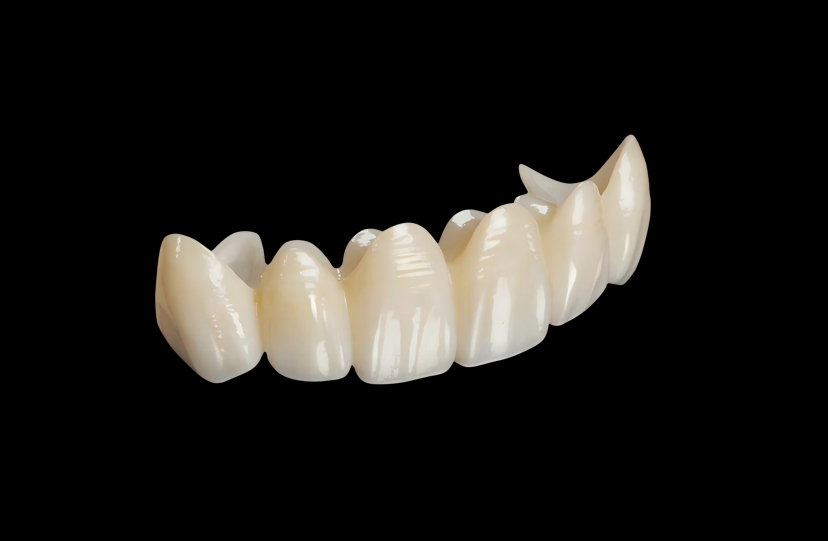
Peek Framework Offers Metal-Free Alternatives for Dental Laboratories
Quick Answer
PEEK Framework provides a biocompatible, metal-free alternative for dental laboratories looking for lightweight prosthetic framework options. Fabricated from Polyetheretherketone (PEEK), this high-performance thermoplastic provides a favorable strength-to-weight ratio, radiolucency, and bone-like elasticity, making it ideal for removable partial dentures, implant-supported overdentures, and fixed restorations. With favorable fatigue resistance and chemical stability, PEEK frameworks may help address clinical requirements where lightweight, metal-free framework options are preferred.
Introduction
For modern restorative dentistry to work, the materials used must be able to balance mechanical performance with patient safety and clinical efficiency. Traditional metal frameworks, including cobalt-chromium and titanium alloys, remain widely used due to their proven mechanical properties. However, certain clinical situations may require alternative materials with different physical characteristics. Some patients may experience sensitivity or allergic reactions associated with certain dental metals, which leads to inflammatory reactions and remakes that raise lab costs and extend treatment times. In addition to creating imaging artefacts during X-rays, highly rigid metal frameworks may contribute to stress shielding due to their higher elastic modulus compared with natural bone. Polymer-based alternatives have gained attention as additional options for specific clinical applications as dentistry labs look for ways to make patients happier while lowering the number of times they have to redo work. PEEK frameworks have gained increasing attention as an alternative framework material supported by clinical research and laboratory applications. They provide dental professionals with a material option that combines engineering precision with biocompatibility.
What is a Peek Framework?
A Peek Framework is a structural prosthetic part that is milled or made from Polyetheretherketone, a semi-crystalline thermoplastic polymer that is known for having great mechanical properties and being biocompatible. This material is used instead of standard metal frames in detachable partial dentures, implant-supported bars, and fixed prosthetic structures. It is the main load-bearing structure in tooth restorations. The chemical structure of PEEK is made up of aromatic rings connected by ether and ketone linkages. It demonstrates high thermal stability and resistance to hydrolysis, chemical exposure, and repeated sterilization procedures.
The material has an elasticity value of about 4 GPa, which is similar to human cortical bone (3–20 GPa). This characteristic may contribute to more favorable stress distribution during function. PEEK frameworks may help distribute occlusal forces more evenly, supporting prosthetic stability during function. This is in contrast to rigid metal alloys that can cause stress shielding. With a density of 1.32 g/cm³, these frames are much lighter than titanium (4.5 g/cm³) or gold (15–19 g/cm³). They make patients much more comfortable, especially during long rehabilitations.
Radiolucency is another feature that sets it apart. When doctors use X-rays, Peek Frameworks don't get in the way, so they can see clearly and check on bone levels, implant integration, and tissue health. This is very helpful for follow-up exams and troubleshooting. This ability to let radiation pass through allows for accurate tests while keeping structural integrity on par with metals.
Benefits
Adopting Peek Frameworks in dentistry lab workflows may contribute to improvements in clinical outcomes, patient comfort, and workflow efficiency. This section discusses how PEEK frameworks may address material selection considerations in clinical and laboratory workflows.
Patient Comfort and Acceptance: PEEK frameworks' lightweight lowers buccal pressure and improves retention comfort in detachable prostheses. The lightweight characteristics of PEEK frameworks may improve patient comfort, particularly in long-term removable prosthetic applications, compared to bulky metal ones, which means they are accepted more often and need fewer changes after delivery. The fact that there is no metallic taste or electrical responses makes the patient's experience even better.
Metal-Free Material Option: Because PEEK is a metal-free polymer material, it may be suitable for patients with concerns regarding certain metal sensitivities; it does not contain nickel, cobalt, or chromium, which may be beneficial for patients with concerns regarding certain metal sensitivities. Dental offices that treat patients with known metal allergies now have a reliable alternative that meets safety standards without lowering mechanical performance.
Enhanced Imaging and Diagnosis: Radiolucent properties make it easier to get an accurate X-ray during all stages of treatment. Prosthodontists and implant specialists can see the structure of the bone and where the implants are placed clearly and without any artefacts getting in the way. This lets them act quickly if problems arise.
Reduced Remake Rates: Digital CAD/CAM manufacturing enables highly consistent framework production and predictable fit accuracy, which means that fit accuracy can be predicted and there is little time spent adjusting the part on the chairside. For labs that are dedicated to getting things right the first time, lower remake rates directly mean lower costs, better timing, and stronger relationships with clients.
Durability and Longevity: PEEK has great fatigue resistance under cyclic loading, which is very important for prosthetics that are used millions of times a year. Available studies have demonstrated promising long-term mechanical stability of PEEK materials in dental applications. This supports long-term prosthesis security and patient happiness.
Advantages
PEEK frameworks offer specific material characteristics that may provide advantages in selected clinical situations. Because of these benefits, PEEK is a good choice for labs that want to support laboratories in developing differentiated material solutions for specific clinical applications.
Bone-Like Elasticity: The elastic modulus is very similar to real bone. It spreads out useful stresses equally and may help reduce excessive stress concentration around implant-supported structures. This biomechanical fit makes implants last longer and lowers the risk of problems from prosthetics that are too rigid.
Chemical Resistance: PEEK doesn't break down when it comes in contact with spit, oral germs, and cleaning products. The substance doesn't dissolve in any common liquids except strong sulphuric acid. This makes sure that the prosthesis works properly for its entire life.
Precision Manufacturing: Frameworks made with advanced five-axis CAD/CAM milling technology are more accurate in size than those made with cast metal methods. Digital processes get rid of mistakes made with waxing and casting, which leads to uniform margins, accurate occlusion, and reliable interproximal contacts.
Customization Flexibility: Peek Frameworks allow for 100% unique designs that are made to fit the anatomy, occlusal patterns, and aesthetic needs of each patient. This adaptability helps with full-arch rehabilitations that are hard to do, implant-supported hybrid prosthetics, and difficult anatomical cases where standard solutions don't work.
Sterilization Compatibility: The material can go through multiple autoclaving cycles without breaking down mechanically or chemically. This means it can support infection control protocols that are very important in regulated clinical settings.
Color and Esthetics: Natural PEEK has a tooth-colored look that makes it easier to blend in, especially in the front. Surface preparation lets you use special primers to bond composite veneers or plastic denture bases, which makes it possible to layer them in a way that looks natural.
Disadvantages
For all their benefits, Peek Frameworks have some issues that dental labs and doctors need to think about in the context of their own work. By knowing these limits, you can choose materials that are well-informed and meet the needs of the case.
Initial Investment: CAD/CAM equipment that can mill PEEK, such as high-speed carbide burs and machining centers, needs more money than normal metal casting infrastructure. When labs switch to PEEK, they need to weigh the costs of the new tools against the expected number of cases and increased income.
Surface Bonding Requirements: To get strong bonds between PEEK surfaces and other materials, the surfaces must be prepared using plasma treatment, acid etching, or special starters. Not properly preparing the surface weakens the bond and raises the risk of veneer delamination over time.
Material Cost: Medical-grade PEEK blanks usually cost more per unit than cobalt-chromium alloys. However, this extra cost is often balanced out by fewer remakes, faster response times, and happier patients, which is why cost-benefit analysis should be done for each individual case.
Limited Repairability: PEEK frameworks can be changed with special burs, but major structural repairs are harder to do than with metal frameworks, which can be welded or soldered. Laboratories should set up clear ways for prescribing clinicians and laboratories to talk about limitations on modifications.
Availability of Trained Technicians: To mill PEEK, you need to know a lot about CAD design, choosing the right tools, and finishing techniques. Laboratories need to spend money on skill development to keep quality high and avoid mistakes that cost a lot of money during the learning curve.
Comparison
When you know how Peek Frameworks are different from other materials, you can make smart choices about what to buy that are in line with clinical goals, patient data, and lab capabilities.
| Property | PEEK Framework | Cobalt-Chromium | Titanium | Zirconia |
|---|---|---|---|---|
| Density | 1.32 g/cm³ | 8.4 g/cm³ | 4.5 g/cm³ | 6.0 g/cm³ |
| Elastic Modulus | 4 GPa | 230 GPa | 110 GPa | 210 GPa |
| Radiolucency | Yes | No | No | No |
| Biocompatibility | Excellent | Good (possible metal sensitivity in some patients) | Excellent | Excellent |
| Fatigue Resistance | High | Good | Very Good | Moderate |
| Manufacturing Method | CAD/CAM milling | Casting or milling | CAD/CAM milling | CAD/CAM milling + sintering |
| Esthetics | Tooth-colored / customizable | Metallic | Metallic | Tooth-colored / translucent options |
| Relative Cost | Moderate | Low to Moderate | Moderate | Moderate to High |
PEEK offers a balance between mechanical properties, biocompatibility, and aesthetic considerations depending on clinical requirements. Cobalt-chromium remains widely used due to its mechanical strength and affordability, while PEEK may offer advantages in cases where reduced weight and flexibility are important considerations. Titanium is very biocompatible, but it is not radiolucent and is not flexible. Zirconia provides excellent aesthetics and strength under compression but has different mechanical characteristics compared with flexible polymer materials, which is a problem for thin, replaceable prosthetics.
Clinical Indications
Peek Frameworks can be used in a variety of clinical situations where traditional materials aren't appropriate or don't work well. These uses show how flexible the material is across different areas of corrective dentistry.
Removable Partial Dentures (RPDs): Peek Framework clasps and major links are used instead of bulky metal frames, which makes the patient more comfortable without sacrificing retention. The bone-like flexibility spreads out the stress on the supporting teeth, which makes them last longer. Aesthetic integration is especially helpful for front cases where metal clasps can make the smile look bad.
Implant-Supported Overdentures: The shock-absorbing qualities of PEEK help protect osseointegration during masticatory loading in bar frameworks that link multiple implants. The material's fatigue resistance can handle the cyclic forces that come with overdentures, which lowers the risk of framework breakage compared to hard metal options.
Full-Arch Hybrid Prostheses: When replacing both natural teeth and implants in a full mouth reconstruction, the materials used need to be able to handle different levels of movement. PEEK Frameworks evenly spread forces, which keeps implants from becoming too heavy and protects the gum health around remaining teeth.
Patients with Metal Sensitivities: People who are allergic to nickel, cobalt, or chromium need treatments that don't contain these metals. PEEK is a clinically proven alternative that meets mechanical needs without causing hypersensitivity reactions.
High-Performance Athletic Populations: People who play contact sports can benefit from prosthetics that are light and not made of metal. These lower the risk of injury during impacts and keep their structural integrity under extreme functional demands.
Materials
Medical-grade Polyetheretherketone is used to make PEEK frameworks because it meets strict biocompatibility and performance standards. The choice of material has a direct effect on clinical results, compliance with regulations, and the success of prosthetics over the long run.
Base Polymer: Medical-grade PEEK meets ISO 10993-1 and USP Class VI biocompatibility standards, which means it is safe to use for a long time in the mouth. The semi-crystalline structure makes it stable at high temperatures, resistant to chemicals, and strong enough for use in prosthetics. Getting your raw materials from certified suppliers makes sure that the crystallinity, molecular weight distribution, and purity levels stay the same.
Radiopaque Variants: Normal PEEK is radiolucent, but some medical protocols need the framework to be visible on X-rays. Radiopaque formulas from manufacturers include barium sulphate or tantalum particles, which allow X-ray detection while keeping the mechanical qualities. When imaging is needed because of the case, laboratories should list radiopaque choices.
Surface Conditioning Agents: To make strong bonds between PEEK and other materials, you need special primers that contain organosilanes or phosphate monomers. These coupling agents change the chemistry of the surface, which makes it easier for acrylic bases or composite veneers to stick to it.
Colour Pigments: Tooth-coloured PEEK products contain stable pigments that don't change colour when they're in the mouth. Laboratories can choose shades that match real teeth or denture base materials, which improves the look of integration without the need for colouring after processing.
Material traceability documentation, such as manufacturer certificates of conformance, batch numbers, and biocompatibility test reports, makes sure that all regulations are followed and quality is maintained throughout production.
Manufacturing Workflow
Peek Frameworks are made using precise CAD/CAM methods that combine digital design, automated machining, quality control, and finishing standards. Each step improves the quality of the measurements and the clinical results.
Digital Impression and Design: The process starts with intraoral scanning or digitising a model, which creates three-dimensional files that show the structure of the patient. With CAD software, you can precisely create a framework that includes retention elements, links, and tissue adaptation surfaces. It makes sure that the tooth is the right thickness (at least 0.8 to 1.2 mm), has the right clasp shape, and has enough space between the teeth.
Toolpath Generation: CAM software turns design files into machine instructions that make milling more efficient while keeping the integrity of the material. Toolpath methods choose the right cutting speeds, feed rates, and tool shapes to reduce thermal stress and tool wear while taking PEEK's machinability into account.
CAD/CAM Milling: Five-axis milling centers use pre-made PEEK blanks or discs to make frameworks. High-speed carbide burs remove material more precisely than wax-up and casting done by hand. Coolant systems keep heat from building up, which could change the crystallinity of a material or cause internal stresses.
Quality Inspection: After milling, 3D scanning technology is used to compare the frameworks that were made to the original CAD designs. Tolerances are confirmed to be within ±20 microns by dimensional analysis, which means that the clinical fit can be predicted. Visual inspection finds flaws, holes, or tool marks on the surface that need to be fixed.
Finishing and Polishing: Using rotating tools and abrasive papers for manual finishing gets rid of cutting lines and smooths out the edges. Polishing protocols make surfaces smooth, which stops plaque from building up and makes patients feel better. The best finish quality is when the surface roughness is less than 0.2 µm Ra.
Surface Conditioning (Optional): Cases that need veneer bonding are treated with plasma, acid etching, or primer to make the bonding stronger. Changing the surface in a controlled way raises its energy without changing the bulk mechanical features.
Final Inspection and Packaging: Once the frameworks are finished, they are checked for final dimensions, cleanliness, and documentation. Frameworks are kept safe during shipping and storage with sterilization-compatible packing that also meets legal requirements.
Cost Factors
By understanding the factors that affect Peek Framework price, labs and clinics can make affordable quotes while still meeting quality and profit standards.
Material Sourcing: The price of a medical-grade PEEK blank depends on the maker, the grade, and the level of certification. Materials on the FDA list that come from well-known sources cost more, but the quality is always the same; they can be tracked, and they follow all the rules.
Milling Complexity: Framework designs with a lot of clasps, complicated undercuts, and thin sections take longer to mill and wear out tools faster. Complex cases require machines to be used for longer periods of time and cost more in consumables.
Customization Requirements: CAD work is more difficult for fully customised designs that are made to fit the body of each patient than for semi-standardized models. It does, however, cut down on the time and number of remakes needed for chairside adjustments, which balances out the higher costs of design by making things run more smoothly.
Certification and Compliance: To keep ISO 13485:2016 quality management systems, FDA registration, and CE certification up to date, you have to pay for regular audits, keep track of paperwork, and make sure processes are working correctly. These investments protect the safety of the product and allow it to be sold in all regulated areas.
Order Volume: Batch production gets economies of scale by making the best use of materials, cutting down on setup time, and streamlining processes. Laboratories that work on a lot of cases can get better prices from the companies that supply the materials and tools they use.
Shipping and Logistics: Faster delivery options, like overnight or two-day shipping, come at extra cost but are necessary for meeting urgent clinical deadlines. Standard turnaround time of 3–5 days strikes a good balance between saving money and keeping to treatment plans.
Transparent cost communication strengthens laboratory-clinician relationships, enabling informed case planning aligned with patient budgets and practice profitability objectives.
How to Choose a Supplier
When selecting a PEEK framework supplier, you need to look at more than just unit price. Managers of procurement and owners of dental labs should look at the company's skills, certifications, service quality, and prospects for a long-term relationship.
Manufacturing Capability: Evaluate whether the supplier has five-axis CAD/CAM milling capabilities suitable for PEEK framework production that can consistently make complex shapes. Ask for model cases that show how accurate the measurements are, how well the surface is finished, and how well the product fits the body.
Quality Management Systems: Make sure the system has ISO 13485:2016 certification, which shows strong quality control, traceability, and ongoing improvement efforts. Review systems for keeping track of documentation that make sure material batches are tracked and production records are kept.
Regulatory Compliance: Check to see if the product is registered with the FDA, has a CE mark, and has biocompatibility licenses. As part of their market authorisation paperwork for target countries, suppliers should include certificates of approval, material safety data sheets, and regulatory documents.
Customization Flexibility: Find out if the provider can meet case-specific design needs, such as those that involve unusual anatomy, hybrid prosthesis designs, and unique retention schemes. 100% custom production means that solutions can be made to fit a wide range of clinical situations.
Communication Responsiveness: Look at how responsive they are to initial questions, how good their expert consultations are, and how ready they are to answer case-specific questions. Good communication cuts down on mistakes, speeds up production, and creates relationships where people can work together.
Turnaround Time: Make sure you know about standard production cycles (three to five days is best) and whether there are fast options for urgent cases. Reliable scheduling keeps treatments from running late and helps the practice run smoothly.
After-Sales Support: Look over the warranty terms—two years is best for set prosthetics and one year for portable ones—as well as the rules for free repairs or replacements during the warranty periods. Problems are quickly fixed by responsive technical support, which keeps patients happy and protects the lab's reputation.
Consider suppliers with demonstrated experience in dental laboratory production, quality systems, and case management. Customer reviews, case studies, and a presence in the market all show that a business is reliable and knows what it's doing.
Maintenance
Even though Peek Frameworks don't need much upkeep, following care instructions can help them last longer and look better.
Daily Cleaning: Patients should use soft soaps and non-abrasive mouth brushes to clean PEEK-based prosthetics. Harsh chemicals, bleach, or rough cleaners can hurt bound materials or surface finishes.
Professional Inspection: Every year, professionals check the structure's integrity, the way the retention elements work, and how the tissue has changed. Early discovery of wear or loosening allows changes to be made quickly, which keeps patients from being in pain or causing the restoration to fail.
Sterilization Protocols: Dental labs sterilise Peek Frameworks by autoclaving them at 134°C for 18 minutes, which doesn't damage the material. Repeated sterilisation processes that are repeated keep biocompatibility and infection control standards high.
Storage Conditions: Keep frameworks in dry places that are at room temperature and out of direct sunlight. Stay away from strong acids and bases and high heat (above 150°C) for a long time.
Surface Reconditioning: If bonded veneers come loose or wear down, surface reconditioning and then re-bonding can fix the function and appearance. Laboratories should write down their reconditioning procedures to make sure that the process is always the same.
Educating patients regarding proper care practices maximizes prosthetic longevity, reduces maintenance costs, and enhances overall treatment satisfaction.
Key Takeaways
Through metal-free construction, biocompatibility, and precision engineering, Peek Frameworks are a game-changing solution to long-standing problems in restorative dentistry. The bone-like flexibility, radiolucency, and light weight of the material make patients more comfortable while removing the allergy risks that come with using traditional metal alloys. When dental labs use PEEK in their production processes, they can cut down on the number of remakes, speed up response times, and set themselves apart from competitors. By choosing providers that show they can make great products, follow the rules, and provide quick service, you can be sure of consistent quality and long-term relationship value. As clinical standards and patient expectations change, Peek Frameworks deliver performance, safety, and aesthetic outcomes that set dental practices up for long-term success.
FAQ
Is PEEK suitable for patients with documented metal allergies?
Because they don't have any metal in them, PEEK frameworks may be considered for patients with concerns regarding certain metal sensitivities to nickel, cobalt, or chromium. The biocompatibility of the material meets ISO 10993-1 and USP Class VI standards, which means that it is safe to eat for a long time without allergic reactions.
How does PEEK compare to titanium in prosthetic weight?
PEEK has a density of 1.32 g/cm³, which is about 70% less than titanium's density of 4.5 g/cm³. The reduced density of PEEK may improve comfort, particularly in larger removable prosthetic designs, especially when they have a lot of removable prosthesis or a full-arch rehabilitation, while still keeping the structure strong when it comes to functional loads.
Can PEEK frameworks be repaired if damaged?
Diamond instruments and specialised carbide burs can be used to modify PEEK frameworks. After the surface is reconditioned with the right primers, bonded veneers or acrylic bases can be replaced. Major structural fixes, on the other hand, are harder to do than metal frames, which shows how important accurate initial production is.
Does PEEK interfere with dental radiography?
PEEK is radiolucent, which means that X-rays can clearly show bone, implants, and soft tissues underneath without any artefacts. This clarity makes it easier to make accurate diagnoses during follow-up exams, planning treatment, and fixing problems—a big plus over radiopaque metal frameworks.
What surface treatments enhance PEEK bonding?
Surface preparation with plasma treatment, acid etching (sulphuric or piranha solution), or the use of special starters containing organosilanes or phosphate monomers is needed for PEEK to stick to secondary materials for a long time. These methods change the surface energy, which makes the bond strength between composites and acrylics much stronger.
HYC PEEK Framework Manufacturing Capabilities
Dental labs looking for precision-engineered PEEK framework supplier partnerships can work with HYC because they have been making high-quality products for 22 years. Our FDA-registered, CE-certified, and ISO 13485:2016-compliant production plant makes 100% custom frameworks that meet strict tolerances within ±20 microns. This ensures that the frames fit the first time perfectly and that they don't need to be made over and over again. We offer standard turnaround times of 3–5 days, as well as faster flash delivery choices to meet important clinical deadlines. Two years for set restorations and one year for removable prosthetics is a full guarantee that covers free repair or replacement. This support helps laboratories maintain consistent production workflows and case management. Our technical team offers quick advice, makes case communication easier, and makes sure that design specs are easily turned into finished frameworks. Get in touch with HYC at info@hycdentallab.com right away to talk about your Peek Framework needs, learn more about HYC’s PEEK framework manufacturing capabilities, and discuss your case requirements with our technical team.
References
1. Najeeb S, Zafar MS, Khurshid Z, Siddiqui F. Applications of polyetheretherketone (PEEK) in oral implantology and prosthodontics. Journal of Prosthodontic Research, 2016, 60(1): 12-19.
2. Schwitalla AD, Spintig T, Kallage I, Müller WD. Flexural behavior of PEEK materials for dental application. Dental Materials, 2015, 31(11): 1377-1384.
3. Tannous F, Steiner M, Shahin R, Kern M. Retentive forces and fatigue resistance of thermoplastic resin clasps. Dental Materials, 2012, 28(3): 273-278.
4. Kurtz SM, Devine JN. PEEK biomaterials in trauma, orthopedic, and spinal implants. Biomaterials, 2007, 28(32): 4845-4869.
5. Zoidis P, Papathanasiou I, Polyzois G. The use of a modified poly-ether-ether-ketone (PEEK) as an alternative framework material for removable dental prostheses. Clinical Case Reports, 2016, 4(1): 80-84.
6. Bathala L, Majeti V, Rachuri N, Singh N, Gedela S. The role of polyether ether ketone (PEEK) in dentistry – A review. Journal of Medicine and Life, 2019, 12(1): 5-9.
YOU MAY LIKE
 Full Cast Crowns.webp "Base Metal (Non-Precious) Full Cast Crowns")