Complete Guide to Acrylic Dentures: Benefits and Care
When someone loses all of their natural teeth, it's important to restore oral function, facial support, and quality of life. For people who are fully edentulous and seek a predictable and non-invasive tooth replacement solution, a Complete Acrylic Denture is a sensible, non-invasive option. These removable prostheses are mostly made of heat-cured polymethyl methacrylate (PMMA) and acrylic teeth. They rest on the soft and hard tissues of the mouth and offer a cost-effective alternative to implant-supported restorations. This guide explains to dental professionals and purchasing managers everything they need to know about Complete Acrylic Dentures, from how they are made and what the material is made of to how to care for them and how to choose a supplier.
Understanding Complete Acrylic Dentures
What Are Complete Acrylic Dentures?
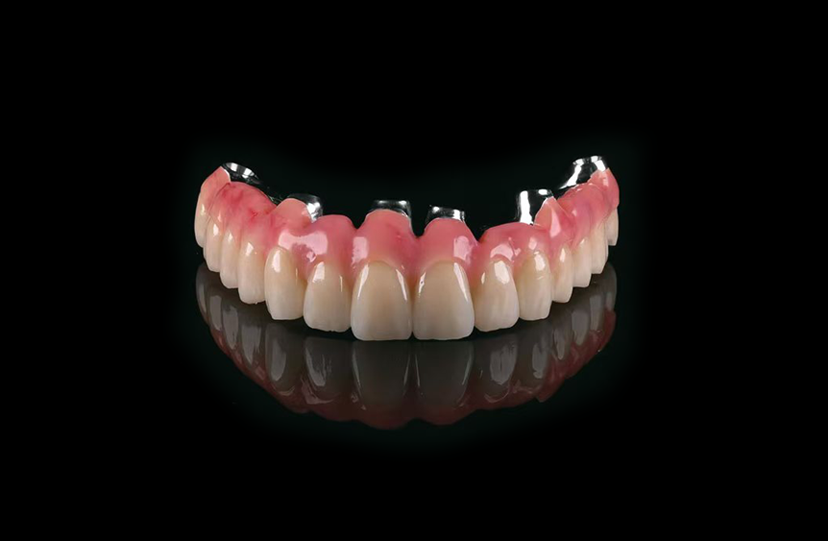
Complete Acrylic Dentures are full-arch removable prostheses made for people who have lost all of their teeth in either the upper or lower jaw, or both. Complete Acrylic Dentures are held in place by the gum tissue and alveolar bone, while partial dentures attach to the natural teeth that are still there. The base of the denture looks and feels like real gums, and the prosthetic teeth are carefully placed to restore chewing function and facial appearance.
Implant-supported overdentures, which attach to dental implants that are put in during surgery, are very different from these devices. Complete Acrylic Dentures don't require any invasive surgery, so they're good for people who can't have surgery or who want a less invasive way to meet their treatment needs.
Core Materials and Composition
Every Complete Acrylic Denture is made of polymethyl methacrylate resin, a biocompatible thermoplastic polymer that is durable, biocompatible, and easy to process. When PMMA is being made, it is heated and cured in special lab equipment. This creates a dense, stable base that offers good dimensional stability under normal clinical conditions. The prosthetic teeth that are attached to this base are also made of acrylic and are tinted to match the natural teeth's colour gradients and level of transparency.
Even though there are other materials out there, like flexible nylon-based polymers and metal-reinforced frameworks, PMMA is still the standard because it is cost-effective, easy to work with, and looks good on a lot of different things. Some people find that flexible dentures are more comfortable, but they may provide lower rigidity than people need for stable occlusion. Even though porcelain teeth look great, they are heavier and more likely to break if they are dropped.
Hard Acrylic vs. Soft Liners
The structural stability of traditional hard acrylic bases is better, and they are easy to clean and maintain. Patients with sensitive gums or significant bone loss, on the other hand, may feel discomfort when the hard surface presses against soft tissues. This problem can be fixed with soft liners, which are thin cushioning pieces bonded to the tissue-facing side of the denture. They make chewing forces more widely distributed and reduce pressure spots.
Soft liners need to be replaced more often than hard acrylic because they undergo bone resorption faster, but they help first-time denture wearers adjust to their new teeth much better. When deciding whether to add soft-lined options to their product line, procurement managers should look at the types of patients they have and what they want from their care.
Benefits and Drawbacks of Complete Acrylic Dentures
Key Advantages for Patients and Practices
People who need reliable prosthetics at a low cost can benefit a lot from acrylic dentures, as can dental practices. Knowing about these benefits helps procurement teams position their product portfolio more effectively in markets that are already very competitive.
Cost-Effectiveness and Accessibility: Complete Acrylic Dentures are the most affordable way to replace a full arch of teeth, compared to implant-supported restorations that may involve significantly higher treatment costs in dollars. This lower cost makes it easier for people who don't have dental insurance or don't have enough coverage to get the care they need.
Ease of Adjustment and Repair: One of the best things about acrylic resin is how easy it is to work with. Dentists can reline, rebase, or repair fractured denture teeth right in the chair using simple tools and supplies, so patients don't have to wait. As teeth are lost, the denture undergoes natural bone resorption. Regular relining keeps the fit accurate without having to replace the whole denture.
Lightweight Comfort: Because PMMA isn't very dense, acrylic dentures are a lot lighter than metal-based or porcelain options. This lighter weight makes it easier for patients to handle, especially during the first few days when they are getting used to having something foreign in their mouth.
Natural Aesthetic Outcomes: New Modern manufacturing techniques let you precisely change the colour of gum tissue, the shape of teeth, and the custom shade matching. High-quality acrylic teeth have the same slight translucency and surface roughness as natural enamel. This means that the restorations blend naturally with your facial features and other teeth and gums.
Rapid Production Timelines: Making acrylic dentures takes fewer technical steps than making cast metal frameworks, so labs can finish cases in less time. This speed advantage is very important for practices that have a lot of patients or need to replace cases quickly.
Because of these benefits, Complete Acrylic Dentures are an important part of making a full treatment plan. When talking to dental clinics and labs that are trying to find a balance between quality and operational efficiency, procurement professionals should stress these benefits.
Limitations to Consider
While acrylic dentures have many benefits, being honest about their flaws is important for setting realistic goals and making smart buying decisions. Material brittleness is still a problem—PMMA can fracture under excessive impact or stress or when put under too much force, which means it needs to be fixed, which interrupts patient care and costs more money. Long-term costs of ownership go up when things need to be replaced every five to seven years.
The lower thermal conductivity is another one. Acrylic's insulating features keep people from reducing temperature perception, which could make eating less enjoyable. Some patients also have allergic reactions to monomers that haven't fully reacted within the resin matrix. However, this happens much less often now that the manufacturing process uses better polymerisation techniques.
Fabrication Process and Quality Standards
Step-by-Step Manufacturing Workflow
To make correct, comfortable Complete Acrylic Dentures, you have to pay close attention to every step of the process. The first step is to make full preliminary impressions in alginate material. This makes the first casts that are used to guide the construction of the custom tray. With these custom trays, the dentist can make very accurate final impressions in materials like polyether or polyvinyl siloxane, which show the exact shape of the tissue and anatomical features.
The jaw registration records show the correct vertical measurement of the occlusion and the central relation position. This makes sure that the finished denture supports the right height of the face and proper joint function. Then, technicians put the prosthetic teeth in place on wax bases. During try-in appointments, patients check the teeth's appearance, phonetics, and comfort before the final processing.
For processing in the lab, the wax mould is put into dental stone in metal flasks, the wax is boiled off, and heat-cured acrylic resin is poured into the mould space. The resin hardens through controlled heating cycles, making the final denture base. After the teeth have been cooled, deflashed, and finished with cutting, polishing, and occlusal adjustment, they are checked by quality control technicians to make sure they are the right size and have a smooth surface before they are shipped.
Critical Quality Certifications
Following the rules is the basis for trusting relationships with suppliers. Complete Acrylic Dentures must adhere to strict biocompatibility standards set by international governing bodies. A product's Manufactured in FDA-registered facilities that the materials used and the way it was made meet US safety standards, while a product's CE marking shows that it meets European Medical Device Regulations.
Getting ISO 13485:2016 certification shows that a company has quality management systems in place that cover designing, making, installing, and fixing medical devices. With this certification, purchasing managers can be sure that suppliers have strict internal controls, traceability protocols, and ways to keep improving.
Material safety is more than just getting approvals. Medical-grade PMMA resin materials are tested for their ability to cause cytotoxicity, sensitization, and irritation. This makes sure that finished prostheses don't pose too much of a risk to oral tissues. Reputable manufacturers keep thorough records of where they get their materials, the results of batch tests, and sterilisation validation studies. They are happy to share these records with potential suppliers when asked.
Cost Comparisons and Customization Capabilities
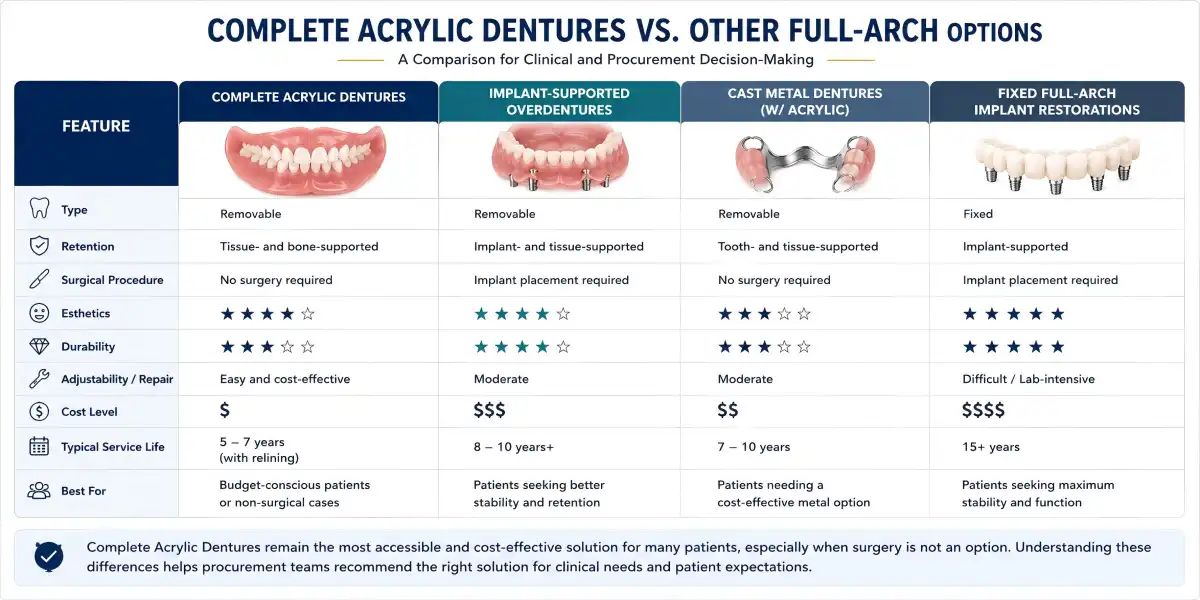
Different types of prosthetics are priced in very different ways. Complete Acrylic Dentures usually have modest to low prices, but implant-supported restorations are more expensive because they have surgical parts and titanium abutments. Cast metal frames with plexiglass overlays are in the middle. They offer better strength at a slightly higher cost.
Customisation directly affects how well patients do in the clinic and how happy they are with their care. There are many choices for choosing a tooth mold, matching the shade, stippling the gums, characterization staining, and designing an occlusal plan in modern labs. Because of this, prosthodontists can make highly customized restorations that take into account things like personality, ethnicity, and normal wear and tear for people of different ages.
During the planning phase, suppliers who really work together should be given extra attention by procurement managers. When compared to competitors who use strict templates, manufacturers who give dedicated case managers, offer digital design models, and allow change requests without charging excessive fees offer better value.
Maintenance, Care, and Troubleshooting
Daily Cleaning Best Practices
Following the right care steps will greatly increase the life of your dentures and protect your mouth's health. After every meal, patients should take off and rinse their prostheses with lukewarm water to get rid of food particles and keep the prostheses from staining. Bacterial biofilm that builds up on plastic surfaces can be removed every day with soft-bristled denture brushes and non-abrasive denture cleansers.
Regular toothpaste and other harsh abrasives leave tiny scratches on teeth that bacteria can live in and speed up discolouration. Specifically designed denture cleaners that are made with mild surfactants and antimicrobials clean well without damaging the material. Soaking your dentures in cleaning solutions overnight keeps them moist and stops them from warping due to drying out.
Hot water is very dangerous because it can permanently distort the precise fit that was set during manufacturing by warping acrylic at high temperatures. Patients should only clean and store things with cool or cold water.
Common Issues and Solutions
Even with careful handling, dentures can sometimes have problems that need to be fixed by a professional. Along stress concentration spots, especially in thin parts of the denture base, hairline cracks may show up. Small cracks can sometimes be fixed with acrylic bonding agents, but large cracks need to be fixed in a lab to make the structure strong again.
As bone resorption changes the foundation below, looseness slowly sets in. Patients who notice less retention should make relining appointments instead of using over-the-counter denture adhesives as a long-term fix. When you get professional relining, the tissue-facing side of your denture is resurfaced with new acrylic. This restores intimate adaptation to the supporting tissues.
Sore spots that won't go away mean that there are pressure points that need to be ground down and adjusted. Patients should never try to change their teeth themselves with common home items because making the wrong changes will damage the prosthesis permanently and void the warranty. Adjustments are made by skilled dentists using precision burs and articulating paper to find and get rid of interference points in a planned way.
Replacement Indicators
Most people can get by with Complete Acrylic Dentures for five to seven years before they need to be replaced. Several warning signs, on the other hand, suggest that getting help sooner may improve treatment outcomes. When occlusal surfaces are worn down badly, it makes chewing less effective and puts more stress on the remaining bone. A lot of stains that won't come off with professional cleaning mean that the surface is breaking down, which lets pathogenic bacteria live.
Large amounts of bone loss can cause big changes in fit that may be too big for relining treatments to fix. In these cases, completely new prostheses must be made to fit the new tissue shape. Cracks, chips, or material breakdown that can be seen also mean that the item needs to be replaced instead of being fixed over and over, which would cost more in the long run.
Procurement Insights for B2B Buyers
Supplier Selection Criteria
When looking for trusted Complete Acrylic Denture providers, dental labs, clinic procurement managers, and marketing partners have to make important choices. To make sure that partnerships work in the long term, evaluation processes should be based on a few key factors.
Product Quality and First-Time Fit Accuracy: Dentures that need a lot of changes at the chairside or are often remade hurt both the business's bottom line and its patient satisfaction. Suppliers that consistently show great fit accuracy through strict quality control measures deliver measurable value by cutting down on labour costs and improving patient outcomes. When evaluating a vendor for the first time, ask for case studies, testimonials, and statistics on the rate of remakes.
Delivery Speed and Logistics Reliability: Dental cases that need to be done quickly need providers who can keep their promises. Manufacturers with standard production cycles of three to five days and fast rush options give dentists the freedom to meet urgent patient needs. Before placing a big order, make sure you check the shipping partners, tracking options, and performance records for on-time delivery rates.
Regulatory Documentation and Compliance Transparency: Suppliers should be able to easily give full copies of their FDA registrations, ISO certifications, material safety data sheets, and biocompatibility test reports. If someone doesn't want to share their compliance documentation, it could mean that there are problems with the quality or regulatory gaps that put purchasing organisations at risk of being sued.
Customization, Responsiveness, and Communication Efficiency: When there are complicated cases with unusual anatomy or specific requests for aesthetics, dentists and lab workers need to work together to find solutions. When looking for a supplier, you should check how they communicate, how quickly they respond, and whether they are willing to work with your specific needs without charging too much extra.
After-Sales Support and Warranty Terms: A full warranty shows that the maker is confident in the quality of the product. Standard warranty periods for removable prostheses are usually one year and cover problems with the way they were made and materials that undergo bone resorption too soon. When suppliers offer free repairs or replacement denture periods, they lower their financial risk and keep patients happy during unexpected problems.
Direct Purchase vs. Distributor Networks
Buying tactics are different for each company, based on its size, the number of orders it gets, and its own logistics skills. When you buy directly from manufacturers, you skip the markups that come from middlemen. This could reduce procurement costs. But with this method, you have to handle international shipping, clearing customs, and talking to people in different time zones.
Established distributor networks make it easier to buy things because they offer local inventory, centralised billing, and customer service support in the United States. Distributors also give manufacturers and retailers useful information about new products and how prices are changing in the market. The added ease that comes with working with a distributor often makes up for a little higher unit costs. This is especially true for smaller offices that don't have dedicated supply chain staff.
Bulk ordering strategies offer economies of scale. Manufacturers usually offer bulk deals that get a lot better at certain levels of production, which shows how efficient their runs are. Organisations that provide dental services and have more than one site should combine their facilities' needs to get better deals and better prices.
Building Long-Term Partnerships
Relationships with suppliers that work well go beyond simple transactions and turn into long-term partnerships based on trust and shared success. When practices consistently deliver high-quality work over long periods of time, they build trust that lets them safely push certain brands to patients.
Buyers can plan their inventory levels ahead of time and avoid service interruptions when they know about changes in production capacity, lead times, and problems getting materials. Regular business reviews with key providers make it easier to talk about ways to keep improving, agree on what quality standards are, and spot new technical skills early on.
Manufacturers that show they care about their customers' success by offering quick technical support, resources for continuing education, and group case consultations earn customer loyalty that can withstand price pressures from other vendors. When figuring out the total value that supplier ties bring, procurement professionals should look at both relationship factors and cost factors.
Conclusion
Complete Acrylic Dentures remain a cornerstone of modern prosthodontic practice, delivering functional tooth replacement at accessible price points for fully edentulous patients. Their combination of affordability, adjustability, and aesthetic customization addresses critical needs within diverse clinical settings. While material limitations such as brittleness and thermal insulation present challenges, proper maintenance protocols and realistic patient expectations yield satisfactory outcomes spanning five to seven years of service. Procurement professionals evaluating denture suppliers should prioritize manufacturers demonstrating regulatory compliance, consistent quality performance, rapid delivery capabilities, and comprehensive after-sales support to optimize both clinical results and operational efficiency.
FAQ
How long will my complete acrylic dentures last?
Most Complete Acrylic Dentures last between five and ten years, but the exact length of time they last depends on several factors. Over time, natural bone resorption changes the shape of the jaw, which makes the denture gradually lose its fit because of ongoing bone resorption. Every day, chewing forces and repeated cleaning processes wear down plastic surfaces and tooth structures over time. The structure of the denture may stay the same for ten years, but it needs to be relined every two to three years to keep it fitting properly as the mouth changes. Patients should plan for a full replacement when normal maintenance procedures can't fix the damage caused by wear and tear, discolouration, or changes in size.
Can I sleep or eat normally with my dentures?
Dental professionals generally recommend taking out dentures at night so that the gums and bone beneath can heal from the pressure of the teeth during the day. Taking off prostheses at night also stops the growth of bacteria that like the warm, damp environment under them. People who are new to wearing dentures should slowly gain confidence by starting with soft foods that have been cut up into small pieces. Most patients get used to eating a lot of different foods over time. However, sticky foods like chewing gum and very hard foods like raw carrots or nuts may always be hard for them. Spreading the chewing forces evenly across both sides of the mouth makes it more stable and less likely to tip over during mastication.
Partner with HYC for Premium Complete Acrylic Denture Solutions
Dental professionals looking for a trusted Complete Acrylic Denture supplier can turn to HYC for help. They have been making specialised products for 22 years. Our manufacturing facility is fully registered with the FDA, has CE certification, and follows ISO 13485:2016, which makes sure that every prosthesis meets strict international safety and biocompatibility standards. We get high first-time fit accuracy by using precise digital processes and strict quality control. This cuts down on remake rates that mess up clinical plans, helping reduce remake rates and improve clinical efficiency. Standard cases ship within three days and have a total turnaround time of four to five days. Urgent cases get expedited shipping support, and expedited turnaround is available for urgent cases. Our full warranty program covers fixed items for two years and removable prostheses for one year. It also covers free repairs or replacements for problems with the way they were made. Contact our expert team at info@hycdentallab.com to request customized quotations, sample evaluations, or technical consultations tailored to your specific clinical requirements.
References
1. Zarb, G.A., Hobkirk, J., Eckert, S., & Jacob, R. (2013). Prosthodontic Treatment for Edentulous Patients: Complete Dentures and Implant-Supported Prostheses. 13th Edition. Mosby.
2. Anusavice, K.J., Shen, C., & Rawls, H.R. (2012). Phillips' Science of Dental Materials. 12th Edition. Saunders.
3. Feine, J.S., & Carlsson, G.E. (2003). Implant Overdentures: The Standard of Care for Edentulous Patients. Quintessence Publishing.
4. Jagger, D.C., Harrison, A., & Jandt, K.D. (1999). The reinforcement of dentures. Journal of Oral Rehabilitation, 26(3), 185-194.
5. Phoenix, R.D., Cagna, D.R., & DeFreest, C.F. (2003). Stewart's Clinical Removable Partial Prosthodontics. 4th Edition. Quintessence Publishing. Sharry, J.J. (1974). Complete Denture Prosthodontics. 3rd Edition. McGraw-Hill.
YOU MAY LIKE