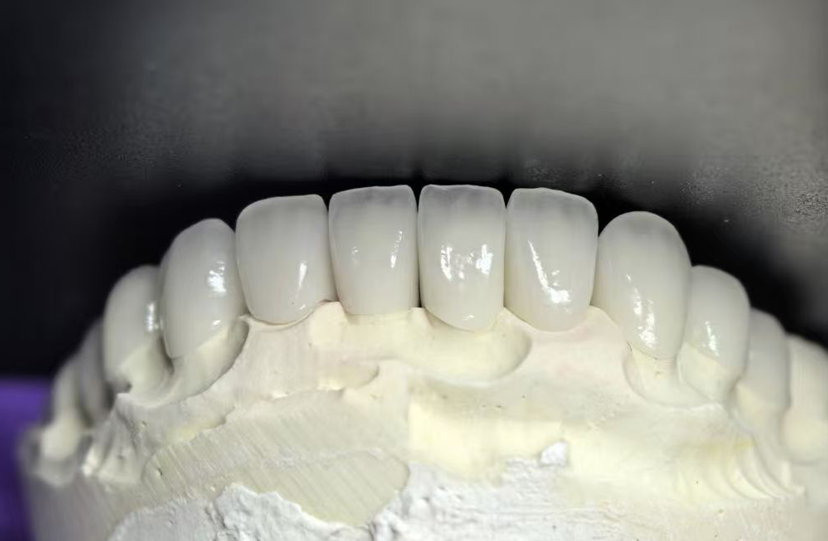
How does FCZ compare with PFM restorations
Many procurement workers ask: How does FCZ (Full Contour Zirconia) compare to traditional Porcelain Fused to Metal (PFM) restorations when deciding which dental repair material to use? FCZ (Full Contour Zirconia) provides a monolithic restoration option made from yttria-stabilized zirconia, known for its high mechanical strength and favorable biocompatibility, without the need for complex layers as in PFM systems. PFM bonds porcelain to a metal substructure, which can chip at the interface. FCZ (Full Contour Zirconia) offers a monolithic, single-material design that eliminates porcelain veneering layers and may reduce the risk of veneer chipping associated with layered restorations. It is important for hospitals and labs that want low remake rates and dependable performance to understand these differences.
Understanding the Basics of FCZ and PFM Restorations
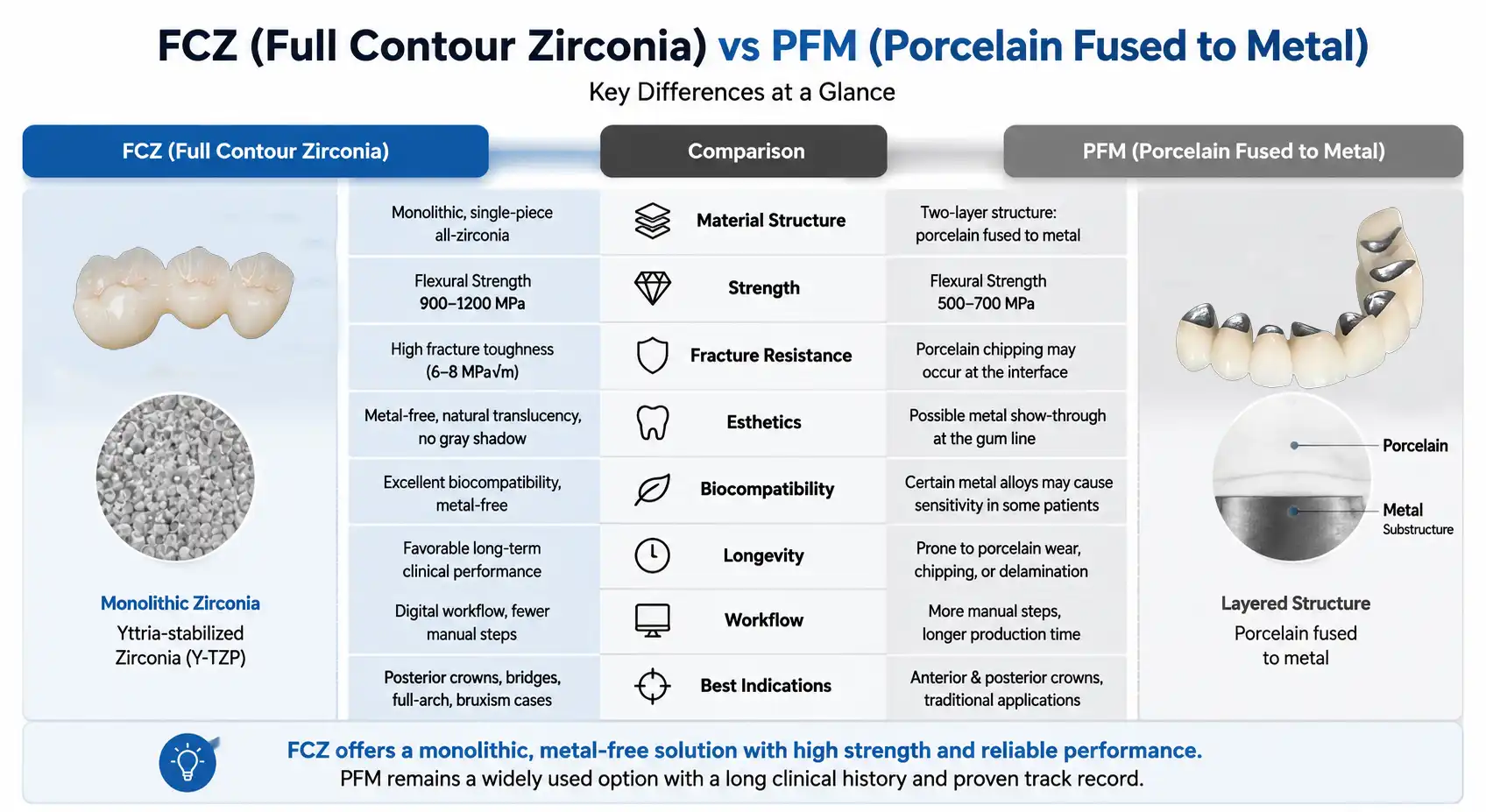
What Is Full Contour Zirconia?
The use of FCZ(Full Contour Zirconia) is a new development in dental ceramics. Using digital CAD/CAM technology, this one-piece restoration is cut out of a single block of pre-sintered zirconia. The material is made up of yttria-stabilized tetragonal zirconia polycrystal, which provides transformation toughening properties that improve fracture resistance compared with many traditional ceramic materials. FCZ(Full Contour Zirconia) can handle strong biting forces without the need for a metal support because its bending strength is over 900 MPa. The all-digital workflow enables precise customization, helping achieve consistent fit accuracy and potentially reducing chairside adjustment time.
How PFM Restorations Are Made
For many years, PFM veneers have been used in dentistry. For these repairs, a cast metal base is used, usually a noble or base metal combination. Then, layers of feldspathic porcelain are put on top and fired. The metal core gives the tooth its functional strength, and the ceramic veneer looks like a real tooth. But the layered structure of PFM restorations requires careful control of the porcelain-metal interface, where porcelain chipping remains one of the reported complications. To make PFM crowns, you have to do a lot of hard work, like waxing, casting, opaquing, porcelain stacking, and burning them over and over again. This makes the production process take longer, and the results are less consistent.
Key Compositional Differences
Material uniformity is what makes them different. FCZ(Full Contour Zirconia) keeps its composition the same throughout the restoration, which helps maintain consistent mechanical properties throughout the restoration. When PFM restorations use different materials with different thermal expansion factors, they create internal stress that can shorten the life of the restoration. Zirconia offers advantages such as chemical stability and metal-free composition compared with some metal-containing restorative materials. Certain metal-containing restorations may present aesthetic concerns or cause sensitivity issues in susceptible patients. Because FCZ does not contain metal, it may help reduce aesthetic concerns such as gray shadows sometimes associated with metal-containing restorations that can happen over time with PFM repairs.
Material Performance and Durability Comparison
Mechanical Strength and Fracture Resistance
Multiple clinical studies have shown that solid zirconia crowns have much lower rates of breaking than PFM replacements. Depending on zirconia formulation and yttria content, monolithic zirconia materials may demonstrate flexural strengths ranging from approximately 900 to 1200 MPa, which depends on how much yttria is in it. PFM metal frames, on the other hand, usually get 500 to 700 MPa. Even better, FCZ(Full Contour Zirconia) has a fracture hardness of 6 to 8 MPa√m, which means it is very hard for cracks to spread. The link between the porcelain and metal in PFM repairs is very weak. Clinical studies have reported porcelain chipping as one of the common complications associated with PFM restorations, although rates vary depending on clinical conditions and follow-up periods. These crowns need expensive fixes or replacements, which slows down clinical processes and makes patients less happy.
Longevity and Service Life
Dental labs and purchasing managers are putting more and more value on products that last longer. When made and cared for properly, with proper case selection, fabrication quality, and maintenance, zirconia restorations have demonstrated favorable long-term clinical performance. Since there is no stacked porcelain, the main way that PFM systems fail is not present. In perfect conditions, PFM crowns last a long time, but the porcelain-metal joint wears down faster, and they are more likely to break completely if you have parafunctional habits like bruxism. For patients with higher occlusal demands, FCZ(Full Contour Zirconia) may be an appropriate option due to its high mechanical strength. This may help reduce maintenance requirements and support more predictable long-term treatment outcomes.
Biocompatibility and Tissue Response
In artificial dentistry, tissue health is still very important. Because it doesn't react with plaque and has a smooth surface, zirconia is chemically solid and doesn't corrode. Zirconia surfaces have demonstrated favorable soft tissue compatibility in clinical applications. Some metal parts in PFM replacements can give off ions that can cause allergic responses or make the area around the implant swell up. It's common for thin gums to show dark metal edges, which can be unsightly and need extra porcelain sealing to fix. FCZ provides a metal-free alternative that may help address certain aesthetic concerns associated with metal-containing restorations and patient comfort throughout the restoration's lifetime.
Cost Analysis and Procurement Considerations
Upfront Material and Production Costs
The original investment and the long-term value are often weighed by procurement teams. Because they use high-quality raw materials and require modern CAD/CAM manufacturing, FCZ(Full Contour Zirconia) products cost more up front. Investing a lot of money in high-quality zirconia blocks and cutting tools is necessary. At first glance, PFM repairs seem more cost-effective because they use less expensive materials and are already used in laboratories. But this simple cost comparison leaves out important things like the amount of work that needs to be done, the time it takes to make the product, and how consistent the quality is. The fully digital FCZ workflow can reduce manual steps and improve production consistency in laboratory environments. This workflow may help improve production efficiency and reduce labor requirements in certain laboratory environments.
Hidden Costs and Long-Term ROI
Total cost of ownership is another thing that smart buying looks at besides the purchase price. PFM restorations have hidden costs because the porcelain chips need expensive fixes, remakes, and patient recalls. Each remake uses up lab resources, extends the length of treatment, and hurts patients' trust. Because FCZ(Full Contour Zirconia) is so durable, these problems happen much less often. This lowers the lifetime costs and makes dentistry labs and offices more profitable. Furthermore, FCZ(Full Contour Zirconia)'s ability to work with digital impression systems can reduce reliance on traditional impression workflows and help improve digital case management efficiency, making supply chains even more efficient. When buying, managers look at bulk sales or OEM relationships. FCZ(Full Contour Zirconia) offers a better return on investment (ROI) because it lowers warranty claims and keeps customers longer.
Supplier Reliability and Logistics
It turns out that picking a reliable source is just as important as picking the right material. Established FCZ manufacturers typically implement quality control systems to maintain consistent production standards, follow all regulations, and provide quick expert help. Professionals in charge of buying things should judge sellers based on their ISO 13485 approval, FDA registration, and proof that their materials are biocompatible. When dealing with urgent clinical cases, it's important to have reliable transportation support, such as fast shipping, expected wait times, and the ability to place emergency orders. Dental labs and group offices that have to deal with a lot of complicated cases and tight patient schedules can get a competitive edge from suppliers who offer standard turnaround times of 3 to 5 days and next-day flash delivery choices.
Clinical Application and Procedural Differences
Digital Workflow Integration
These days, making FCZ(Full Contour Zirconia) uses fully digital processes that make things a lot more efficient. After intraoral scans are taken, plans are sent wirelessly to milling centers, which carefully cut pre-sintered zirconia blocks. This method can reduce the need for certain traditional laboratory steps, depending on the clinical workflow, including making physical models and waxing by hand. In some cases, this cuts production time from days to hours. PFM replacements are still made using traditional lab methods like lost-wax casting, metal polishing, and applying porcelain layers. These time-consuming, labor-intensive methods make turnaround times longer, increase the chance of human mistakes, and make it harder for large dental service companies that want to maintain consistent quality across multiple sites to grow.
Preparation and Placement Protocols
The ways that these types of restorations need to be prepared for the tooth are very different. Due to its high strength-to-thickness ratio, FCZ(Full Contour Zirconia) doesn't need many tooth reductions. It is suggested to prepare the teeth by reducing them by 1.5 mm at the buccal and 1.0 mm at the cervical levels, with shoulder borders. This keeps more of the natural tooth structure than PFM, which usually needs more reduction. This careful method helps patients because it keeps teeth healthy and lowers their sensitivity. Also, the way crowns are cemented is different. PFM crowns use regular cement, but FCZ(Full Contour Zirconia) crowns use MDP-containing primers and resin cements that chemically bond to zirconia surfaces, making them more stable over time and lowering the risk of microleakage that can hurt the success of the restoration.
Clinical Indications and Limitations
Knowing the right practical uses helps with choosing the right materials. For cases where strength is very important, FCZ (Full Contour Zirconia) is commonly considered for posterior crowns, bridges, full-arch restorations, and cases requiring high mechanical strength. It can handle heavy occlusal loads that would break stacked ceramics because it is very hard to break. Traditional FCZ(Full Contour Zirconia) formulas, on the other hand, are naturally opaque, which makes them less aesthetically pleasing in areas that are easily seen from the front, where maximum transparency is most important. New developments in high-translucency zirconia (5Y-PSZ) have closed this gap, with translucency values approaching those of some lithium disilicate materials. PFM restorations are useful in both anterior and posterior situations, but they don't look as good as they should because the metal shows through and the haze isn't natural, which isn't what modern patients expect from restorations that look natural.
Industry Trends and Supplier Landscape for Full Contour Zirconia
Market Shift Toward Monolithic Solutions
Because it works better and patients like it, monolithic zirconia is being used more and more in the dentistry business. The adoption of monolithic zirconia has continued to grow in dental laboratories and clinical applications, driven by advances in digital dentistry and material science. This is because doctors are realizing that it has benefits like being durable, biocompatible, and making work easier. Multilayer translucency gradients have made FCZ(Full Contour Zirconia) more aesthetically pleasing, which lets it compete well in anterior uses that were previously controlled by pressed ceramics and PFM. This change is part of a larger trend in the dental business toward metal-free dentistry, digital production, and treatment methods that require little to no surgery. Dental labs and wholesalers that adapt to this change can get ahead of the competition by providing complete FCZ(Full Contour Zirconia) solutions that can be customized and need quick turnaround support.
Evaluating Supplier Capabilities
Partnering with sellers who make great products and provide reliable service is key to successful procurement. Leading FCZ(Full Contour Zirconia) makers put money into high-tech cutting tools, quality control systems, and skilled workers who can consistently produce good results. First-time fit accuracy is one of the most important factors for evaluation because it has a direct effect on chairside adjustment time and patient happiness. To make sure that materials meet foreign biocompatibility standards, suppliers should show full regulatory paperwork, such as FDA registration, CE approval, and ISO 13485:2016 compliance. Customization options are very important; being able to meet specific design needs, color matching, and other special case issues sets top sellers apart from commodity providers in a market that is becoming more and more competitive.
After-Sales Support and Warranty Programs
Full service after the sale builds trust and lowers the risk of buying something. Reliable sellers offer long warranties—usually two years for fixed restorations—that cover manufacturing flaws and provide free repairs or replacements. Technical support teams that are quick to respond help with case planning, choosing materials, and fixing problems, so they add value beyond the product itself. Dental labs and group practices that handle a lot of cases can streamline their operations and make things more predictable by working with suppliers who offer specialized account management, priority handling, and clear communication lines. When procurement managers look at long-term relationships, these service elements become very important. This is especially true for OEM partnerships that need uniform quality across long production runs and multiple geographic markets.
Conclusion
There are clear performance benefits between FCZ(Full Contour Zirconia) and PFM restorations in terms of strength, longevity, biocompatibility, and digital workflow integration. While PFM systems are still used in dentistry, monolithic zirconia addresses several limitations associated with traditional layered restorations, including porcelain chipping concerns and metal-related aesthetic considerations that hurt patients' results. When purchasing these materials, experts should think about not only the original prices but also the total lifetime value, which includes the cost of replacements, warranty support, and improvements in working efficiency. As material science keeps making progress, gaps in appearance are closing while keeping better mechanical properties that guarantee long-term clinical success and patient happiness. This is a trend that points to FCZ(Full Contour Zirconia) adoption.
FAQ
Can FCZ be used for anterior restorations?
Traditional FCZ(Full Contour Zirconia) has lower translucency, which makes the front look less appealing. New high-translucency formulas (5Y-PSZ) reach 49% translucency, which is close to lithium disilicate. When the right shade selection and characterisation methods are used, these new materials work well in the front areas of teeth. However, cases that need to look very good may still benefit from using different ceramics.
Does monolithic zirconia wear opposing teeth?
When FCZ(Full Contour Zirconia) is cleaned correctly, it doesn't wear down natural teeth much. Studies show that zirconia is less rough than feldspathic porcelain used in PFM veneers when the surface roughness is lowered to less than 0.2 µm using the right cleaning methods. The most important thing is how the finish is done, not what material is used.
How does FCZ pricing compare long-term?
Even though FCZ(Full Contour Zirconia) costs more at first, it has a better return on investment because it needs less upkeep and lasts longer. Long-term costs for PFM restorations are higher because they need to be fixed more often for porcelain chipping and replacements that happen too soon, which slows down work and lowers profits.
Partner with HYC for Premium Monolithic Zirconia Solutions
With 22 years of experience making high-precision dental restorations that meet the strict needs of current dentistry labs and offices, HYC is a leader in the field. We are a reliable FCZ(Full Contour Zirconia) seller, and our facility operates under an ISO 13485:2016-certified quality management system, with FDA registration and applicable regulatory documentation for international markets. These certifications and registrations support our commitment to quality management and regulatory compliance for international markets. As part of our production, we can make solutions that are 100% customizable and designed to achieve excellent fit accuracy and minimize chairside adjustments. We maintain strict quality control processes to help reduce remake rates. We offer a range of delivery choices, including regular 3-day shipping, turnaround times of 4-5 days for most cases, and flash delivery for pressing needs that need to arrive the next day. As part of our guarantee program, our warranty program provides coverage for eligible manufacturing-related issues on fixed restorations according to our warranty terms. Whether you run a solo office, a dental lab, or a DSO with multiple locations, HYC provides dental professionals with quality-focused manufacturing, dependable communication, and efficient service support. Get in touch with our team at info@hycdentallab.com to talk about your needs and feel the HYC difference.
References
1. Kelly JR, Denry I. Stabilized zirconia as a structural ceramic: an overview. Dental Materials. 2008;24(3):289-298.
2. Sailer I, Makarov NA, Thoma DS, Zwahlen M, Pjetursson BE. All-ceramic or metal-ceramic tooth-supported fixed dental prostheses: a systematic review of the survival and complication rates. Dental Materials. 2015;31(6):603-623.
3. Zhang Y, Lawn BR. Novel zirconia materials in dentistry. Journal of Dental Research. 2018;97(2):140-147.
4. Heintze SD, Rousson V. Survival of zirconia- and metal-supported fixed dental prostheses: a systematic review. International Journal of Prosthodontics. 2010;23(6):493-502.
5. Denry I, Kelly JR. State of the art of zirconia for dental applications. Dental Materials. 2008;24(3):299-307.
6. Luthardt RG, Holzhüter MS, Rudolph H, Herold V, Walter MH. CAD/CAM-machining effects on Y-TZP zirconia. Dental Materials. 2004;20(7):655-662.
YOU MAY LIKE
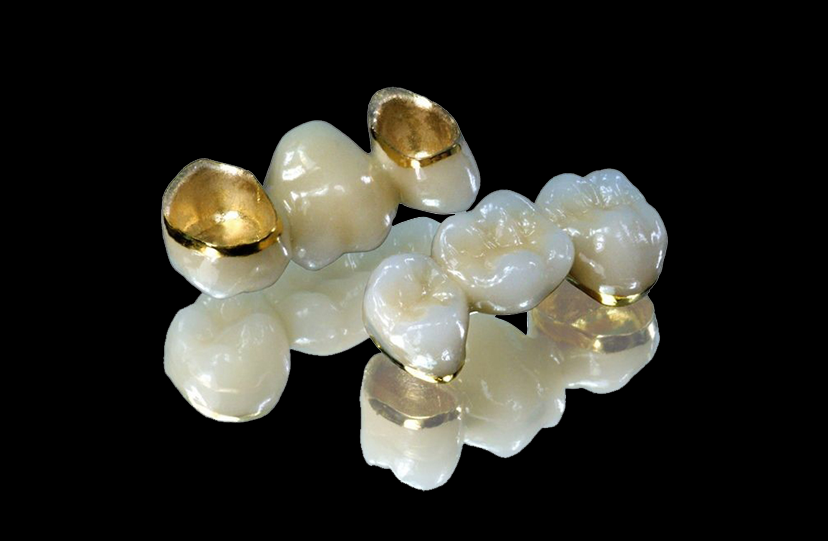
 Partial.webp "Cobalt-Chrome (Co-Cr) Partial")
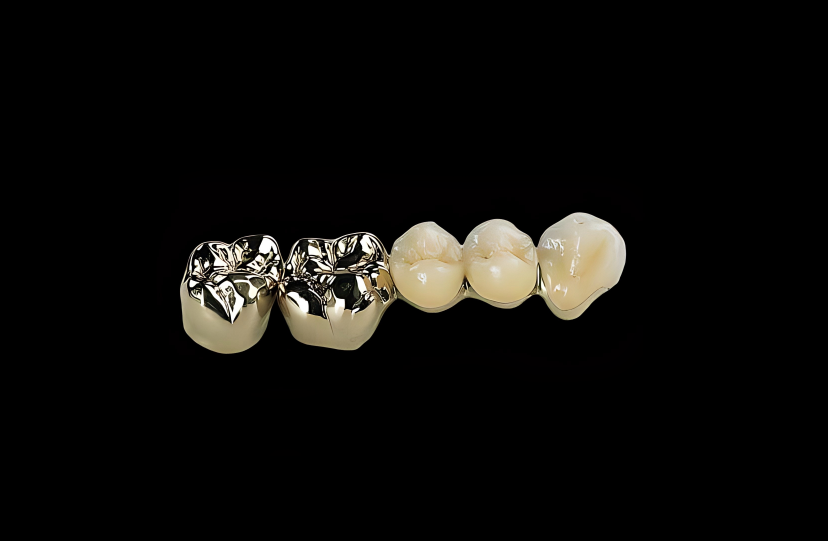
 Full Cast Crowns.webp "Base Metal (Non-Precious) Full Cast Crowns")