Best Custom Teeth Whitening Trays Deliver Accurate Patient Fitting
The best custom teeth whitening trays are professionally fabricated dental appliances made from individual impressions or digital scans to provide a patient-specific fit for at-home whitening treatments, designed to deliver an exact anatomical fit for professional whitening treatments. Laboratory-fabricated trays can help reduce common issues associated with poorly fitting whitening trays, such as gel leakage, uneven gel distribution, and soft-tissue irritation—by ensuring intimate tooth-to-tray contact and controlled peroxide delivery. With appropriate design and suitable thermoplastic materials, custom trays can provide improved fit, patient comfort, and consistent gel application. Their service life depends on material selection, usage frequency, maintenance, and changes in the patient's dentition.


Introduction
Cosmetic dentistry has evolved significantly over the past two decades, with teeth whitening remaining one of the most requested aesthetic procedures in dental practices worldwide. In the U.S. dental market, practitioners increasingly focus on consistent whitening outcomes, treatment efficiency, and patient comfort. In addition to the whitening agent itself, the delivery system can influence how consistently the whitening gel contacts the tooth surfaces. Over-the-counter trays and whitening strips may provide less individualized coverage than professionally fabricated trays, particularly when the tray does not closely adapt to the patient's dentition. Custom-fabricated whitening trays address these clinical shortcomings by providing personalized fit geometry that accommodates individual dental anatomy, occlusal relationships, and soft tissue contours. This approach provides dental practices with an option for delivering customized whitening treatments based on individual dental anatomy and dental laboratories aiming to expand their range of professionally fabricated dental products.
What Are Custom Teeth Whitening Trays?
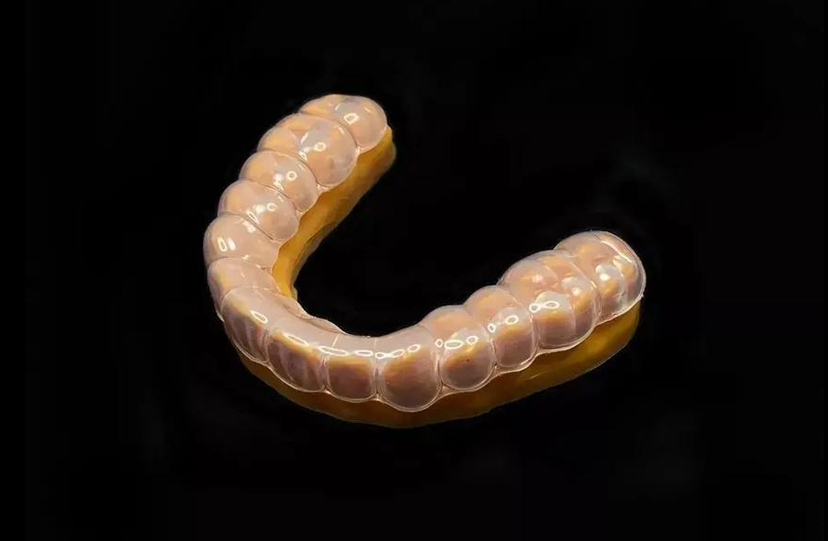
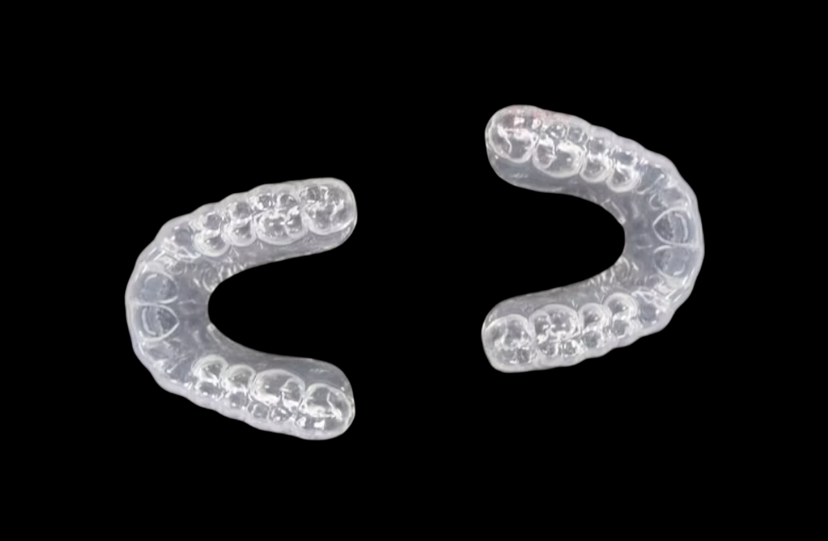
Custom teeth whitening trays are thermoformed dental appliances fabricated from patient-specific casts or digital models. They are designed to hold whitening gel against the tooth surfaces during treatment. Unlike mass-produced alternatives, these trays are made in a lab using medical-grade thermoplastic materials and a process that includes taking impressions, making casts, and precision thermoforming. The purpose of the tray is to maintain close adaptation to the teeth and help keep the whitening gel in the intended treatment area for the prescribed exposure time. Close adaptation may help limit excessive dilution of the whitening gel by saliva and reduce unnecessary contact between the gel and surrounding soft tissues.
Custom whitening trays incorporate several design features that influence fit, retention, and gel distribution. Tray thickness varies according to the material, thermoforming technique, and intended application. Common laboratory specifications may fall within approximately 0.035–0.060 inches, although manufacturers may use different thickness ranges, which is just thick enough to be hard enough for handling while still being bendable enough to wear comfortably. To keep the gums from touching soft tissues, scalloped gingival borders are cut about 0.5 mm above the open gingival margin. Some tray designs incorporate facial reservoirs to provide additional space for whitening gel over selected tooth surfaces. They create controlled spaces that hold the right amount of whitening gel without pressing too hard and putting material on the gingiva.
A professionally fabricated tray should provide accurate adaptation to the patient's dental anatomy, with dimensional accuracy determined by the fabrication method and the laboratory's quality-control specifications, when appropriate for the intended application, tray materials should be supported by relevant biocompatibility documentation and evaluated according to applicable standards, is clear to look at so it doesn't get dirty during treatment, and has mechanical memory properties that keep the fit intact after multiple uses. These traits directly address the buying priorities of dental professionals: getting the right fit the first time, keeping patients comfortable, and reducing the need for remakes.
Benefits of Custom Teeth Whitening Trays
Best custom teeth whitening trays have real benefits for both patients and the business itself. These benefits lead to more efficient care and happier patients. In terms of practical performance, the exact fit shape makes sure that the bleaching agent is evenly spread across all tooth surfaces. This means that you don't get the uneven results that you usually do with stock trays. This consistency lowers the range of outcomes that can happen during treatment and gives professionals the confidence to predict shade change outcomes. The degree of whitening varies considerably depending on the type and severity of discoloration, the whitening agent, treatment protocol, and patient compliance.
Another important benefit is that it makes the patient feel better. The thin, perfectly shaped design gets rid of pressure spots and extra material that can cause gag reflexes or make it hard to speak. Depending on the whitening system and clinician's instructions, patients may wear custom trays for a specified period during the day or overnight, without having to worry about a foreign object bothering them all the time, which happens with other options that don't fit right.
Custom boxes cut down on the number of times that things have to be made again by a large amount. Laboratories may monitor first-time acceptance and remake rates as part of their internal quality-control programs. These metrics can help evaluate fabrication consistency and workflow efficiency. This is in contrast to the 60–70% rate for changed stock trays. Consistent fabrication can help laboratories and dental practices reduce remakes and maintain a more predictable workflow.
Long-term worth comes from the longer working life. The service life of a custom whitening tray depends on the material, fabrication quality, frequency of use, cleaning method, storage conditions, and changes in the patient's dentition. This means that patients can buy more whitening gel for touch-up treatments without having to buy new trays. Purchasing managers who look at the total cost of ownership instead of just the initial purchase price like this longevity.
Advantages Over Alternative Whitening Systems
According to a number of review factors, best custom teeth whitening trays work better than competing delivery methods. Even though over-the-counter boil-and-bite trays are easy to find and don't cost much, they aren't precisely measured enough to give consistent results. The thermoforming process used in home kits causes uneven thickness distribution and poor margin adaptation, which causes gel to leak and cover only some of the tooth. Poorly fitting trays may allow whitening gel to contact the gingival tissues, which can contribute to soft-tissue irritation or sensitivity.
With their high-concentration peroxide formulas and light activation, in-office power bleaching systems get the job done quickly. But these treatments often cause temporary sensitivity in the teeth and need separation procedures that make appointments take longer. Custom trays can be used with whitening protocols that employ lower peroxide concentrations over longer exposure periods. The risk of sensitivity varies according to the whitening agent, concentration, exposure time, and individual patient factors. A combination approach, in which in-office whitening is followed by dentist-supervised at-home treatment, may be considered depending on the patient's needs and the clinician's treatment plan.
Prefabricated tray systems that come in different sizes are a good compromise, but they can't handle the different body shapes of different patients. Because everyone's arch shape, tooth size, and gingival contours are different, they need truly customized solutions. Lab-made best custom teeth whitening trays don't have the compromises that come with sized systems. Instead, every millimeter of the tray's shape is tailored to the patient's specific oral tissue.
This benefit is made even better by the quality control measures that can be used with best custom teeth whitening tray manufacturing. Checking the dimensions against master casts, checking the edges for flaws in the way they've been flame-polished, verifying that the materials used are supported by appropriate biocompatibility documentation and that applicable testing requirements have been addressed, measuring the retention force, and looking at the porosity all create a wide range of quality checks that can't be done with mass-produced alternatives. These quality-control procedures can provide objective documentation for supplier qualification and quality-system assessments.
Disadvantages and Considerations
Best custom teeth whitening trays have a lot of benefits, but procurement leaders should know that they also have some drawbacks. For the manufacturing process, impressions or intraoral scans must be taken, which requires an appointment and costs money that aren't present with over-the-counter options. This aspect of scheduling is especially important for busy offices that make a lot of appointments because it directly affects how much money they make.
Careful attention to the patient's history is needed when choosing materials. Although adverse reactions to dental tray materials are uncommon, material selection should consider the intended use and any relevant patient sensitivities. Appropriate material documentation should be maintained. To deal with possible reaction issues, practices must keep clear records of what materials they use.
Custom whitening trays cannot address all causes of tooth discoloration or compensate for underlying dental conditions. Patients with intrinsic discoloration, fluorosis, tetracycline staining, or visible anterior restorations may require individualized treatment planning, as whitening may not produce uniform changes across natural teeth and restorative materials, no matter how good the tray is. The doctor is still in charge of setting realistic goals by carefully reviewing each case.
Protocols for storage and handling need to be taught to patients. If you clean thermoplastic the wrong way, especially if you expose it to hot water, it can warp and lose its ability to fit correctly. Clear care instructions must be given by practices to keep custom teeth whitening trays lasting longer and avoid having to pay for replacements too soon.
Because they depend on lab partnerships, they have to think about the supply chain. Timeliness, dependability of shipping, and ease of contact all become very important. Laboratory turnaround time varies according to the fabrication workflow, case complexity, order volume, and shipping requirements, so businesses that are used to getting products right away may need to change how they do things to fit the longer production cycle. However, there are fast-track choices for urgent cases.
Comparison: Custom Trays vs. Alternative Whitening Methods
| Evaluation Factor | Custom Lab Trays | Boil-and-Bite Trays | Whitening Strips | In-Office Whitening |
|---|---|---|---|---|
| Fit | Patient-specific | Less individualized | Not applicable | Clinician-controlled |
| Gel Distribution | Designed for controlled application | May vary with fit | Pre-measured strip | Clinician-controlled |
| Gingival Contact | Reduced with appropriate tray design | May vary with fit | Depends on application | Managed with clinical isolation |
| Patient Comfort | Generally high when properly fitted | Variable | Generally well tolerated | Variable |
| Treatment Time | Depends on whitening protocol | Depends on product | Depends on product | Usually shorter |
| Reusability | Yes, depending on condition | Usually limited | Single-use | Not applicable |
| Customization | High | Limited | Limited | High |
| Fabrication Time | Requires laboratory processing | Immediate | Immediate | Same appointment |
This comparison shows that best custom teeth whitening trays are the only ones that can balance long-term worth, clinical success, and patient comfort. The benefits are especially clear when you look at the total cost of treatment over several whitening cycles. This is when the fact that the best custom teeth whitening trays can be used again and again saves you a lot of money compared to disposable options.
Clinical Indications and Applications
In modern dentistry, best custom teeth whitening trays are useful in many situations. A common indication is elective tooth whitening for patients seeking a brighter smile for personal, social, or professional reasons. Tooth whitening is a commonly offered cosmetic dentistry service and can be incorporated into a practice's range of aesthetic treatment options that sets practices apart in crowded markets.
Post-treatment after orthodontics is another important use. After orthodontic treatment, some patients may notice differences in tooth color or areas of discoloration. A whitening assessment can help determine whether professional whitening is appropriate or whether foods they eat stain the teeth during treatment. Best custom teeth whitening trays made right after the device is taken off take care of these worries about appearance while the patient stays actively involved in care, building on the treatment progress that is already there.
Professional whitening investments last longer when they are maintained after power bleaching in the office. Dentists give patients the best custom teeth whitening trays to keep their teeth's color from fading over time. This way, patients can do touch-up treatments on a regular basis without having to make more in-office appointments. This method lowers the long-term cost of bleaching while keeping the effects the same.
The delivery of desensitizing agents goes beyond whitening. To treat dentin hypersensitivity, similar custom tray designs may also be used for the application of certain desensitizing or remineralizing agents when recommended by a dental professional. This flexibility increases their clinical worth and gives the labs that make the best custom teeth whitening trays more ways to make money.
Some dental laboratories and dental service providers may offer custom whitening trays through dentist-supervised or other appropriate treatment models that are easy for customers to get. Labs offer professional-grade PVS impression kits so that patients can get clinic-quality trays at lower prices while still keeping an eye on the quality of the process. To ensure this application works without a doctor's supervision, the materials must be very durable, and the patient must be given clear directions.
Materials and Their Impact on Performance
The choice of material has a big impact on how well a custom teeth whitening tray works, how long it lasts, and how biocompatible it is. Ethylene-Vinyl Acetate (EVA) and modified Polyethylene Terephthalate Glycol (PETG) are the two main thermoplastic groups used by the business. Each material has its own unique qualities that affect its use in medicine.
EVA is widely used for dental trays because it offers a combination of flexibility, transparency, and suitability for thermoforming applications. Medical-grade EVA versions have Shore A hardness values between 65 and 75, which means they are stiff enough to handle while still fitting easily in the mouth. The material's natural memory properties keep the measurements accurate even after being heated and cooled many times during patient use. Optical clarity is higher than 90% light transfer, which makes the lenses look good and makes patients feel less self-conscious while they're wearing them. To ensure that tissues are safe during long-term mouth contact, for materials intended for applicable medical or dental uses, manufacturers should provide appropriate regulatory and biocompatibility documentation, including relevant testing where required.
PETG can provide greater rigidity than some EVA formulations, which may be advantageous when additional structural stability is desired, making it better for uses that need more structural support. The higher elastic modulus keeps the gel from deforming while it is being loaded and inserted, which is good for patients who have trouble moving their fingers. The chemical resistance of PETG to whitening agents depends on the specific formulation and exposure conditions and should be verified through material testing, which keeps the material from breaking down during treatment rounds. Because it doesn't absorb as much water as EVA, the material doesn't change shape as much in the wet mouth environment.
Choosing the right sheet thickness strikes a balance between different needs. Thinner materials (0.035 inches) make patients more comfortable and reduce speech interference, but they need to be handled carefully so they don't tear. Thicker specs (0.060 inches) make the gel reservoir last longer and define better, but they may make it less comfortable for people with strong gag reactions. Most lab protocols say that sheets that are 0.040 to 0.050 inches thick are best for most uses.
The place where thermoplastic materials are made affects their consistency. Material providers who are listed with the FDA have strict rules about the polymer makeup, the uniformity of sheet thickness, and the quality of the surface finish. These strict rules make it possible for labs to get consistent thermoforming results across production runs. This has a direct effect on the low restart rates that are necessary for labs to make money and patients to be happy.
Manufacturing Workflow and Quality Control
Making the best custom teeth whitening trays is a methodical process that combines old-fashioned dentistry lab methods with current quality control standards. Knowing this workflow helps procurement professionals figure out what a supplier can do and what kind of delivery is expected.
The first step is for the dentist's office to take a print or do a computer scan. Traditional polyvinyl siloxane (PVS) impressions are still used because they are stable and accurate in terms of size and shape, but intraoral scanners are becoming more popular as digital options. The quality of the impression has a direct effect on how well the final tray fits, so it's important to keep good records of how you did the job.
Once the laboratory receives the impressions, they are looked over to make sure they are correct and complete. Defects like voids, drags, or not enough anatomical detail cause rejection and re-impression requests, which stop quality problems from happening later on. If the prints are good enough, vacuum-mixed Type III or Type IV tooth stone is used to make the cast. The working cast that is made must be able to hold fine surface details and not wear down during the next steps of processing.
To get a cast ready, you have to cut off any extra stone and mark the tray extension lines according to the prescription. For scalloped designs, you need to carefully mark 0.5 mm above the free gingival margin on the front surfaces and at the gingival crest on the back surfaces. Accurate marking helps ensure consistent tray extension and alignment with the prescribed design.
The most important step in the manufacturing process is thermoforming. The prepared cast is positioned on a vacuum-forming machine, and the thermoplastic sheet is heated to its appropriate forming temperature, and the thermoplastic sheet is placed in the hot element. With controlled heating, the material can be shaped at its forming temperature, which is usually between 280°F and 320°F for EVA and 300°F to 340°F for PETG. When a vacuum is applied at the same time, it pulls the softened material tightly against the cast surface, catching every physical detail. To get a consistent wall thickness distribution and full margin adaptation, you need to carefully control the forming pressure, the length of the heating process, and the timing of the vacuum.
After thermoforming and cooling, excess material can be trimmed using rotary instruments or automated cutting systems, depending on the laboratory's equipment and production workflow, to cut off any extra material. Edge finishing uses flame polishing to make the edges of cuts smooth without leaving sharp edges that could cut soft tissues. This step requires a lot of technical know-how because too much heat can warp the material and not enough finishing can leave the surfaces rough.
The manufacturing process ends with thorough quality control. Dimensional verification puts the finished tray on top of the master cast to see if it rocks, has gaps, or doesn't hold its shape well enough. A check of the edge's structure under a microscope finds any rough spots that need more work. Testing the retention force makes sure that the tray seats have the right amount of snap-fit resistance without needing too much force to be removed. Laboratories that use statistical process control write down these quality checkpoints for each production batch. This gives objective proof of consistent best custom teeth whitening tray manufacturing, which is useful when evaluating suppliers.
More tests are done in more advanced facilities, such as accelerated aging studies that put sample boxes through repeated temperature cycles and chemical exposure to predict how long something will last. Porosity analysis uses backlit inspection to find bubbles or thin spots. These strict rules set top providers apart from basic fabrication services.
Cost Factors Influencing Pricing
The price of a best custom teeth whitening tray depends on a number of input factors that people who work in procurement should be aware of when they are comparing quotes and making contracts. The most obvious factor is the cost of the raw materials. Material costs vary according to polymer type, sheet thickness, formulation, supplier, purchasing volume, and regional market conditions, based on the thickness, purity of the formulation, and where the source is located. Due to the need for regulatory documentation and quality assurance testing, FDA-listed materials are more expensive.
The intensity of labor has a big effect on the cost of production. The many-step making process needs trained workers who can accurately prepare the mold, control the thermoforming process, and do careful finishing work. Location has a big effect on labor costs; goods made in the United States usually cost more than those made in other countries. But this difference in cost needs to be weighed against factors like quality consistency, turnaround time, and how well people can communicate.
The level of customization affects how prices are set. Standard full-arch best custom teeth whitening trays have a base price. However, special needs like adding reservoirs, giving patients with gum loss more coverage, or making designs stronger for bruxism patients take more time and use more materials. With volume agreements, labs can offer tiered prices, where the cost per unit drops by a lot for practices that order a lot of units every month.
Investing in regulatory compliance creates fixed costs that are spread out over the volume of production. For example, getting FDA establishment registration, putting in place an ISO 13485:2016 quality management system, keeping records of biocompatibility tests, and getting CE marking for foreign sales all cost a lot of money up front and on a regular basis. Suppliers that work with controlled markets have to cover these costs through their prices. However, the quality control that comes from this is worth it because it lowers the number of times products need to be redone and lowers legal risk.
Logistics issues affect the cost of delivery. For standard three- to five-day delivery within the United States, Shipping costs vary according to shipment size, destination, carrier, service level, and delivery requirements. Expedited and overnight services generally involve additional shipping charges. International sourcing lowers unit costs but adds to the time it takes to deliver goods and adds unknowns related to customs clearance, which makes it harder to plan.
The regularity of orders affects how well the business runs and how much it costs. By setting up regular ordering patterns with predictable amounts, laboratories can get the most out of their production schedules and material purchases, which can lead to price changes that are more favorable. On the other hand, random sales for a single unit cost more per unit because they are harder to set up and cost more to ship individually.
How to Choose the Right Supplier
In order to choose the best custom teeth whitening tray provider, you need to carefully consider a number of factors that go beyond the price per unit. A manufacturing capability assessment should look at how complex the equipment is, how much it can make, and how much technical know-how the staff has. When evaluating a supplier, procurement teams may consider equipment capability, process controls, production capacity, and the consistency of documented quality procedures. Site visits or thorough paperwork of the facility can tell you a lot about how well the production actually works compared to what the marketing promises.
Quality management systems show how mature an organization is and how well it controls its processes. ISO 13485 certification can provide evidence that a manufacturer's quality management system has been assessed against the requirements of the standard, does regular internal checks, uses corrective action methods, and keeps track of quality measurements. You can see how well a quality system is being put in place by asking for quality badges and reading the yearly surveillance audit reports.
In controlled markets, it's important to keep records of how well you follow the rules. If a supplier wants to sell to people in Europe, they should be able to easily give FDA establishment registration numbers, material safety data sheets for all thermoplastic materials used, ISO 10993 biocompatibility test reports, and CE certificates of conformity. Concerns about regulatory awareness and risk management practices are raised when documentation is missing or provided reluctantly.
Having experience with oral prosthetics gives you a basis for judging how reliable a source is. Manufacturers with a lot of experience making crowns and bridges, removable prosthetics, or orthodontic devices can apply their technical knowledge and high-quality standards to making the best custom teeth whitening trays. More experience lowers the risks of learning a new skill and the chance of having to start over.
If a provider can customize their products, it means they can work with different clinical scenarios. Anatomical differences mean that designs need to be changed in practices that treat a wide range of patients. Suppliers who are flexible about where the reservoir goes, how the extension is adjusted, and the thickness requirements offer more clinical freedom than makers who stick to rigid standard products.
Workflow integration is directly affected by how well people can communicate. Quick expert help, clear updates on the state of production, and easy-to-reach routes for fixing problems all make things easier for administrators and reduce schedule uncertainty. Time zone alignment and language skills have a big effect on how well people can communicate, especially when dealing with international suppliers.
Post-sale support, warranty terms, remake policies, and technical communication are additional factors that may be considered during supplier evaluation when competing on total value rather than just transaction price. Warranty terms that cover problems with the way the product was made, fix policies that deal with fit issues, and the ability to get technical help all lower the risk for practices that are starting to offer cosmetic services. Warranty terms can be considered as part of the supplier evaluation process, particularly when they clearly define coverage for manufacturing defects and fit-related issues.
References and reviews from well-known dentistry practices or labs give you more useful information about success than what the supplier's marketing materials say. By calling current users and asking for case samples, you can get an unbiased look at the quality of the product and the regularity of the service.
Maintenance and Service Life Optimization
Following the right maintenance steps will make your best custom teeth whitening tray last longer and keep the fit accurate during treatment and any touch-up cycles that follow. Patients should be taught about care methods starting with the arrival of the tray, with a focus on cleaning and storage practices that help preserve the tray's fit and material integrity.
How you clean things has a big effect on how long they last. Rinsing best custom teeth whitening trays with cool tap water right away after each use gets rid of gel residue before it dries and sticks to the plastic's surface. Using soft-bristled toothbrushes and pH-neutral liquid soap to gently brush the surface cleans well without scratching or breaking down the material chemically. Patients should avoid hot or boiling water, as excessive heat may deform thermoplastic materials and cause changes in size that make the fit less accurate. Harsh cleaners, abrasive toothpastes, and cleaning products that are not recommended for the tray material should be avoided.
The way something is stored affects how stable its dimensions are. Trays should be kept in the vented cases that come with them. This lets moisture evaporate and protects them from damage. Thermoplastics soften and deform when they are exposed to direct sunlight and high temperatures, like those found in car interiors in the summer. Keeping things at room temperature and dry keeps their qualities.
Handling safety measures keep things from getting damaged. Even though best custom teeth whitening trays are flexible, they can tear if they are stretched too much when they are being put in or taken out. Patients should be instructed to seat the tray evenly using gentle finger pressure over the teeth rather than forcing the tray into position by grabbing the sides of the trays and pushing them into place. For removal, the back parts should be gently lifted instead of the front parts being pulled, which puts more stress on those parts.
Inspections done on a regular basis help find problems early on. Patients need to check their custom teeth whitening trays for cracks, tears, or rough spots that could irritate soft tissues before each use. Changes in color or thickness may mean that the material is wearing down and needs to be replaced. Practices should plan regular tray checks during hygiene meetings to make sure that the fit is still correct and that the materials are still in good shape.
When to replace something depends on how often it is used. Patients who use the best custom teeth whitening trays heavily for the first few weeks to whiten their teeth and then periodically for care usually get three to five years of use out of them. People who use whitening processes that last for a long time or trays that give desensitizing agents may need to change them sooner because of wear and tear.
Key Takeaways
Custom teeth whitening trays provide a patient-specific delivery method for professional whitening protocols. The lab fabrication process makes patient-specific geometry that can't be achieved with mass-produced options. Patient-specific fabrication can improve tray adaptation and may contribute to more consistent gel placement and comfortable wear. Material science progress in medical-grade thermoplastics guarantees biocompatibility while keeping dimensions stable over a longer service life.
When purchasing professionals look at best custom teeth whitening tray suppliers, they should look at more than just unit price. They should also look at comprehensive quality management systems, regulatory compliance documentation, and manufacturing process controls. The total cost of ownership calculation needs to take into account things like the number of remakes, how well people can communicate, how reliable delivery is, and how much support is available after the sale. These factors can influence workflow efficiency, treatment consistency, and overall patient experience.
Best custom teeth whitening trays are useful for more than just teeth whitening. They can also be used for desensitizing treatments and finishing off the look of braces after they're done. This ability to be used for more than one thing increases the return on investment and meets the needs of a wide range of patients within practice guidelines.
The complicated manufacturing workflow and strict quality control needs for regular production make it even more important to choose sources with a history of successful projects. Verifying the dimensions, checking the integrity of the edges, and testing the retention force are the bare minimum quality standards that set professional best custom teeth whitening tray fabrication apart from mass production.
Teaching patients about proper upkeep has a big effect on how long a product lasts. Clear rules for cleaning, storing, and handling keep the material's properties and fit accuracy, which protects the original investment and allows for long-term treatment worth.
FAQ
How do best custom teeth whitening trays prevent gum sensitivity?
Custom whitening trays may incorporate scalloped gingival margins designed to minimize unnecessary contact between the tray and the gingival tissues. The exact margin design depends on the fabrication protocol and clinical prescription. This makes a buffer that keeps the whitening gel from touching sensitive soft tissues. Appropriate tray adaptation and margin design can help reduce the risk of excessive gel displacement toward the gingival tissues that happens when stock trays don't fit right, which is what happens when the caustic peroxide mixtures irritate periodontal tissues and cause inflammatory responses.
What is the expected lifespan of professionally fabricated trays?
Best custom teeth whitening trays are made from medical-grade EVA or PETG thermoplastics. Properly maintained trays may be reusable for an extended period, but service life depends on material, usage, maintenance, and changes in the patient's dentition if they are cleaned, stored, and handled properly. Service life relies on how often it is used, how well it is maintained, and whether there are any big changes to the teeth, like moving them, getting them fixed, or having them pulled out.
Can these trays deliver desensitizing agents effectively?
Custom trays can also be used to deliver certain desensitizing or remineralizing agents when prescribed or recommended by a dental professional, high-concentration fluoride treatments, and calcium phosphate products that strengthen teeth straight to the tooth surfaces. The same precise fit geometry that makes it easier for the whitening agent to reach the teeth also makes it easier for the desensitizing treatments to work. This means that the duration of the exposure can be controlled and salivary dilution can't happen too soon.
Why do lab-made trays outperform boil-and-bite alternatives?
When thermoplastic materials are softened at home, they can't achieve uniform wall thickness, full anatomical adaptation, or precise margin definition. Laboratory fabrication allows greater control over tray adaptation, margin design, and material forming conditions than standard over-the-counter tray systems. Industrial vacuum pressure is used in the controlled best custom teeth whitening tray thermoforming process.
What cleaning methods protect tray materials from degradation?
Cool water rinsing immediately after use combined with gentle brushing using pH-neutral liquid soap provides effective cleaning without compromising thermoplastic properties. Avoiding hot water prevents warping, while excluding alcohol-based products and abrasive cleaners maintains surface integrity and optical clarity throughout the best custom teeth whitening tray service life.
Partner with HYC for Superior Custom Whitening Tray Solutions
HYC operates an FDA-registered facility equipped with thermoforming equipment and documented quality-control procedures for custom dental appliance manufacturing. Each tray undergoes dimensional inspection, edge finishing verification, and material quality evaluation to ensure consistent performance across every production batch. HYC supports dental laboratories, clinics, and distributors through digital case workflows, thermoforming processes, and scalable production capabilities.
From prototype development to high-volume production, our team provides customized solutions that meet the specific requirements of professional whitening applications. In addition to fabrication accuracy, production documentation, delivery coordination, and applicable regulatory requirements are considered within the manufacturing workflow. Through continuous investment in manufacturing technology and quality systems, HYC manufactures custom whitening trays designed for patient-specific fit and professional whitening applications.
For dental professionals, laboratories, and procurement teams evaluating custom whitening tray manufacturers, HYC provides laboratory fabrication, customization, and production support. HYC offers the combination of technical expertise, manufacturing consistency, and customer-focused service required for competitive cosmetic dentistry markets. Contact our team to discuss your project requirements and develop a tailored whitening tray solution designed for your business needs. Contact HYC at info@hycdentallab.com to discuss custom whitening tray specifications, materials, production requirements, and case workflows.
References
1. Haywood, V. B., & Heymann, H. O. (1989). Nightguard vital bleaching. Quintessence International, 20(3), 173–176.
2. Matis, B. A., Wang, Y., Jiang, T., & Eckert, G. J. (2006). Extended bleaching of tetracycline-stained teeth: A 5-year study. Operative Dentistry, 31(6), 643–651.
3. Joiner, A. (2006). The bleaching of teeth: A review of the literature. Journal of Dentistry, 34(7), 412–419.
4. Kwon, S. R., & Wertz, P. W. (2015). Review of the mechanism of tooth whitening. Journal of Esthetic and Restorative Dentistry, 27(5), 240–257.
5. International Organization for Standardization. (2009). ISO 10993-5:2009 Biological evaluation of medical devices—Part 5: Tests for in vitro cytotoxicity. Geneva, Switzerland: ISO.
6. da Silva, E. M., Maia, J. N., Mitraud, C. G., Russo, J. D., Poskus, L. T., & Guimarães, J. G. A. (2012). Can whitening toothpastes maintain the optical stability of enamel over time? An in vitro study. Journal of Dentistry, 40(Supplement 2), e43–e50.
YOU MAY LIKE