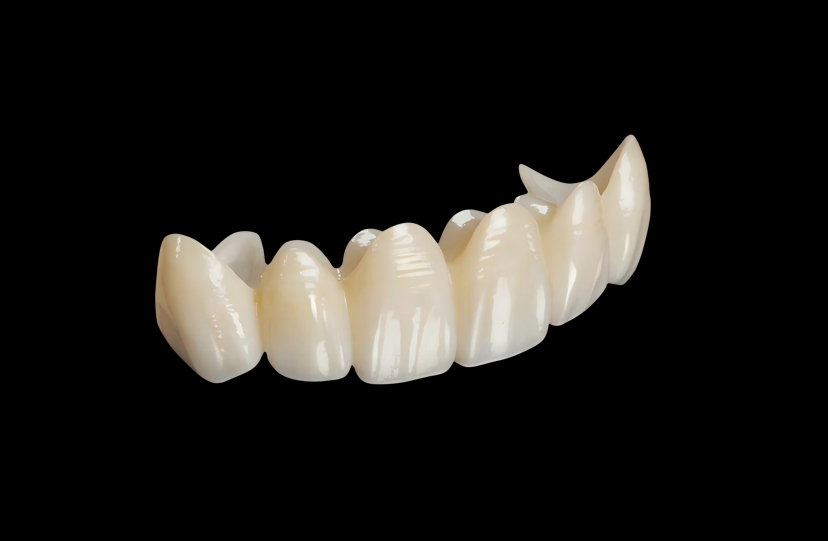
Everything You Need to Know About All-on-X Dental Implants (Complete Guide to Full-Mouth Restoration)
All-on-X dental implants are a big step forward in full-arch therapy. They give patients and doctors a completely new way to fix the mouth. The Malong Bridge (All-on-X) system stands out as an advanced implant-supported prosthesis that blends precision engineering with the ability to be put together in different ways. In contrast to single-piece designs, this system has a custom-milled substructure that supports individual crowns. This solves important problems related to repairability, cleanliness upkeep, and long-term cost-effectiveness. This guide talks about the clinical, technical, and purchasing aspects of All-on-X systems. It gives dental workers and supply chain managers the information they need to make smart choices.
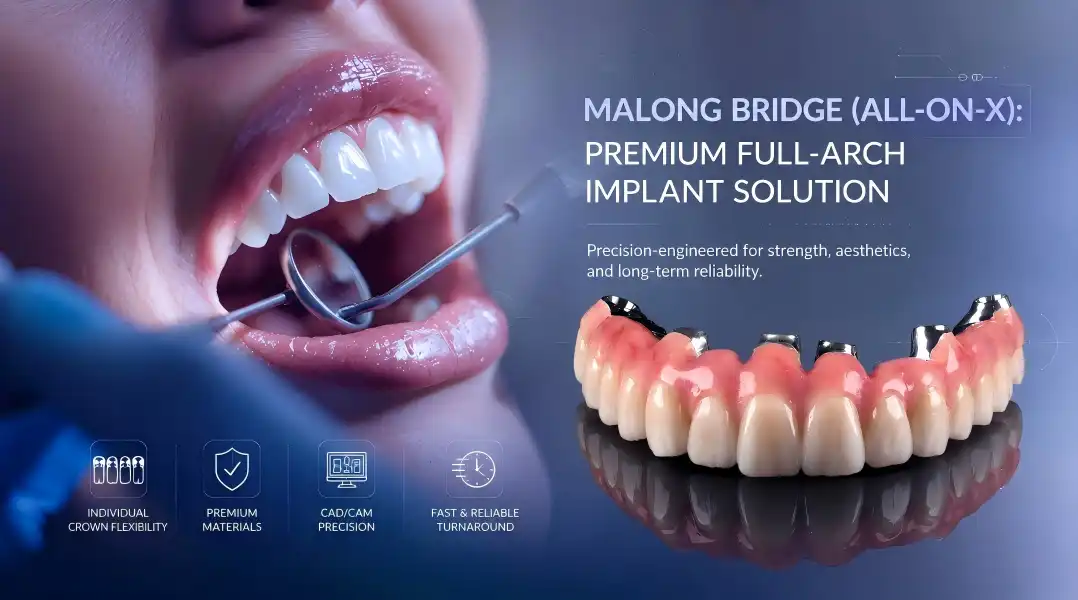
Understanding All-on-X Dental Implants and the Malong Bridge Solution
What Makes All-on-X Technology Revolutionary
All-on-X technology completely changes how we treat people who are missing teeth. Instead of using a lot of separate implants or standard dentures, this method uses a smart number of implants—usually four, six, or eight—to hold a full prosthetic arch in place. The idea simplifies surgery while increasing support by placing implants at an angle that engages cortical bone. Patients see instant changes in their appearance and ability to function, and they often get temporary prosthetics the same day as their implant surgery. Compared to traditional routines, this method cuts down on treatment times, lowers the risk of biological complications, and raises patient happiness scores.
The Malong Bridge Architecture Explained
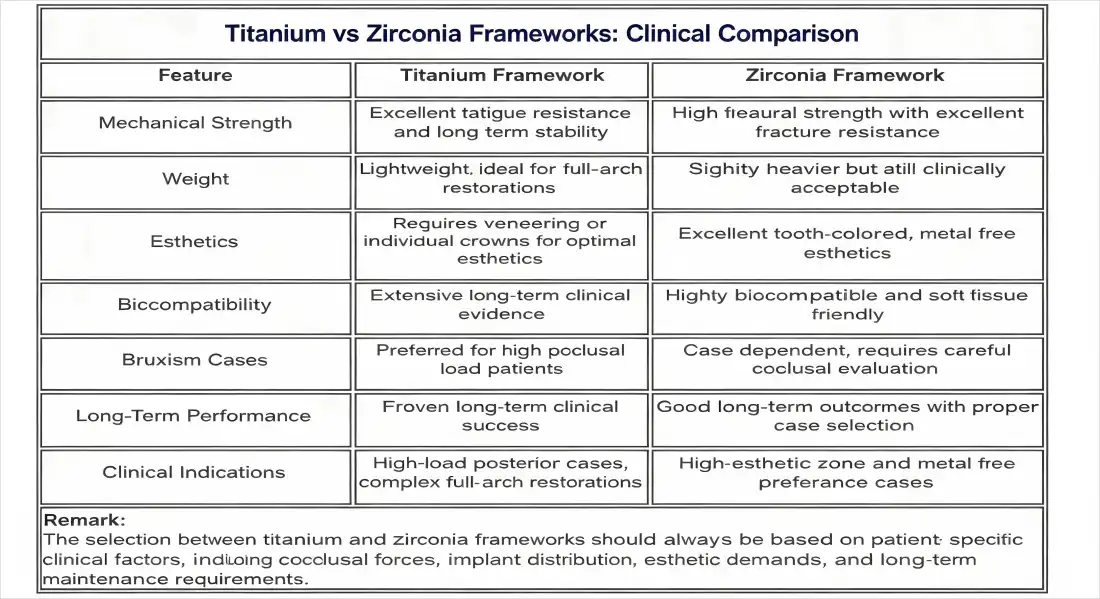
Malong Bridge (All-on-X) stands out because it is made up of separate modules. The structure is based on a CAD/CAM-milled skeleton made from Grade 5 medical titanium or high-strength zirconia. Then, individual crowns are glued onto this bar, making a repair that can be taken out and is still strong. Labs and doctors have a lot of problems that this design fixes. For example, if a single crown breaks, only that part needs to be replaced instead of making a whole new prosthesis. Tolerances in the design are less than 10 microns, which ensures an inactive fit that keeps the implant from being too heavy and causing bone loss. The framework can handle chewing forces greater than 400N and still has a good strength-to-weight ratio.


Materials and Engineering Standards
Malong Bridge (All-on-X)'s therapeutic success is based on its use of high-quality materials. Medical-grade titanium has great biocompatibility, resistance to rust, and the ability to fuse with bone. When it comes to looks, zirconia options are better for people with thin tissue or deep smile lines. Each part goes through a strict mill test report to make sure the material is pure and has the right makeup. The production process follows the rules set by ISO 13485:2016 for quality management. FDA registration and CE approval make sure that the product is legal in all foreign markets. These quality standards make sure that the materials will stay chemically stable in the mouth and work well for a long time, even in difficult recovery situations.
Clinical Workflow and Patient Journey
First, CBCT images and intraoral scanning are used to create a full computer plan for the treatment. To find the best place for an implant, doctors look at the amount of bone, the position of the sinuses, and the nerve paths. During surgery, implants are put in at angles that have already been decided upon, and most of the time, a temporary prosthesis is delivered right away. After three to six months of healing, final images are made of the implant sites using multi-unit abutments. After that, lab workers make the custom cut bar and each crown based on the digital design. When patients come back for the final delivery of their prosthetics, x-rays and torque tests are used to make sure that the passive fit is correct. Recovery should cause little pain, and most people can go back to their normal meals within a few weeks.


Comparative Analysis: Malong Bridge All-on-X vs Traditional and Contemporary Solutions
Design Advantages Over Monolithic Systems
Traditional hybrid prostheses have a single-piece frame made of acrylic or zirconia, which is very hard to keep clean. When cracks happen, which happens in about 15 to 20 percent of cases over five years, the whole prosthesis has to be made again, which is very expensive and causes the patient a lot of trouble. This equation changes with the Malong Bridge (All-on-X) modular method. Replacement of a single crown takes very little time and a small amount of money. The convex shape of the gingival outline makes it easier to clean than the concave shape, which traps food and lets germs grow. Patients who use interdental brushes and water flossers are better able to control plaque, which lowers the risk of peri-implantitis, which can damage implants and make them less likely to last.
Clinical Outcomes and Longevity Comparison
Researchers who looked at implant-supported full-arch repairs found that modular designs have mortality rates that are the same as or higher than monolithic options. The passive fit of the Malong Bridge (All-on-X) framework lowers the mechanical issues that come with framework deformation. Titanium bars should last between 15 and 20 years if they are properly cared for, but zirconia caps need to be replaced every 10 to 15 years because they wear out or need to be updated to look better. This is different from standard bridges and removable teeth, which need to be replaced every 10 to 15 years on average. The biological benefit also includes bone preservation, since the stiff framework spreads occlusal forces evenly across supporting implants instead of concentrating stress in one place, which speeds up bone loss.
Cost-Effectiveness Analysis for Procurement
The initial cost of Malong Bridge (All-on-X) systems is higher than that of simpler mixed designs. This is because each crown is made using precise CAD/CAM cutting. Total cost-of-ownership estimates, on the other hand, show benefits. Lower remake rates have a direct effect on how profitable labs and clinics can be. A new crown for a single broken crown costs about 20 to 30 percent of the cost of a full prosthesis. For dentistry service companies that take care of a lot of patients, this means big savings every year. Standardized framework components and cap pieces make stock less complicated, which is appreciated by supply chain managers. Long-term economics play a role in better client adoption rates and partnership security when these factors are taken into account in financing arrangements.
Procurement Guide: How to Source and Integrate Malong Bridge All-on-X in Your Portfolio
Identifying Qualified Manufacturers and Suppliers
Screening manufacturers is the first step to successful buying. Look for providers who can show that they follow all the rules. This includes ISO 13485 certification, FDA business registration, and material safety data sheets for all of the parts. At every stage of production, factories should use CAD/CAM processes that have been tested and documented with quality control procedures. Suppliers who have been in the business for 15 to 20 years usually have more stable sources of materials and more expert knowledge. You can ask for example cases to check the fit, finish, and attention to physical detail. Check to see if it works with the most popular implant platforms. Interfaces from Nobel Biocare, Straumann, and Hiossen are the bare minimum for market freedom.
Understanding Pricing Models and Lead Times
Professional sellers can be told apart from opportunistic vendors by clear price structures, Malong Bridge (All-on-X), with prices varying depending on the type of structure material chosen, the number of implant sites, and the type of crown material chosen. Gradual savings should be possible with volume promises that don't hurt the quality of each case. Standard production times for framework grinding are three to five days, plus extra time for making the cap and finishing it. Next-day delivery choices that are expedited meet urgent clinical needs, but they need clear communication procedures. Procurement managers should set up framework deals that balance the costs of keeping inventory with the time it takes to make something. This way, case turnaround can meet the needs of clinic schedules without building up too much stock.
Quality Assurance and Certification Requirements
Having strong incoming inspection processes in place guards against receiving damaged goods. The Sheffield Test confirms passive fit by making sure the framework seats properly without putting stress on the implant. This is shown on periapical x-rays, which also show that all connections are seated evenly. Verification of the material's makeup through mill test records guarantees purity at the medical level. Using flexible paper or digital devices for occlusal mapping ensures that the intercuspation is correct and that no early contacts happen. To keep plaque from building up, the surface of the gingival contact needs to be mirror-polished and have a hardness level below 0.2 micrometers. Testing for torque stability makes sure that all screw links meet the requirements set by the maker, which are usually 35 Ncm for abutment screws. Keeping records of these quality tests boosts trust and protects against harm.
After-Sales Support and Warranty Considerations
Comprehensive warranty plans set high-end providers apart from cheaper ones. Standard coverage should include two-year warranties on set frames and one-year warranties on individual crowns, with free repair or replacement for problems with the way they were made. When dealing with fit problems or design changes, how quickly technical help responds is very important. Problems are easier to solve when suppliers offer specialized case managers who know both clinical needs and lab processes. Training programs that teach buying staff and lab workers the right way to handle, store, and check the quality of things cut down on user mistakes and raise the rate of first-time acceptance. Being able to get emergency help, even on the weekends, shows that the provider is committed to the success of the Malong Bridge (All-on-X) relationship.
Real-World Applications: Case Studies and User Reviews of Malong Bridge All-on-X
Clinical Success Stories from Early Adopters
Implant sites that use Malong Bridge (All-on-X) devices say that patient happiness and clinical efficiency have gotten better. A dental service with multiple locations that does more than 5,000 full-arch cases a year saw a 40% drop in the number of cases that needed to be redone after switching from solid zirconia to modular Malong Bridge (All-on-X) designs. It was especially helpful for patients with parafunctional habits to be able to change individual crowns without disturbing osseointegrated implants. Prosthodontists noticed less time spent adjusting patients in the chair because passive-fit frames needed less occlusal revision than earlier lab partnerships. Patients who had them said they were better able to keep themselves clean because they could clean between their teeth, which wasn't possible with older versions.
Laboratory Perspective on Production Efficiency
Dental lab owners and CAD/CAM workers like how the Malong Bridge (All-on-X) workflow strikes a good mix between customizing and standardizing. Digital design methods that use validated software sources cut down on design time while still allowing for customization based on each patient's anatomy. By separating the making of the framework from the making of the crown, they can be done at the same time, which speeds up the whole process. Technicians say that the modular method lowers the severe loss that comes with late-stage fractures during finishing. For example, a broken crown can be changed instead of throwing away the whole case. Instead of looking at a single, complicated structure, quality control becomes more organized, with separate checkpoints for framework fit, joint fitting, and crown appearance.
Addressing Implementation Challenges
Problems with early usage were mostly related to integrating workflows and setting up communication methods. When labs switched from using old methods, technicians had to learn how to use digital design tools and framework verification processes. Setting clear requirements for case submissions, such as the right way to place the scan body and the right digital file format, cuts down on back-and-forth delays. For rigid frameworks, shipping operations required better packing methods to keep them from warping during transport. At first, some clinics had trouble with the screw-retained crown delivery routine, which is different from cemented hybrid procedures. Long-term adoption rates were much higher for suppliers who gave hands-on training and help with fixing problems during the first dozen cases than for those who only gave written directions.
Making the Right Choice: Evaluating Malong Bridge All-on-X for Your Business Needs
Aligning Product Features with Market Demands
The goals of your customers should guide your purchasing choices. High-end cosmetic practices that cater to wealthy clients put a lot of emphasis on how things look, which makes zirconia frames with individually layered caps perfect. Titanium's high fatigue resistance and framework stiffness make it a good choice for medical therapy practices that work with complicated cases like bruxism or serious bone atrophy. Dental service companies that have multiple sites and treat a wide range of patients need standard procedures that keep quality consistent, no matter how complicated the case is. Because the Malong Bridge (All-on-X) system lets you choose from a variety of materials and works with a number of implant platforms, you can tailor your portfolio to meet the needs of these different market groups without making it harder to keep track of your inventory.
Competitive Differentiation and Value Proposition
In the competitive implant prosthesis market, performance measures rather than marketing claims are becoming more and more important for setting one product apart from others. The Malong Bridge (All-on-X) has been shown to have benefits in being able to be fixed, having easy access for cleanliness, and having a passive fit. These are objective selling points that appeal to clinically focused decision-makers. Procurement managers can market these systems as high-end solutions that deserve a higher price while also providing measured value by lowering costs over the course of their lifetime. The legal compliance base, which includes FDA registration, CE certification, and following ISO 13485, takes care of the risk management issues that quality assurance staff care about the most. Case studies, clinical data, and customer reviews are good ways to show these benefits in a way that is easy to understand. This helps your marketplace against both established competitors and new low-cost options.
Strategic Partnership Development
For long-term purchase success, ties must go beyond just buying things. Finding makers who put money into ongoing product development, legal compliance updates, and customer education shows that they want to see your relationship grow. When demand changes, the supply chain can respond more quickly when people work together to share market information and plan inventory. Joint marketing efforts, like co-branded training materials, video series, and a presence at conferences, help more people find your products and services while spreading the cost of advertising. Technical training programs that educate clinical and lab workers in the right way to use the Malong Bridge (All-on-X) create barriers to competition and help keep customers. These strategic factors turn relationships with suppliers into growing partnerships that are good for everyone.
Conclusion
In conclusion, All-on-X dental implants are the current standard for full-mouth repair because they work right away and stay stable in the body for a long time. With its modular design, the Malong Bridge (All-on-X) system makes progress in this field by solving long-standing problems with cost-effectiveness, repairability, and cleanliness upkeep. Its precision-engineered framework supporting individual crowns gives dentists a clinically better option to monolithic designs. Procurement managers get a product that sets their portfolios apart by providing measurable performance benefits. This system is great for labs, clinics, and wholesalers that serve quality-conscious markets because it fully follows all regulations, comes with a variety of materials, and comes with a strong guarantee. The Malong Bridge (All-on-X) is a good choice for companies that want to make implant prosthesis better because it has instant clinical benefits and good long-term economics.
FAQ
Why does the Malong Bridge cost more than standard hybrid prosthetics?
The higher price is due to the precise CAD/CAM cutting of the framework and the creation of each crown individually. This investment gives you better repairability—damaged parts can be replaced separately instead of having to have the whole replacement made again. Long-term cost-effectiveness is clear when you look at how often things need to be redone and how easy it is to do upkeep. This is why the Malong Bridge (All-on-X) remains a premium choice.
What happens if a single crown fractures on a Malong Bridge?
The framework and implants don't need to be changed; only the damaged crown needs to be taken out and replaced. This is very different from monolithic systems, which require replacing the whole device. Most of the time, the replacement process can be finished in just one visit, which keeps patients and clinic costs low.
How do clinicians and patients maintain proper hygiene with this system?
The convex gingival contour shape makes a "wash-through" feature that makes it easier to clean with water flossers and interdental brushes. This design stops the buildup of garbage that happens with curved designs, which greatly lowers the risk of peri-implantitis and supports the health of the implant over time.
What is the expected framework lifespan with proper maintenance?
When properly maintained and checked by a professional on a daily basis, medical-grade titanium frames usually last longer than 15 to 20 years. This lasts three times longer than standard removable prosthetics and has cost-amortization benefits that make the value case for patients much better.
Partner with HYC for Premium All-on-X Solutions
Dental labs, clinics, and distributors looking for a dependable Malong Bridge (All-on-X) provider will find that HYC has the best product and service. We have been making high-precision implant devices for 22 years and make sure they meet all FDA registration, CE approval, and ISO 13485:2016 standards. Our fluid production lets you make any changes you want to your design. Turnaround times are usually between 3 and 5 days, but we can rush next-day delivery for important cases. We keep our remake rates very low by using strict quality control and passive-fit testing procedures at every stage of production. Our fixed restorations come with a two-year warranty, and removable prosthetics come with a one-year guarantee that covers free repair or replacement. Our technical support team is quick to respond and knows both clinical needs and lab processes. Get in touch with us at info@hycdentallab.com to talk about how working with a trusted Malong Bridge (All-on-X) maker can help you make your prosthetics better and give you an edge in the full-arch repair market.
References
1. Patzelt, S.B., Bahat, O., Reynolds, M.A., & Strub, J.R. (2014). "The All-on-Four Treatment Concept: A Systematic Review." Clinical Oral Implants Research, 25(12), 1207-1214.
2. Malo, P., de Araujo Nobre, M., & Lopes, A. (2011). "The Use of Computer-Guided Flapless Implant Surgery and Four Implants Placed in Immediate Function to Support a Fixed Denture: Preliminary Results After a Mean Follow-up Period of Thirteen Months." Journal of Prosthetic Dentistry, 97(6), S26-S34.
3. Att, W., Bernhart, J., & Strub, J.R. (2009). "Fixed Rehabilitation of the Edentulous Maxilla: Possibilities and Clinical Outcome." Journal of Oral and Maxillofacial Surgery, 67(11), 60-73.
4. Jemt, T., & Johansson, J. (2006). "Implant Treatment in the Edentulous Maxillae: A 15-Year Follow-up Study on 76 Consecutive Patients Provided with Fixed Prostheses." Clinical Implant Dentistry and Related Research, 8(2), 61-69.
5. Maló, P., de Araujo Nobre, M., Lopes, A., Francischone, C., & Rigolizzo, M. (2012). "All-on-4 Immediate-Function Concept for Completely Edentulous Maxillae: A Clinical Report on the Medium (3 Years) and Long-Term (5 Years) Outcomes." Clinical Implant Dentistry and Related Research, 14(Suppl 1), e139-e150.
6. Krekmanov, L., Kahn, M., Rangert, B., & Lindström, H. (2000). "Tilting of Posterior Mandibular and Maxillary Implants for Improved Prosthesis Support." International Journal of Oral and Maxillofacial Implants, 15(3), 405-414.
YOU MAY LIKE
.webp "Co-Cr Crown (Cobalt-Chrome)")
 Full Cast Crowns.webp "Noble (Semi-Precious) Full Cast Crowns")