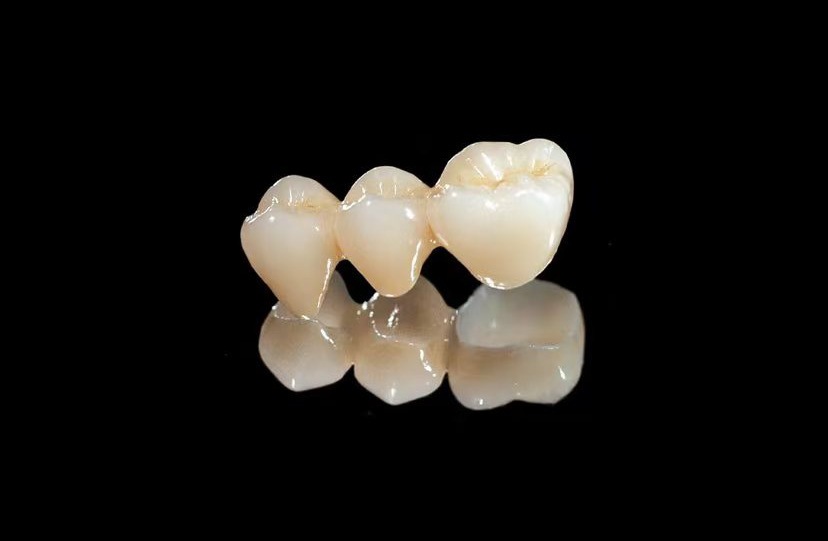
When Do Titanium Partials Fit High-Volume Lab Workflows?
Titanium partials fit high-volume lab workflows best when precision, speed, and biocompatibility are non-negotiable. Because CAD/CAM milling produces consistent frameworks with minimal remakes, labs processing large case volumes benefit from predictable cycle times and reliable fit accuracy. Titanium partials also serve patients with metal sensitivities—the same medical-grade material used in implants and hip replacements—making them a clinically sound, scalable choice for modern dental laboratories.
Introduction
High-volume dental laboratories operate under relentless pressure. Cases arrive daily, turnaround expectations tighten, and a single remake ripples through the schedule. Removable partial frameworks have historically been a workflow bottleneck, particularly when cast metal frameworks introduced dimensional inconsistencies linked to casting shrinkage.
Over the past decade, digitally milled titanium frameworks have entered the mainstream. According to the Journal of Prosthetic Dentistry, CAD/CAM-milled restorations can achieve high levels of accuracy compared with cast alternatives. For labs scaling their output, that precision can translate into fewer adjustments and lower operational costs. Understanding exactly when and why titanium partial frameworks align with high-volume production is essential for lab owners, purchasing managers, and clinic operations teams making sourcing decisions today.
What Are Titanium Partial Frameworks?
Defining the Structure
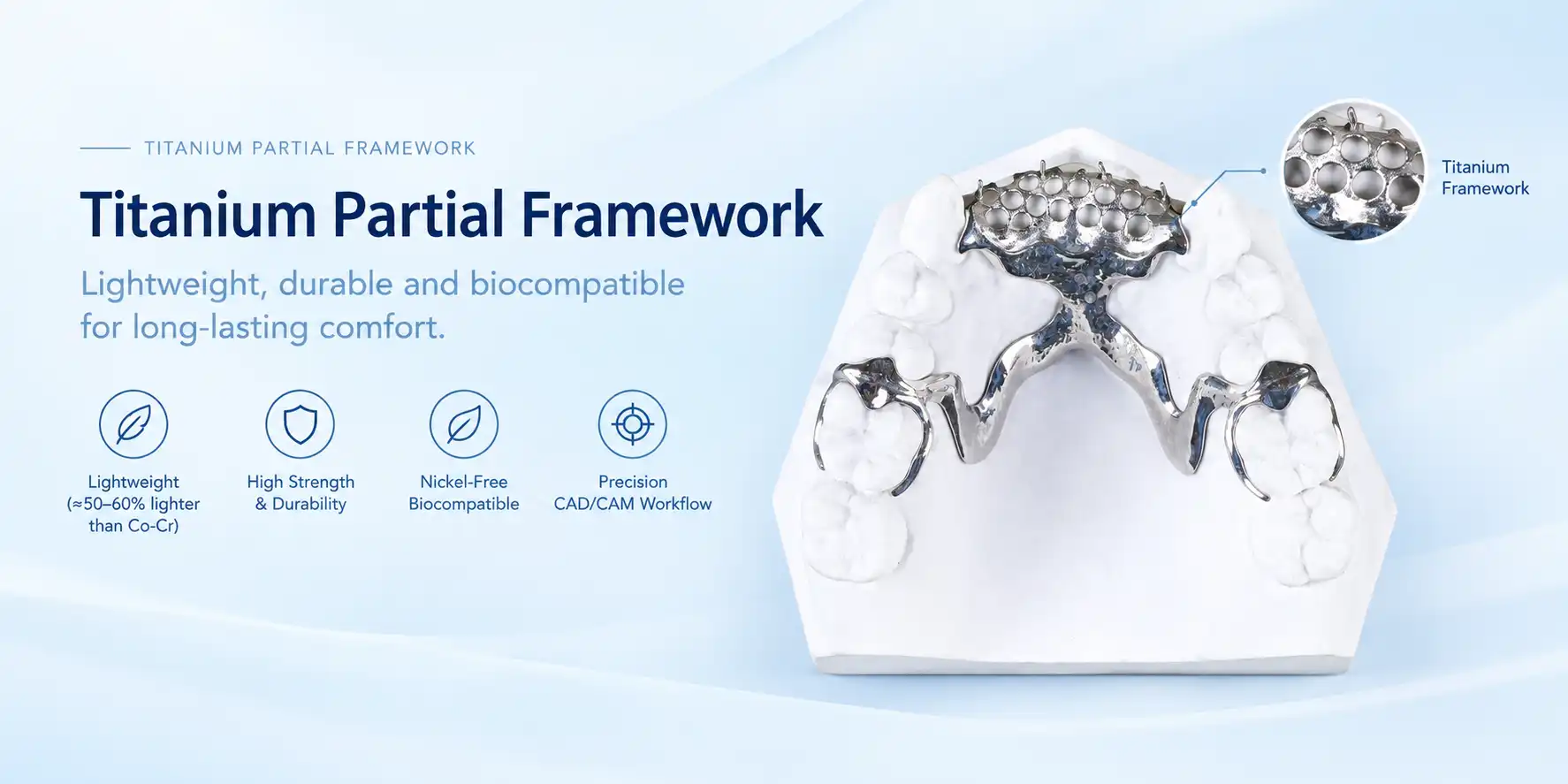
The framework of a Titanium Partial denture is a removable partial prosthesis substructure that was digitally designed and milled from Grade 5 titanium (Ti-6Al-4V ELI). The framework has clasps, rests, and links that hold the replacement in place over the natural teeth. The artificial teeth are held in place by acrylic or composite saddles.
Milled titanium frameworks are made from a single piece, unlike cobalt-chrome cast frameworks, so they don't have the internal porosity or casting-related variables associated with casting. Each part is made with high precision by the CAD/CAM process. This is exactly what makes Titanium Partials scalable across hundreds of cases without significant quality variation.
Benefits of Titanium Partial Frameworks in Lab Workflows
Precision is the advantage that labs see right away. The framework is milled instead of cast, so the accuracy of the measurements can remain consistent for every unit in a batch. Clinicians may spend less time making chairside adjustments when the framework is accurately fabricated. This means that both the lab and the sending office can be more productive.
Here are the main health and workflow perks that make it worth integrating into high-volume production:
Biocompatibility without compromise: Titanium is a medical-grade material that is widely used for dental implants and orthopedic devices and is generally considered highly biocompatible. Titanium may be a suitable option for people who are sensitive to certain base-metal alloys, although individual material sensitivities should be evaluated clinically.
Lightweight patient comfort: The strength-to-weight ratio of Titanium Partials is higher than that of cobalt-chrome, which can make frameworks about 40% lighter. Lower framework weight may contribute to improved patient comfort and adaptation.
Digital reproducibility: If a patient's teeth change or a framework gets broken, existing digital records can make it possible to quickly reproduce a new one without taking a new impression, depending on the clinical situation. This can reduce the time required to produce a replacement.
Low remake rate: Stable milling tolerances can help reduce fabrication-related remakes, which is an important metric for any purchasing manager keeping an eye on cost-per-unit.
Because of these benefits, labs may achieve greater efficiency further down the laboratory workflow. Labs that use titanium milling can benefit from improved case throughput and consistent production processes.
Advantages Over Traditional Cobalt-Chrome Frameworks
Why Digital Milling Outperforms Casting at Scale
For many years, cast cobalt-chrome has been useful in the field, but casting can introduce dimensional changes based on the metal, investment system, and casting method used. At low volume, a skilled expert makes the adjustments by hand. When there is a lot of it, that variation can make quality management harder.
Milled titanium frames get rid of the need for casting completely, which takes away casting-related variables from the production cycle. Every framework leaves the mill within a defined manufacturing tolerance, which makes it easier to check the quality of each batch.
Regulatory and Compliance Alignment
Titanium materials used for dental applications may be subject to applicable regulatory requirements depending on the market, product classification, and intended use. Documentation such as material certificates and ISO 13485:2016 quality-system records can support traceability and regulatory documentation for laboratories serving dental clinics, DSOs, or medical device distributors.
Disadvantages and Practical Considerations
Titanium Partial frameworks aren't always the best option, and having a fair view helps with buying choices.
The main problem with repairing Titanium Partials is the technical difficulty involved. When a clasp or connector on Titanium Partials breaks, welding titanium typically requires specialized laser welding equipment and skilled operators, which are not available in every dental laboratory. As a result, outsourced repairs of Titanium Partials may take longer to complete and can extend the overall turnaround time. However, as mentioned earlier, digital records can often make rapid re-fabrication possible as an alternative solution that causes minimal clinical disruption. For laboratories using digital workflows, maintaining accurate design files can make it easier to reproduce Titanium Partials when repair is impractical or when a replacement is the more efficient option.
It costs more per unit than regular cobalt-chrome. The higher price per unit is due to the grinding disk, the wear and tear on the CAD/CAM tools, and the longer machine time. This has to be weighed against the cost savings of remakes, the lower rate of adjustments, and the need to command a higher price from doctors who want lightweight frames.
Comparison: Titanium vs. Cobalt-Chrome vs. Flexible Nylon Partials
| Factor | Titanium Partial | Cobalt-Chrome Cast | Flexible Nylon |
|---|---|---|---|
| Biocompatibility | Excellent (medical-grade) | Moderate (nickel risk) | Good |
| Fit Accuracy | CAD/CAM precision | Casting variability | Impression-dependent |
| Weight | Light weight | Stronger | Very light |
| Durability | Very high | High | Low |
| Repair Ease | Hard | Moderate | Not Much |
| Digital Workflow | Fully compatible | Somewhat compatible | Not compatible |
| Regulatory Compliance | FDA, CE, and ISO tracking | Standard | Variable |
Flexible nylon partials serve aesthetic cases where metal display is unacceptable, but they lack the rigidity for complex Kennedy Class I or II cases. Cobalt-chrome remains cost-competitive for straightforward cases. Titanium frames occupy the premium, high-precision segment where clinical outcomes and patient comfort take priority.
Clinical Indications
Titanium Partial frameworks are recommended in several clinical situations that often come up in high-volume labs, including:
People who are known to be allergic to nickel or cobalt and can't tolerate regular metal alloys
Kennedy Class I and II bilateral distal extension cases where rigid framework support and appropriate connector design are required
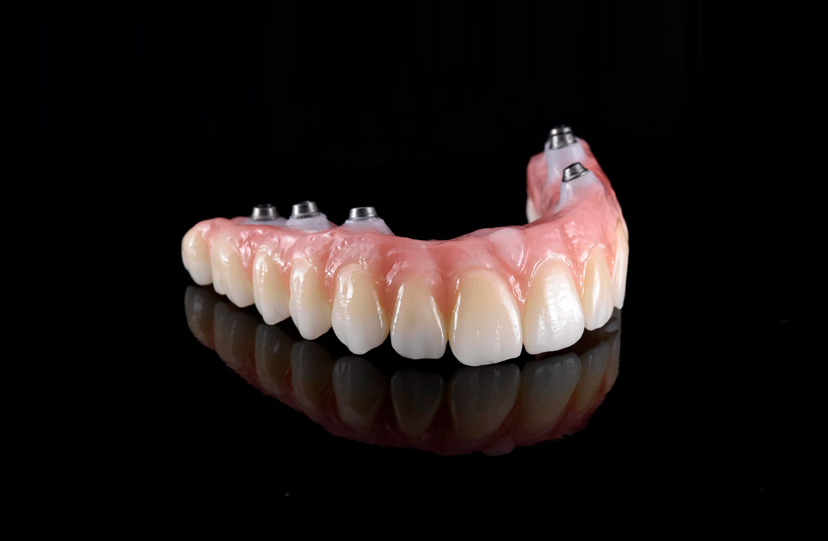
Cases of full-arch rehabilitation where a titanium base supports individual implant crowns, allowing for customized emergence profiles and natural esthetics
When there isn't much room between the teeth, titanium's high strength-to-volume ratio can allow for a thinner frame than some other metals while maintaining structural strength.
Bruxism patients, where appropriate framework design and material selection may help manage functional loading
Materials Used in Titanium Partial Production
It is best to use Grade 5 titanium (Ti-6Al-4V ELI). The ELI (Extra Low Interstitial) name means that the material has lower levels of oxygen, nitrogen, hydrogen, and iron, which can support material performance and biocompatibility. This material is also widely used in medical and dental applications.
The choice of materials has a direct effect on clinical performance. Lower-grade titanium metals may have different mechanical and surface properties after milling, which can affect clinical performance and maintenance. Using Grade 5 titanium discs with appropriate material documentation helps support consistent manufacturing and traceability.
Manufacturing Workflow
A reliable Titanium Partial production cycle follows these stages:
CAD software receives digital scan data or physical impressions that are converted into digital files. The worker builds the structure's parts—clasps, rests, and major and minor connectors—based on the instructions. Before it is sent to the mill, the CAD file is checked against parameters for occlusal clearance and retention.
A Grade 5 titanium disc is put on the cutting center. After cutting, the framework is finished on the outside by sandblasting and polishing until the desired surface finish is reached. A quality control check makes sure that the measurements, framework design, and correctness of the margins are correct. When the framework is finished, it is cleaned, packed, and sent out with paperwork that lets the customer track the materials used.
Batch processing multiple cases in a single milling session makes the most of disc space and cuts down on machine time per unit in high-volume labs.
Cost Factors
The price of made Titanium Partials depends on a number of factors that affect each other. The base unit price includes the cost of a Grade 5 titanium disc, the wear and tear on CAD/CAM equipment, and the labor needed after processing. More clasps, precise fittings, or implant integration make the case anatomy more complicated, which takes more time to create and mill.
Documentation for regulatory compliance, such as material certificates and ISO 13485 tracking records, adds costs that trustworthy suppliers include in their prices. Order volume has a big effect on unit pricing; labs that place a lot of orders every month may receive better terms than buyers who only buy one case every once in a while.
How to Choose a Titanium Partial Supplier
Selecting the right Titanium Partial manufacturer requires evaluating capability beyond price alone. A reliable supplier should demonstrate:
Certified Grade 5 titanium material source with appropriate material documentation
ISO 13485:2016 quality management system for controlled production
Shown ability to turn things around (3–5 days as a standard cycle, faster choices are possible)
Remake and warranty policy that is clear—free re-fabrication during the guarantee time lowers lab risk
Responsive technical communication with case consultation in English
After qualifying capability, assess the supplier's actual production volume. A seller that handles thousands of cases every month has fine-tuned processes that can support consistent production at scale.
Maintenance
Titanium frames don't rust or corrode easily in clinical settings, and they don't need as much upkeep as base metal options. Patients should use non-abrasive denture cleaners to clean the frameworks. Ultrasonic cleaning is generally compatible with titanium, following appropriate equipment and manufacturer instructions. Before sending frames out, labs should keep them in sealed, moisture-controlled packaging to help protect the finished surfaces.
Conclusion
When accuracy, biocompatibility, and digital integration are very important in a high-volume lab setting, Titanium Partials offer strong workflow value. Milled frameworks get rid of casting variability, support regulatory traceability, and can provide consistent framework fit, which may help reduce remakes and chairside adjustments. Even though the unit cost is higher, there can be less impact on operations throughout the whole case cycle. Adding Titanium Partial production, either in-house or through a qualified outsourcing partner, can be a practical option for labs that work with doctors who care about patient comfort, safety, and clinical outcomes.
FAQ
Are titanium partials biocompatible?
Titanium is widely used in medical and dental applications because of its generally favorable biocompatibility. The specific material and patient's clinical history should be considered when selecting a removable partial framework.
What are titanium partial dentures made of?
Titanium partial denture frameworks are commonly fabricated from Grade 5 titanium, such as Ti-6Al-4V ELI. The framework can include clasps, rests, and major and minor connectors that support the removable prosthesis.
What are the benefits of titanium partial dentures?
Common benefits include low framework weight, high strength-to-weight ratio, digital CAD/CAM fabrication, and good material biocompatibility. These characteristics can make titanium partials suitable for selected patients and digital laboratory workflows.
Are titanium partials lighter than cobalt-chrome?
Yes. Titanium has a lower density than cobalt-chrome, so a titanium framework can be significantly lighter while providing the required structural strength when properly designed and fabricated.
Are titanium partial dentures suitable for high-volume dental laboratories?
Titanium partial frameworks can be suitable for high-volume dental laboratories because CAD/CAM milling provides a digitally controlled and repeatable manufacturing workflow. Digital design files can also support efficient reproduction of cases when appropriate.
What is the difference between titanium partials and cobalt-chrome partials?
Titanium partials are generally lighter and can be digitally milled, while cobalt-chrome frameworks are commonly produced using casting or digital manufacturing workflows. The choice depends on the clinical indication, framework design, material requirements, production workflow, and cost.
Can titanium partial frameworks be repaired?
Titanium partial frameworks can be repaired in some situations, but repair may require specialized equipment and technical expertise. When repair is impractical, an existing digital design file may allow the framework to be reproduced more efficiently.
How long does it take to manufacture a titanium partial?
A typical production cycle can be around 3–5 days depending on the supplier, case complexity, digital workflow, and order requirements. Urgent production and shipping options may also be available.
What type of titanium is used for dental partial frameworks?
Grade 5 titanium, including Ti-6Al-4V ELI, is commonly used for titanium partial frameworks because it combines strength, relatively low density, and established use in medical and dental applications.
Are titanium partial dentures suitable for patients with metal allergies?
Titanium may be considered for patients who have sensitivity to certain base-metal alloys such as nickel or cobalt. However, material selection should be based on the patient's documented sensitivity and clinical evaluation rather than assuming that titanium is suitable for every patient.
Can titanium partials be made from digital scans?
Yes. Titanium partial frameworks can be designed using digital intraoral scans or digitized impressions. The digital file can then be used in a CAD/CAM workflow for framework design and milling.
Can a dental lab reorder a titanium partial using the original digital file?
In many digital workflows, stored CAD design files can help a laboratory reproduce a framework without starting the design process from the beginning. The current clinical situation should still be evaluated before producing a replacement.
Are titanium partial frameworks durable?
Titanium has a high strength-to-weight ratio and can provide durable framework performance when the material, design, milling parameters, and clinical application are appropriate. Durability also depends on case design, occlusal loading, and patient use.
How should titanium partial frameworks be cleaned?
Patients should follow the cleaning instructions provided by their dental professional and use appropriate non-abrasive denture cleaning products. Laboratories should also follow their established cleaning, finishing, and packaging procedures before delivery.
Is titanium a good alternative to cobalt-chrome for partial dentures?
Titanium can be a suitable alternative to cobalt-chrome in selected cases, particularly when reduced framework weight, digital fabrication, or specific material considerations are important. The best material depends on the individual case and clinical requirements.
Partner with HYC — Your Trusted Titanium Partials Manufacturer
HYC has been making precise dental restorations for 22 years and brings that experience to every case. As a Titanium Partials provider, we offer Grade 5 titanium frameworks produced within an ISO 13485:2016 quality management system, with a normal response time of 3–5 days. For urgent orders, we also offer flash delivery choices. Our free re-fabrication policy and 2-year guarantee protect the work that your lab does. To get a consultation or quote right away, email our team at info@hycdentallab.com or visit hycdentallab.com to request a consultation or quotation today.
References
1. Journal of Prosthetic Dentistry — Accuracy of CAD/CAM-Fabricated Removable Partial Denture Frameworks, 2021.
2. International Journal of Prosthodontics — Biocompatibility of Titanium Alloys in Removable Partial Dentures, 2020.
3. Journal of Dental Research — Comparative Evaluation of Cast vs. Milled Cobalt-Chrome and Titanium Frameworks, 2019.
4. Clinical Oral Investigations — Patient-Reported Outcomes for Titanium vs. Cobalt-Chrome Removable Partial Dentures, 2022.
5. European Journal of Oral Sciences — Material Properties of Grade 5 Titanium in Prosthetic Dentistry Applications, 2020.
6. Journal of Oral Rehabilitation — Digital Workflow Integration in High-Volume Dental Laboratory Production, 2023.
YOU MAY LIKE
 Partial.webp "Cobalt-Chrome (Co-Cr) Partial")