Acrylic Partial Dentures for Dental Labs: When Do They Make Sense?
Acrylic Base Partial Denture for Flexible Dental Lab Workflows
An acrylic base partial denture is a removable prosthetic device fabricated from PMMA (polymethyl methacrylate) resin and designed to replace one or more missing teeth. It provides tissue support, natural-looking aesthetics, and a relatively straightforward production process, making it a practical option for dental labs managing diverse caseloads. Compared with metal-framework alternatives, acrylic partials can offer relatively fast turnaround, easier adjustment, and lower material costs, which can be useful in flexible, high-volume lab workflows.
Introduction
Removable partial dentures have been an important part of restorative dentistry for many years. However, labs are increasingly reviewing the materials and processes they use as they look for faster production, cost control, and more flexible workflows. Acrylic-based removable solutions continue to be considered by dental offices and outsourcing labs in the United States, particularly for cases where adjustment, modification, and turnaround are important considerations.
The American College of Prosthodontists reports that millions of Americans are completely edentulous, while many more are missing at least one tooth. To manage a broad and growing range of cases, labs need workflows that can accommodate different clinical and production requirements. An Acrylic Base Partial Denture is one option that combines relatively straightforward fabrication with flexibility for selected cases.
What Is an Acrylic Base Partial Denture?
An Acrylic Base Partial Denture is a removable prosthesis made with a PMMA (polymethyl methacrylate) denture base and artificial teeth. Unlike cast metal partial dentures, the acrylic base provides much of the support for the prosthesis. Depending on the design, wire clasps or other retentive components may be used to help stabilize the appliance.
The structure is relatively simple: an edentulous ridge is covered by a shaped acrylic saddle, artificial teeth are incorporated into the base, and retention components may engage suitable adjacent teeth to reduce movement. This design can also make the prosthesis relatively practical to repair, reline, or adjust when the patient's oral condition changes.
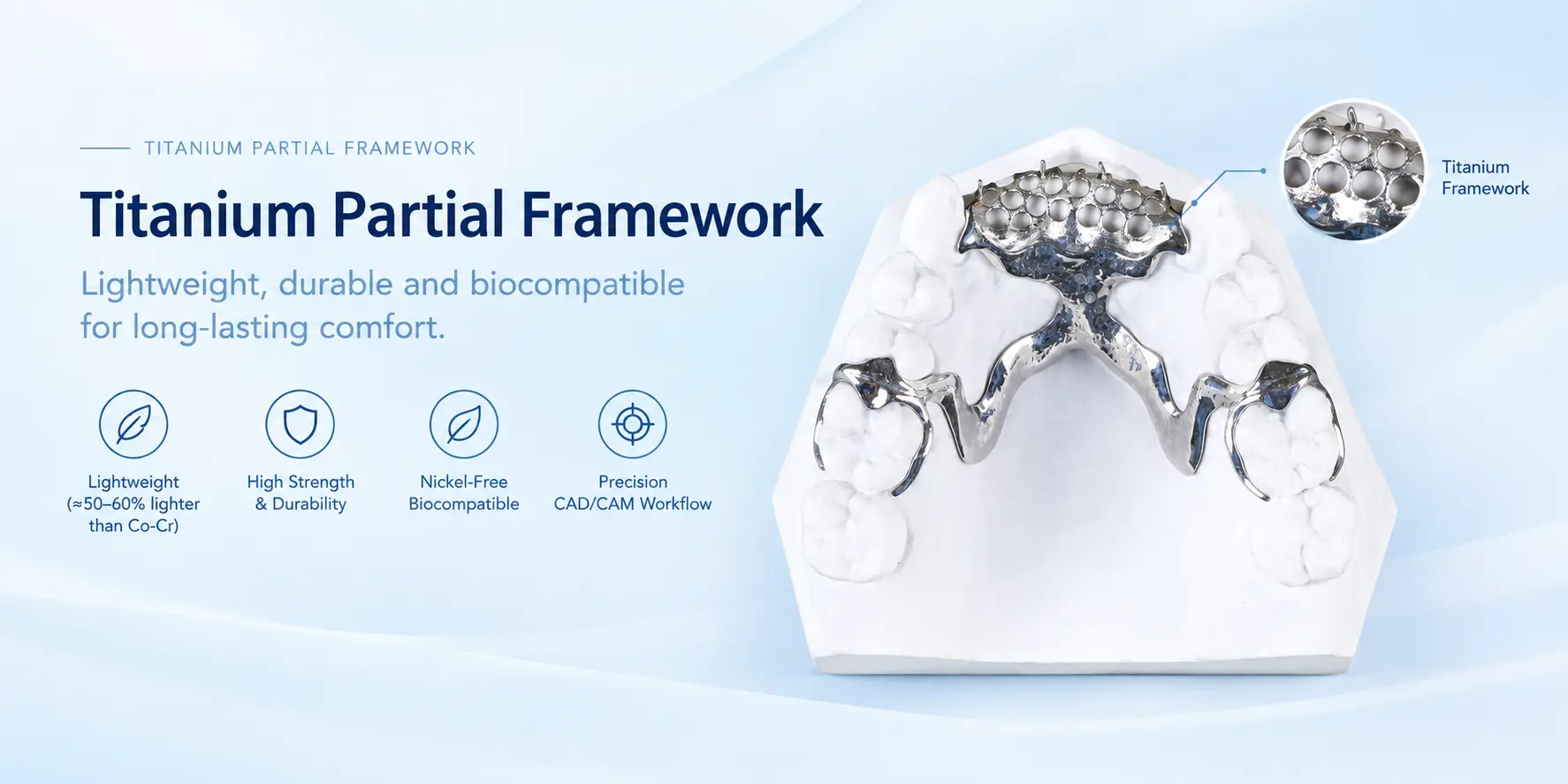
Benefits of Acrylic Partial Dentures
Dental labs and clinics may choose Acrylic removable partials for reasons that go beyond the initial material cost. The following features can make them useful in a variety of clinical and laboratory settings:
Rapid fabrication cycle: PMMA processing is well established, allowing labs to produce selected cases within relatively short turnaround times. Standard production can be completed in 3–5 business days, depending on case requirements.
Ease of modification: Acrylic bases can generally be adjusted or repaired in the laboratory, and some adjustments can also be performed chairside when clinically appropriate.
Immediate tooth replacement: These prostheses can be used for selected immediate partial denture cases following tooth extraction, providing tooth replacement while longer-term treatment is planned or completed.
Lower initial cost: An Acrylic Base Partial Denture can be a practical option for patients who are not ready for implants or fixed bridges, depending on the clinical situation.
Because of these features, acrylic partials can be useful in DSO settings and community dental clinics where case requirements and patient budgets vary.
Advantages Over Alternative Solutions
There are several differences to consider when labs compare acrylic removable partials with other options. Metal-framework partials generally provide greater rigidity, but their fabrication can involve more complex laboratory procedures. Flexible thermoplastic partials, such as Valplast, do not use a conventional metal framework, but their repair and relining options can be more limited depending on the material and design.
Acrylic Base Partial Dentures can be repaired, relined, and produced using established laboratory procedures. These characteristics can be useful for labs handling a wide range of cases, including cases where future modification may be required. Acrylic materials can also be selected in a range of tooth and base shades when aesthetics are an important consideration.
Disadvantages to Consider
Acrylic partial dentures also have limitations that should be considered before selecting them for a case.
PMMA denture base materials can accumulate plaque and oral biofilm when the prosthesis is not cleaned properly. Poor hygiene and continuous wear may contribute to irritation of the oral tissues. Patients should follow their dentist's instructions regarding cleaning, removal, and periods of rest for the oral tissues.
Acrylic generally provides less structural rigidity than conventional metal frameworks. Under higher occlusal loads, an acrylic base may be more susceptible to fracture or deformation. This consideration can be particularly relevant for certain smaller designs or patients with parafunctional habits. The prescribing clinician and laboratory should consider these factors when selecting the appropriate prosthesis design and material.
Comparison: Acrylic vs. Metal Framework vs. Flexible Partial
| Factor | Acrylic Partial | Metal Framework | Flexible Partial |
|---|---|---|---|
| Initial cost | Lower | Higher | Moderate–High |
| Fabrication | Relatively straightforward | More complex | Specialized |
| Relining | Possible | Case-dependent | Limited |
| Adding teeth | Generally possible | Case-dependent | Difficult |
| Rigidity | Lower | High | Flexible |
| Typical role | Interim / selected long-term cases | Long-term definitive | Selected metal-free cases |
This comparison shows why acrylic removable partials remain useful in flexible lab settings, particularly when turnaround, modification, and cost are important considerations.
Clinical Indications
Acrylic Base Partial Dentures can be used in a range of treatment situations. They are often used as immediate partial dentures following tooth extraction, allowing patients to have tooth replacement while longer-term treatment is planned. They may also be used as an interim prosthesis during implant treatment when appropriate.
General dentists, prosthodontists, and oral surgeons may prescribe acrylic partials depending on the clinical situation. Labs that work with DSOs may receive these cases regularly, particularly when a practical and relatively economical removable solution is required. Acrylic partials may also be used in community dental settings where accessibility and turnaround are important considerations.
Materials Used in Acrylic Partial Fabrication
Heat-cured or self-cured PMMA denture base materials are commonly used to fabricate Acrylic Base Partial Dentures. Heat-cured materials are processed under controlled conditions and are widely used for denture base fabrication. Material selection should follow the manufacturer's instructions and the applicable requirements for the intended use.
Denture base polymers are covered by ISO 20795-1, which specifies requirements and test methods for denture base polymers. The applicable standard and material documentation should be checked for the specific product being used.
Artificial teeth are commonly made from acrylic or composite resin materials that are selected for appropriate shape, shade, and compatibility with the denture base. When used, wire clasps may be fabricated from cobalt-chromium or stainless steel wire. Material selection can affect the strength, surface characteristics, fit, and service performance of the finished prosthesis.
Manufacturing Workflow
To achieve consistent fit and quality, labs should follow a controlled workflow when fabricating an Acrylic Base Partial Denture.
The process starts with an impression or digital scan and preparation of the working model or digital record. Next, the wax setup or digital tooth arrangement is completed, and the teeth are positioned. The wax pattern may then be processed in a mold under controlled temperature and pressure according to the selected PMMA system. Deflasking, trimming, and finishing with progressively finer abrasives are part of the post-processing stage. Before final finishing and shipping, a quality review checks areas such as occlusion, fit, tooth position, and surface integrity. When appropriate, digital scans and CAD design can also be incorporated into the workflow to support case communication and repeatable production.
Cost Factors
Several factors affect the final cost of an Acrylic Base Partial Denture:
Material grade: Different PMMA materials and processing methods have different costs and handling requirements. Heat-cured and self-cured systems may differ in their material properties and production procedures.
Number of teeth replaced: More replacement teeth generally require additional setup and processing time.
Clasp design complexity: More complex clasp designs can require additional laboratory work.
Turnaround requirement: Shorter production schedules may involve additional laboratory resources.
Regulatory and quality requirements: Material documentation, quality management procedures, and applicable regulatory requirements can affect production costs.
How to Choose a Reliable Supplier
There are more factors to consider than price per unit when choosing an Acrylic Base Partial Denture manufacturer. Labs and dental centers should review the supplier's material documentation, quality management system, applicable regulatory information, ability to track materials, and remake history when available. Clear communication and the ability to manage routine and urgent cases can also be important.
A supplier with a clear warranty or remake policy can provide additional clarity when a case requires correction or reproduction. For DSOs and laboratories handling a steady number of cases each month, consistent production and communication can be important considerations when evaluating a long-term supplier.
Maintenance Guidelines
A soft-bristle brush and a non-abrasive denture-cleaning product can be used to clean an Acrylic Base Partial Denture regularly. Denture-cleaning solutions may also be used according to the manufacturer's instructions. Regular cleaning helps reduce the accumulation of plaque and oral biofilm.
Patients should follow their dentist's instructions regarding when to remove the prosthesis and how to clean and store it. Regular removal can allow the oral tissues to rest and also provides an opportunity to clean both the prosthesis and the mouth.
The timing of relining should be based on the fit of the prosthesis and changes in the patient's oral tissues rather than on a fixed interval for every patient. Over time, changes in the residual ridge can affect the fit of a removable partial denture. Regular dental follow-up can help determine when relining, repair, adjustment, or replacement is appropriate.
Key Takeaways
Acrylic Base Partial Dentures are a practical option for dental laboratories handling a wide range of removable prosthetic cases. They can provide relatively fast fabrication, acceptable aesthetics, and practical options for repair, relining, and modification in selected cases. These characteristics can be useful for laboratories that need flexible workflows and predictable production processes.
The most important part of selecting a supplier is not price alone. Material documentation, production consistency, quality management, turnaround time, communication, and after-sales support should all be considered when establishing an outsourced acrylic partial denture workflow.
FAQ
Is an acrylic partial denture a permanent or temporary solution?
Acrylic Base Partial Dentures are often used as interim prostheses while patients are waiting for implants, fixed bridges, or other definitive treatment. They can also be used for longer periods in selected cases. Suitability for long-term use depends on the patient's oral condition, prosthesis design, material, maintenance, and clinical follow-up.
How long does an acrylic partial last?
There is no single service-life period that applies to every Acrylic Base Partial Denture. Longevity depends on factors such as material, design, occlusal loading, patient habits, oral changes, maintenance, and professional follow-up. The prosthesis should be evaluated periodically to determine whether repair, relining, or replacement is needed.
Are there risks to gum health with acrylic partials?
Acrylic denture bases can accumulate plaque and oral biofilm if they are not cleaned regularly. Poor hygiene and continuous wear may contribute to irritation of the oral tissues. Regular cleaning and following the prescribing dentist's instructions for removal and oral hygiene can help reduce these risks.
What is the difference between a PMMA partial and a flexible partial denture?
PMMA partials use an acrylic denture base and can generally be repaired or relined using established laboratory procedures. Flexible partial dentures use thermoplastic materials and provide greater flexibility. Their repair and relining options can be more limited depending on the specific material and design.
Can an acrylic partial be repaired if it breaks?
Yes. Acrylic denture bases can often be repaired in a dental laboratory using established PMMA repair techniques. The feasibility and quality of a repair depend on the location and extent of the damage, the original design, and the condition of the prosthesis.
What is an acrylic base partial denture made of?
An acrylic base partial denture is generally made from a denture base polymer such as PMMA, with artificial teeth and, when required, clasp components incorporated into the prosthesis. ISO 20795-1 provides requirements and test methods for denture base polymers.
Is an acrylic partial denture good for replacing several missing teeth?
An acrylic partial denture can be used to replace one or more missing teeth, depending on the patient's oral condition, remaining teeth, tissue support, and treatment plan. The final design should be determined by the prescribing dental professional.
What is the difference between an acrylic partial denture and a metal partial denture?
An acrylic partial denture uses an acrylic denture base as its primary base structure, while a conventional metal partial denture uses a metal framework for support and retention. Acrylic partials can be practical to adjust, repair, or reline, while metal frameworks generally provide greater rigidity and may be preferred for selected long-term cases.
Can an acrylic partial denture be used as an immediate partial denture?
Yes. Acrylic partial dentures can be used as immediate tooth-replacement appliances following extraction when prescribed and designed for the specific clinical situation.
Can acrylic partial dentures be relined?
Yes. Acrylic denture bases can generally be relined when changes in the oral tissues or residual ridge affect the fit, provided the existing prosthesis is suitable for relining. The appropriate timing and relining method should be determined by the dental professional and laboratory.
How long does it take to make an acrylic partial denture?
Production time depends on the number of teeth, clasp design, impression or digital workflow, laboratory process, and requested turnaround. The standard production time stated in this article is 3–5 business days.
Are PMMA denture base materials regulated?
Denture base polymers are subject to applicable regulatory requirements depending on the material, intended use, and market. ISO 20795-1 is an international standard covering denture base polymers. Specific regulatory status should be confirmed from the documentation for the material and market involved.
Can dental laboratories outsource acrylic partial denture production?
Yes. Dental laboratories can outsource acrylic partial denture fabrication to qualified dental laboratories or manufacturing partners. When selecting a supplier, labs should evaluate material documentation, quality management, turnaround time, remake policies, communication, and case-handling capabilities.
What should a dental lab look for when choosing an acrylic partial denture manufacturer?
A dental lab should evaluate the supplier's material documentation, quality management system, production consistency, turnaround time, communication, warranty or remake policy, and ability to support the laboratory's expected case volume.
Is an acrylic partial denture suitable for long-term use?
An acrylic partial denture can be used for an extended period in selected cases, but its suitability for long-term use depends on the patient's oral condition, prosthesis design, material performance, maintenance, and clinical follow-up. It should not be assumed to be the best long-term option for every patient.
Partner with HYC for Acrylic Base Partial Denture Solutions
HYC provides Acrylic Base Partial Denture fabrication services for dental laboratories and clinical partners that need consistent production support. With 22 years of experience in dental laboratory production, HYC supports both conventional and digital case workflows.
Our production process is designed to support consistent results across different case types. Standard production is typically 3–5 business days, depending on case requirements and production schedules. For urgent cases, turnaround options can be discussed based on the specific case.
For laboratories considering outsourced Acrylic Base Partial Denture production, HYC can provide information about materials, case requirements, production procedures, turnaround times, and quality-control processes.
Contact us at info@hycdentallab.com or visit hycdentallab.com to request a quote.
References
Carr, A. B., & Brown, D. T. McCracken's Removable Partial Prosthodontics. Elsevier, 2015.
Phoenix, R. D., Cagna, D. R., & DeFreest, C. F. Stewart's Clinical Removable Partial Prosthodontics. Quintessence Publishing, 2008.
Journal of Prosthetic Dentistry — "Clinical performance of acrylic resin removable partial dentures: A systematic review." Volume 118, 2017.
International Journal of Prosthodontics — "Denture base polymers: A review of current materials and technologies." Volume 31, 2018.
ISO 20795-1:2013 — Dentistry — Base Polymers — Part 1: Denture Base Polymers. International Organization for Standardization, 2013.
American College of Prosthodontists. The Prosthodontic Patient: Facts & Figures. ACP Position Statement, 2020.
YOU MAY LIKE
.webp "Co-Cr Crown (Cobalt-Chrome)")