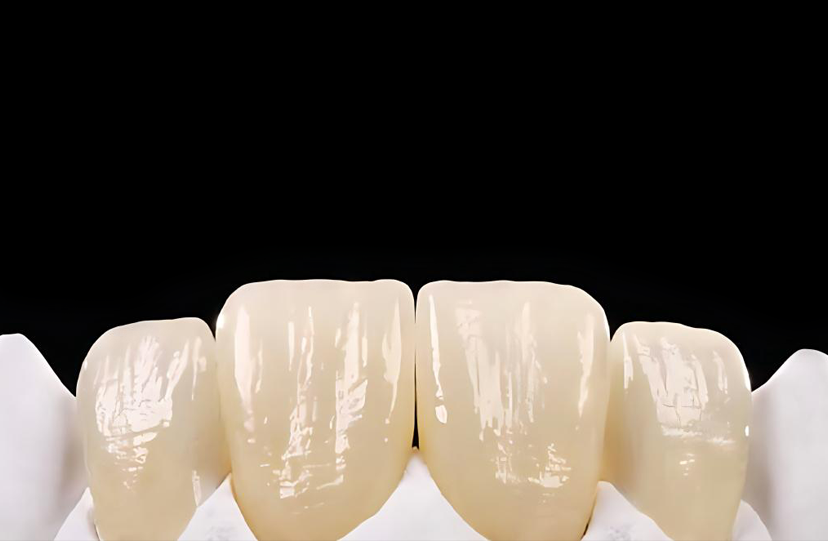
When Is an Implant Cemented Crown Preferred for Anterior Implant Restorations?
When esthetic considerations are a priority, such as in highly visible anterior regions, an Implant Cemented Crown can be a suitable option for selected implant restoration cases. This method can provide natural emergence profiles, intact occlusal anatomy, and smooth integration with adjacent teeth. When achieving optimal tissue contours is more important than future retrievability, cemented restorations can be an option for managing non-ideal implant angulations through custom abutments. To help minimize complications around the implant, the technique requires careful control and removal of excess cement.
Introduction
Anterior implant replacements are one of the more demanding procedures in modern restorative dentistry because patients often have high expectations for both appearance and function. When working in this specialized area, choosing between cement-retained and screw-retained implant crowns can affect treatment planning, maintenance, and laboratory procedures.
Patients may expect a natural appearance, harmonious shade matching, and appropriate restoration contours. Understanding when cement-retained implant crowns are appropriate is important for dental professionals who need to balance esthetic requirements with long-term maintenance and retrievability.
What Is an Implant Cemented Crown?
The first part of a cement-retained implant crown is a custom or stock abutment that is connected to the dental implant fixture. The second part is a separate crown that is cemented onto the abutment using dental cement.
With screw-retained crowns, the prosthetic restoration is connected through a screw-access channel. With cemented crowns, the visible or occlusal surface of the crown does not require a screw-access opening.
The system may use titanium or zirconia abutments with porcelain-fused-to-metal (PFM), all-ceramic, or zirconia crowns. Implant-abutment connections may be internal or external depending on the implant system. The crown fits over the abutment like a conventional crown.
Because the crown and abutment are separate components, the laboratory has greater flexibility when designing the visible and occlusal surfaces. Cementation provides retention between the crown and abutment, although future removal may be more difficult than with a screw-retained restoration.
Benefits

Esthetic Integration
When visual integration is a priority, an Implant Cemented Crown can be well suited to selected anterior implant restorations. Because there is no screw-access opening through the visible crown surface, the laboratory has greater freedom when designing the facial and incisal anatomy.
An Implant Cemented Crown can be fabricated using custom-shaded porcelain, lithium disilicate, or zirconia according to the clinical requirements of the case. The final esthetic result also depends on implant position, abutment design, emergence profile, soft-tissue conditions, crown material, and shade matching.
For highly visible restorations, a cement-retained design can therefore provide useful flexibility in achieving the desired crown appearance.
Occlusal Design Flexibility
The intact occlusal surface provides greater freedom when designing cusp anatomy, fossae, marginal ridges, and occlusal contacts.
This can be useful in cases where the clinician requires specific occlusal relationships or guidance. The final occlusal design should always be based on the patient's clinical situation, implant position, opposing dentition, and overall treatment plan.
Laboratory Fabrication
When the crown does not require a screw-access channel, technicians have greater freedom when developing the crown contour, occlusal anatomy, contact areas, and shade.
The laboratory workflow can use conventional or digital CAD/CAM techniques depending on the selected materials and restoration design. This allows technicians to focus on margin adaptation, emergence profile, contact relationships, occlusal anatomy, and esthetic characterization.
Clinical Technique Familiarity
Dentists with experience in conventional fixed prosthodontics may already be familiar with many aspects of cementation procedures. Depending on the case, the clinical process may include try-in, evaluation of contacts and occlusion, cementation, and removal of excess cement.
The specific cementation protocol should follow the requirements of the selected crown and abutment materials, cement manufacturer, and implant system.
Advantages
The cemented crown method has several potential advantages that can make it suitable for selected clinical situations. These benefits may be particularly relevant in anterior implant restorations where esthetics and crown contour are important.
Compensation for Implant Angulation Issues
Implant placement does not always align with the ideal prosthetic axis. If the implant axis would place a screw-access channel through a highly visible area, a custom abutment can sometimes help manage the prosthetic emergence and crown position.
The separate abutment-and-crown design provides flexibility when managing implant angulation. The amount of correction possible depends on the implant system, abutment design, available restorative space, and clinical conditions.
Cementation and Fit Considerations
The cement interface provides retention between the crown and abutment. The clinical behavior of a cement-retained restoration depends on factors such as abutment geometry, cement selection, crown material, preparation design, and restoration fit.
Cement should not be considered a substitute for appropriate abutment design or accurate laboratory fabrication. The restoration should be designed so that the cement margin is as accessible as clinically appropriate and excess cement can be effectively removed.
Restoration Structural Considerations
Ceramic restorations can have favorable mechanical properties when properly designed and used within their indications. A cement-retained crown does not require a screw-access opening through the restoration, which provides additional freedom in crown design.
However, fracture resistance depends on many factors, including crown material, thickness, preparation geometry, occlusal loading, implant position, and laboratory fabrication. For patients with heavy occlusal forces or bruxism, the clinician should carefully evaluate material selection and occlusal design.
Custom Abutment Tissue Management
Custom abutments can be designed to provide an appropriate emergence profile and margin position according to the clinical situation.
A well-planned margin can make excess cement easier to inspect and remove. This is particularly important because residual cement around implant restorations has been identified as a possible risk indicator for peri-implant disease.
Custom abutment design can therefore support both esthetic planning and practical cementation management when appropriate.
Disadvantages
Even though cemented anterior implant crowns can provide esthetic and restorative flexibility, they also have limitations that clinicians should consider carefully.
Retrievability is one of the main concerns. Screw-retained restorations generally provide easier access for future removal, while cemented crowns may require more complex removal procedures and may be damaged during removal.
This can become relevant when the restoration requires repair, when the abutment screw needs to be accessed, or when complications develop around the implant.
Another consideration is residual cement. Excess cement that remains around the implant restoration may interfere with peri-implant tissue health. A systematic review identified excess cement as a possible risk indicator for peri-implant disease.
At the same time, more recent systematic-review evidence found no significant difference in the overall risk of peri-implant mucositis or peri-implantitis between cement- and screw-retained implant-supported prostheses in the randomized clinical trials included in that analysis.
This means that cement-retained restorations should not automatically be considered a cause of peri-implantitis. Instead, cement selection, restoration design, margin accessibility, cementation technique, and careful removal of excess cement should all be considered during treatment planning.
Long-term maintenance can also be more complicated when a cemented crown is difficult to remove. Clinicians should therefore consider future maintenance and retrievability before selecting the restoration design.
Design choices may also be affected by available restorative space. The available space must accommodate the implant connection, abutment, crown material, and appropriate restoration dimensions.
Comparison: Cemented vs. Screw-Retained Anterior Implant Crowns
| Feature | Cemented Crown | Screw-Retained Crown |
|---|---|---|
| Esthetics | No screw-access opening through the crown surface | Requires a screw-access channel that is restored after placement |
| Retrievability | Generally more difficult to remove | Generally easier to remove |
| Occlusal Anatomy | Greater freedom in occlusal surface design | Design is influenced by screw-channel position |
| Cement Considerations | Requires careful control and removal of excess cement | Does not require crown cementation |
| Angulation Management | Can be managed with appropriate custom abutment designs | Can be managed with appropriate implant and prosthetic components |
| Fracture Resistance | Depends on restoration design and material | Depends on restoration design and material |
| Clinical Technique | Requires appropriate cementation and cement-removal procedures | Requires correct screw seating and torque according to manufacturer instructions |
| Long-Term Maintenance | Crown removal can be more difficult | Generally provides easier access for future maintenance |
| Cost | Depends on abutment, crown material, and laboratory design | Depends on implant components, crown design, and laboratory workflow |
| Vertical Space | Depends on abutment and crown design | Depends on implant, components, and prosthetic design |
The comparison shows that cemented crowns may be suitable when esthetics, crown contour, or implant angulation management are important and future retrievability is less critical. Screw-retained restorations may be preferred when easy future access and maintenance are priorities.
Systematic reviews indicate that both retention methods can provide successful implant restorations, although they have different mechanical, biological, and maintenance considerations.
Clinical Indications
Cement-retained anterior implant crowns may be considered in the following clinical situations:
High Esthetic Demand Zones: Central incisors, lateral incisors, and canines in highly visible areas may benefit from a crown design without a visible screw-access opening.
Implants With Non-Ideal Prosthetic Angulation: When implant angulation would result in an unfavorable screw-access position, an appropriate custom abutment may help establish a more favorable prosthetic axis.
Occlusal Design Requirements: Cases requiring specific incisal positioning, canine guidance, or other occlusal considerations may benefit from an intact crown surface.
Adequate Restorative Space: The available restorative space should allow appropriate abutment and crown dimensions without compromising the restoration.
Existing Cement-Retained Restorations: In selected treatment plans, using a similar restoration approach for adjacent or replacement restorations may help maintain consistent restorative procedures.
The technique may be less suitable when restorative space is insufficient, abutment retention is inadequate, cement margins cannot be adequately controlled, or future retrievability is a major clinical priority.
Treatment planning should always be based on the individual patient's anatomy, implant system, restorative requirements, occlusion, esthetic expectations, and long-term maintenance needs.
Materials
The choice of material affects the appearance, mechanical behavior, and clinical performance of implant-supported crowns. Both the abutment and crown materials should be selected according to the clinical requirements of the case.
Abutment Materials
Titanium and zirconia are commonly used abutment materials for implant restorations.
Titanium has extensive clinical use and established mechanical performance. Zirconia abutments may provide esthetic advantages in selected anterior cases, particularly when the color of the abutment may influence the appearance of thin peri-implant soft tissue.
Systematic reviews have reported favorable esthetic outcomes with zirconia abutments in selected anterior implant cases, while also noting that mechanical considerations and long-term evidence should be taken into account.
The appropriate abutment material should therefore be selected based on implant connection, mechanical requirements, soft-tissue characteristics, esthetic demands, and manufacturer recommendations.
Crown Materials
Several crown materials can be considered depending on the clinical requirements.
Porcelain-fused-to-metal (PFM) crowns have a long history of clinical use and combine a metal substructure with veneering porcelain.
Lithium disilicate and other all-ceramic systems can provide favorable esthetic characteristics and may be appropriate for selected anterior implant restorations.
Monolithic zirconia provides high strength and can be considered when greater resistance to mechanical loading is important. Translucency and optical properties vary among zirconia formulations, so material selection should consider both mechanical and esthetic requirements.
Cement Materials
Different dental cements have different retention and removal characteristics. Resin-modified glass ionomer cements, resin-based luting agents, and temporary cements may be used in different clinical situations.
There is no single cement that is universally appropriate for every cement-retained implant crown.
Cement selection should consider the abutment geometry, crown material, desired retention, future retrievability, manufacturer recommendations, and clinical requirements.
Manufacturing Workflow
A structured laboratory workflow helps ensure that cement-retained implant crowns are designed and fabricated according to the clinical prescription.
Digital Impression and Design
The process may begin with an intraoral scan or conventional implant impression using appropriate impression components.
Technicians use CAD software to design the custom abutment and crown according to the implant position, emergence profile, margin location, contact points, occlusal relationships, incisal edge position, and surrounding teeth.
Abutment Manufacturing
Custom abutments may be milled from appropriate titanium or zirconia components using CAD/CAM technology and compatible implant interfaces.
The abutment should be designed according to the implant manufacturer's specifications and the clinical requirements of the restoration.
Surface finishing should be controlled according to the selected cementation system and material requirements.
Crown Manufacturing
Depending on the selected material, crowns may be milled from zirconia or lithium disilicate blocks or fabricated using layering techniques for PFM restorations.
For zirconia restorations, milling is typically followed by sintering according to the material manufacturer's recommended protocol.
Quality-control procedures may include checking margins, contacts, occlusal anatomy, crown contours, and shade.
Quality Assurance Steps
Each restoration should be inspected for dimensional accuracy, margin integrity, contact relationships, surface quality, and overall design.
The laboratory should maintain appropriate documentation for materials and manufacturing processes according to its quality-management procedures.
Where applicable, facilities operating under ISO 13485 quality-management systems should maintain appropriate documentation and process controls.
Final Steps
Crowns may be characterized through staining, glazing, polishing, or other finishing procedures depending on the selected material.
Before shipment, the restoration should be checked against the prescription and case information.
HYC Dental Laboratory provides a standard turnaround of approximately 4–5 days for applicable cases, subject to case complexity, material selection, and shipping requirements.
Cost Factors
The final price of a cemented anterior implant crown depends on several factors.
Material Choice
The selected abutment and crown materials influence laboratory costs. Zirconia, lithium disilicate, PFM, and other restorative materials have different material and manufacturing requirements.
Customization Level
Stock abutments with standard crown designs may require less laboratory customization than fully customized abutments and highly individualized crown designs.
Custom emergence profiles, margin positioning, individualized shade characterization, and complex implant positioning can increase laboratory production requirements.
Laboratory Capabilities
Laboratories with CAD/CAM equipment, trained implant technicians, structured quality-control procedures, and experience with complex implant restorations may have different pricing structures.
When comparing suppliers, dental practices should evaluate not only the laboratory fee but also communication, turnaround time, technical support, quality control, and consistency.
Order Volume
Dental practices and group organizations may discuss volume-based pricing or long-term laboratory agreements with their suppliers. Any discount structure should be confirmed directly with the laboratory.
Certification and Compliance
Material documentation and quality-management requirements may contribute to laboratory operating costs.
When applicable, dental practices should request documentation for the materials and components used in the restoration and verify the relevant regulatory requirements for their market.
Delivery Needs
Standard and urgent turnaround options may have different costs. Delivery time should be confirmed with the laboratory before placing an urgent case.
How to Choose a Supplier
Choosing a laboratory partner for cemented anterior implant crowns requires consideration of technical capability, communication, quality control, and service reliability.
Manufacturing Skills and Technology
Evaluate the laboratory's experience with implant restorations, CAD/CAM workflows, custom abutments, zirconia, PFM, and other relevant restorative materials.
If appropriate, ask about the laboratory's quality-control procedures and technical workflow.
Regulatory Compliance and Documentation
Ask the laboratory about applicable quality-management certifications and documentation for the materials and components used.
For U.S. cases, confirm the relevant regulatory status of the products and components being supplied rather than assuming that every dental laboratory or restoration has the same regulatory classification.
Quality Metrics
Ask potential suppliers about their quality-control procedures, remake policies, and methods for checking margins, contacts, occlusion, shade, and implant components.
Relevant quality metrics should be supported by the laboratory's own records rather than relying on unsupported industry-wide averages.
Customization Flexibility
For anterior implant restorations, confirm whether the laboratory can provide customized abutment and crown designs according to the clinician's prescription.
Examples of previous anterior implant cases can also help dentists evaluate the laboratory's esthetic and technical capabilities.
Communication and Technical Support
Clear communication is especially important for implant restorations.
The laboratory should be able to communicate effectively regarding implant systems, components, emergence profiles, abutment design, shade requirements, and case-specific questions.
Turnaround Time and Delivery Reliability
Confirm the laboratory's standard turnaround time, shipping options, and procedures for urgent cases before beginning a partnership.
For HYC Dental Laboratory, standard applicable cases are generally completed within approximately 4–5 days, depending on case requirements.
Warranty and After-Sales Support
Understand the laboratory's warranty terms before placing cases.
HYC Dental Laboratory provides a two-year warranty for applicable fixed restorations, subject to the laboratory's warranty terms and exclusions.
Long-Term Stability
Consider the laboratory's experience, technical team, production capabilities, quality-control procedures, and ability to maintain consistent communication over time.
A long-term laboratory relationship can be valuable when a practice regularly handles implant and restorative cases.
Maintenance
Proper maintenance is important for the long-term health of implant-supported restorations and the surrounding tissues.
Patient Home Care
Patients should receive appropriate oral-hygiene instructions for cleaning around implant crowns.
Soft-bristled toothbrushes and suitable interdental cleaning methods can help control plaque around the restoration and adjacent tissues.
Interdental brushes or water flossers may be useful for selected patients depending on their anatomy and clinical recommendations.
Professional Maintenance
Regular professional maintenance should include evaluation of peri-implant tissues, plaque control, restoration condition, occlusion, and other clinical factors.
The maintenance interval should be determined by the clinician based on the patient's risk factors and clinical condition.
Radiographic monitoring may also be indicated when clinically appropriate.
Occlusal Monitoring
Occlusion should be evaluated during maintenance visits, particularly for patients with heavy occlusal loading or bruxism.
Patients with bruxism may require additional protective measures such as a professionally designed occlusal appliance, depending on the clinician's assessment.
Any mobility or unusual changes in the restoration should be evaluated by the dentist because they may indicate a mechanical complication.
Service Life Expectations
Cemented anterior implant crowns can provide long-term clinical service, but there is no single service-life period that applies to every restoration.
Longevity depends on factors including material selection, occlusal conditions, implant position, restoration design, maintenance, oral hygiene, and patient-specific factors.
Monolithic zirconia may be considered in cases where mechanical demands are higher, while layered ceramic restorations may have different risks for chipping or wear.
The crown and abutment should be monitored over time, and replacement may eventually be necessary because of mechanical wear, esthetic changes, tissue remodeling, or other clinical factors.
Key Takeaways
Cement-retained anterior implant crowns can be a suitable option for selected cases where esthetics, crown contour, or implant angulation management are important.
They provide an intact visible and occlusal crown surface without a screw-access opening and can offer flexibility in custom abutment and emergence-profile design.
However, cement-retained restorations also have limitations, particularly regarding retrievability and excess cement management.
Current evidence does not show that cement-retained restorations are universally inferior or superior to screw-retained restorations. The appropriate retention method depends on the individual case, including implant position, esthetic requirements, restorative space, abutment design, crown material, occlusion, cement accessibility, and future maintenance needs.
Successful results depend on appropriate clinical treatment planning, accurate laboratory fabrication, careful cementation, and effective long-term maintenance.
FAQ
What is an Implant Cemented Crown?
An Implant Cemented Crown is an implant-supported restoration in which a separate crown is cemented onto an abutment connected to the dental implant. Unlike a screw-retained crown, the crown does not require a screw-access opening through its visible or occlusal surface.
Is a cement-retained implant crown better than a screw-retained crown?
Neither retention method is universally better.
Cement-retained and screw-retained implant crowns have different advantages and limitations. Cemented crowns can provide greater freedom for esthetic and occlusal surface design, while screw-retained crowns generally provide easier retrievability.
The appropriate option depends on implant position, available restorative space, esthetic requirements, restoration design, occlusion, and future maintenance needs. Current systematic-review evidence indicates that both approaches can provide successful clinical outcomes.
Are cement-retained implant crowns suitable for anterior teeth?
Yes. Cement-retained implant crowns can be considered for selected anterior implant restorations, particularly when esthetic requirements and crown contour are important.
Because there is no screw-access opening through the visible crown surface, the laboratory has greater freedom when designing the facial and incisal anatomy.
What makes custom abutments useful for cemented anterior crowns?
Custom abutments can be designed according to the implant position, emergence profile, tissue contours, and desired crown position.
They may also allow the cement margin to be positioned in a way that makes inspection and removal of excess cement more manageable when clinically appropriate.
How do I prevent cement-related peri-implant complications?
Careful treatment planning and cementation are important.
The restoration should be designed so that the cement margin is as accessible as clinically appropriate, and excess cement should be carefully removed and inspected.
Excess cement has been identified as a possible risk indicator for peri-implant disease, so cement control is an important part of cement-retained implant restoration procedures.
Can cemented crowns handle misaligned implants?
Custom abutments can help manage some implant-angulation challenges by allowing the prosthetic axis and crown emergence to be adjusted.
The amount of correction possible depends on the implant system, abutment design, available restorative space, and clinical situation.
What cement type provides the best balance of retention and retrievability?
There is no single cement that is best for every cement-retained implant crown.
Resin-modified glass ionomer cements, resin-based luting agents, and temporary cements have different retention and removal characteristics.
The choice should consider abutment geometry, crown material, desired retention, future retrievability, manufacturer recommendations, and clinical requirements.
How long do cemented anterior implant crowns typically last?
There is no fixed service-life period that applies to every cemented anterior implant crown.
Longevity depends on material selection, restoration design, occlusal conditions, implant position, maintenance, oral hygiene, and patient-specific factors.
The crown may eventually require replacement because of wear, fracture, esthetic changes, tissue remodeling, or other clinical factors.
What vertical space is required for cemented implant crowns?
There is no single vertical-space requirement that applies to every cemented implant crown.
The available space must accommodate the implant connection, abutment design, crown material, crown thickness, and overall restoration dimensions.
When restorative space is limited, the clinician and laboratory should evaluate whether a cement-retained or screw-retained design is more appropriate.
Why do some cemented crowns feel loose over time?
Crown movement can have several possible causes, including cement failure, abutment screw loosening, inadequate retention form, or other mechanical complications.
The restoration should be evaluated by the dentist to identify the underlying cause.
If an abutment screw is loose, it should be managed according to the implant manufacturer's specifications.
What is the difference between cement-retained and screw-retained implant crowns?
The main difference is how the restoration is connected to the implant.
A cement-retained crown is cemented onto a separate abutment, while a screw-retained restoration is connected using a prosthetic screw.
Cement-retained designs can provide greater freedom for visible and occlusal surface design, while screw-retained designs generally provide easier future access.
Are cement-retained implant crowns more aesthetic?
They can provide an esthetic advantage in selected cases because there is no screw-access opening through the visible crown surface.
However, the final esthetic result depends on many factors, including implant position, abutment material, emergence profile, crown material, shade, soft-tissue conditions, and laboratory fabrication.
Are cement-retained implant crowns suitable for patients with bruxism?
They may be considered for selected patients with bruxism, but bruxism increases the mechanical demands placed on implant restorations.
The clinician should evaluate the restoration material, occlusal design, implant position, abutment design, and appropriate protective measures before treatment.
Can zirconia abutments be used with cement-retained implant crowns?
Yes. Zirconia abutments can be used in selected anterior implant cases.
Systematic reviews have reported favorable esthetic outcomes for zirconia abutments, particularly regarding soft-tissue color in some clinical situations, although mechanical considerations remain important.
The implant connection and manufacturer's recommendations should always be considered when selecting an abutment.
How important is cement removal for implant crowns?
Cement removal is an important part of cement-retained implant restoration procedures.
Residual cement around implant restorations has been identified as a possible risk indicator for peri-implant disease. Therefore, restoration margins and cementation procedures should be planned to facilitate inspection and removal of excess cement whenever clinically appropriate.
Can cement-retained implant crowns be removed?
They can sometimes be removed, but removal is generally more difficult than with a screw-retained restoration.
Depending on the cement, crown material, abutment design, and clinical situation, removal may risk damaging the crown or abutment.
Future retrievability should therefore be considered during treatment planning.
How should dentists choose between cement-retained and screw-retained implant crowns?
Dentists should consider implant angulation, esthetic requirements, restorative space, abutment design, crown material, cement accessibility, retrievability, occlusion, and long-term maintenance.
Both retention methods can be appropriate depending on the individual case.
What should dentists look for when choosing a laboratory for cement-retained implant crowns?
Dentists should evaluate the laboratory's experience with implant restorations, CAD/CAM capabilities, material documentation, quality-control procedures, communication, turnaround time, customization capabilities, and ability to follow implant manufacturer specifications.
For custom anterior implant cases, clear communication between the dentist and laboratory is particularly important.
Partner with HYC for Cemented Implant Crown Solutions
HYC Dental Laboratory supports customized implant restoration workflows according to clinical and laboratory specifications, including custom abutment designs, emergence-profile development, and individualized shade matching.
Our standard turnaround is approximately 3–5 days, depending on case requirements and shipping. Our technical team provides case-specific support throughout the design and manufacturing process.
Each restoration is inspected for factors such as marginal adaptation, contact relationships, occlusal anatomy, emergence profile, and shade consistency before shipment.
HYC Dental Laboratory has more than 22 years of experience in dental laboratory production and provides a two-year warranty for applicable fixed restorations, subject to our warranty terms and exclusions.
For custom cemented implant crown cases, material specifications, technical consultations, quotations, or laboratory partnerships, contact HYC Dental Laboratory at info@hycdentallab.com.
Our goal is to provide carefully manufactured implant restorations supported by consistent quality control, technical communication, and practical laboratory service.
References
-
Sherif S, Susarla HK, Kapos T, Munoz D, Chang BM, Wright RF. A Systematic Review of Screw- versus Cement-Retained Implant-Supported Fixed Restorations. Journal of Prosthodontics. 2014;23(1):1–9. DOI: 10.1111/jopr.12128.
-
Wilson TG Jr. The Positive Relationship Between Excess Cement and Peri-Implant Disease: A Prospective Clinical Endoscopic Study. Journal of Periodontology. 2009;80(9):1388–1392. DOI: 10.1902/jop.2009.090115.
-
Lim HC, et al. Evaluation of cement-retained versus screw-retained implant-supported restorations for marginal bone loss: A systematic review and meta-analysis. The Journal of Prosthetic Dentistry. 2016;115(4):419–427. DOI: 10.1016/j.prosdent.2015.08.026.
-
Naveau A, Rignon-Bret C, Wulfman C. Zirconia abutments in the anterior region: A systematic review of mechanical and esthetic outcomes. The Journal of Prosthetic Dentistry. 2019;121(5):775–781.e1. DOI: 10.1016/j.prosdent.2018.08.005.
-
Jain JK, Sethuraman R, Reddy NK, et al. Retention failures in cement- and screw-retained fixed restorations on dental implants in partially edentulous arches: A systematic review with meta-analysis. Journal of Indian Prosthodontic Society. 2018;18(3):193–201.
-
Totou D, Naka O, Mehta SB, Banerji S. Esthetic, mechanical, and biological outcomes of various implant abutments for single-tooth replacement in the anterior region: a systematic review of the literature. International Journal of Implant Dentistry. 2021;7(1):85. DOI: 10.1186/s40729-021-00370-7.
-
Dini C, Borges GA, Costa RC, Magno MB, Maia LC, Barão VAR. Peri-implant and esthetic outcomes of cemented and screw-retained crowns using zirconia abutments in single implant-supported restorations—A systematic review and meta-analysis. Clinical Oral Implants Research. 2021;32(10):1143–1158. DOI: 10.1111/clr.13824.
-
Ribeiro Dos Reis IN, Fukuoka GL, Nagay BE, et al. Incidence of peri-implant disease associated with cement- and screw-retained implant-supported prostheses: A systematic review and meta-analysis. The Journal of Prosthetic Dentistry. 2025;134(1):100–108. DOI: 10.1016/j.prosdent.2023.08.030.
YOU MAY LIKE
.webp "Ni-Cr PFM (Nickel-Chrome)")
.webp "Silver-Palladium Crown (Ag-Pd)")