How Can Labs Evaluate Acrylic Base Partial Denture Suppliers?
Sourcing an acrylic base partial denture supplier involves more than comparing prices. Dental laboratories, clinics, and procurement teams usually need to consider fit accuracy, production turnaround, material documentation, customization, and after-sales support. A supplier that can provide consistent fabrication, clear quality procedures, and reliable communication can help reduce remakes and make removable prosthetic workflows easier to manage.
Introduction
Acrylic Base Partial Dentures remain a practical option for replacing missing teeth in a range of clinical situations. They are often used as interim restorations after extraction, during implant treatment, or when a removable solution is preferred. Compared with cast metal frameworks, acrylic partial dentures can also be easier to adjust and repair.
For dental laboratories, DSOs, and clinics that handle a regular volume of removable cases, the supplier can have a direct effect on daily workflow. Delays, inconsistent fabrication, or unclear case communication may lead to additional chairside adjustments and remakes. For this reason, supplier selection should consider production quality and service capabilities as well as unit price.
What Is an Acrylic Base Partial Denture?
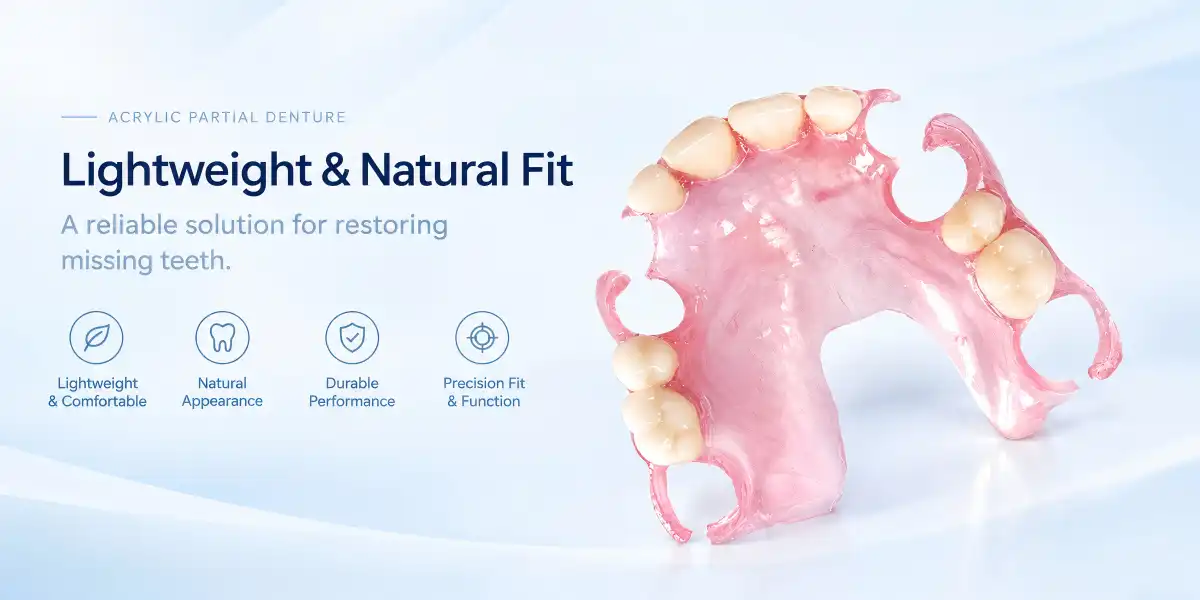
An Acrylic Base Partial Denture is a removable dental prosthesis used to replace one or more missing teeth. The denture base is commonly made from polymethyl methacrylate (PMMA) resin, with prosthetic teeth attached to the base. Depending on the design, wire clasps may be used to provide additional retention from the remaining natural teeth.
Unlike a cast metal partial denture, an acrylic partial denture generally uses a thicker acrylic base and does not rely on a rigid cast metal framework. This makes acrylic designs relatively straightforward to modify or repair when clinical conditions change.
Acrylic Base Partial Dentures may be used as interim restorations following tooth extraction or during implant treatment. In selected cases, they may also be used as a longer-term removable prosthetic solution, depending on the patient's oral condition and treatment plan.
Benefits of Acrylic Partial Dentures
Acrylic Base Partial Dentures offer several practical advantages for both dental professionals and patients:
-
Cost-accessible fabrication: PMMA-based designs can provide a lower-cost alternative to some cast metal frameworks.
-
Relatively fast production: Acrylic fabrication can support cases where a removable restoration is needed within a short treatment schedule.
-
Chairside adjustability: Acrylic bases can generally be adjusted when pressure areas or minor fit issues are identified during delivery.
-
Repairability: Acrylic bases and denture teeth can often be repaired or modified in the dental laboratory rather than requiring a completely new prosthesis.
-
Flexible case applications: Acrylic partial dentures can be used for interim treatment, post-extraction replacement, and selected longer-term removable cases.
These characteristics make acrylic partial dentures useful for practices and laboratories that manage a variety of removable prosthetic cases.
Advantages Over Alternative Removable Solutions
Compared with cast metal partial dentures, acrylic base partial dentures generally require a simpler fabrication process. This can be useful when a case needs to be produced within a shorter timeframe or when the treatment plan is expected to change later.
Acrylic bases can also be modified more easily when additional teeth, repairs, or relining are required. For laboratories managing different types of removable restorations, this can make acrylic partial dentures practical for interim and economy cases.
Flexible thermoplastic partial dentures offer a different set of characteristics, particularly in cases where the absence of visible metal clasps is important. However, material properties and repair or relining options differ between acrylic and flexible designs. The appropriate choice depends on the clinical indication, denture design, and treatment objectives.
Disadvantages to Consider
Acrylic partial dentures also have limitations that should be considered before treatment or procurement.
The acrylic base requires regular cleaning because plaque and biofilm can accumulate on the denture surface. Poor hygiene may contribute to odor, tissue irritation, or other oral health problems. Patients should receive clear instructions on cleaning, storage, and regular dental follow-up.
Acrylic is also less resistant to fracture than a well-designed cast metal framework in many high-stress situations. Patients with heavy occlusal forces or bruxism may therefore require a different prosthetic design, depending on the clinical assessment.
Another consideration is the changing shape of the residual ridge. Bone and soft-tissue changes can affect the fit of a removable partial denture over time. When the fit becomes inadequate, a professional evaluation can determine whether adjustment, relining, repair, or replacement is appropriate.
Acrylic vs. Metal Framework Partial Dentures
Understanding the differences between acrylic and cast metal partial dentures can help dental laboratories and clinics select the appropriate option for each case.
| Factor | Acrylic Base Partial | Cast Metal Partial |
|---|---|---|
| Material | PMMA acrylic resin | Cobalt-chromium or other dental alloy |
| Fabrication time | Generally shorter | Generally longer |
| Cost | Generally lower | Generally higher |
| Rigidity | Moderate | High |
| Fracture resistance | Generally lower | Generally higher |
| Chairside adjustment | Relatively easy | More limited |
| Repair and modification | Generally straightforward | More complex |
| Common application | Interim and selected economy cases | Long-term and structurally demanding cases |
Neither design is appropriate for every patient. The decision should be based on the clinical situation, remaining teeth, available support and retention, treatment objectives, and the dentist's prescription.
Clinical Indications
Acrylic Base Partial Dentures may be considered in several clinical situations, including:
-
Immediate replacement of missing teeth following extraction.
-
Interim prosthetic treatment while a patient is waiting for implant restoration or another definitive treatment.
-
Partial edentulism where an acrylic removable design is clinically appropriate.
-
Cases where a relatively economical removable prosthetic solution is required.
-
Situations where future changes to the denture are expected and an easily adjustable base is useful.
For dental laboratories serving general practices, implant centers, and multi-location dental groups, consistent fabrication is particularly important when case specifications vary from one prescription to another.
Materials Used in Fabrication
Heat-Cured PMMA Resin
Heat-cured polymethyl methacrylate is a commonly used material for acrylic denture bases. Proper processing and finishing are important for achieving the required dimensional stability, surface quality, and appearance.
The specific resin used should be documented by the supplier and handled according to the manufacturer's instructions and applicable regulatory requirements.
Acrylic Denture Teeth
Acrylic or composite resin denture teeth are commonly selected according to shade, size, mold, and the patient's existing dentition. Tooth selection and arrangement should follow the dentist's prescription and the requirements of the individual case.
Wire Clasp Components
Depending on the design, stainless steel or cobalt-chromium wire components may be incorporated to provide additional retention. Clasp design should be based on the remaining dentition and the prescribed prosthetic design.
Manufacturing Workflow
The fabrication of an Acrylic Base Partial Denture begins with the clinical information provided by the dentist or laboratory. Depending on the workflow, the case may be received from a conventional impression and model or through a digital scan.
The model is evaluated, the occlusal relationship is established, and the denture teeth are selected and arranged according to the prescription. The acrylic base is then processed using an appropriate curing or injection technique.
After processing, the denture is deflasked, trimmed, polished, and inspected. Final quality control should include checks of the base, tooth arrangement, surface finish, clasp components where applicable, and overall conformity with the prescription.
For laboratories comparing suppliers, it is useful to ask how quality checks are performed and how case information is documented throughout production. Consistent inspection procedures can help reduce avoidable adjustments and remakes.
Cost Factors
The final cost of an Acrylic Base Partial Denture can vary according to several factors:
-
Number of teeth being replaced: More teeth may require additional setup and processing work.
-
Tooth shade and mold: Premium tooth systems or specific shade requirements may affect the cost.
-
Clasp design: Additional clasp components or more complex designs can increase production requirements.
-
Customization: Individual case instructions may require additional laboratory time.
-
Relining or rebasing: Existing prostheses requiring modification involve different production steps from new cases.
-
Shipping method: Standard and expedited shipping have different costs.
-
Order volume: Regular case volume may allow suppliers to offer different pricing structures.
For overseas dental laboratories, shipping time, packaging, customs requirements, and communication should also be considered when comparing suppliers.
How to Choose a Reliable Acrylic Partial Denture Supplier
Selecting an Acrylic Base Partial Denture supplier should involve more than a price comparison. The following points can help laboratories and clinics evaluate a potential production partner:
-
Quality documentation: Ask for applicable certifications, quality-management documentation, and material information that can be verified.
-
Case accuracy: Request information about quality-control procedures and, where available, documented remake or adjustment data.
-
Turnaround time: Confirm the normal production schedule and the supplier's process for urgent cases.
-
Customization: Check whether the laboratory can follow specific instructions for tooth shade, mold, arch form, clasp design, and other case requirements.
-
Warranty terms: Review the warranty period and understand what types of quality-related issues are covered.
-
Communication: Clear case confirmation and responsive technical communication can make international outsourcing easier to manage.
-
Packaging and shipping: Ask how completed cases are packaged, tracked, and dispatched.
A supplier that can provide consistent production together with clear communication is generally easier to work with over the long term.
Maintenance Guidance for End Users
Proper maintenance is important for keeping an Acrylic Base Partial Denture clean and functional.
Patients should clean the denture regularly with a soft-bristled brush and a denture cleanser suitable for acrylic materials. Abrasive cleaning products should be avoided because they may scratch the surface.
Hot water should also be avoided because excessive heat may affect the shape of the acrylic base. When the denture is not being worn, it should be stored according to the care instructions provided by the dental professional or material manufacturer.
Regular dental examinations are important because the condition of the remaining natural teeth, oral tissues, and residual ridge can change over time. If the denture becomes loose, uncomfortable, damaged, or difficult to insert and remove, the patient should have it professionally evaluated rather than attempting to modify it at home.
Key Takeaways
Acrylic Base Partial Dentures remain a practical removable prosthetic option for interim treatment and selected longer-term cases. Their relatively straightforward fabrication, adjustability, and repairability can make them useful for dental clinics and laboratories handling different types of removable restorations.
For B2B buyers, the supplier is an important part of the overall process. Fit accuracy, material documentation, production consistency, turnaround time, customization, warranty terms, and communication should all be considered before establishing a long-term supply relationship.
FAQ
What is an acrylic base partial denture?
An acrylic base partial denture is a removable dental prosthesis used to replace one or more missing teeth. It commonly consists of a PMMA acrylic base, prosthetic teeth, and, depending on the design, clasp components for additional retention.
Are acrylic partial dentures permanent or temporary?
Acrylic partial dentures can be used as interim restorations, such as after extraction or during implant treatment. In selected cases, they may also serve as longer-term removable prostheses. The appropriate use depends on the patient's clinical condition and treatment plan.
How long does an acrylic partial denture last?
There is no single service-life period that applies to every acrylic partial denture. Longevity depends on the patient's oral condition, denture design, material, occlusal forces, hygiene, and maintenance. Changes in the residual ridge may require adjustment, relining, repair, or replacement before the denture itself is significantly damaged.
Can acrylic partial dentures be repaired?
Yes. Many acrylic partial denture bases can be repaired or modified in a dental laboratory. Depending on the damage and case design, repairs may include adding denture teeth, repairing a fractured acrylic base, or modifying the existing prosthesis.
Can acrylic partial dentures be relined?
Yes. Acrylic partial dentures can generally be relined when changes in the residual ridge affect the fit. Whether relining is appropriate depends on the condition of the existing denture and the patient's clinical situation.
Are acrylic partial dentures suitable for patients with bruxism?
Acrylic partial dentures may require additional consideration in patients with bruxism or heavy occlusal forces because acrylic bases are generally less fracture-resistant than cast metal frameworks. The dentist should evaluate the patient's occlusion and treatment requirements before selecting the design.
What materials are used to make acrylic partial dentures?
The denture base is commonly made from PMMA resin. Prosthetic teeth may be made from acrylic or composite resin, while some designs use stainless steel or cobalt-chromium wire components for retention.
How should acrylic partial dentures be cleaned?
Use a soft-bristled brush and a denture cleanser suitable for acrylic materials. Avoid abrasive products and hot water. Patients should follow the cleaning and storage instructions provided by their dentist or dental laboratory.
Can dental laboratories order custom acrylic partial dentures from an overseas supplier?
Yes. Many dental laboratories outsource removable prosthetic cases internationally. Before placing regular orders, the buyer should confirm the supplier's case submission process, prescription requirements, turnaround time, shipping arrangements, material information, and warranty policy.
Can digital scans be used to order acrylic partial dentures?
Digital workflows may be used for suitable acrylic partial denture cases, depending on the laboratory's scanning and production capabilities. Dental laboratories should confirm the accepted file formats and case requirements with the supplier before submitting digital cases.
What information should I provide when ordering an acrylic partial denture?
The order should include the dentist's prescription and all relevant case information, such as the teeth to be replaced, tooth shade and mold where required, clasp design, occlusal information, and any special instructions. Clear case information helps reduce unnecessary communication and production delays.
What affects the price of an acrylic partial denture?
Pricing can depend on the number of teeth, material selection, tooth system, clasp design, customization requirements, order volume, and shipping method. For international orders, shipping and customs-related costs may also need to be considered.
What should a dental laboratory look for in an acrylic partial denture supplier?
A dental laboratory should review the supplier's quality-management system, material documentation, production turnaround, customization capabilities, quality-control procedures, warranty terms, shipping process, and communication. It is also useful to request case samples or documented production information before establishing regular cooperation.
Why is remake rate important when choosing a supplier?
A high remake rate can increase laboratory costs, extend treatment schedules, and create additional communication and shipping work. Reviewing documented remake or adjustment data can therefore provide useful information when evaluating a potential production partner.
Partner With HYC for Acrylic Base Partial Denture Solutions
HYC has 22 years of experience in dental restoration production and provides Acrylic Base Partial Dentures for dental clinics and dental laboratories.
HYC maintains an ISO 13485:2016 quality management certification and supports case production according to individual prescriptions and specifications. The normal turnaround time for removable restorations is 4–5 days, with expedited options available for urgent cases.
HYC also provides a one-year warranty for removable restorations, covering quality-related repair or remake according to the applicable warranty terms.
For dental laboratories and clinics looking for an overseas production partner for acrylic partial dentures, HYC can support custom case production, regular orders, and long-term B2B cooperation.
Contact HYC at info@hycdentallab.com to discuss case requirements, request pricing, or learn more about Acrylic Base Partial Denture production.
References
-
Carr, A. B., & Brown, D. T. McCracken's Removable Partial Prosthodontics. Elsevier.
-
Phoenix, R. D., Cagna, D. R., & DeFreest, C. F. Stewart's Clinical Removable Partial Prosthodontics. Quintessence Publishing.
-
International Organization for Standardization. ISO 13485:2016 — Medical Devices — Quality Management Systems — Requirements for Regulatory Purposes. ISO.
YOU MAY LIKE
.webp "Co-Cr PFM (Cobalt-Chrome)")
.webp "Silver-Palladium Crown (Ag-Pd)")