Dental Lab Outsourcing: A Complete Guide to Crowns, Bridges, Dentures and Custom Dental Restorations
Dental lab outsourcing covers the external production of crowns, bridges, implant restorations, and removable prostheses — including the complete acrylic denture — by certified dental laboratories. Outsourcing gives clinics and labs access to precision CAD/CAM fabrication, FDA-listed materials, and faster turnaround times without expanding in-house capacity. For fully edentulous patients, PMMA-based full dentures remain one of the accessible and clinically established restoration options available today.
Introduction
The U.S. dental outsourcing market has expanded steadily over the past decade. According to the American Dental Association, more than 35 million Americans are completely edentulous, and tens of millions more require partial tooth replacement. Meeting that demand puts serious pressure on dental clinics, DSOs, and local labs to produce restorations quickly and consistently.
Outsourcing dental restorations to a certified production partner has become a practical option. It can reduce overhead, shorten patient wait times, and give practitioners access to a broader range of materials — from full-contour zirconia crowns to heat-cured acrylic full dentures — without investing in equipment or additional technicians. This guide walks through every stage of that process, from material selection to supplier evaluation.
What Is a Complete Acrylic Denture?
A Complete Acrylic Denture is a full-arch, removable prosthesis that can be used to replace all of the teeth in either the upper or lower jaw. The base is made of polymethyl methacrylate (PMMA) resin that has been heated and hardened. The artificial teeth are bonded acrylic prosthetic teeth that are chosen to match the patient's natural tooth color and shape.
The prosthesis sits directly on the soft tissues in the mouth and the remaining alveolar ridge. It stays in place through close tissue contact and suction, especially in the maxillary arch. It does not require surgery like implant-supported overdentures do.
Structure
The denture has an acrylic base that is pink or gum-colored and a full arch of acrylic teeth. Each case has its own shade choice, tooth mold, and vertical measurement.
Working Principle
Retention depends on how well the fitting surface fits the shape of the oral mucosa. How well the finished prosthesis fits and functions depends directly on how well the impressions and jaw registration are done in the lab.
Core Characteristics
PMMA is light, easy to adjust chairside, and works with standard methods for relining and repair. It is more likely to fracture under heavy oral load than metal-reinforced options, though.

Benefits of Complete Acrylic Dentures
There are several reasons why Complete Acrylic Dentures are used for people who are missing teeth. Here are the main reasons why they are still used in therapeutic settings:
Affordability: Heat-cured PMMA dentures are generally less expensive than metal-based or implant-supported options. This means that patients on a tight budget can access full-arch restoration.
Fast fabrication: The working cycle for PMMA is faster than that for metal framework production. This means that the patient's treatment can take less time overall, from the impression to delivery.
Non-invasive: There is no need for surgery, which is important for people who are on anticoagulant medicine or who have trouble healing.
Customizable aesthetics: The base can be color-matched to the patient's gum tissue, and the translucency of the acrylic teeth can resemble natural enamel.
Because of these characteristics, the complete acrylic denture can be considered when a removable full-arch restoration is appropriate, particularly when the patient's clinical or financial circumstances make more complex restorations less suitable.
Advantages Over Alternative Prostheses
The heat-cured Complete Acrylic Denture has some practical advantages that are worth mentioning when compared to cast metal partial dentures, implant overdentures, or flexible nylon dentures.
Ease of adjustment: PMMA is easy to reline, repair, and modify chairside. Since the remaining ridge resorbs over time, the denture doesn't always have to be completely changed. Instead, it can be rebased.
Lightweight comfort: The low density of acrylic makes it easier on the mouth tissues, which may help the patient tolerate the first few weeks of the adaptation period.
Metal-free construction: Patients with documented metal sensitivities can benefit from a prosthesis that is made without any metal.
Shock absorption: Acrylic teeth transmit less occlusal force to the bone below than porcelain teeth. This may help some patients reduce the effects of occlusal loading.
Because of these characteristics, the PMMA denture can be used as a long-term restoration for appropriate patients, rather than only as a temporary option.
Disadvantages and Clinical Considerations
In order to give Complete Acrylic Dentures an objective review, their limitations must be acknowledged. The material is more likely to break than metal-reinforced bases, especially in people who grind their teeth or have strong occlusal forces. If PMMA isn't handled properly, residual monomers may irritate sensitive patients' mucosa. However, this risk is reduced when heat-curing methods are carefully controlled.
Bone loss under the tooth base is a natural process that occurs over time. To maintain the fit, some patients may need relining or rebasing every two to three years, and replacement may be needed after five to seven years depending on fit, wear, oral conditions, and clinical assessment. Also, complete acrylic dentures may not be suitable for people who have a strong gag reflex, a serious allergy to acrylic resin, or insufficient residual ridge support for retention.
Comparison: Complete Acrylic Denture vs. Alternative Full-Arch Solutions
| Feature | Complete Acrylic Denture | Implant-Supported Overdenture | Cast Metal Denture |
|---|---|---|---|
| Cost | Low | High | Medium |
| Surgery Required | No | Yes | No |
| Weight | Light | Medium | Heavy |
| Adjustability | High | Low | Medium |
| Fracture Resistance | Moderate | High | High |
| Typical Lifespan | 5–7 years | 10–15 years | 7–10 years |
| Best Indication | Fully edentulous, budget-sensitive | Stable bones, surgical candidates | Partially edentulous |
The table provides a general comparison. The results are different for each person because of their anatomy, the occlusal forces, and the quality of the lab work.
Clinical Indications
Complete Acrylic Dentures are recommended for patients who are fully edentulous, which means they have lost all of their natural teeth in one or both arches, and for patients who still have teeth but can't save them because of advanced periodontal disease or cavities. They can also be used as temporary or transitional dentures while the ridge heals after an extraction. This gives the ridge time to stabilize before a definitive prosthesis is made.
The main therapeutic target group is people with systemic health problems that make implant surgery unsuitable or who want a non-surgical, removable option. PMMA is the main material used for both economy dentures and immediate dentures in this group.
Materials Used in Complete Acrylic Denture Fabrication
PMMA Resin Base
The standard base material is polymethyl methacrylate that has been heated and cured. When heat is applied under pressure, a thicker and more uniform polymer structure is formed compared to cold-cure methods. This can help maintain the color and reduce porosity.
Acrylic Prosthetic Teeth
Chemicals are used to bond pre-made acrylic teeth to the base. They are chosen based on the patient's facial features and records of their previous teeth. This is done by shade, mold, and size.
Biocompatibility
PMMA has been used in medicine for a long time and has a long history of clinical use. The main biocompatibility factor is the concentration of residual monomers, which can be affected by curing time and temperature protocols.
Manufacturing Workflow
A well-known clinical-technical procedure is followed during the laboratory production of a Complete Acrylic Denture:
Preliminary impression — a stock tray alginate or PVS impression shows the overall shape of the arch.
Custom tray fabrication — a tray that fits tightly is made to make the definitive impression.
Final impression — a detailed record of the border-molded and tissue-supporting surface.
Jaw registration — bite rims are used to record the vertical dimension of the occlusion and the centric relation.
Tooth arrangement — the teeth are set in wax on casts that are attached to an articulator.
Wax try-in — the wax try-in is sent to the clinic so that the patient and dentist can approve it before it is finished.
Flasking and packing — PMMA dough that cures over heat and under pressure is used instead of wax.
Heat curing — placed in a water bath and heated to a specific temperature as directed by the maker.
Finishing and polishing — edges are smoothed out to remove excess acrylic and reduce bacteria-holding surfaces.
Quality inspection — fit, occlusion, and appearance are checked before the order is sent out.
Cost Factors
Several production factors affect the cost of Complete Acrylic Dentures that are outsourced. The type of material has a direct effect; premium PMMA and high-cross-linked acrylic teeth cost more to make than economy alternatives. Case complexity, such as an unusual arch structure or noticeable asymmetry, takes more time for the technician. It costs more to make restorations when they are customized in ways like unique characters, gum stippling, or phonetic adjustment records. Regulatory compliance, such as using materials on the FDA list and processes that are ISO 13485:2016 certified, is an important quality factor that can be reflected in the price. For cases that need to be delivered quickly, shipping urgency, such as express or next-day logistics, is another factor to consider.
How to Choose a Dental Lab Outsourcing Supplier
It's not enough to just look at price when choosing a production partner for crowns, bridges, and removable restorations. How well a supplier can make sure that the first fit is correct can affect how quickly and well patients are satisfied in every case.
Important factors for review are:
Regulatory certifications: Make sure the product is registered with the FDA, has a CE mark, and is certified to ISO 13485:2016. For compliance in the U.S. and European markets, these are important requirements.
Material traceability: All materials, including PMMA resins, should be on the FDA list and be able to be tracked back to approved sources.
Turnaround performance: A normal production cycle of 4–5 days for removable cases, with the ability to send orders via express dispatch if needed.
Remake and rework rate: Low remake rates can indicate that the process is well controlled. Before you agree to work with a seller, make sure you have documented their quality measures.
After-sales support: A clear warranty that includes free reproduction for qualifying defects can lower the financial risk of outsourcing.
Communication reliability: Consistent case communication, dedicated account management, and quick technology help make international outsourcing easier.
These factors can help dental labs and clinics compare outsourcing suppliers according to their own case requirements.
Maintenance and Service Life
Patients should remove their Complete Acrylic Denture every night so that the gums can recover from the stress of the daytime load. Soaking dentures overnight in a non-abrasive cleaner can help reduce the buildup of bacterial biofilm and maintain the base. Abrasive toothpaste should be avoided, as it can scratch the PMMA surface and make plaque adhere more easily.
For five to seven years, many heat-cured PMMA dentures can remain functional. However, jawbone resorption starts after the teeth are extracted and continues progressively. This changes the fit of the denture over time, so getting it relined by a dentist every two to three years may help maintain fit and reduce sore spots.
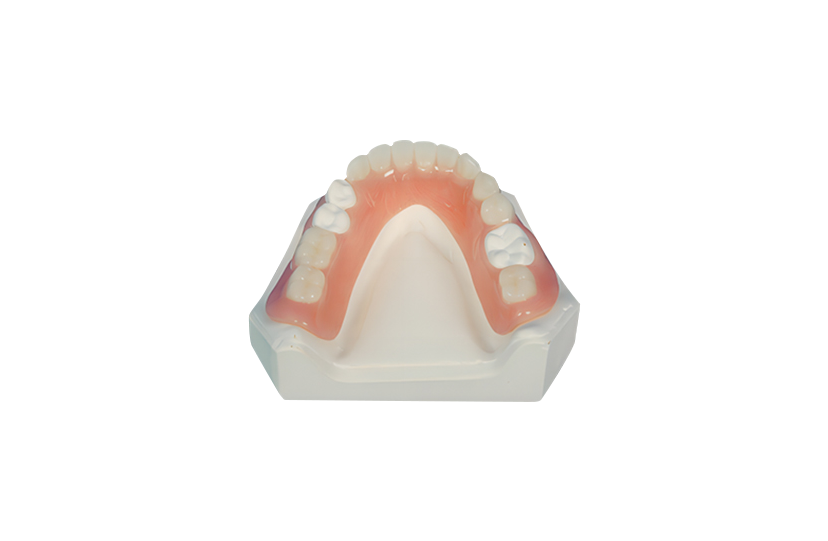
If a person with bruxism wears a nightguard over their dentures, the acrylic teeth may last longer and be less likely to break.
Conclusion
Complete Acrylic Dentures remain a commonly used tooth replacement option for edentulous patients. Made from heat-cured PMMA and artificial acrylic teeth, they can be made relatively quickly, are easy to adjust, and don't use any metal. With a typical service life of five to seven years and routine maintenance needs, they can provide functional and aesthetic benefits for appropriate patients. Dental labs and clinics that outsource production can consider the quality of the materials, regulatory requirements, turnaround consistency, and after-sales support when evaluating a supplier. These factors can affect restoration quality and workflow efficiency.
FAQ
What is a complete acrylic denture?
A complete acrylic denture is a full-arch removable prosthesis used to replace all natural teeth in the upper or lower jaw. It typically consists of a heat-cured PMMA resin base and bonded acrylic prosthetic teeth.
What is a complete acrylic denture made of?
It has a base made of heat-cured PMMA resin and acrylic prosthetic teeth that are bonded to it. The PMMA base is custom-shaded to match the gum tissue of the patient.
How long do complete acrylic dentures last?
Most full dentures made of PMMA last between five and seven years before they need to be replaced. To maintain fit as the ridge resorbs, relining or rebasing may be needed every two to three years.
Are complete acrylic dentures suitable for fully edentulous patients?
Yes. Complete acrylic dentures are designed specifically for patients who have lost all natural teeth in one or both arches. The final suitability depends on factors such as ridge anatomy, retention, oral conditions, and the patient's clinical requirements.
What are the benefits of a complete acrylic denture?
Common benefits include relatively low cost, non-surgical treatment, lightweight construction, adjustable PMMA material, and customizable tooth and base aesthetics. They can also be relined, rebased, or repaired when clinically appropriate.
How is a complete acrylic denture made?
The typical workflow includes preliminary impressions, custom tray fabrication, final impressions, jaw registration, tooth arrangement, wax try-in, flasking and packing, heat curing, finishing and polishing, and final quality inspection.
How long does it take to make a complete acrylic denture?
For outsourced removable restorations, four to five business days is the usual turnaround time stated in this article. Express or next-day dispatch may be available for urgent cases, depending on the production and shipping requirements.
How does a dental lab maintain complete denture fit?
Fit depends on accurate impressions, precise jaw registration records, appropriate tooth arrangement, and final clinical verification. Relining or rebasing may also be required as the residual ridge changes over time.
What is the difference between a complete acrylic denture and an implant-supported overdenture?
A complete acrylic denture is a removable prosthesis that is supported primarily by oral tissues and the residual ridge. An implant-supported overdenture uses dental implants to provide additional support and retention and therefore requires implant surgery.
Is PMMA a suitable material for complete dentures?
PMMA is a commonly used denture-base material. Heat-cured PMMA can provide a relatively lightweight, adjustable base and can be processed using established laboratory methods for finishing, relining, and repair.
How should complete acrylic dentures be cleaned?
Complete acrylic dentures should be removed regularly and cleaned with a non-abrasive denture cleaner. Abrasive toothpaste should be avoided because it can scratch the PMMA surface. Overnight removal can also allow the oral tissues to recover.
Can complete acrylic dentures be repaired or relined?
Yes. PMMA dentures can generally be repaired, relined, or rebased when clinically appropriate. The need for these procedures depends on the condition of the denture and changes in the patient's oral tissues.
What certifications should a dental lab outsourcing supplier hold?
To follow rules in the U.S. and other regulated markets, look for FDA registration, CE marking, and ISO 13485:2016 certification as baseline requirements.
How can dental labs outsource complete acrylic denture production?
Dental labs can provide the required case records, impressions or digital information where supported, jaw registration records, tooth selection requirements, and other case instructions to an outsourcing laboratory. The production laboratory then follows the agreed workflow and returns the completed restoration for clinical delivery.
What should dental labs consider when choosing a complete denture outsourcing supplier?
Key factors include material traceability, regulatory requirements, turnaround time, remake and rework rates, communication, quality control, and after-sales support. Comparing these factors alongside case requirements can help a dental lab evaluate outsourcing options.
Partner with HYC for Custom Dental Restorations
For 22 years, HYC has been making dental products for clinics, labs, and DSOs across the United States. They make fixed restorations and Complete Acrylic Denture solutions. HYC holds FDA registration, CE certification, and ISO 13485:2016 qualification as a verified manufacturer. The FDA lists all PMMA and prosthetic materials. Standard removable cases are sent out four to five days after you order them, and you can get flash delivery the next day. All removable products come with a one-year warranty that covers free replacements in qualifying cases. To get a quote, email our team at info@hycdentallab.com or go to hycdentallab.com.
References
1. American Dental Association. Dental Laboratory Survey Report. ADA Health Policy Institute, 2022.
2. Carlsson, G.E., & Omar, R. "The future of complete dentures in oral rehabilitation." Journal of Oral Rehabilitation, 2010.
3. Phoenix, R.D., Cagna, D.R., & DeFreest, C.F. Stewart's Clinical Removable Partial Prosthodontics. 4th ed. Quintessence Publishing, 2008.
4. Felton, D.A., et al. "Evidence-based guidelines for the care and maintenance of complete dentures." Journal of Prosthodontics, 2011.
5. Zarb, G.A., Hobkirk, J., Eckert, S., & Jacob, R. Prosthodontic Treatment for Edentulous Patients. 13th ed. Elsevier Mosby, 2012.
6. Glossary of Prosthodontic Terms Committee. "The Glossary of Prosthodontic Terms: Ninth Edition." Journal of Prosthetic Dentistry, 2017.
YOU MAY LIKE
.webp "High-Noble Gold (HNG)")