What Should Buyers Compare When Sourcing Valplast Dentures?
When sourcing Valplast Dentures, price is only one part of the decision. Dental laboratories and clinics also need to consider material documentation, case design, fit, production consistency, turnaround time, warranty support, and how easily the supplier communicates when a case needs clarification.
Flexible partial dentures can work very well when the case is selected and designed appropriately. At the same time, they are not interchangeable with conventional acrylic or cast metal partial dentures. Each material has its own handling characteristics, and those differences are important when deciding which cases to send to a laboratory.
Introduction
Flexible partial dentures made from thermoplastic materials have been used for many years as an alternative to conventional metal and acrylic partial dentures. In cases where a metal-free appearance and a flexible base are important, they can provide a practical restorative option.
For dental laboratories and clinics, however, the material itself is only part of the equation. The quality of the finished restoration also depends on case design, impression or scan quality, material handling, processing, finishing, and final inspection.
This is particularly important when working with an overseas dental laboratory. A supplier may offer a competitive price, but consistent results depend on whether the laboratory follows a controlled workflow and communicates clearly when the prescription or case information is incomplete.
For that reason, buyers evaluating Valplast Dentures should look at the complete production process rather than comparing the laboratory price alone.
What Are Valplast Dentures?
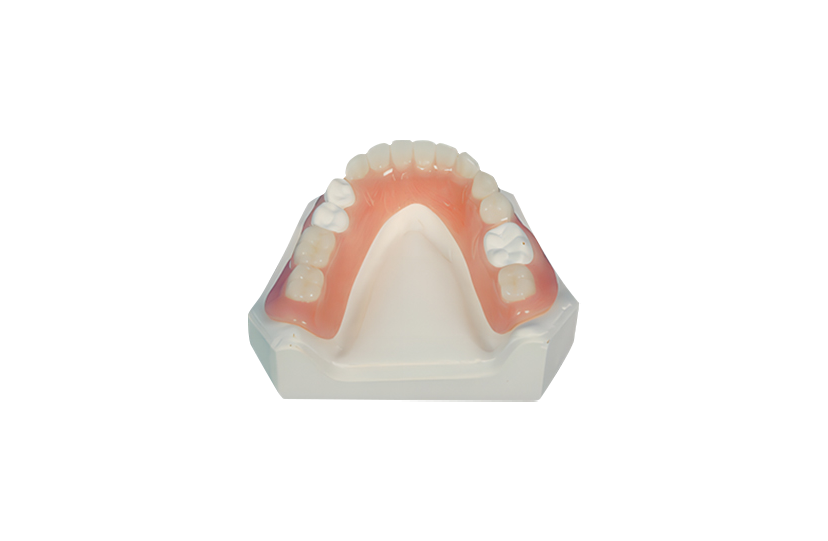
Valplast Dentures are flexible partial dentures made from thermoplastic resin. Unlike conventional cast metal partial dentures, they do not rely on visible metal clasps for retention. Instead, the flexible material can extend around selected areas of the remaining teeth and soft tissue according to the design of the case.
The gum-colored appearance is one of the main reasons flexible partial dentures are considered for anterior or other visible areas. The base can blend with the surrounding gingival tissue, while the absence of metal components can make the restoration less noticeable.
Compared with conventional acrylic partial dentures, a thermoplastic base is more flexible and can be relatively thin in appropriately designed cases. This can be useful where a patient prefers a lighter or more discreet removable restoration.
There is also an important limitation: flexibility does not automatically mean that a case is easier to design or adjust. Once the restoration has been processed, some modifications are more complicated than they would be with an acrylic base. Case selection and communication between the dentist and laboratory therefore remain important.

Key Benefits of Flexible Partial Dentures
Flexible partial dentures are mainly selected for their combination of appearance, flexibility, and metal-free construction. The practical benefits can include:
Natural-looking appearance: The gingival-colored thermoplastic material can blend with the patient's soft tissue, particularly when the design and shade are appropriate.
Metal-free design: Flexible partial dentures can be produced without the visible metal framework and clasps associated with conventional cast partial dentures.
Flexibility: The material can flex during insertion and removal, which can be useful in appropriately selected cases with suitable undercuts.
Patient comfort: A flexible base may feel less rigid than a conventional acrylic or metal framework. Whether a patient finds it more comfortable still depends on the individual case, extension, fit, and design.
Lightweight construction: Thermoplastic materials can allow a relatively thin design in suitable cases.
Aesthetic clasp design: Flexible extensions can often be positioned to reduce the visibility of retention areas compared with conventional metal clasps.
For laboratories, these advantages also need to be considered alongside the production requirements. A flexible partial is not simply an acrylic partial made from a different material. The design, processing, finishing, and adjustment procedures are different.
Competitive Advantages Over Alternative Partial Solutions
The following comparison provides a general overview of the characteristics of commonly used removable partial denture materials.
| Feature | Flexible Nylon Partial | Cast Metal RPD | Acrylic Partial |
|---|---|---|---|
| Aesthetics | Excellent (tissue-colored) | Moderate (metal clasps may be visible) | Moderate |
| Patient Comfort | High | Moderate | Low–Moderate |
| Metal-Free | Yes | No | Yes |
| Modifiability | Limited | Moderate | High |
| Turnaround Time | 3–5 days | 5–7 days | 3–5 days |
| Durability | Depends on case and material | Generally high | Depends on material and design |
These figures should not be treated as universal clinical standards. Production time, material selection, laboratory workflow, and case complexity can all affect the final result.
Flexible partial dentures such as Valplast Dentures have a specific role in removable prosthodontics. Their flexibility and tissue-colored appearance can be useful in selected cases, especially when the patient wants to avoid visible metal.
The trade-off is that thermoplastic materials are generally less straightforward to modify after fabrication. If future tooth additions, major relines, or repeated changes are likely, the dentist and laboratory should discuss the case before production.
Honest Limitations Buyers Should Acknowledge
Flexible partial dentures are not suitable for every patient or every clinical situation.
One of the first things to consider is future modification. If a patient is expected to lose additional teeth, the possibility of adding teeth or changing the base should be discussed before selecting a flexible material. Depending on the material and laboratory technique, adding teeth or carrying out a reline may require specific procedures and may not be as straightforward as working with an acrylic denture.
Another consideration is adjustment. Flexible thermoplastic materials require appropriate finishing and polishing techniques. Routine chairside adjustment should be carried out carefully and with instruments suitable for the material.
The laboratory's manufacturing method also matters. Injection or press-forming procedures, controlled processing conditions, accurate finishing, and final inspection all contribute to consistency. Buyers should ask the supplier how flexible partial dentures are fabricated rather than judging quality only from photographs or price lists.
For overseas procurement, it is also useful to confirm in advance how the laboratory handles remakes, repairs, additional tooth requests, shade adjustments, and cases where the prescription needs clarification.
These discussions may seem minor before the first order, but they can make a significant difference once case volume increases.
Clinical Indications
Flexible partial dentures may be considered in situations such as:
Patients who prefer a metal-free removable restoration
Anterior tooth replacement where appearance is an important consideration
Cases with suitable undercuts that can provide retention for a flexible design
Temporary tooth replacement while other restorative treatment is being planned
Selected patients who prefer a flexible alternative to a conventional acrylic or cast metal partial
Case selection should be based on the patient's oral condition, remaining teeth, periodontal status, occlusion, expected future treatment, and the dentist's clinical assessment.
Flexible partial dentures are used in general dentistry and prosthodontic treatment, but they should not automatically be considered a substitute for a cast metal framework or conventional acrylic denture. The appropriate design depends on the individual case.
For dental groups, DSOs, and laboratories handling a larger number of removable cases, having a standardized prescription and communication process can also help reduce avoidable production issues.
Material Composition
Flexible partial dentures are commonly produced from thermoplastic materials, including polyamide-based resins. The exact composition depends on the material system used by the laboratory and manufacturer.
When purchasing flexible partial dentures, dental laboratories should request appropriate material documentation and confirm that the material and finished device meet the regulatory requirements applicable to the target market.
Material quality is important because the finished restoration needs to maintain its intended physical and aesthetic characteristics throughout normal use. Differences in material formulation, processing temperature, injection or pressing conditions, and finishing can affect the final restoration.
Before approving a new supplier, buyers can request:
Material identification and technical information
Relevant safety or biocompatibility documentation
Applicable regulatory documentation
Manufacturing and quality-control information
Instructions for cleaning, adjustment, repair, and maintenance
A supplier should be able to explain what material is being used rather than simply describing a restoration as “flexible nylon.”
Manufacturing Workflow
A consistent laboratory workflow generally includes the following stages:
Case intake and design verification — The laboratory reviews the impression or digital scan, prescription, tooth shade, clasp design, and other case instructions. Any unclear information should be confirmed before production.
Model preparation — For conventional impressions, the model is prepared, and the relevant undercuts are evaluated. Appropriate block-out and design preparation are carried out according to the case.
Injection or pressing — The thermoplastic material is processed under controlled conditions using the laboratory's selected injection or press-forming system.
Deflasking and finishing — After processing, the restoration is carefully removed from the flask. Excess material is trimmed, and the surface is finished using instruments appropriate for the thermoplastic material.
Quality inspection — The laboratory checks the denture base, tooth position, borders, retention areas, occlusion, surface finish, and overall appearance against the prescription and working model.
Shade and tissue contour verification — The final restoration is visually checked for tooth shade, gingival appearance, contour, and surface finish before packaging and shipment.
For each stage, trained technicians and properly maintained equipment are important. Processing conditions should be controlled because inconsistent handling can affect the fit, surface quality, and overall consistency of the finished restoration.
Cost Factors in Sourcing
The cost of flexible partial dentures can vary depending on several factors:
Material grade: Different thermoplastic materials and material systems have different costs and processing requirements.
Case complexity: The number of replacement teeth, clasp design, base extension, shade requirements, and overall design can affect laboratory time.
Certifications and compliance: Laboratories maintaining documented quality-management systems may have additional operating and documentation costs.
Turnaround time: Standard and expedited production may have different pricing and shipping arrangements.
Order volume: Larger laboratories or group practices may negotiate different commercial terms based on order volume.
Shipping: For overseas orders, freight, customs requirements, and delivery method should also be considered.
A lower laboratory price does not necessarily mean a lower total cost. Remakes, additional shipping, chairside adjustment, communication delays, and case handling can all add to the actual cost of procurement.
For this reason, laboratories comparing suppliers should consider the complete cost per successful case rather than the unit price alone.
How to Choose a Reliable Supplier
There is more to choosing a flexible partial denture supplier than comparing prices.
Before placing regular orders, dental laboratories and clinics can evaluate the following areas:
Material documentation: Confirm the material used and request relevant technical and regulatory documents.
Quality management: Check whether the supplier maintains an appropriate quality-management system, such as ISO 13485:2016 where applicable.
Case communication: Ask how the laboratory handles unclear prescriptions, missing information, and design questions.
Digital workflow: Confirm whether the laboratory accepts digital scans and which file formats are supported.
Customization: Ask about tooth shades, gingival shades, clasp configurations, and other available design options.
Turnaround: Confirm the normal production time as well as the procedure for urgent cases.
Remake and warranty policy: Understand what happens if a case has a manufacturing-related problem.
Repair and modification: Ask how the laboratory handles repairs, tooth additions, and other post-delivery requirements.
Communication: A supplier should provide a practical way to discuss cases and resolve problems when they arise.
It is also useful to begin with a small number of cases before moving to regular production. This allows the laboratory and supplier to compare prescriptions, design preferences, packaging, shipping, and finished-case quality.
Maintenance Recommendations
Patients should follow the cleaning instructions provided by their dentist and laboratory.
In general, flexible partial dentures should be handled carefully during cleaning. Avoid exposing the restoration to very hot water, as excessive heat may affect the shape of thermoplastic materials.
A suitable denture-cleaning product should be used according to the material manufacturer's instructions. If a cleaning solution contains ingredients that may be incompatible with the material, the laboratory or dentist should be consulted before regular use.
Patients should also avoid aggressively bending the denture during insertion or removal. When the restoration no longer fits correctly, feels loose, or becomes damaged, it should be assessed by the dental professional rather than repeatedly adjusted at home.
Regular professional examinations can help identify changes in fit, oral tissues, occlusion, and the condition of the restoration.
Key Takeaways
When sourcing Valplast Dentures, laboratories and clinics should evaluate the complete process rather than focusing only on the price per case.
Material documentation, case selection, laboratory design, processing consistency, finishing quality, turnaround time, and after-sales support all contribute to the final result.
Flexible partial dentures can provide an aesthetic, metal-free option for appropriately selected cases. Their flexibility is also one of the reasons they require different handling and modification procedures from conventional acrylic or cast metal partial dentures.
For laboratories purchasing from overseas suppliers, starting with trial cases and establishing clear communication procedures can be a practical way to evaluate consistency before increasing order volume.
A reliable supplier should be able to explain its material, workflow, quality-control process, documentation, turnaround time, and warranty terms clearly. These details are usually more useful for long-term procurement decisions than a low initial quotation alone.
FAQ
What are Valplast dentures?
Valplast dentures are flexible partial dentures made from a thermoplastic material. They are designed as removable restorations and can provide a metal-free alternative to conventional cast metal partial dentures in selected cases.
What are Valplast dentures used for?
They are generally used to replace one or more missing teeth when a removable, flexible, and aesthetic restoration is appropriate for the patient's clinical situation.
Are Valplast dentures better than acrylic dentures?
Neither material is universally better. Flexible thermoplastic and acrylic dentures have different properties and are suited to different clinical situations. Acrylic dentures can generally be easier to modify, while flexible materials may offer advantages in flexibility and appearance.
Are Valplast dentures suitable for everyone?
No. Case selection is important. Patients who are likely to require frequent tooth additions, major relines, or significant future changes may need another type of removable restoration. The dentist should assess the case before selecting the material.
Are Valplast dentures comfortable to wear?
Comfort depends on the fit, design, extension, occlusion, and individual patient. The flexible nature of the material may make the restoration feel less rigid, but flexibility alone does not guarantee comfort.
Are Valplast dentures metal-free?
Flexible partial dentures can be made without a conventional metal framework or visible metal clasps. The exact design and material should be confirmed with the laboratory before production.
Can Valplast dentures be repaired or relined?
Some repairs, tooth additions, or relines may be possible, but the procedure depends on the material and laboratory technique. These procedures are generally less straightforward than modifying an acrylic denture, so the laboratory should be consulted before treatment.
How long do Valplast dentures last?
There is no single service-life figure that applies to every patient. Longevity depends on the case design, material, fit, occlusion, oral environment, cleaning routine, and how the denture is handled. Regular professional evaluation is recommended.
Can Valplast dentures replace missing molar teeth?
They may be used in selected cases, but posterior cases require careful consideration of support, retention, occlusion, and the condition of the remaining teeth. The dentist should determine whether a flexible partial denture is appropriate.
Can Valplast dentures be used as a temporary denture?
They may be used as a temporary removable solution in selected treatment plans. Whether they are appropriate depends on the patient's clinical condition and the planned long-term restoration.
How should Valplast dentures be cleaned?
Follow the cleaning instructions provided by the dentist or laboratory. Avoid very hot water and harsh cleaning methods that may affect the thermoplastic material. When in doubt, check the material manufacturer's recommendations.
Can dental laboratories order Valplast dentures from an overseas supplier?
Yes. Many dental laboratories work with overseas manufacturing partners for removable and fixed restorations. Before placing regular orders, buyers should confirm shipping arrangements, case submission procedures, material documentation, turnaround time, warranty terms, and communication methods.
What should dental laboratories look for in a Valplast denture supplier?
Important areas include material documentation, manufacturing workflow, quality control, case communication, turnaround time, digital-file capability, remake policy, warranty coverage, and the supplier's experience with international orders.
Can digital scans be used to order Valplast dentures?
Digital workflows can be used for many removable denture cases, depending on the laboratory's equipment and workflow. The laboratory should confirm the accepted file format and any additional information required for flexible partial denture cases.
What is the standard turnaround time for Valplast dentures?
Turnaround time varies by laboratory and case complexity. At HYC, the normal production time for flexible partial denture cases is generally 3–5 days, with expedited arrangements available for urgent cases.
What remake rate should a dental laboratory expect from a Valplast denture supplier?
There is no universal industry remake-rate benchmark that applies to every laboratory or case type. Buyers should ask suppliers for their own documented case history and, where possible, evaluate remake information alongside the reasons for remakes.
What certifications should a Valplast denture supplier have?
The appropriate documentation depends on the supplier, manufacturing location, product classification, and target market. Buyers should verify the supplier's applicable quality-management certification and product/material regulatory documentation rather than relying on a general certification statement.
What information should I send a dental laboratory when ordering Valplast dentures?
A complete prescription should normally include the patient's relevant case information, impression or digital scan, tooth shade, requested tooth arrangement, clasp or retention preferences where applicable, and any other design instructions. Clear photographs can also help when shade or aesthetic details need clarification.
What is the difference between Valplast and flexible partial dentures?
“Flexible partial denture” describes a type of removable denture made from a flexible thermoplastic material. Valplast is a specific material/product name associated with flexible partial dentures. Not every flexible partial denture is necessarily made from Valplast material.
Is Valplast the same as nylon?
Valplast is associated with a thermoplastic flexible denture material, while “nylon” is a broader material term. Buyers should confirm the exact material formulation and manufacturer documentation rather than assuming that every flexible denture described as nylon uses the same material.
Partner With HYC — Your Trusted Valplast Denture Manufacturer
HYC has been making dental restorations for more than 22 years, with experience in both fixed and removable restorations and international dental laboratory cooperation.
As a dental laboratory providing flexible partial denture solutions, HYC maintains ISO 13485:2016 quality management certification and provides product and material documentation applicable to the target market.
Our normal turnaround time for flexible partial denture cases is 3–5 days, with expedited production available for urgent orders.
For removable restorations, HYC provides a one-year warranty covering qualifying quality-related issues, together with support for repair or remake when applicable.
Dental laboratories and clinics interested in evaluating our flexible partial denture service can contact us to discuss case requirements, digital workflows, production time, and sample orders.
Email: info@hycdentallab.com
Website: hycdentallab.com
References
Singh, K., Aeran, H., Kumar, N., & Gupta, N. Flexible Thermoplastic Denture Base Materials for Aesthetical Removable Partial Denture Framework. Journal of Clinical and Diagnostic Research. 2013;7(10):2372–2375.
Fueki, K., Ohkubo, C., Yatabe, M., et al. Clinical application of removable partial dentures using thermoplastic resin. Part I: Definition and indication of non-metal clasp dentures. Journal of Prosthodontic Research. 2014.
Fueki, K., Ohkubo, C., Yatabe, M., et al. Clinical application of removable partial dentures using thermoplastic resin. Part II: Material properties and clinical features of non-metal clasp dentures. Journal of Prosthodontic Research. 2014.
Manzon, L., Fratto, G., Poli, O., & Infusino, E. Patient and Clinical Evaluation of Traditional Metal and Polyamide Removable Partial Dentures in an Elderly Cohort. Journal of Prosthodontics. 2019;28(8):868–875.
ISO 10993-1. Biological Evaluation of Medical Devices — Part 1: Requirements and General Principles for the Evaluation Within a Risk Management Process.
Carr, A. B., & Brown, D. T. McCracken's Removable Partial Prosthodontics. 13th ed. Elsevier. 2015.
YOU MAY LIKE
.webp "Silver-Palladium Crown (Ag-Pd)")