Porcelain Layered Zirconia Provides Natural-Looking Dental Restorations
Quick Answer
Porcelain Layered Zirconia combines a high-strength yttria-stabilized zirconia core with hand-layered feldspathic porcelain veneer to deliver natural-looking dental restorations that balance mechanical durability and lifelike aesthetics. This bi-layered ceramic system offers flexural strength exceeding 900 MPa alongside superior translucency, making it a suitable choice for anterior crowns and bridges where patient satisfaction depends on invisible, seamless integration with natural dentition.
Introduction
Modern restorative dentistry needs materials that meet two often-opposing needs: they need to be strong enough to withstand chewing forces and look good enough that restorations can't even be seen. Even though traditional porcelain-fused-to-metal (PFM) restorations are strong, they often leave behind dark gingival margins and opacity that make patients feel less confident. Monolithic zirconia fixed the problem of strength, but it also created a new problem: its uniform structure doesn't have the depth or ability to let light through as natural enamel does. Porcelain Layered Zirconia became the answer dentists were looking for because it combined the strength of zirconia frameworks with the artistic detail of layered ceramics. This technology addresses important considerations for dentists, lab owners, and purchasing managers: it can lower the number of cases that need to be redone, support efficient case turnaround, and meet strict esthetic standards in the anterior areas without sacrificing durability in the posterior areas.
What Is Porcelain Layered Zirconia?
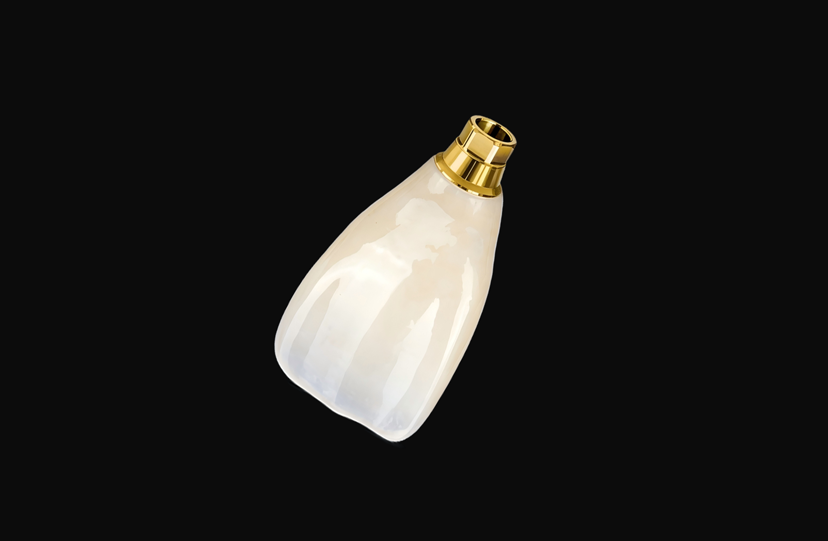
A hybrid ceramic system called Porcelain Layered Zirconia has a dense zirconia base that is covered with feldspathic porcelain that is applied by hand by skilled artisans. The inner framework is made of yttria-stabilized tetragonal zirconia polycrystal (Y-TZP), which was precisely cut using CAD/CAM technology and then heated in a vacuum to a very high temperature. This core has a flexural strength of about 1,200 MPa, which is about the same as some metal alloys. The top veneering porcelain, which is carefully brushed and fired in layers, has optical properties similar to natural teeth. It has gradients of translucency, opalescence, and polychromatic depth, which solid materials can't do. To keep the porcelain from coming apart during thermal cycling in the mouth, the coefficient of thermal expansion (CTE) between these layers needs to be carefully calibrated. It should be between 9.1 and 10.2 x 10^-6/K.
This construction solves two problems that dentists have to deal with: making teeth look good on the front and last a long time on the back. When you bite down, the zirconia framework supports the tooth, and the porcelain layer gives it the nice look that patients want. Full-contour zirconia spreads light evenly, but the layered method lets you control how much light gets scattered, which is similar to how enamel naturally works. The core and veneer are joined together by chemical bonding through special zirconia surfaces and mechanical interlocking. This makes a strong link that can handle the pressures of daily use.
Benefits of Porcelain Layered Zirconia for Clinical Practice
Enhanced Patient Satisfaction Through Lifelike Aesthetics
More and more, patients don't want restorations that say they are "artificial." Porcelain Layered Zirconia restorations fit well with nearby natural teeth, matching shade, value, and chroma. The porcelain veneer lets dentists create incisal translucency, mamelons, and subtle characterizations—differences in surface texture that catch light just like natural enamel does. Dental offices say that patients are more likely to accept visible dental work and experience less mental distress, especially when it comes to smile-zone restorations.
Reduced Chairside Adjustment Time
For busy dental offices, getting the minor fit right is very important. When made under controlled conditions, these restorations usually have marginal gaps below 50 microns, which means that chairside changes don't have to be made as often. This accuracy directly leads to shorter appointment times, better patient throughput, and more efficient practices. This is a big practical benefit for dental service companies with multiple locations that have to meet tight timing needs.
Extended Service Life and Lower Remake Rates
When paired with the right clinical methods, the structural strength of the zirconia core allows for service lives of 10 to 15 years in normal situations. Compared to traditional all-ceramic systems that are more likely to break in large pieces, practices have much lower remake rates. The economic effects go beyond the cost of materials. Remakes mess up schedules, hurt patients' trust, and put extra work on both clinics and labs without paying them. Reliable first-time success rates help keep long-term relationships with suppliers stable and keep revenue projections accurate.

Advantages Compared to Alternative Restoration Materials
Superior Strength-to-Aesthetics Ratio
Traditional PFM restorations are strong enough, but the metal substructures make the edges dark, and the gums shadowed. All-ceramic systems, such as leucite-reinforced glass-ceramics, look great, but they aren't strong enough to hold teeth in place for long periods of time or in posterior applications. Monolithic zirconia is the strongest material available, but it often looks cloudy and "chalky" when placed in front of something. Porcelain Layered Zirconia is one of a kind because it has core strength of more than 900 MPa and veneering porcelain that looks just like real tooth transparency.
When building long-span bridges, the mechanical advantage is especially clear. Normal ceramics might break under tensile stress, but the zirconia framework keeps its structure strong across bridges up to 47 mm long with multiple abutments. This feature increases the number of treatment options for cases with multiple lost teeth, which means that removable partial dentures are not as necessary.
Metal-Free Biocompatibility
The removal of all metal parts solves a number of medical problems at the same time. Even though allergic responses to base metals are rare, they can cause big problems that need to be fixed by replacing the whole restoration. When compared to metal edges, gingival tissues react better to zirconia surfaces, showing less plaque attachment and lower levels of inflammation markers. The lack of metal also stops galvanic currents between metals that are not the same in people who have multiple fillings. This gets rid of a possible source of mouth pain.
Effective Masking of Discolored Preparations
The zirconia core is very opaque, so it can cover up tooth structures that are discolored or dark, metal posts, or titanium implant abutments. This property is very helpful for fixing teeth that have been treated with endodontics or replacing PFM restorations that aren't holding up, as it lets the teeth look better without having to go through a lot of preparation work. Dentists can confidently handle difficult cosmetic cases that would need more invasive treatments otherwise.
Disadvantages and Clinical Considerations
For a balanced review to work, possible flaws must be acknowledged. While the veneering ceramic layer looks better, it makes the tooth more likely to chip when too much pressure is put on it. People who have been diagnosed with bruxism or severe clenching habits are more likely to have problems. This problem can be lessened by following clinical guidelines that change the way the teeth are made. For example, "cut-back" designs keep the occlusal contacts in solid zirconia and only use porcelain on the buccal sides. Protective occlusal bands give your teeth even more protection while you sleep.
When compared to minimally invasive bonded restorations, tooth preparation needs a deeper reduction depth. When you combine circumferential reduction of 1.0–1.5 mm with occlusal clearance of 1.5–2.0 mm, you lose more tooth structure than some dentists like. When there isn't much space between the teeth or when teeth have been highly repaired, and only a little structure is left, it may be necessary to use a different treatment method. Feather-edge preparations don't have enough material thickness for strength and retention, so they need finish lines with only the bare minimum of chamfers or shoulders.
Cost is another thing that should be thought about. When you combine advanced CAD/CAM milling machines, vacuum sintering furnaces, and skilled ceramic technician labor, the cost per unit of production is higher than with monolithic options. Practices need to think about this investment in terms of the extra money that patients are willing to pay for better cosmetic results. Long-term partnerships with suppliers and agreements to buy in bulk help keep quality standards high while lowering costs.
Comparison with Monolithic Zirconia and PFM Restorations
| Property | Porcelain Layered Zirconia | Monolithic Zirconia | PFM Restorations |
|---|---|---|---|
| Core Strength | 900 to 1,200 MPa | 900 to 1,400 MPa | 500–800 MPa |
| Aesthetic Quality | Excellent depth and translucency | Some translucency | Good, but metal margins visible |
| Biocompatibility | No metals, great tissue reaction | Free of metals, great | Possible metal sensitivity |
| Chipping Risk | Moderate (layer of porcelain) | Not much | Low |
| Cost | Low to high level | Moderate | Less |
| Best Applications | Front crowns and cosmetic bridges | Back crowns, areas with a lot of stress | Crowns for general use |
Clinical Indications and Application Scenarios
Zirconia with porcelain veneers is used a lot in a wide range of clinical settings. The esthetic benefits of anterior single crowns are greatest, especially in the maxillary central and lateral incisors, where patients pay the most attention to how they look. Because the material can copy small changes in color within a single restoration—from darker cervical areas to clear incisal edges—the results are so close to natural teeth that not even trained professionals can tell the difference.
Fixed bridges are another main indication that can confidently fill in places left by missing teeth. Short-span bridges that connect two abutments can go as far as 38 mm, while longer reconstructions with more than two abutments can safely go as far as 47 mm. From single-tooth replacements to quadrant rehabilitations, these parameters cover a wide range of common clinical situations. Regulatory systems change from place to place. For example, Canadian rules say that bridges can only have six units and no more than two pontics between abutments. These rules are based on evidence-based load distribution principles.
Implant-supported restorations use the material's ability to hide titanium abutments to good effect. When thin-walled all-ceramic crowns are used on implants, the grayish color of metal parts can show through the porcelain layers. The zirconia core stops this from happening. The health of the soft tissues around zirconia edges is usually better than around metal parts, which supports long-term security around the implant, even in difficult full-arch repairs.
A growing area of use includes complicated cases with multiple missing teeth, discolored existing teeth, or switching from older restorations that aren't working. Because the material system is so flexible, labs and doctors can use it to solve a wide range of problems within a single workflow. This makes inventory management easier and makes sure that quality standards are followed in all cases.
Materials and Manufacturing Quality Standards
Before it is used in production, the base material, yttria-stabilized zirconia, goes through a lot of quality checks. According to ISO 6872 dental ceramics standards, suppliers must show that the bending strength is greater than 900 MPa through standard tests. Chemical purity requirements make sure that there aren't too many impurities that could hurt biocompatibility or the structure. Veneering porcelain formulations balance how they look with how well they work mechanically, keeping CTE matching within tight limits to avoid breakdowns caused by heat stress.
The first step in making something is digital case design. This is where CAD software turns dentist prescriptions and intraoral scan data into exact three-dimensional models. Zirconia blocks that have already been sintered are shaped by computer-controlled milling machines. These blocks are then vacuum-sintered at temperatures close to 1,500°C. This process makes the material denser until it reaches its final strength, but it also shrinks by about 25%. This changes the size of the material, so correct compensation estimates must be made during the design phase.
After sintering, trained workers put down layers of porcelain, each fired at a different temperature to make sure the right color and solid structure. By hand staining, features that look like natural tooth anatomy are added, such as developmental lobes, hypocalcified areas, and crack lines that make the tooth look more real. Final glazing and polishing create surface textures that match the enamel next to it, making sure that the whole thing looks like it belongs together. Throughout this workflow, quality control checkpoints make sure that minor errors are fixed, that colors match, and that the bonds between layers are strong.
Cost Factors Influencing Procurement Decisions
The cost of materials is only one part of the total cost of restoration. When compared to regular ceramics, high-purity zirconia powders and veneering porcelains that work with them cost more. CAD/CAM systems, sintering furnaces, and porcelain ovens are examples of equipment investments that require capital expenditures that suppliers spread out over a period of time. Larger labs can save money by working with more people, but smaller specialty shops may charge more for hand-made work.
The intensity of labor has a big effect on how prices are set. Some physical work is cut down by computer-aided design, but ceramic layering is still an art that takes years to learn. Prices per unit show that experienced ceramists get paid more. The level of customization also affects the price. Simple single crowns are less expensive than complicated multi-unit bridges that need to be carefully shaped and colored to match a lot of teeth.
Regulatory compliance adds costs that end users can't see. For example, maintaining FDA registration, CE marking, or ISO 13485:2016 certification requires quality system upkeep, recordkeeping, and regular audits. Biocompatibility testing for raw materials, checking for chemical solubility, and checking for radiopacity are all costs that have to be paid. Reliable providers include these compliance costs in their prices without hiding them. They don't try to save money by using products or methods that aren't appropriately documented or compliant.
Pricing is flexible when there are a lot of orders and the relationship stays stable. Dental service companies that place regular monthly orders at multiple sites can get volume savings that individual practices that only place occasional orders can't get. Long-term supply deals help sellers plan their production more accurately, giving them better prices and guaranteed capacity allocation during times of high demand.
How to Choose a Supplier for Porcelain Layered Zirconia
When choosing a manufacturing partner, you need to look at a lot of different aspects of their abilities. Regulatory credentials are the most important part. Check the current FDA registration, CE certification, and ISO 13485:2016 compliance through official documents, not just what the supplier says. Ask for license numbers and check them against government databases. Biocompatibility test reports should include all materials that come into contact with patient tissues and be based on recognized standards, such as the ISO 10993 series.
Production capacity and return dependability have a direct effect on how the practice runs. Suppliers should consistently show a normal turnaround time of 3–5 days for regular cases, with choices for faster service for emergencies. If you can, go to production facilities to check out the quality of the equipment, how well the work is organized, and how quality control is done. Digital workflows that accept intraoral scans and give real-time case status updates show that the technology is advanced enough to meet the needs of modern practice.
The framework for communication should be carefully looked at. Language and time zone differences can make it harder to have technical conversations about tough cases. Suppliers with specialized case managers, support lines that are open 24 hours a day, and expert staff who speak English as their first language help avoid misunderstandings that lead to remakes. Practices are kept running smoothly by having clear rules for how to handle rush cases, design changes, and problem settlement.
Warranty terms show how confident the supplier is in the quality of the product. Reputable manufacturers cover fixed restorations for two years and removable prosthetics for one year. If there are any problems with the manufacturing, the manufacturer will fix or replace the item for free. Carefully look over the warranty exclusions—some suppliers won't cover cases that they think were not properly prepared or glued together, which could lead to a dispute. Clear rules and easy ways to file claims show that a business cares about its customers.
Customization is important for practices that treat a wide range of patients. In addition to standard VITA guides, suppliers should be able to handle unique shade systems, requests for custom staining, and anatomical changes that meet the needs of each patient. The ability to work with different digital file types (STL, PLY, and DCM) and standard impression methods makes it easy to integrate with how practices already work.
Maintenance and Care Recommendations
Educating patients is a key part of making repairs last longer. Tell your patients not to use their front teeth to open packages, bite their nails, or break hard foods like ice or unpopped popcorn kernels. These actions focus forces on weak spots on porcelain edges, raising the risk of breaking. Patients with bruxism must have an occlusal splint made. This protective device greatly increases the service life of restorations by spreading parafunctional forces across multiple teeth instead of focusing them on a single restoration.
Regular cleanliness habits help you succeed in the long run. To keep the surface from getting dull, suggest toothpastes that don't have harsh abrasives. Some whitening formulas have harsh abrasives that wear away glaze layers over time. Electric toothbrushes with pressure sensors help people avoid using too much force, which could put stress on the edges of a restoration. During prophylaxis appointments, dentists should follow the right polishing protocols and stay away from rough prophy paste grits that could damage porcelain surfaces and make plaque stickier.
When occlusal changes are needed, they need to be done carefully. Grinding porcelain creates heat that can cause tiny cracks if it is done without using water to cool it down. Diamond burs that are made especially for ceramic materials reduce damage to the subsurface. After making any changes, re-glazing makes the surface smooth again and fills in any tiny holes that bacteria could live in. Within a few weeks of cementation, patients should come back for a follow-up exam to make sure the occlusal harmony is still good and make any necessary adjustments before the cement hardens completely.
Long-term tracking includes checking the tooth structure and the health of the tooth's edges on a regular basis with X-rays. If you notice recurring cavities or cement washout early on, you can fix the problem before it gets worse. Patients can safely get 10–15 years of service with the right care routines. This is a great amount of time given the cosmetic and functional benefits.
Key Takeaways
By combining a strong zirconia core with an artistically layered porcelain veneer, Porcelain Layered Zirconia solves the long-standing problem of how to balance strength and beauty in restorative dentistry. This material system is good for both anterior and posterior applications because it fits the first time correctly, looks natural by matching the adjacent teeth, and is long-lasting mechanically. When compared to monolithic options, veneering porcelain is slightly more likely to chip, but strategic design methods and patient care procedures successfully reduce this risk. When making purchases, companies should give more weight to suppliers that show they follow the rules, provide consistent quality, can turn orders around quickly, and offer full warranty support. Investing in high-quality materials pays off in the form of lower remake rates, happier patients, and a better image for the business. Layered zirconia is an important part of modern treatment plans for dentists who want to improve the repair services they offer, especially in cases where the way the teeth look has a big effect on the patient's quality of life.
FAQ
How deep does Porcelain Layered Zirconia need to be prepared?
To prepare the tooth correctly, it needs to be reduced by 1.0 to 1.5 mm along its length and given 1.5 to 2.0 mm of space on the biting surface so that the zirconia framework and porcelain overlay can fit. Finish lines should be shaped like a curve or a shoulder. Feather-edge preparations don't have enough material thickness for strength and durability.
What is the difference between this material and solid zirconia for front teeth?
Layered zirconia's porcelain veneer gives it a better look by correctly imitating the depth and transparency of real teeth. Monolithic zirconia is less likely to chip, but it looks less clear. The choice depends on what the patient wants in terms of looks and how well it works for them.
Can people who have bruxism use Porcelain Layered Zirconia?
Of course, with some changes. Plan the restoration so that the occlusal contacts are made of solid zirconia instead of porcelain, and only cover the exposed biting areas with the veneer. Protective occlusal guards must be worn by patients while they sleep to spread out parafunctional forces and keep porcelain from breaking.
What makes layered zirconia restorations chip?
Chips are usually caused by not enough occlusal space, bad CTE matching between the core and veneer materials, too much occlusal force in people who brux, or trauma. Checking for thermal expansion compatibility during the manufacturing process greatly lowers the risk of delamination caused by materials that don't work well together.
How long do most of these restorations last?
The service life is usually between 10 and 15 years if everything works as it should and is properly maintained. Longevity depends on things like occlusal forces, patient cleanliness habits, how well bruxism is managed, and how often the patient gets checked by a dentist to find early problems that need treatment.
Is special cementation required?
If you follow the manufacturer's instructions for treating the zirconia surface, resin-modified glass ionomer or resin cements work well. To stick best to the zirconia surface, some systems need certain primers or bonding agents. Isolation and moisture control during cementation are very important for long-term marginal integrity.
Can these restorations be repaired if chipping occurs?
Composite bonding systems can often fix small porcelain chips, but the results aren't always the same, and they don't last as long as the original porcelain. When there is extensive damage, it usually takes a full repair and replacement to get things working and looking good again.
What makes porcelain-layered zirconia metal-free advantageous?
Getting rid of metal stops gum discoloration, allergic responses to base metals, and galvanic currents between metal fillings that are not the same. Zirconia is biocompatible, which means it works better with tissues and doesn't build up plaque as much as metal margins do. This is especially helpful for people whose immune systems aren't working well.
Partner with HYC for Premium Porcelain Layered Zirconia Solutions
Dental workers who need stable, high-quality Porcelain Layered Zirconia restorations can turn to HYC's 22 years of experience in specialized manufacturing. Our factory is FDA-registered and CE-certified, and it uses ISO 13485:2016 quality management systems to make sure that every restoration meets the highest standards for safety and biocompatibility around the world. We know what dental offices and labs go through when they have to deal with tight deadlines, high standards for esthetics, and no room for mistakes. That's why our normal response time for fixed restorations is 4–5 days for complex cases, and we offer a two-day turnaround for simple expedited cases. Our manufacturing precision always keeps the gaps between parts below 50 microns, which means that the parts fit the first time perfectly and require very little time to be adjusted at the chairside. As an experienced supplier, we can fully customize each repair to meet your exact design needs, color tastes, and anatomical preferences. Our full warranty program covers fixed prosthetics for two years and includes free repair or replacement for any problems with the way they were made. This protects your practice's investment and the relationships you have with your patients. Contact our technical team at info@hycdentallab.com to discuss your unique case needs, request sample restorations, or set up a supply relationship. Visit hycdentallab.com to explore our full capabilities and discover how our commitment to precision manufacturing can improve the results of your restoration.
References
1. Conrad, H.J., Seong, W.J., & Pesun, I.J. (2007). Current ceramic materials and systems with clinical recommendations: A systematic review. Journal of Prosthetic Dentistry, 98(5), 389-404.
2. Raigrodski, A.J., Hillstead, M.B., Meng, G.K., & Chung, K.H. (2012). Survival and complications of zirconia-based fixed dental prostheses: A systematic review. Journal of Prosthetic Dentistry, 107(3), 170-177.
3. Denry, I., & Kelly, J.R. (2008). State of the art of zirconia for dental applications. Dental Materials, 24(3), 299-307.
4. Sailer, I., Makarov, N.A., Thoma, D.S., Zwahlen, M., & Pjetursson, B.E. (2015). All-ceramic or metal-ceramic tooth-supported fixed dental prostheses: A systematic review of the survival and complication rates. Clinical Oral Implants Research, 26(Suppl 11), 185-213.
5. Guess, P.C., Att, W., & Strub, J.R. (2012). Zirconia in fixed implant prosthodontics. Clinical Implant Dentistry and Related Research, 14(5), 633-645.
6. Zhang, Y., & Lawn, B.R. (2018). Novel zirconia materials in dentistry. Journal of Dental Research, 97(2), 140-147.
YOU MAY LIKE
_1779414359377.webp "FMZ (Fully Milled Zirconia)")
 Framework.webp "High-Performance Polymer (HPP) Framework")